
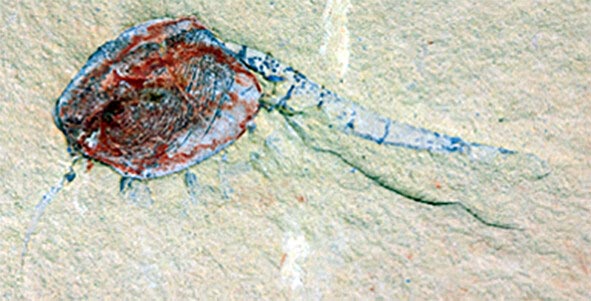
Deposit contains exceptionally preserved fossils of soft-bodied, juvenile organisms from the Cambrian period.
All life on Earth 500 million years ago lived in the oceans, but scientists know little about how these animals and algae developed. A newly discovered fossil deposit near Kunming, China, may hold the keys to understanding how these organisms laid the foundations for life on land and at sea today, according to an international team of researchers.
The fossil deposit, called the Haiyan Lagerstätte, contains an exceptionally preserved trove of early vertebrates and other rare, soft-bodied organisms, more than 50% of which are in the larval and juvenile stages of development. Dating to the Cambrian geologic period approximately 518 million years ago and providing researchers with 2,846 specimens so far, the deposit is the oldest and most diverse found to date.
“It’s just amazing to see all these juveniles in the fossil record,” said Julien Kimmig, collections manager at the Earth and Mineral Sciences Museum & Art Gallery, Penn State. “Juvenile fossils are something we hardly see, especially from soft-bodied invertebrates.”
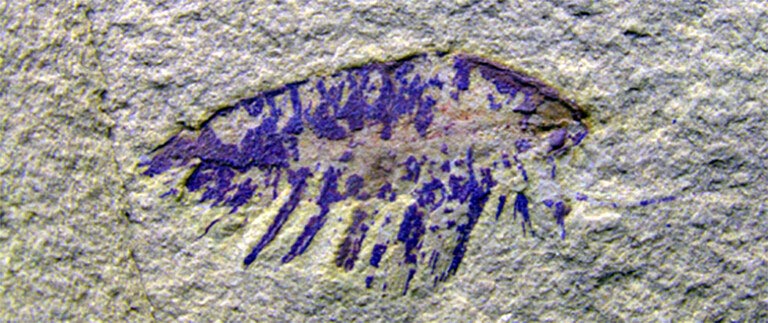
Xianfeng Yang, a paleobiologist at Yunnan University, China, led a team of Chinese researchers that collected the fossils at the research site. He measured and photographed the specimens and analyzed them with Kimmig. The researchers report the results of their study today (June 28) in the journal Nature Ecology and Evolution.
The researchers identified 118 species, including 17 new species, in the lagerstätte — a sedimentary deposit of extraordinary fossils with exceptional preservation that sometimes includes preserved soft tissues.
The species include the ancestors of modern-day insects and crustaceans, worms, trilobites, algae, sponges, and early vertebrates related to jawless fish. The researchers also found eggs and an abundance of rare juvenile fossils with appendages still intact and their internal soft tissues visible.
The specimens are so well-preserved that they are revealing body parts never before seen, said Sara Kimmig, assistant research professor in the Earth and Environmental Systems Institute and facility director of the Laboratory for Isotopes and Metals in the Environment at Penn State.
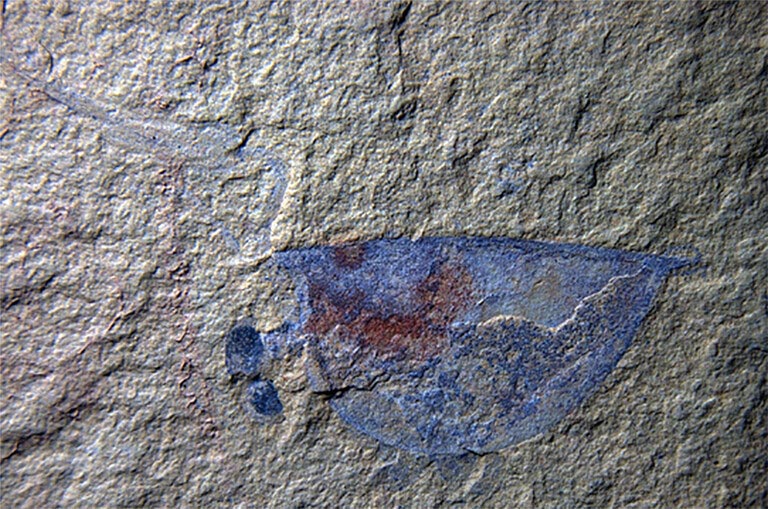
“The site preserved details like 3D eyes, features that have never really been seen before, especially in such early deposits,” she said.
Scientists can use CT scanning on these 3D features to reconstruct the animals and extract even more information from the fossils, according to the researchers.
Sediment Layers Reveal Extinction Patterns
The lagerstätte contains several event beds, or layers in the sediment where the fossils are found. Each layer represents a single burial event. All species identified in the study are present in the lowest layer, with subsequent layers containing diverse species, but not to the extent of the lowest one.
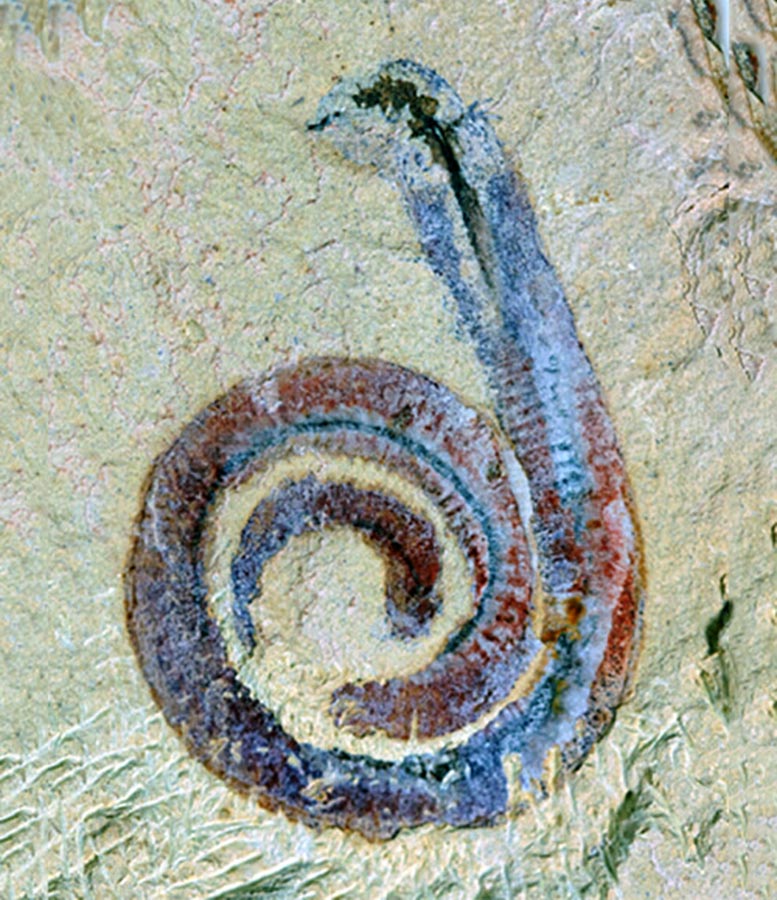
The researchers think these intervals could represent boom and bust periods in the marine community. Many species might have come to the area — at the time located in deeper waters toward the center of the Kunming Gulf — seeking protection from strong ocean currents. However, a change in oxygen levels or storm events that caused sediment to flow down a slope and bury everything in its path may have caused extinctions.
The abundance of juvenile fossils, on the other hand, suggests that the Haiyan Lagerstätte could have been a paleonursery. The species found in the lagerstätte may have chosen to reproduce there due to the protection it provided from predators.
“Could these worms and jellyfish and bugs have developed something as sophisticated as a paleonursery to raise their young? Whatever the case may be, it’s fascinating to be able to parallel this behavior to that of modern animals,” Sara Kimmig said.
Fossils as Clues to Evolution and Behavior
Scientists will be able to use this collection to study how these ancient animals developed from the larval to the adult stage.
“We’ll see how different body parts grew over time, which is something we currently do not know for most of these groups,” Julien Kimmig said. “And these fossils will give us more information on their relationships to modern animals. We will see if how these animals develop today is similar to how they developed 500 million years ago, or if something has changed throughout time.”
The developmental information will also provide insights into the relationships between animal groups, as similar developmental patterns may indicate a link between species, he added.
“The Haiyan Lagerstätte will be a wealth of knowledge moving forward for many researchers, not only in terms of paleontology but also in paleo-environmental reconstructions,” said Sara Kimmig. She and her colleagues would like to conduct geochemical analyses on the specimens and the sediments. These analyses could help them potentially recreate the environment and climate during the time that this lagerstätte was deposited.
The fossils will also allow the researchers to study how animals behaved 500 million years ago when the world was a bit warmer than today and use it as a proxy for where the world is headed in terms of animal behavior in a warmer environment.
“In this deposit, we found the ancestors to most modern animals, both marine and terrestrial,” Julien Kimmig said. “If the Haiyan Lagerstätte is actually a paleonursery, it means that this type of animal behavior has not changed much in 518 million years.”
Reference: “A juvenile-rich palaeocommunity of the lower Cambrian Chengjiang biota sheds light on palaeo-boom or palaeo-bust environments” by Xianfeng Yang, Julien Kimmig, Dayou Zhai, Yu Liu, Sara R. Kimmig and Shanchi Peng, 28 June 2021, Nature Ecology and Evolution.
DOI: 10.1038/s41559-021-01490-4
Additional contributors to this study include Dayou Zhai and Yu Liu, Yunnan University; and Shanchi Peng, Chinese Academy of Sciences.
The National Natural Science Foundation of China, the State Key Laboratory of Palaeobiology and Stratigraphy at the Nanjing Institute of Geology and Palaeontology, and the Key Research Program of the Institute of Geology & Geophysics, Chinese Academy of Sciences, funded this research.
Never miss a breakthrough: Join the SciTechDaily newsletter.
Follow us on Google and Google News.