
Close Menu
    Facebook X (Twitter) Instagram
    SciTechDaily
    • Biology
    • Chemistry
    • Earth
    • Health
    • Physics
    • Science
    • Space
    • Technology
    Facebook X (Twitter) Pinterest YouTube RSS
    SciTechDaily
    Home»Biology»Chest-Beating Gorillas Don’t Bluff: Honest Signal of True Body Size
    Biology

    Chest-Beating Gorillas Don’t Bluff: Honest Signal of True Body Size

    By Max Planck Institute for Evolutionary AnthropologyApril 8, 2021No Comments3 Mins Read
    Facebook Twitter Pinterest Telegram LinkedIn WhatsApp Email Reddit
    Share
    Facebook Twitter LinkedIn Pinterest Telegram Email Reddit
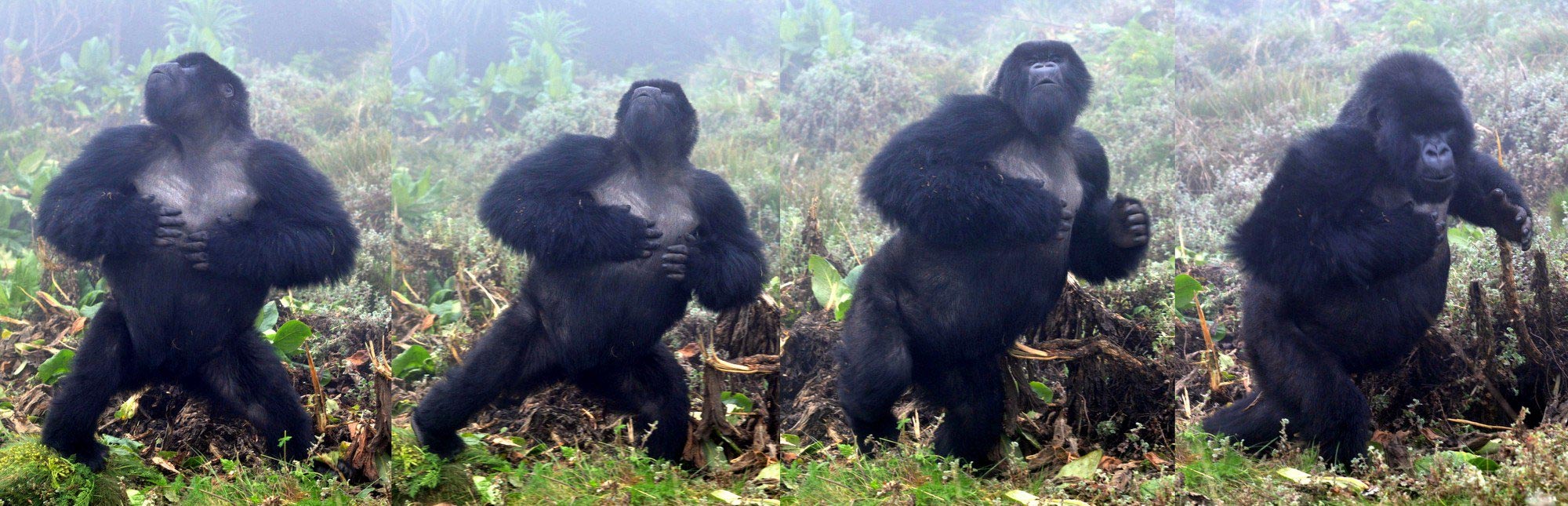
    Male Gorilla Chest Beating
    A male gorilla chest beating. Credit: Jordi Galbany / Dian Fossey Gorilla Fund

    The Chest Beats Given by Adult Male Gorillas Reliably Indicate Their Body Size

    Gorillas usually stand bipedally and rapidly beat their chests with cupped hands in rapid succession. Chest beating is a unique sound because is it not a vocalization, like frogs croaking, but rather it is a form of gestural communication that can be both heard and seen. The emanating drumming sound can be heard over one kilometer (3,300 feet) away. The presumed function of gorilla chest beats is to attract females and intimidate rival males.

    Researchers recorded chest beats and used a technique called photogrammetry to non-invasively measure the body size of adult male wild mountain gorillas monitored by the Dian Fossey Gorilla Fund in Volcanoes National Park, Rwanda. They found that larger males emitted chest beats with lower peak frequencies than smaller ones. In other words, chest beats conveyed information regarding the body size of the chest beater.
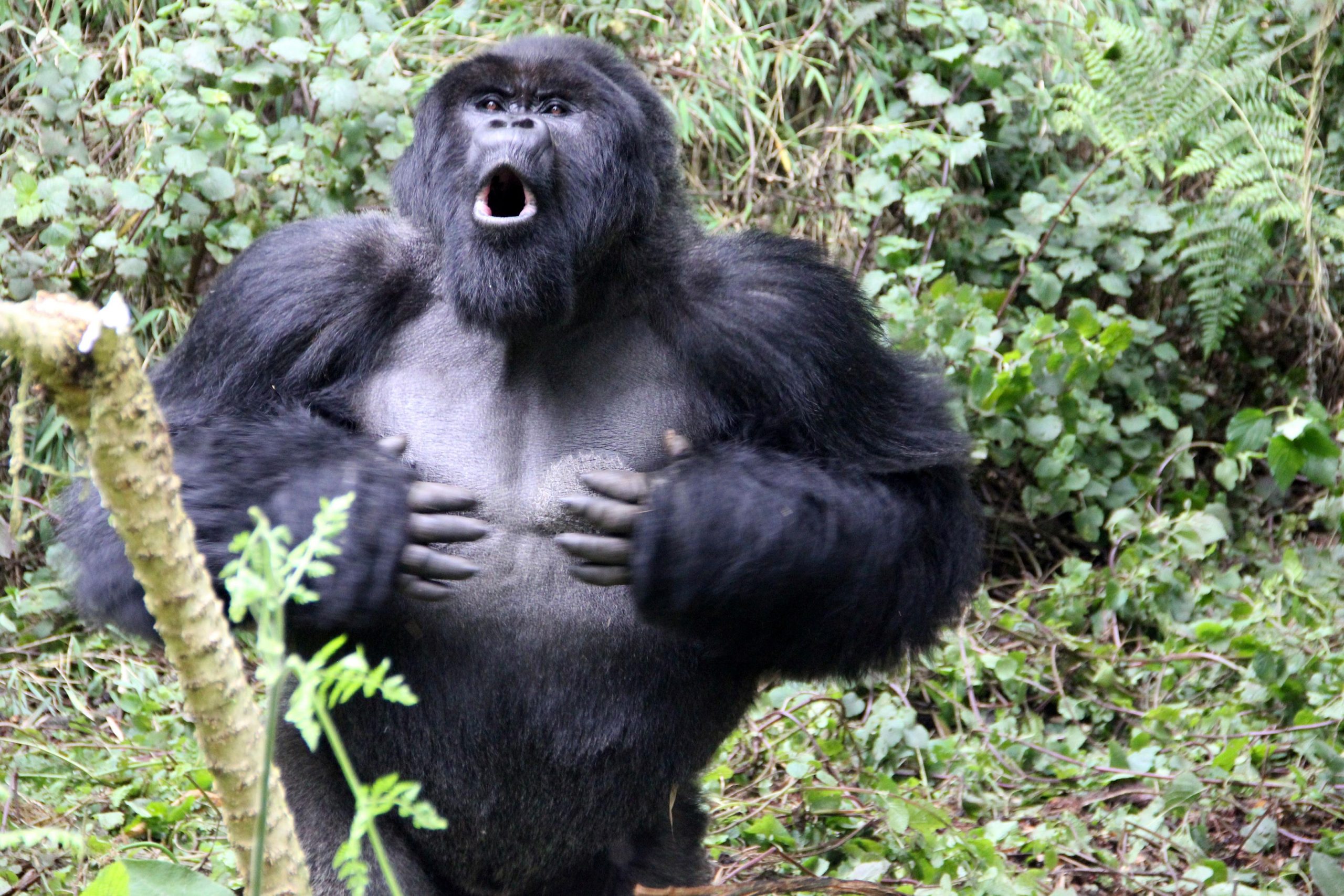
    Silverback Gorilla Chest Beating
    Silverback chest beating. Credit: Dian Fossey Gorilla Fund

    “The gorilla chest beat is one of those iconic sounds from the animal kingdom, so it is great that we have been able to show that body size is encoded in these spectacular displays,” says Edward Wright, the first author of the study from the Max Planck Institute for Evolutionary Anthropology in Leipzig, Germany.

    Size Signals and Dominance in Social Hierarchies

    Body size is a key attribute in many animals as it often reflects fighting or competitive ability. Previous research by this team showed that larger males were more socially dominant and more successful in terms of reproduction than smaller males.

    “Conducting this study was challenging because the chest beats are relatively short in duration and we needed to be in the right place at the right time to obtain the sound recordings, as well as staying clear from these large powerful animals,” says co-author Eric Ndayishimiye, research assistant with the Dian Fossey Gorilla Fund.
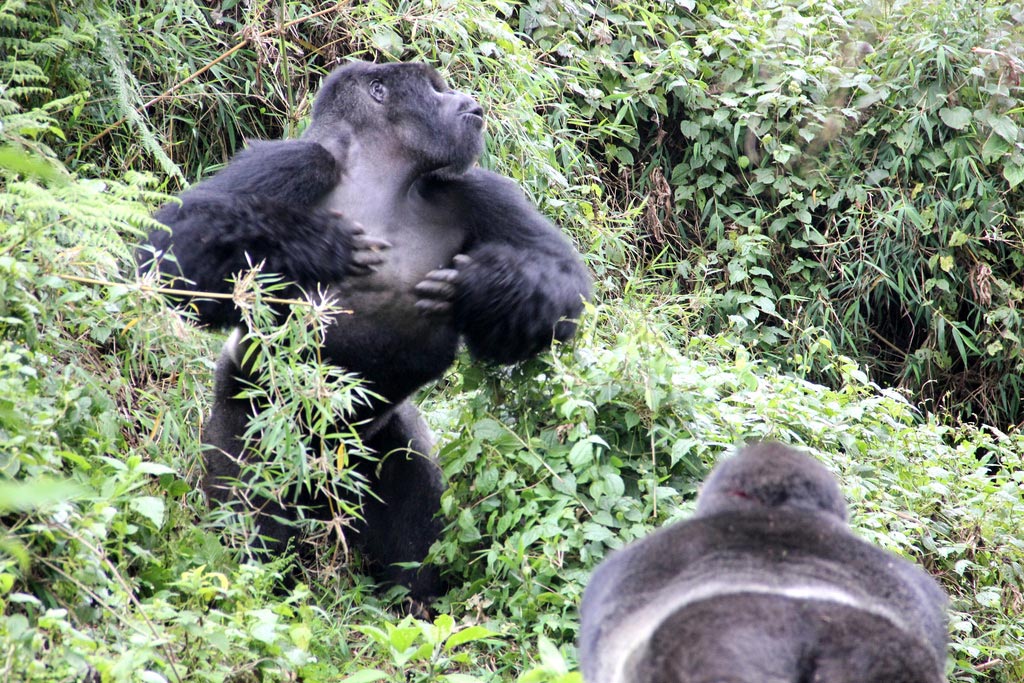
    Silverback Chest Beating
    Silverback chest beating during an inter-group interaction. Credit: Dian Fossey Gorilla Fund

    Rivals, Mates, and Chest Beat Intelligence

    Rival males are likely to attend to the body size information transmitted in chest beats as it allows them to assess the competitive ability of the chest beater, this will help them decide whether to initiate, escalate, or retreat in aggressive contests with them. Females on the other hand, are likely to use this information in their choice of potential mates.

    Interestingly, the researchers also found a great deal of variation among males in both the number of beats comprised in a chest beat as well as the duration of the chest beat. “This hints at the possibility that chest beats may have individual signatures, but further study is needed to test this,” says Wright.

    Reference: “Chest beats as an honest signal of body size in male mountain gorillas (Gorilla beringei beringei)” by Edward Wright, Sven Grawunder, Eric Ndayishimiye, Jordi Galbany, Shannon C. McFarlin, Tara S. Stoinski and Martha M. Robbins, 8 April 2021, Scientific Reports.
    DOI: 10.1038/s41598-021-86261-8

    Never miss a breakthrough: Join the SciTechDaily newsletter.
    Follow us on Google and Google News.

    Evolution Gorillas Max Planck Institute Zoology
    Share. Facebook Twitter Pinterest LinkedIn Email Reddit

    Related Articles

    Mountain Gorillas May Use Chest Beats To Communicate Information About Themselves

    Like Humans, Chimpanzees Can Suffer for Life if They Lose Their Mother Before Adulthood

    Mountain Gorillas That Live in Large Groups Have Less Diverse Social Relationships

    Scientists Discover Oldest Directly Dated Homo Sapiens Fossil Outside of Africa

    Scientists Reveal the Evolution of Modern Human Brain Shape

    Princeton Study Finds That New Species Can Develop in as Little as 2 Generations

    Temperature Variability Across the World Alters the Ecological Impacts of Seasons

    Hybridization Leads to New Pathogen Species

    Marine Worm Thrives on Steady Diet of Deadly Poisons

    Leave A Reply Cancel Reply

    • Facebook
    • Twitter
    • Pinterest
    • YouTube

    Don't Miss a Discovery

    Subscribe for the Latest in Science & Tech!

    Trending News

    The Strange “Spacetime Crystal” That Can Suddenly Turn Into a Black Hole

    The Surprising Way Asteroids May Have Helped Life Begin on Earth

    Vast Hidden Structure Discovered Under Miles of Ice in East Antarctica

    A Surprising Discovery Suggests Autism Is Not One Condition

    New Alzheimer’s Discovery Could Change How Scientists Fight the Disease

    Yale Discovery Overturns Long-Held “Evolutionary Dead End” Theory

    UCLA Scientists Uncover a “Hidden Weakness” in Some of the World’s Deadliest Cancers

    Humpback Whale Stuns Scientists With 15,000 Kilometer Journey Across Oceans

    Follow SciTechDaily
    • Facebook
    • Twitter
    • YouTube
    • Pinterest
    • Newsletter
    • RSS
    SciTech News
    • Biology News
    • Chemistry News
    • Earth News
    • Health News
    • Physics News
    • Science News
    • Space News
    • Technology News
    Recent Posts
    • Meet the Artemis III Astronauts Preparing for NASA’s Boldest Moon Mission Yet
    • Scientists Develop a New Way To Measure Gravitational Waves in the Expanding Universe
    • MIT’s New Dual-Mode Rocket System Could Send Tiny Satellites to Mars
    • Scientists Discover a Biological Clock Unlike Anything Seen Before
    • This “Zombie” Sea Creature Keeps Growing After Being Cut Apart
    Copyright © 1998 - 2026 SciTechDaily. All Rights Reserved.
    • Science News
    • About
    • Contact
    • Editorial Board
    • Privacy Policy
    • Terms of Use

    Type above and press Enter to search. Press Esc to cancel.