
Close Menu
    Facebook X (Twitter) Instagram
    SciTechDaily
    • Biology
    • Chemistry
    • Earth
    • Health
    • Physics
    • Science
    • Space
    • Technology
    Facebook X (Twitter) Pinterest YouTube RSS
    SciTechDaily
    Home»Biology»Chill To Kill: How Cooling Turns Prey Bacteria Into Predators
    Biology

    Chill To Kill: How Cooling Turns Prey Bacteria Into Predators

    By PLOSFebruary 8, 2024No Comments3 Mins Read
    Facebook Twitter Pinterest Telegram LinkedIn WhatsApp Email Reddit
    Share
    Facebook Twitter LinkedIn Pinterest Telegram Email Reddit
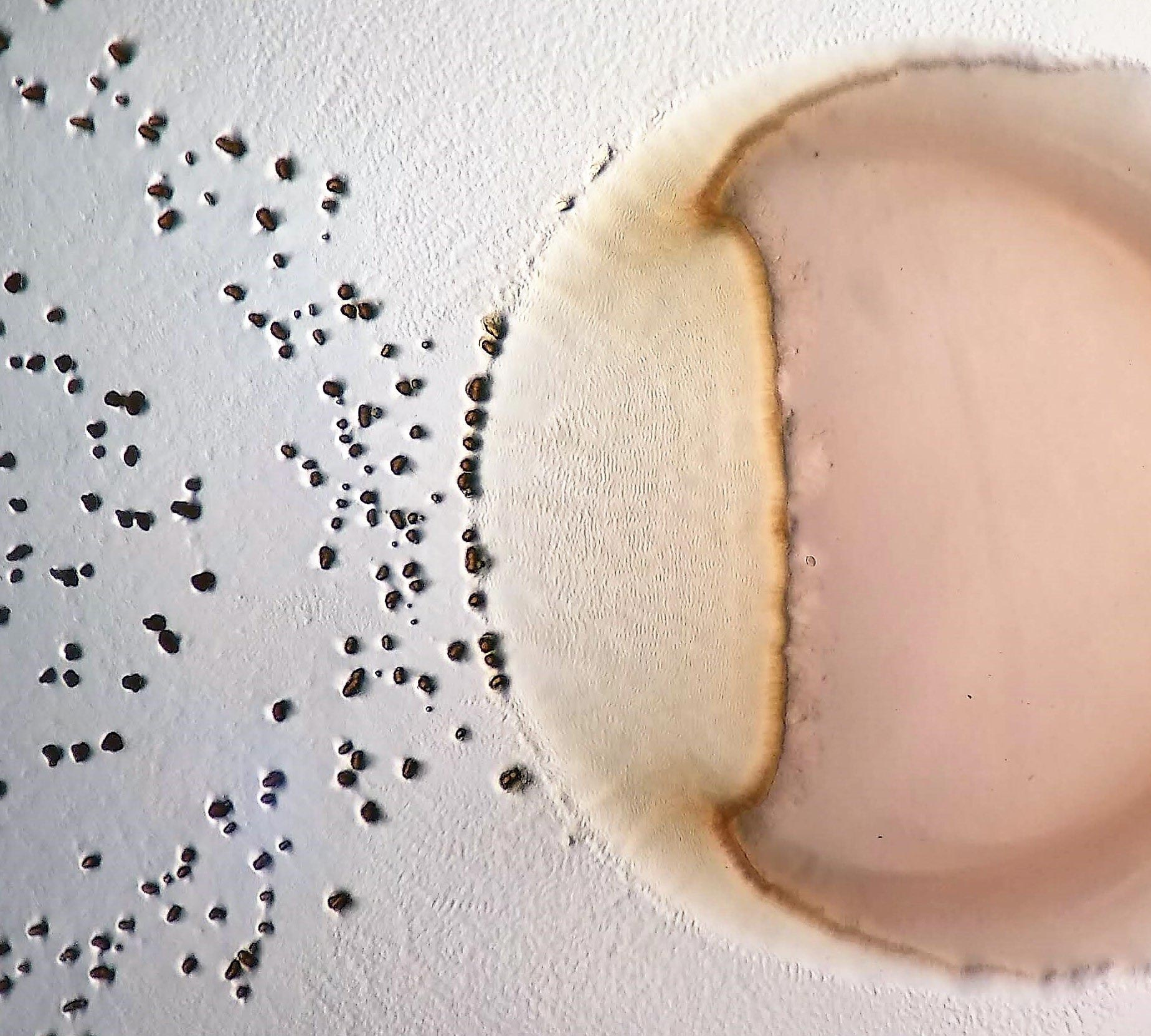
    Predatory Bacterium Myxococcus xanthus Slaughtering Its Prey
    The predatory bacterium Myxococcus xanthus (left) slaughtering its prey (right). Black dots are predator aggregates called fruiting bodies and the rippling waves in the contact zone are characteristic of predatory interactions. Credit: Nicola Mayrhofer (CC-BY 4.0)

    New study demonstrates that environmental changes can flip microbial predator-prey hierarchy.

    In a new study, two species of bacteria grown in a lab reversed their predator-prey relationship after one species was grown at a lower temperature. Marie Vasse of MIVEGEC, France, and colleagues published these findings on January 23rd in the open access journal PLOS Biology.

    Ecological Influences on Predator-Prey Interactions

    Prior research has shown that ecological context can influence predator-prey relationships. For instance, similarity or contrast between background color and coloration of a prey species can influence how easily it is detected by predators. In addition, predator-prey relationships can sometimes switch, as is the case for two crustacean species that mutually prey on each other, where a change in surrounding salinity reverses which species dominates. However, there are few other known examples of such switching in response to non-biological ecological changes.

    Laboratory Experimentation and Findings

    Some bacteria prey on others, and ecological context can influence predation efficiency. Building on that knowledge, Vasse and colleagues conducted several laboratory experiments to test how temperature might influence the predator-prey relationship between the bacterial species Myxococcus xanthus and Pseudomonas fluorescens.

    They found that, when P. fluorescens was grown in a dish at 32 degrees Celsius and then exposed to M. xanthus, M. xanthus acted as the predator and extensively killed P. fluorescens. However, after P. fluorescens was grown at 22 degrees Celsius, the predator-prey relationship switched, with P. fluorescens killing and obtaining nutrients from M. xanthus for its continued growth.

    The researchers conducted further experiments to better understand the mechanism by which growth at chillier temperatures may have reversed the predator-prey roles. They homed in on a non-protein substance released by P. fluorescens that is lethal to M. xanthus, the production of which appears to be influenced by temperature.

    The Importance of Historical Context

    The researchers say their findings suggest that many forms of microbe-microbe killing not traditionally associated with predation – the consumption of a killed organism by its killer – may in fact result in it. They also note that, in this study, the temperature at which P. fluorescens grew before meeting M. xanthus could determine which would be predator and which prey when the two species met later, highlighting the importance of considering historical context when evaluating present predator-prey relationships.

    Implications and Future Research

    This study and follow-up research could aid understanding of both natural ecology and practical applications, such as optimizing the use of some microbes to control others.

    The authors add, “We find it fascinating that a relatively small change in just one ecological factor can determine who kills and eats whom in microbial predation. We suspect that microbe-microbe killing results in predation far more often than has previously been appreciated.”

    Reference: “Killer prey: Ecology reverses bacterial predation” by Marie Vasse, Francesca Fiegna, Ben Kriesel and Gregory J. Velicer, 23 January 2024, PLOS Biology.
    DOI: 10.1371/journal.pbio.3002454

    Never miss a breakthrough: Join the SciTechDaily newsletter.
    Follow us on Google and Google News.

    Bacteria Microbiology PLOS Predator
    Share. Facebook Twitter Pinterest LinkedIn Email Reddit

    Related Articles

    The Silent Warriors: Predatory Bacteria Battling Superbugs

    Bacteria Can Be Spatially Excluded from the Exchange of Amino Acids

    Scientists Pinpoint Lowest Temperature Limit for Life on Earth

    Study Reveals How Deadly Bacteria Trick the Immune System

    Virus Has the Potential To Stop Acne

    Microbiota in Pregnant Women Looks Like Those of People with Diabetes

    Plants Choose and Make Use of the Bacteria They Allow into Their Roots

    Superoxide Reacts With Manganese to Aid in Environmental Cleanup

    Widespread Presence of Antibiotic Resistant Bacteria in Agricultural Soils

    Leave A Reply Cancel Reply

    • Facebook
    • Twitter
    • Pinterest
    • YouTube

    Don't Miss a Discovery

    Subscribe for the Latest in Science & Tech!

    Trending News

    Scientists Warn That This Common Pet Fish Can Wreck Entire Ecosystems

    Scientists Make Breakthrough in Turning Plastic Trash Into Clean Fuel Using Sunlight

    This Popular Supplement May Interfere With Cancer Treatment, Scientists Warn

    Scientists Finally Solved One of Water’s Biggest Mysteries

    Could This New Weight-Loss Pill Disrupt the Entire Market? Here’s What You Should Know About Orforglipron

    Earth’s Crust Is Tearing Open in Africa, and It Could Form a New Ocean

    Breakthrough Bowel Cancer Trial Leaves Patients Cancer-Free for Nearly 3 Years

    Natural Compound Shows Powerful Potential Against Rheumatoid Arthritis

    Follow SciTechDaily
    • Facebook
    • Twitter
    • YouTube
    • Pinterest
    • Newsletter
    • RSS
    SciTech News
    • Biology News
    • Chemistry News
    • Earth News
    • Health News
    • Physics News
    • Science News
    • Space News
    • Technology News
    Recent Posts
    • Ancient Roman Ship Coating Reveals Secrets Hidden for 2,200 Years
    • Enormous Prehistoric Insects Puzzle Scientists
    • College Student Identifies Bizarre New Carnivorous Dinosaur Three Times Older Than T. rex
    • The Most Effective Knee Arthritis Treatments Aren’t What You Expect
    • Scientists Develop Bioengineered Chewing Gum That Could Help Fight Oral Cancer
    Copyright © 1998 - 2026 SciTechDaily. All Rights Reserved.
    • Science News
    • About
    • Contact
    • Editorial Board
    • Privacy Policy
    • Terms of Use

    Type above and press Enter to search. Press Esc to cancel.