
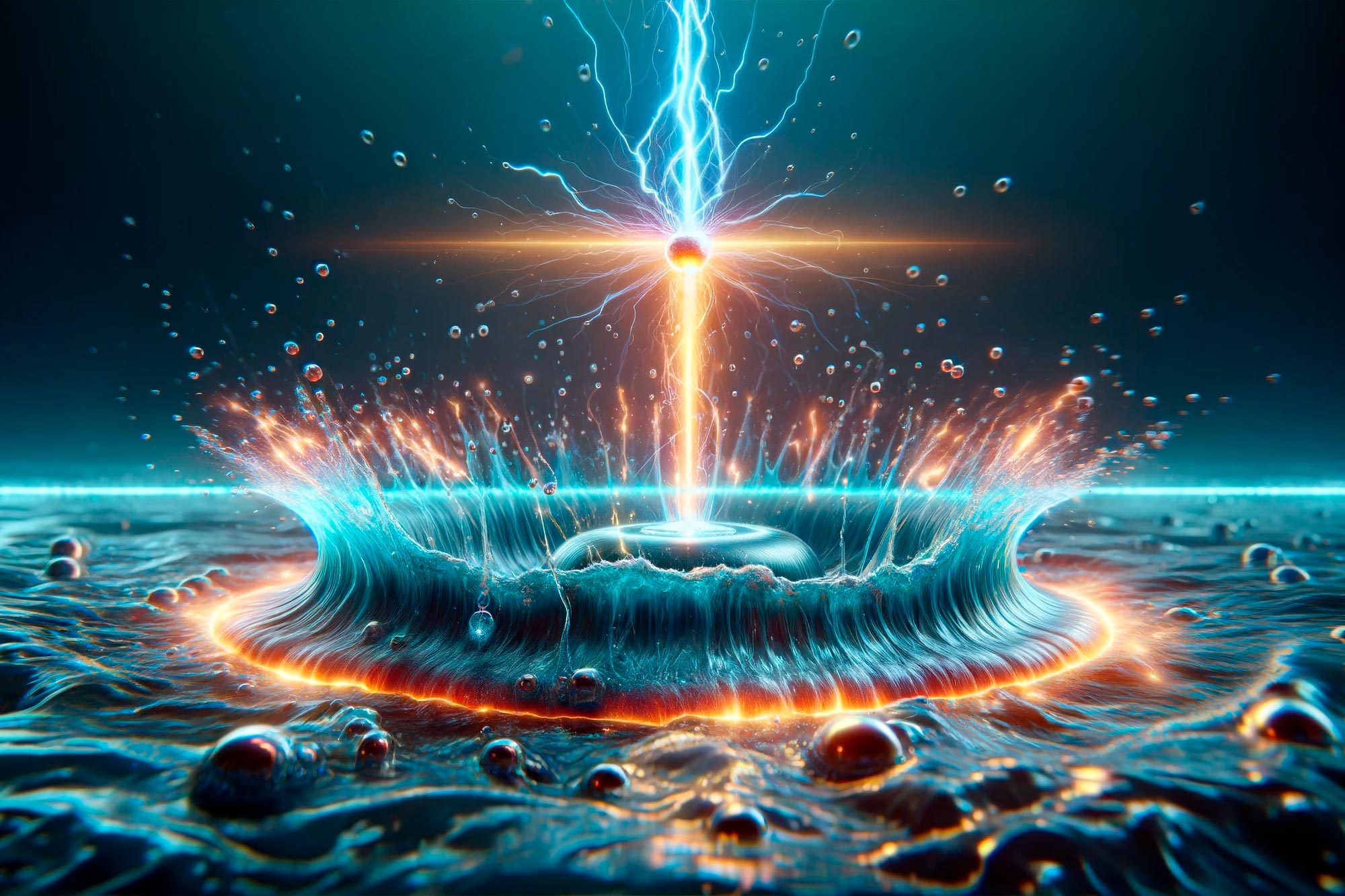
Two UCO research groups design a plasma (an ionized gas) reactor maintained by microwaves that makes it possible to decontaminate waters with high concentrations of dye.
Plasma is an ionized gas — that is, a gas containing electrons, ions, atoms, molecules, radicals, and photons. It is often called the fourth state of matter and, surprisingly, it permeates everything. Plasmas, which are artificially generated by transmitting energy to a gas, are found in the fluorescent tubes that light kitchens, but they have also allowed mobiles to become smaller and smaller.
Plasma in Technology
Plasma has been a veritable revolution in the world of technology. Before, to engrave the circuits on the silicon plates used in electronic devices like mobile phones, it was necessary to use polluting chemical products. Now, the use of plasma has made it possible to do this more cleanly and precisely, it being possible to make the slits smaller and smaller, and, with them, the devices.
Plasma’s Environmental Applications
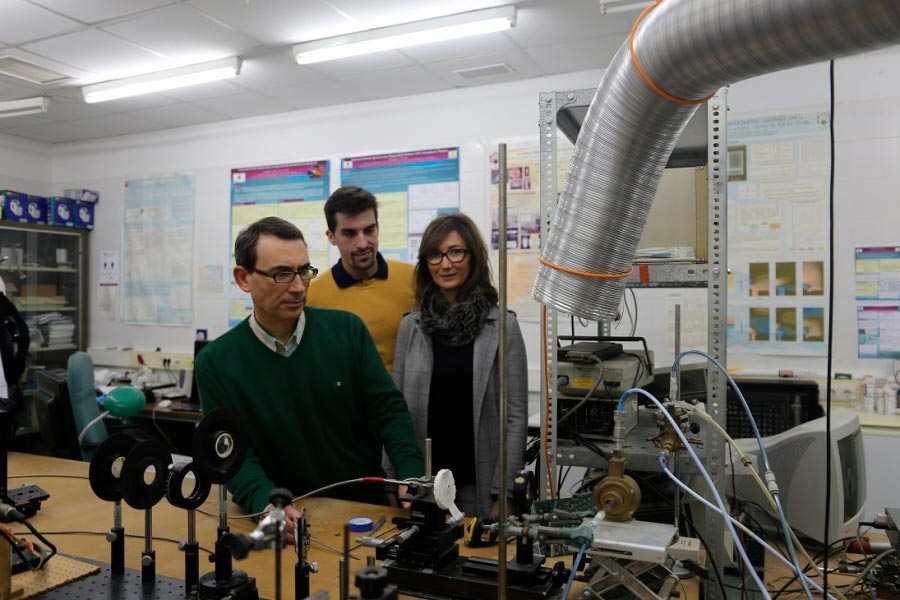
But plasma has other applications too, such as water treatment. The FQM-136 Physics of Plasmas and FQM-346 Organic Catalysis and Nanostructured Materials groups at the University of Cordoba collaborated on a research study whose purpose was the elimination of contaminants present in water by applying plasma to promote chemical processes.
With the aim of tackling the problem of the increasing presence of organic pollutants in waters, such as dyes and other compounds from agricultural and industrial activity in waters that destabilize ecosystems, these researchers opted for the application of plasma.
Breakthrough in Water Decontamination
In 2017 they demonstrated, for the first time, that the argon plasmas induced by microwaves open to the air, when acting on water, generated in it reactive species containing oxygen and nitrogen (such as hydroxyl radicals, hydronous peroxide, nitrogen radicals) capable of decontaminating it. Now the researchers Juan Amaro Gahete, Francisco J. Romero Salguero and María C. García have managed to design a reactor of this type of plasma and to significantly increase the amounts of these active species generated in water, thus making possible the destruction of high concentrations of dyes (in this case, methylene blue) in just minutes.
Innovations in Plasma Reactor Design
This was achieved by altering the design of the surfatron, the metal device that mixes the energy from a microwave generator with the plasma to maintain it. “What we’ve done is to place a small piece of silicon in the quartz discharge tube, allowing a different plasma to be generated, one that is not filamentary and is more efficient at creating active species when interacting with water,” explained Professor María C. García. The aforementioned plasma components, when interacting with water, generate oxidizing species capable of degrading organic compounds and killing microorganisms, which allows this plasma reactor to be used in applications related to water remediation.
This new configuration, therefore, expands the applicability of this type of plasmas. “The design completely changes the configuration of the electromagnetic field generated by the surfatron to create the plasma, resulting in plasma with different and more efficient properties, also eliminating the problem of filamentation (the division of the plasma column into many filaments), which destabilizes it,” explained Professor García.
The Future of Plasma Decontamination
And then…decontamination. “Those oxidizing species generated due to the action of plasma are very reactive and make it possible to destroy the organic matter inside the water,” continued Professor Francisco J. Romero. For this to happen, the plasma is not introduced into the water. Rather it is made to act remotely, so that between the water and the plasma there is a zone of air where numerous reactions occur due to collisions between the excited species and the molecules of oxygen, nitrogen and water vapor, and “reactive species that diffuse into the liquid and end up with the contaminants” are generated.
The decontaminating potential of this type of plasma, generated with this new design “has been tested to reduce high concentrations of methylene blue dye in water, with very efficient results in terms of energy, achieving the complete elimination of the dye at reduced treatment times,” said researcher Juan Amaro.
Thus, with this work progress is made on one of the applications of plasma, that “fourth state of matter” created by providing a stable gas with energy and converting it into an ionized gas, with this being applicable to almost everything: manufacturing microchips, disinfecting surfaces, healing wounds, depositing anti-reflective coatings on glasses, improving seed germination, recovering waste, activating the surface of plastics to achieve better paint adhesion, and countless other applications.
Reference: “Modified surfatron device to improve microwave-plasma-assisted generation of RONS and methylene blue degradation in water” by Juan Amaro-Gahete, Francisco J. Romero-Salguero and Maria C. Garcia, 29 November 2023, Chemosphere.
DOI: 10.1016/j.chemosphere.2023.140820
Never miss a breakthrough: Join the SciTechDaily newsletter.
Follow us on Google and Google News.
1 Comment
That’s really cool. I don’t understand. It’s oxidizing the dye? Could it create hazardous chemicals, the way chlorine oxidizing organics creates chloramides and chloramines? Will it fit in my hot tub?