
According to a new paper, ancient Maya reservoirs, which used aquatic plants to filter and clean the water, “can serve as archetypes for natural, sustainable water systems to address future water needs.”
The Maya built and maintained reservoirs that were in use for more than 1,000 years, wrote University of Illinois Urbana-Champaign anthropology professor Lisa Lucero in a perspective in the Proceedings of the National Academy of Sciences. These reservoirs provided potable water for thousands to tens of thousands of people in cities during the annual, five-month dry season and in periods of prolonged drought.
“Most major southern lowland Maya cities emerged in areas that lacked surface water but had great agricultural soils,” Lucero said. “They compensated by constructing reservoir systems that started small and grew in size and complexity.”
Innovative Water Filtration Techniques
Over time, the Maya built canals, dams, sluices, and berms to direct, store, and transport water. They used quartz sand for water filtration, sometimes importing it from great distances to massive cities like Tikal in what is now northern Guatemala. A sediment core from one of Tikal’s reservoirs also found that zeolite sand had been used in its construction. Previous studies have shown that this volcanic sand can filter impurities and disease-causing microbes from water. The zeolite also would have been imported from sources about 18 miles (30 kilometers) away.
“Tikal’s reservoirs could hold more than 900,000 cubic meters of water,” Lucero wrote. Estimates suggest that up to 80,000 people lived in the city and its environs in the Late Classic period, roughly 600 to 800 C.E. The reservoirs kept people and crops hydrated during the dry season, Lucero said.
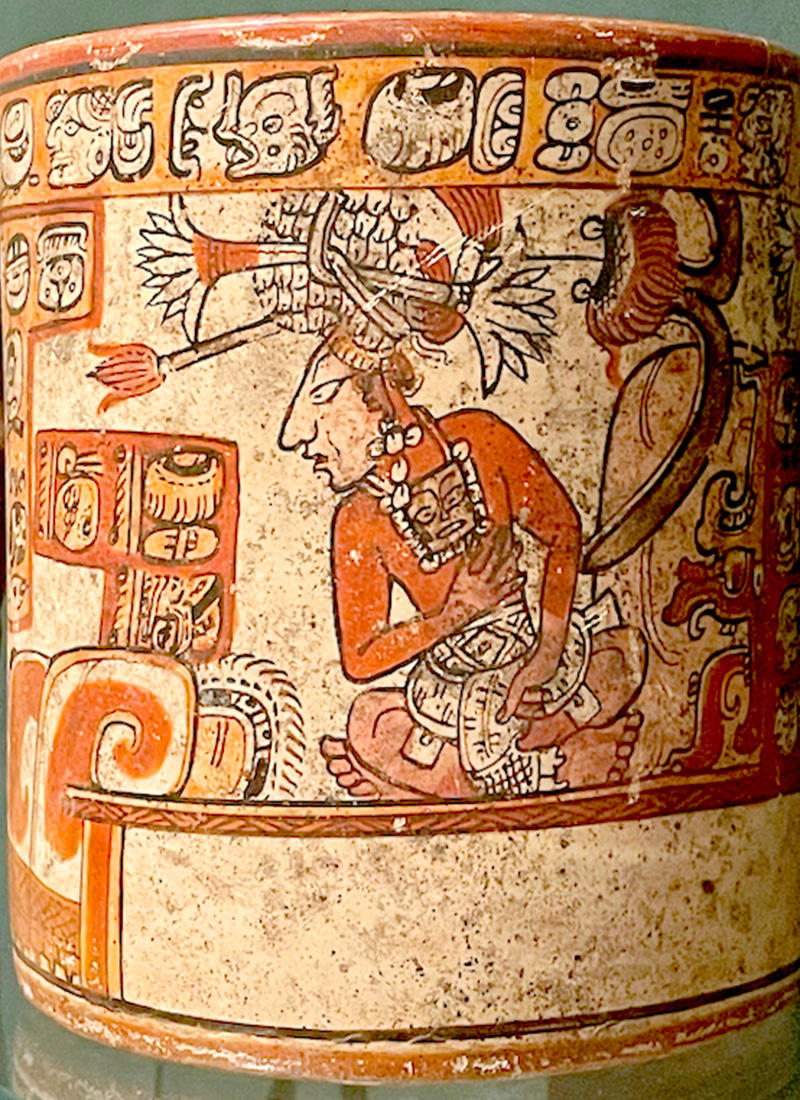
Maya royalty got much of their status from their ability to provide water to the populace.
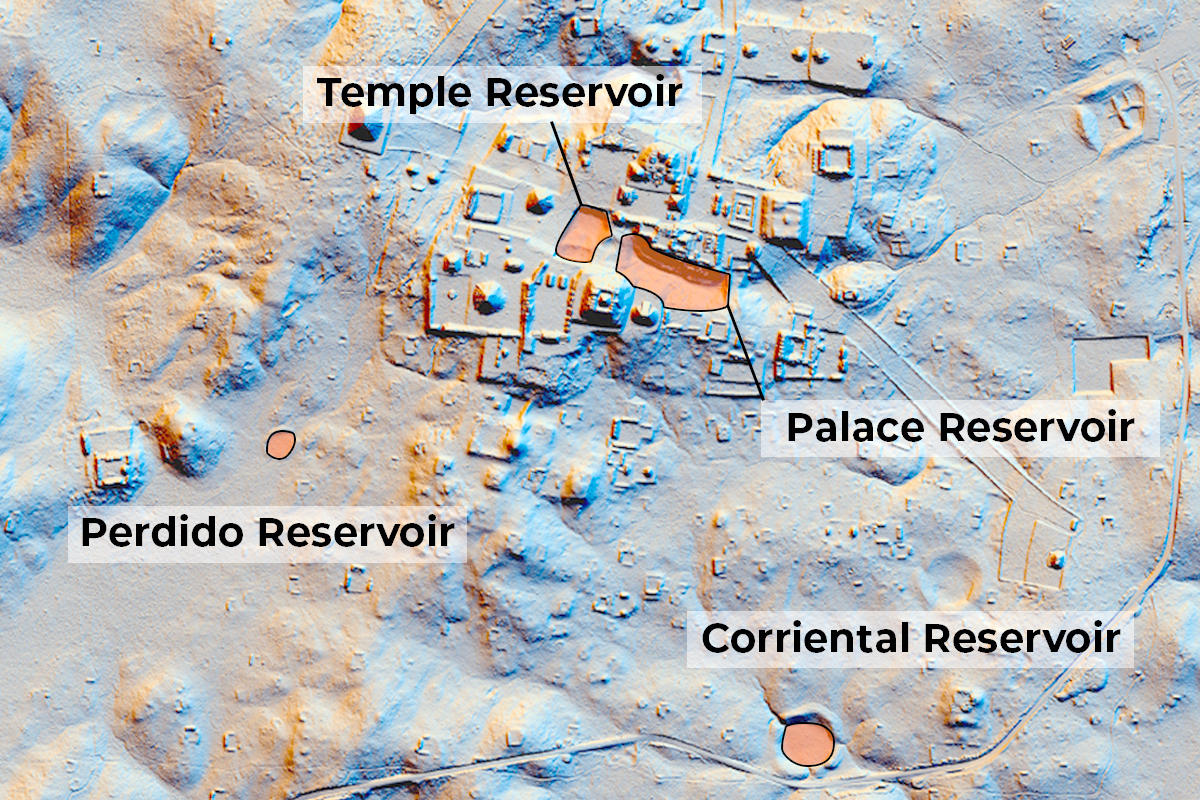
“Clean water and political power were inextricably linked – as demonstrated by the fact that the largest reservoirs were built near palaces and temples,” Lucero wrote. The kings also performed ceremonies to gain the favor of ancestors and the rain god, Chahk.
Aquatic Plants in Maya Reservoirs
A key challenge was to keep standing water in reservoirs from becoming stagnant and undrinkable, and for that, the Maya likely relied on aquatic plants, many of which still populate Central American wetlands today, Lucero said. These include cattails, sedges, reeds, and others. Some of these plants have been identified in sediment cores from Maya reservoirs.
These plants filtered the water, reducing murkiness and absorbing nitrogen and phosphorous, Lucero said.
“The Maya would have had to dredge every several years… (and) harvest and replenish aquatic plants,” she wrote. The nutrient-laden soils and plants removed from reservoirs could then be used to fertilize urban fields and gardens.
Symbolism and Practicality of Water Lilies
The most iconic aquatic plant associated with the ancient Maya is the water lily, Nymphaea ampla, which thrives only in clean water, Lucero said. Its pollen has been found in sediment cores from several Maya reservoirs. Water lilies symbolized “Classic Maya kingship,” Lucero wrote.
“The kings even donned headdresses adorned with the flowers and are depicted with water lilies in Maya art,” Lucero said.
“Water lilies do not tolerate acidic conditions or too much calcium such as limestone or high concentrations of certain minerals like iron and manganese,” she wrote.

To keep water lilies alive, water managers would have had to line the reservoirs with clay, Lucero said. A layer of sediment would be needed for plants’ roots. In turn, the water lilies, trees, and shrubs planted near the reservoirs shaded the water, cooling it and inhibiting the growth of algae.
“The Maya generally did not build residences near reservoir edges, so contamination seeping through the karstic terrain would not have been an issue,” Lucero wrote.
Lessons from Maya Reservoirs for Modern Times
The evidence gathered from several southern lowland cities indicates that, as constructed wetlands, Maya reservoirs supplied potable water to people for more than 1,000 years, failing only when the severest droughts took hold in the region between 800 and 900 C.E., Lucero said. She notes that current climate trends will require many of the same approaches the Maya employed, including the use of aquatic plants to improve and maintain water quality naturally.
“Constructed wetlands provide many advantages over conventional wastewater treatment systems,” she wrote. “They provide an economical, low technology, less expensive and high energy-saving treatment technology.”
In addition to providing clean water, constructed wetlands also support aquatic animals and can be a source of nutrients to replenish agricultural soils, she wrote. “The next step moving forward is to combine our respective expertise and implement the lessons embodied in ancient Maya reservoirs in conjunction with what is currently known about constructed wetlands,” she wrote.
Reference: “Ancient Maya reservoirs, constructed wetlands, and future water needs” by Lisa J. Lucero, 9 October 2023, Proceedings of the National Academy of Sciences.
DOI: 10.1073/pnas.2306870120
Never miss a breakthrough: Join the SciTechDaily newsletter.
Follow us on Google and Google News.