
Scientists share analysis of first fresh samples from the moon in more than 40 years.
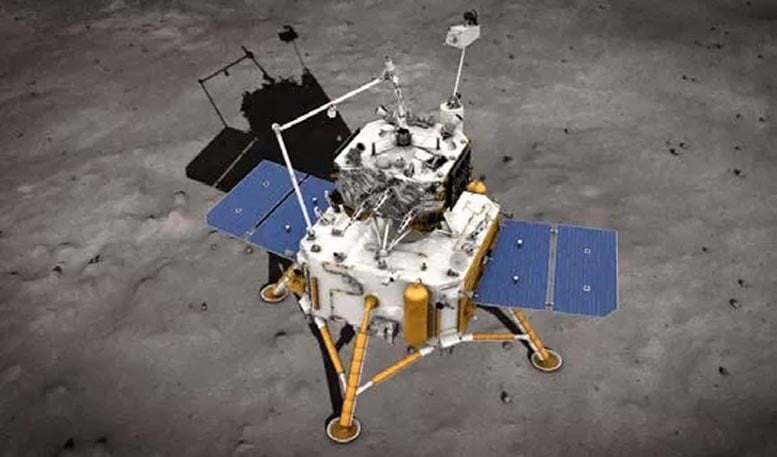
A lunar probe launched by the Chinese space agency recently brought back the first fresh samples of rock and debris from the moon in more than 40 years. Now an international team of scientists — including an expert from Washington University in St. Louis — has determined the age of these moon rocks at close to 1.97 billion years old.
“It is the perfect sample to close a 2-billion-year gap,” said Brad Jolliff, the Scott Rudolph Professor of Earth and Planetary Sciences in Arts & Sciences and director of the university’s McDonnell Center for the Space Sciences. Jolliff is a U.S.-based co-author of an analysis of the new moon rocks led by the Chinese Academy of Geological Sciences, published on October 7, 2021, in the journal Science.
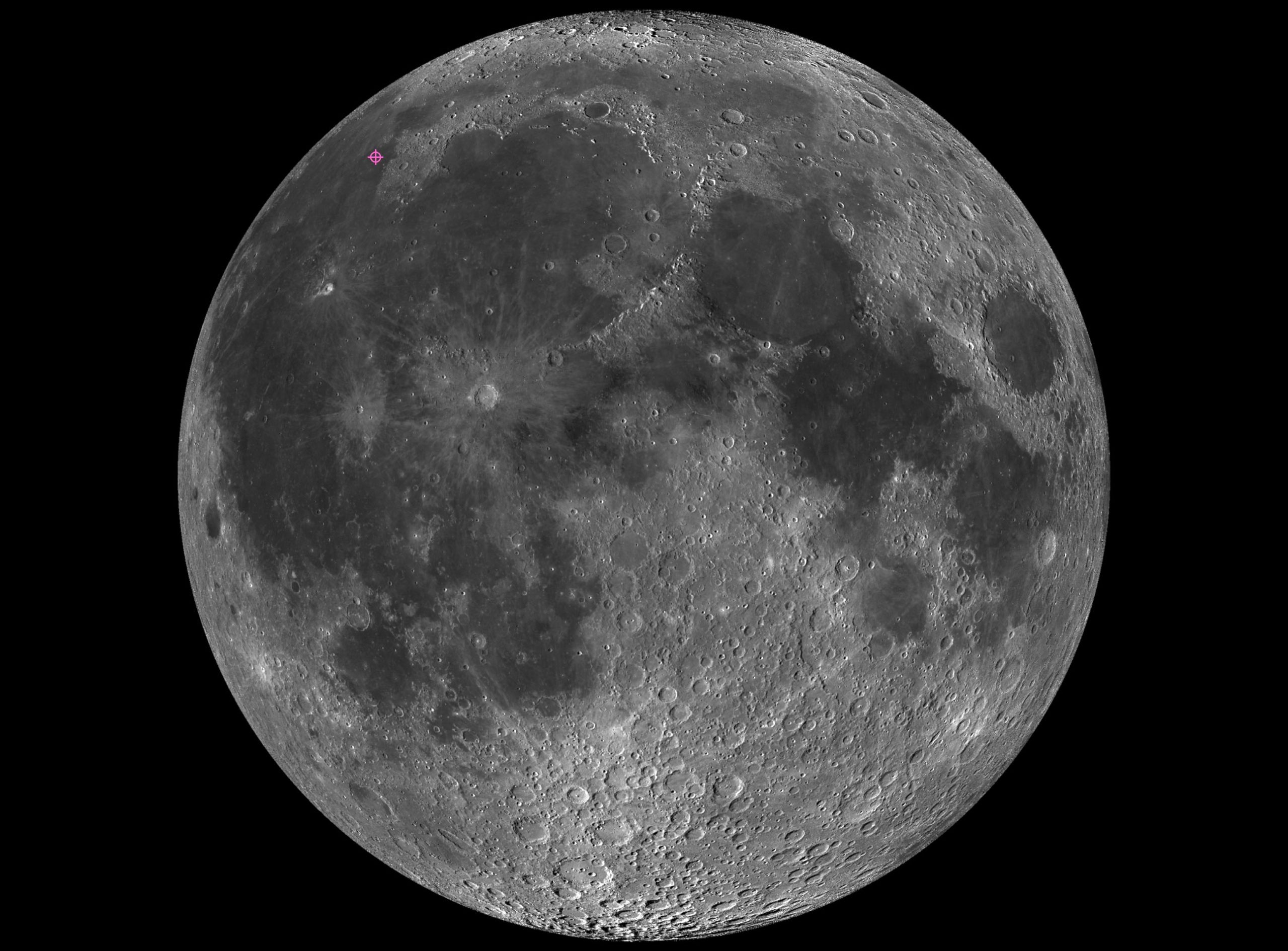
The age determination is among the first scientific results reported from the successful Chang’e-5 mission, which was designed to collect and return to Earth rocks from some of the youngest volcanic surfaces on the moon.
A Window Into Planetary History
The gap that Jolliff references is important not only for studying the moon, but also for studying other rocky planets in the solar system.
As a planetary body, the moon itself is about 4.5 billion years old, almost as old as the Earth. But unlike the Earth, the moon doesn’t have the erosive or mountain-building processes that tend to erase craters over the years. Scientists have taken advantage of the moon’s enduring craters to develop methods of estimating the ages of different regions on its surface, based in part on how pocked by craters the area appears to be.
This study shows that the moon rocks returned by Chang’e-5 are only about 2 billion years old. Knowing the age of these rocks with certainty, scientists are now able to more accurately calibrate their important chronology tools, Jolliff said.
“It’s a phenomenal result. In terms of planetary time, that’s a very precise determination.”
Brad Jolliff
“Planetary scientists know that the more craters on a surface, the older it is; the fewer craters, the younger the surface. That’s a nice relative determination,” Jolliff said. “But to put absolute age dates on that, one has to have samples from those surfaces.”
“The Apollo samples gave us a number of surfaces that we were able to date and correlate with crater densities,” Jolliff explained. “This cratering chronology has been extended to other planets — for example, for Mercury and Mars — to say that surfaces with a certain density of craters have a certain age.”
Detailed Lunar Sample Analysis
“In this study, we got a very precise age right around 2 billion years, plus or minus 50 million years,” Jolliff said. “It’s a phenomenal result. In terms of planetary time, that’s a very precise determination. And that’s good enough to distinguish between the different formulations of the chronology.”
Other interesting findings from the study relate to the composition of basalts in the returned samples and what that means for the moon’s volcanic history, Jolliff noted.
The results presented in the Science paper are just the tip of the iceberg, so to speak. Jolliff and colleagues are now sifting through the regolith samples for keys to other significant lunar science issues, such as finding bits and pieces tossed into the Chang’e-5 collection site from distant, young impact craters such as Aristarchus, to possibly determining the ages of these small rocks and the nature of the materials at those other impact sites.
Jolliff has worked with the scientists at the Sensitive High Resolution Ion MicroProbe (SHRIMP) Center in Beijing that led this study, including study co-author Dunyi Liu, for over 15 years. This long-term relationship is possible through a special collaboration agreement that includes Washington University and its Department of Earth and Planetary Sciences, and Shandong University in Weihai, China, with support from Washington University’s McDonnell Center for the Space Sciences.
“The lab in Beijing where the new analyses were done is among the best in the world, and they did a phenomenal job in characterizing and analyzing the volcanic rock samples,” Jolliff said.
“The consortium includes members from China, Australia, the U.S., the U.K. and Sweden,” Jolliff continued. “This is science done in the ideal way: an international collaboration, with free sharing of data and knowledge — and all done in the most collegial way possible. This is diplomacy by science.”
Jolliff is a specialist in mineralogy and provided his expertise for this study of the Chang’e-5 samples. His personal research background is focused on the moon and Mars, the materials that make up their surfaces and what they tell about the planets’ history.
As a member of the Lunar Reconnaissance Orbiter Camera science team and leader of the Washington University team in support of NASA’s Apollo Next Generation Sample Analysis (ANGSA) program, Jolliff investigates the surface of the moon, relating what can be seen from orbit to what is known about the moon through the study of lunar meteorites and Apollo samples — and now, from Chang’e-5 samples.
Reference: “Age and composition of young basalts on the Moon, measured from samples returned by Chang’e-5” by Xiaochao Che, Alexander Nemchin, Dunyi Liu, Tao Long, Chen Wang, Marc D. Norman, Katherine H. Joy, Romain Tartese, James Head, Bradley Jolliff, Joshua F. Snape, Clive R. Neal, Martin J. Whitehouse, Carolyn Crow, Gretchen Benedix, Fred Jourdan, Zhiqing Yang, Chun Yang, Jianhui Liu, Shiwen Xie, Zemin Bao, Runlong Fan, Dapeng Li, Zengsheng Li and Stuart G. Webb, 7 October 2021, Science.
DOI: 10.1126/science.abl7957
Never miss a breakthrough: Join the SciTechDaily newsletter.
Follow us on Google and Google News.