
A team of researchers led by Arizona State University School of Earth and Space Exploration Professor Lindy Elkins-Tanton has provided the first ever direct evidence that extensive coal burning in Siberia is a cause of the Permo-Triassic Extinction, the Earth’s most severe extinction event. The results of their study have been recently published in the journal Geology.
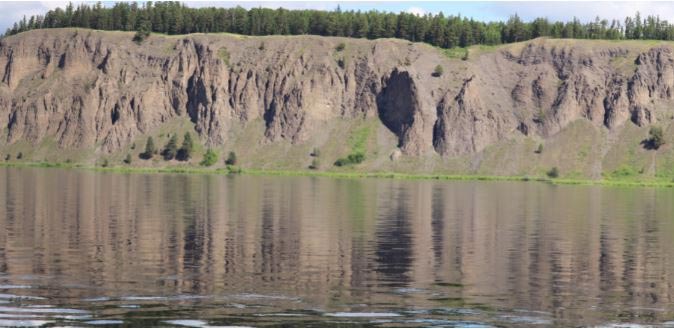
For this study, the international team led by Elkins-Tanton focused on the volcaniclastic rocks created by explosive volcanic eruptions of the Siberian Traps, a region of volcanic rock in Russia. The massive eruptive event that formed the traps is one of the largest known volcanic events in the last 500 million years. The eruptions continued for roughly 2 million years and spanned the Permian-Triassic boundary. Today, the area is covered by about 3 million square miles of basaltic rock.
This is ideal ground for researchers seeking an understanding of the Permo-Triassic extinction event, which affected all life on Earth approximately 252 million years ago. During this event, up to 96% of all marine species and 70% of terrestrial vertebrate species became extinct.
Calculations of sea water temperature indicate that at the peak of the extinction, the Earth underwent lethally hot global warming, in which equatorial ocean temperatures exceeded 104 degrees Fahrenheit. It took millions of years for ecosystems to be re-established and for species to recover.
Among the possible causes of this extinction event, and one of the most long-hypothesized, is that massive burning coal led to catastrophic global warming, which in turn was devastating to life. To search for evidence to support this hypothesis, Elkins-Tanton and her team began looking at the Siberian Traps region, where it was known that the magmas and lavas from volcanic events burned a combination of vegetation and coal.
While samples of volcaniclastics in the region were initially difficult to find, the team eventually discovered a scientific paper describing outcrops near the Angara River.
“We found towering river cliffs of nothing but volcaniclastics, lining the river for hundreds of miles. It was geologically astounding,” Elkins-Tanton said.
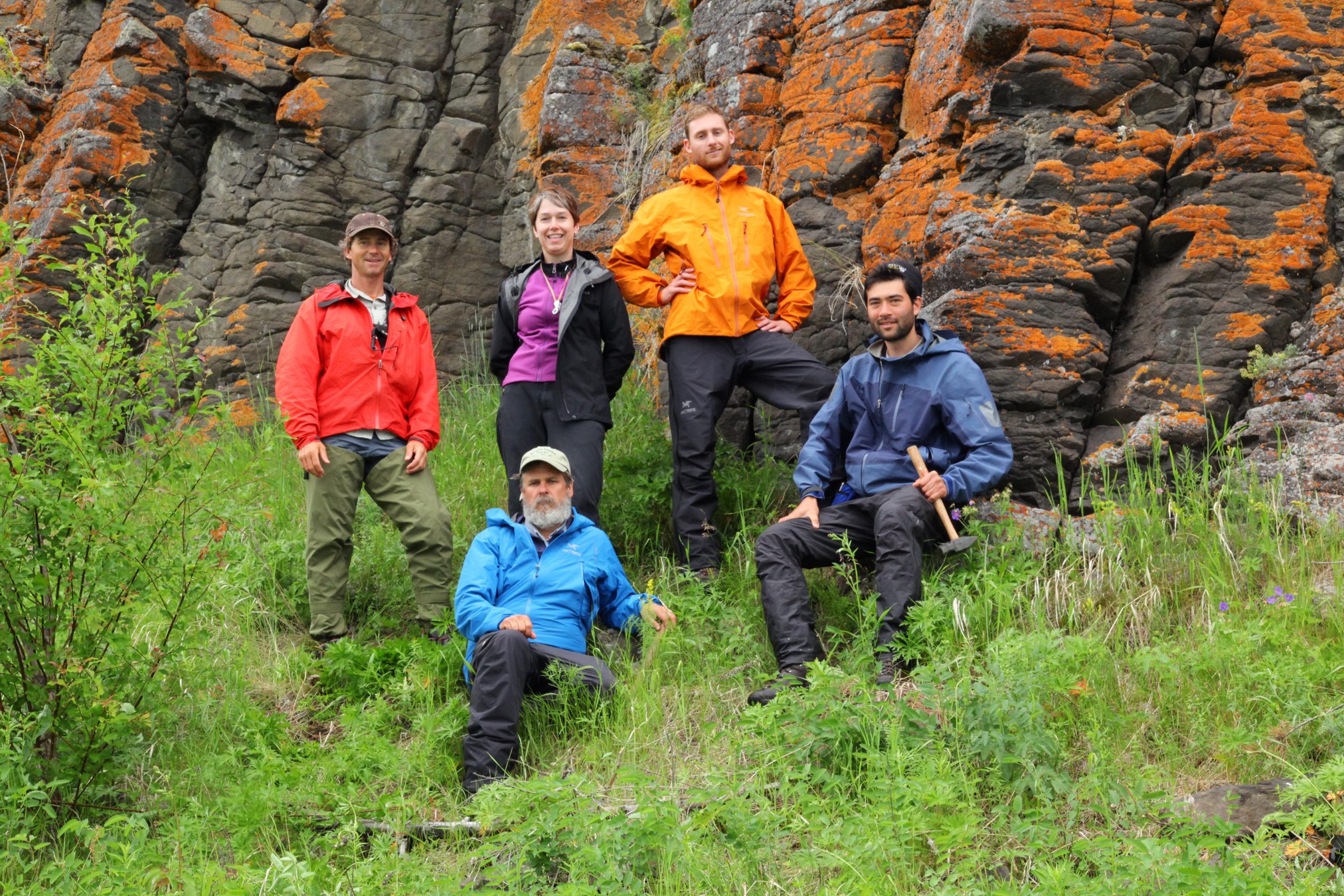
Over six years, the team repeatedly returned to Siberia for field work. They flew to remote towns and were dropped by helicopter either to float down rivers collecting rocks, or to hike across the forests. They ultimately collected over 1,000 pounds of samples, which were shared with a team of 30 scientists from eight different countries.
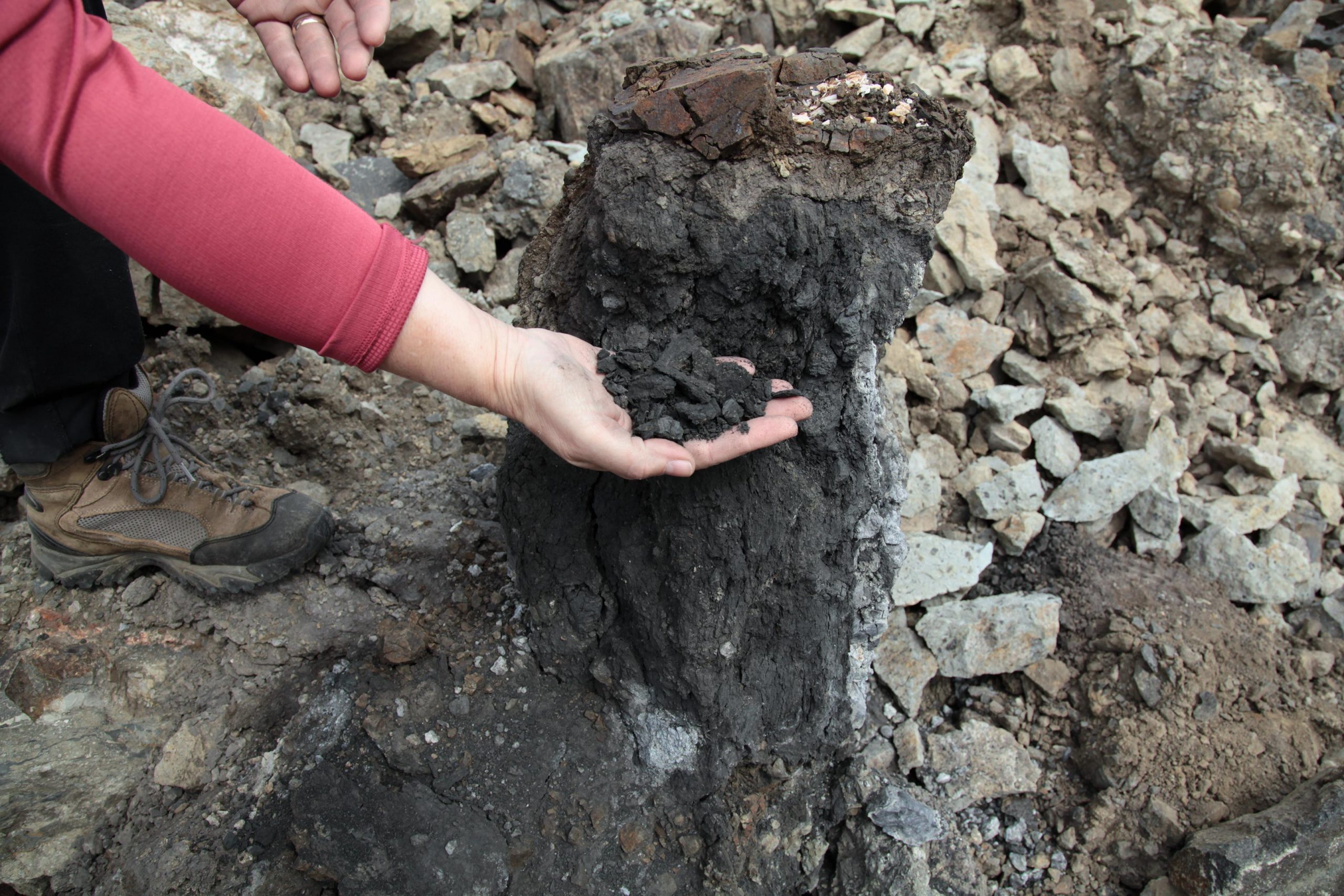
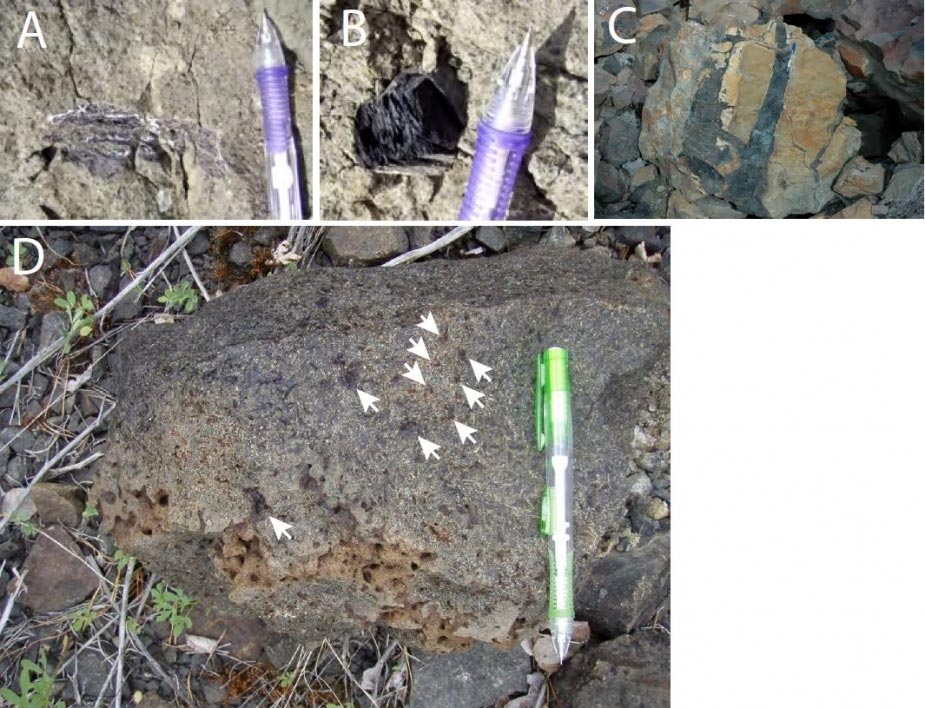
As the samples were analyzed, the team began seeing strange fragments in the volcaniclastics that seemed like burnt wood, and in some cases, burnt coal. Further field work turned up even more sites with charcoal, coal, and even some sticky organic-rich blobs in the rocks.
Elkins-Tanton then collaborated with fellow researcher and co-author Steve Grasby of the Geological Survey of Canada, who had previously found microscopic remains of burnt coal on a Canadian arctic island. Those remains dated to the end-Permian and were thought to have wafted to Canada from Siberia as coal burned in Siberia. Grasby found that the Siberian Traps samples collected by Elkins-Tanton had the same evidence of burnt coal.
“Our study shows that Siberian Traps magmas intruded into and incorporated coal and organic material,” Elkins-Tanton said. “That gives us direct evidence that the magmas also combusted large quantities of coal and organic matter during eruption.”
And the changes at the end-Permian extinction bear remarkable parallels to what is happening on Earth today, including burning hydrocarbons and coal, acid rain from sulfur and even ozone-destroying halocarbons.
“Seeing these similarities gives us extra impetus to take action now, and also to further understand how the Earth responds to changes like these in the longer term,” Elkins-Tanton said.
Reference: ” Field evidence for coal combustion links the 252 Ma Siberian Traps with global carbon disruption” by L.T. Elkins-Tanton, S.E. Grasby, B.A. Black, R.V. Veselovskiy, O.H. Ardakani and F. Goodarzi, 12 June 2020, Geology.
DOI: 10.1130/G47365.1
Additional study co-authors include Benjamin Black of City College of New York, Roman Veselovskiy of the Institute of Physics of the Earth (Russia), Omid Haeri Ardakani of the Geological Survey of Canada, and Fariborz Goodarzi of FG & Partners Ltd.
Never miss a breakthrough: Join the SciTechDaily newsletter.
Follow us on Google and Google News.
9 Comments
But this coal burning was not like the mine(s) in KY or TN that are burning underground?
All those volcanic eruptions but it must be only the coal that was burnt that caused the mass extinction. We better shut down all the factories and plug up all the volcanos immidietly or we will all be dead in 10 years. Massive eruptions are more devastating and have a much bigger effect in the climate than some burning coal. Have seen Mt. St Helens eruption, yep, just like a coal mine fire. You guys are a joke….back in the 70s we were about to start another ice age. In the 80s acid rain was going to destroy civilization. Now it’s CO2(and very small percentage of the atmosphere but let’s not pay attention to that FACT) were all gonna burn up and the oceans will flood over the coasts. That’s been the prediction for 20 years. It’s the earth, it’s nature, and you’ll never be able to predict what it will do. Focus on being better people while were here, instead of spreading worry and nonsense.
“You guys are a joke”, there was never e main stream claim that “we” were about to start another ice age [ https://www.climate.gov/teaching/resources/70s-they-said-thered-be-ice-age ].
Why are you afraid of the observed facts? Why are you afraid that we can predict the CO2, temperature and ocean rise due to man made global warming? As you say, focus on the problem at hand, instead of spreading your strawman nonsense which has no evidence – or, as in the case of your “history” telling is politically conceived myth.
[As context, since you claim scientists worry, there was one risk that they predicted and society tabled, of the ozone layer destruction [ https://en.wikipedia.org/wiki/Ozone_depletion ]. I’m not sure how society being able to table that risk wouldn’t prop up that we can fold man made global warming too. And, besides the risk for people’s life and livelihood, it is already cheaper to do it – which is one reason why we *are* doing it, see the Paris Agreement.]
i’ll try again, with just one reference link:
“You guys are a joke”, there was never e main stream claim that “we” were about to start another ice age [ https://www.climate.gov/teaching/resources/70s-they-said-thered-be-ice-age ].
Why are you afraid of the observed facts? Why are you afraid that we can predict the CO2, temperature and ocean rise due to man made global warming? As you say, focus on the problem at hand, instead of spreading your strawman nonsense which has no evidence – or, as in the case of your “history” telling is politically conceived myth.
[As context, since you claim scientists worry, there was one risk that they predicted and society tabled, of the ozone layer destruction – look it up in Wikipedia. I’m not sure how society being able to table that risk wouldn’t prop up that we can fold man made global warming too. And, besides the risk for people’s life and livelihood, it is already cheaper to do it – which is one reason why we *are* doing it, see the Paris Agreement.]
And we pay these people far too much money to sit looking at rocks claiming it was burning coal. How do they know that it was not just hardwoods etc caught up in the magma? According to scientists, coal only started to be formed 250million years ago, a couple of million years AFTER this event was to have taken place. The more realistic scenario is that the 2 million years of volcanic eruptions with the associated ash caused the warming. As the normal cycle of earth has always been global warming followed by ice ages this would put a spanner in the current theory on global warming. We need to start focusing on the global ice age that is set to follow which from the previous one covered almost all of the northern hemisphere. Should that happen now, we would lose probably 75% of the world population as the majority of this planet inhabitants live north of the equator.
Why do you call these under payed scientists “these people”!? I have read enough papers to recognize Lindy Elkins-Tanton as a good scientist.
As for the science of the work, you should of course read the paper! If they conclude that the more realistic scenario is of burning coal – which they found lots of – is published in peer review it is something to heed. Further work will tell.
Meanwhile, the problem of current climate is not an ice age, but man made global warming, as all climate scientists and a majority of the global population know. Your fantasy, which has no evidence, is a dangerous myth, since we need to continue focus on the Paris Agreement work. And, besides the risk for people’s life and livelihood if we don’t focus, it is already cheaper to do it – which is one reason why we *are* doing it.
“That gives us direct evidence that the magmas also combusted large quantities of coal and organic matter during eruption.”
Close, but no cigar. It is evidence that the heat drove off volatiles, such as water, assorted hydrocarbons, and sulfur, such as is done to make charcoal or coking coal. The evidence for having been “combusted” would be siliceous clinker such as is produced at coal-burning power plants.
Because the carbon is retained, it suggests that the carbon dioxide production was probably less than assumed.
The eruption lasted for 2 millions years and each year it put out more CO2 than have been emitted by human activity for all time.
Yes, after 2 million years it can cause a problem.
Trying to extrapolate that to a century or two of human activity? Give me a break.
At 252 Million years ago, The Siberian Traps were antipodal to the Large Impact Event
in Antarctica. The energy from that impact event refracted and reflected and refocused
to a small area under Siberia. This severely fractured Siberia, and a whole lot of magma leaked out, enough to cover the entire earth 10 feet deep. This is mirrored by the Chicxulub Impact at 66 Ma which created the Deccan Traps In India. At 66 Ma, India was approximately 2 degrees south of the equator, and Chicxulub was at approximately 2 degrees north of the equator. This even was smaller as only enough magma was released to cover the entire Earth to a depth of 3 feet. Note the similarities where 2 impact events created two multi-flood magma events from fractures that were antipodal to the impact locations. Both created massive extinction events.