
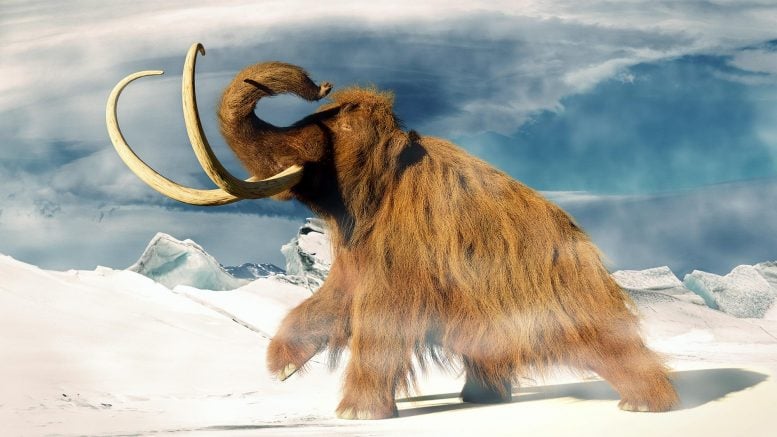
Bringing back mammoths may help fight climate change by restoring Arctic ecosystems, but it raises ethical and resource concerns. Experts argue its potential merits justify pursuing it alongside traditional conservation.
US startup Colossal Biosciences has announced plans to bring woolly mammoths, or animals like them, back from extinction and into the frosty landscape of the Siberian tundra.
Colossal has received US$15 million in initial funds to support research conducted by Harvard geneticist George Church, among other work. The proposed project is exciting, with laudable ambitions — but whether it is a practical strategy for conservation remains unclear.
Colossal proposes to use CRISPR gene editing technology to modify Asian elephant embryos (the mammoth’s closest living relative) so their genomes resemble those of woolly mammoths.
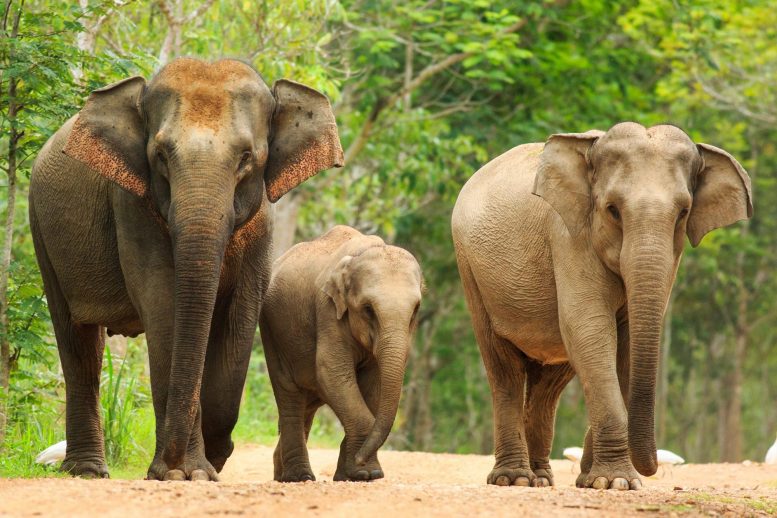
These embryos could then theoretically develop into elephant-mammoth hybrids (mammophants), with the appearance and behavior of extinct mammoths. According to Colossal, the ultimate aim is to release herds of these mammophants into the Arctic, where they will fill the ecological niche mammoths once occupied.
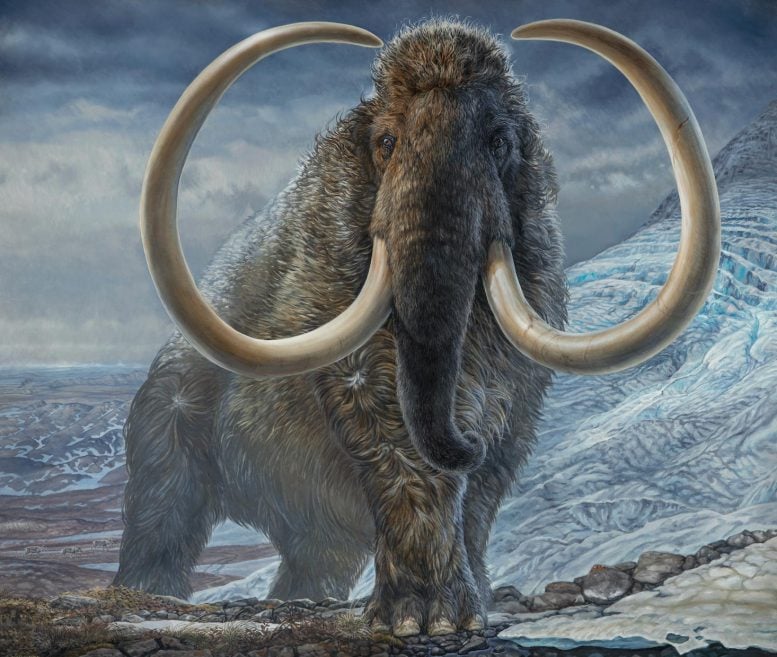
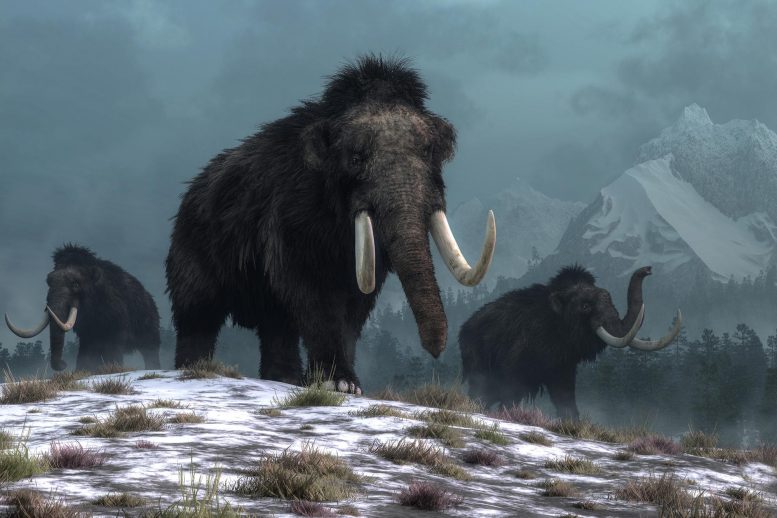
When mammoths disappeared from the Arctic some 4,000 years ago, shrubs overtook what was previously grassland. Mammoth-like creatures could help restore this ecosystem by trampling shrubs, knocking over trees, and fertilizing grasses with their feces.
Theoretically, this could help reduce climate change. If the current Siberian permafrost melts, it will release potent greenhouse gases. Compared to tundra, grassland might reflect more light and keep the ground cooler, which Colossal hopes will prevent the permafrost from melting.
While the prospect of reviving extinct species has long been discussed by groups such as Revive and Restore, advances in genome editing have now brought such dreams close to reality. But just because we have the tools to resurrect mammoth-like creatures, does this mean we should?
A Cause Worth Considering
De-extinction is a controversial field. Critics have referred to such practices as “playing god” and accused scientists in favor of de-extinction of hubris.
A common worry is that bringing back extinct species, whose ecological niches may no longer exist, will upset existing ecosystems. But when it comes to mammophants, this critique lacks bite.
Colossal says it aims to recreate the steppe ecosystem (a large, flat grassland) that flourished in Siberia until about 12,000 years ago. It has been estimated the total mass of plants and animals in Siberia’s tundra is now 100-fold less than when it was a steppe.
Simply, this ecosystem is already compromised, and it’s hard to see how reintroducing mammophants would lead to further damage.
Reintroducing species can transform ecosystems for the better. A well-known example is the reintroduction of wolves to Yellowstone National Park in the 1990s, which started a cascade of positive changes for local flora and fauna. Mammophants may do the same.
Furthermore, climate change is one of the great moral challenges of our time. The melting of the Siberian permafrost is expected to accelerate climate change and exacerbate ecological disaster.
This is such a serious problem that even ambitious projects with a low probability of success can be ethically justified. Often our moral intuitions are clouded when considering new technologies and interventions.
But technologies which originally seemed scary and unnatural can slowly become accepted and valued. One tool that is sometimes used to overcome these tendencies is called the reversal test, which was originally developed by Oxford philosophers Nick Bostrom and Toby Ord as a way to tackle status quo bias.
This test involves assuming the new thing already exists, and the novel proposal is to take it away. Imagine an endangered population of mammophants currently inhabits Siberia, where it plays an important role in maintaining the ecosystem and protecting the permafrost.
Few would argue attempts to save these mammophants are “unethical”. So if we would welcome efforts to save them in this hypothetical scenario, we should also welcome efforts to introduce them in real life.
So according to the reversal test, the key ethical objections to Colossal’s project should not relate to its aims, but rather to its means.
The Main Ethical Concerns
Let’s look at two ethical concerns related to de-extinction. The first is that de-extinction could distract from more cost-effective efforts to protect biodiversity or mitigate climate change. The second relates to the possible moral hazards that may arise if people start believing extinction is not forever.
1. Opportunity Costs
Some critics of de-extinction projects hold that while de-extinction may be an admirable goal, in practice it constitutes a waste of resources. Even if newly engineered mammophants contain mammoth DNA, there is no guarantee these hybrids will adopt the behaviors of ancient mammoths.
For instance, we inherit more than just DNA sequences from our parents. We inherit epigenetic changes, wherein the environment around us can affect how those genes are regulated. We also inherit our parents’ microbiome (colonies of gut bacteria), which plays an important role in our behaviors.
Also important are the behaviors animals learn from observing other members of their species. The first mammophants will have no such counterparts to learn from.
And even if de-extinction programs are successful, they will likely cost more than saving existing species from extinction. The programs might be a poor use of resources, especially if they attract funding that could have otherwise gone to more promising projects.
The opportunity costs of de-extinction should be carefully scrutinized. As exciting as it may be to see herds of wild mammophants, we shouldn’t let this vision distract us from more cost-effective projects.
That said, we also shouldn’t rule out de-extinction technologies altogether. The costs will eventually come down. In the meantime, some highly expensive projects might be worth considering.
2. Broader Implications for Conservation
The second concern is more subtle. Some environmentalists argue once de-extinction becomes possible, the need to protect species from extinction will seem less urgent. Would we still worry about preventing extinctions if we can just reverse them at a later date?
Personally, however, we are not convinced by these concerns. Extinction is currently irreversible, yet humans continue to drive an era of mass extinction that shows no sign of slowing. In other words, moving towards increasing extinctions is the status quo, and this status quo is not worth preserving.
Also, de-extinction is not the only conservation strategy that seeks to undo otherwise irreversible losses. For example, “rewilding” involves reintroducing locally-extinct species into an ecosystem it once inhabited. If we welcome these efforts — and we should — then we should also welcome novel strategies to restore lost species and damaged ecosystems.
Written by:
- Julian Koplin – Resarch Fellow in Biomedical Ethics, Melbourne Law School and Murdoch Children’s Research Institute, The University of Melbourne
- Christopher Gyngell – Research Fellow in Biomedical Ethics, The University of Melbourne
This article was first published in The Conversation.
Never miss a breakthrough: Join the SciTechDaily newsletter.
Follow us on Google and Google News.
24 Comments
From what I’ve read and heard most Scienctist are Atheist so playing “God” shouldn’t enter into this discussion. The only people they are going to headbutt I see are the Archeologists. Those folks are finding all kinds of stuff that has been under the deep ice for hundreds maybe thousands of yrs. These boys & girls ever think what burying that stuff again is going to do in the short as well as the long run? Nope! Doesn’t fit their template. In.tjeir flea bitten brain it’s damn the torpedoes full steam ahead. You know why their right? Time machine. Yep,they’ve traveled ahead in time & got the word to not worry about right or wrong just do it. It’ll somehow work itself out in the end. And they thought Nuclear War was bad. Nahhh. Got more important things to worry about. Now how can we turn the clock back 4,000 yrs.? Hummmm…🤔
Schizophrenia can be controlled. Please seek help.
I’m all for this but please don’t try to couch the arguments for doing this in climate change fear mongering.
What’s this? Bring back the Woolly Mammoth? Maybe the SCIENCE FICTIONALISTS “working” this one should find something better to do with their $15 million “gift”. Let’s (briefly) look this gift horse… err… Woolly Mammoth in the mouth. It’s a little late in the game to “seed” the Tundra with this (these) extincted species. The Mammoths retreated Northward with gross climate change, ultimately ending their flight and their species viability on Kotelnyy Island, North of the Arctic Circle. The World was “way” too WARM for them. The “Tundra” spoken of in this article is in an advanced state of melting, belching carbon dioxide, and LITERALLY on-fire, in many places. MAYBE (just MAYBE) we should be “working” the problem: How to save our own Woolly Butts from the EXTINCTION EVENT in progress… Self-inflicted (in many ways). Indeed and in deed, we have unwisely “tricked” with Momma Nature. I mean, ACTUALLY inducing Climate Change to open sea lanes over the pole, to save fuel costs when shipping OIL to-and-from MARKET-to-market… Something about that SMACKS of REDUNDANCY… MAYBE (just MAYBE) PSYCHOSIS.
Bringing back the Woolly Bully is going to help stall climate change!? Lame, BLIND, RECURSIVE, DEVOLUTION.
Make me laugh… err… CRY why doancha!?
Let’s us look on the BRIGHT SIDE: Woolly Mammoth aside, This global heating PARADIGM is just a TRANSITIONAL PHASE, on the way to GLOBAL GLACIATION and another Extinction Event: We have met the ENEMY and HE is US. (Quoth POGO). We are in the cross Mammoth hairs on this one. So… Bundle up your coffin for your transit to MARS, there SKIPPY. It’s a long, cold, one-way TRIP.
MOTHER is tired of your BS. TIME for another form of “Scientific” DISCIPLINE… And it IS ONLY matter of TIME: An average lifespan of 76 years is but a flash in the pan and BOUND to produce a short-sighted/nearsighted perspective.
🦋
p.s.: You might check out the April 2013 issue of National Geographic Magazine for an “elaboration” on the Science. Just the facts, Mam.
Hopefully they will bring back Smilodon, and the Dire Wolf, since they are so concerned with restoring the balanced halcyon ecosystem of the Pleistocene. Don’t forget mastodons, Bison priscus, the American LIon, camel and horse, and of course don’t forget to eliminate crops from the Great Plains. Have I forgotten anything? Oh yeah, like everything about the Pleistocene yet undiscovered. Question – what tiny fraction of the Earth’s surface would be affected by these wandering never-before-seen-on-Planet Earth hybrid charismatic megafauna monstrosities? The businessmen/PhD genetic engineers behind this nonsense might reread Gaia and see that climate change is one aspect of what James Lovelock was writing about. Life isn’t about people. It is a physical system in a dynamic equilibrium with all life. Intense wildfires and drought will restore grasslands absent all the brilliant GMO Frankenphants they populate the planet with. Probability of this succeeding, not exactly zero. But I’ll take the house odds on this bet. I just wish these geniuses would leave the fing world alone. Everything people do is ultimately for the benefit of people and not plant or animal or even ultimately human life. It is all about the money and power.
Gaia theory is daft, and so is thinking hard working scientists are “geniuses”, or have high salaries [look it up].
But I agree that GMO is brilliant technique, which can save many lives.
I don’t see the issue. If the impact isn’t positive….it’s pretty easy to find and hunt the mammoths back to extinction.
Bring everything back that you can. Medical scientists try to save every last human but it is wrong to save other species? I personally think the human race is evolving into Idiocracy but thankfully there are still some intelligent folks that are working on bringing back species that can actually do some good for this human wrecked planet.
Yeah,f**ck it. Why not. We’re well on our way to killing off the virus that is humanity along with the rest of the poor animals that are stuck with us. Let’s go out with a bang and play Pleistocene Park. Maybe in the twilight of our existence we’ll finally see the error of our ways. I doubt it.
What’s this? Bring back the Woolly Mammoth? Maybe the SCIENCE FICTIONALISTS “working” this one should find something better to do with their $15 million “gift”. Let’s (briefly) look this gift horse… err… Woolly Mammoth in the mouth. It’s a little late in the game to “seed” the Tundra with this (these) extincted species. The Mammoths retreated Northward with gross climate change, ultimately ending their flight and their species viability on Kotelnyy Island, North of the Arctic Circle. The World was “way” too WARM for them. The “Tundra” spoken of in this article is in an advanced state of melting, belching carbon dioxide, and LITERALLY on-fire, in many places. MAYBE (just MAYBE) we should be “working” the problem: How to save our own Woolly Butts from the EXTINCTION EVENT in progress… Self-inflicted (in many ways). Indeed and in deed, we have unwisely “tricked” with Momma Nature. I mean, ACTUALLY inducing Climate Change to open sea lanes over the pole, to save fuel costs when shipping OIL to-and-from MARKET-to-market… Something about that SMACKS of REDUNDANCY… MAYBE (just MAYBE) PSYCHOSIS.
Bringing back the Woolly Bully is going to help stall climate change!? Lame, BLIND, RECURSIVE, DEVOLUTION.
Make me laugh… err… CRY why doancha!?
Let’s us look on the BRIGHT SIDE: Woolly Mammoth aside, This global heating PARADIGM is just a TRANSITIONAL PHASE, on the way to GLOBAL GLACIATION and another Extinction Event: We have met the ENEMY and HE is US. (Quoth POGO). We are in the cross hairs on this one. So… Bundle up your coffin for your transit to MARS, there SKIPPY. It’s a long, cold, one-way TRIP.
MOTHER is tired of your BS. TIME for another form of “Scientific” DISCIPLINE… And it IS a ONLY matter of TIME: An average lifespan of 76 years is but a flash in the pan and BOUND to produce a short-sighted/nearsighted perspective.
🦋
p.s.: You might check out the April 2013 issue of National Geographic Magazine for an “elaboration” on the Science. Just the facts, Mam.
At least *they* are trying to do something about it.
I can only guess that they might believe mammoths were passive herbivores. A time traveling friend of mine told me, word of mouth from her friends facebook friend from twitter, based on an artical
read by a tictok’er said she read on twitter with proof posted to onlyfans that mammoths were vicious carnivorous predators!
If we have the power to do this why don’t we do this with species on the verge of Extinction first isn’t there a species of rhino where there’s only one left in existence?
Those animals would just be killed by poachers.
I wouldn’t say that our planet is completely past the point of no return. We have a few hundred years before we hit that point. However, I would like to see a few newer species running around that could maybe stifle the process. After all, us humans are only a part in climate change. The earth warms and cools, we know this because we have studied the earths history. Most people fail to recognize that our earth has experienced extreme temperature changes that are natural and were not caused by humans. The fact that some people think that only humans are to blame for climate change makes me lose my faith in humanity just that much more. People need to actually go out and do the research, well they don’t, but it would be nice if they did.
Not getting Earth too warm for some of our food plants is soon too late.
Man, there was a whole entire movie franchise on why this is wrong, morally, ethically, and just down right dangerous. Damn, what was the name of that Movie franchise… Erm.. ope, got it. Maybe Jurassic Park?
Or it might make better sense to bring back flora that was better suited to capture greater amounts of co2 based on previous concentrations.
Absolutely crazy, if they did exist and were endangered species we would protect them so it’s right to reintroduce them?! By that logic we should re introduce the black plague to reduce the population and inturn reduce global warming.
It’s actually nutts how we try to justify things 🤦
It would be a mammothified elephant, not a mammoth.
I am of the belief that these efforts should go towards species whose loss is more in line with anthropocene impacts. Like the Passenger Pigeon.
Introducing a mammothified elephant would not bring the grasslands back, which replacements by forests may have caused the mammoth extinction [Wikipedia].
If the melting of permafrost is reduced by reintroduced large herbivores like bison and muskox etc donated from countries that have them .try this first,trees and srubs can be bulldozed or cut cheaper and kept down by grazing This idea could take ages as committees argue the case and time is short before melting takes its own action, and what we do is irrelevant 😀
Reintroduction of long extinct animals, of another climatic era, is cruel. Their time is passed. Their relatives adapted for todays environment still exist. Understand the past to protect the present and future. A mammoth born artificially today would be like a zombi in a zoo. It would not last long in the wild. Protect the elephants of today so that mammoth-like proboscideans might be capable of evolving during the next ice age. They might be our dinner, if we survive until then.