
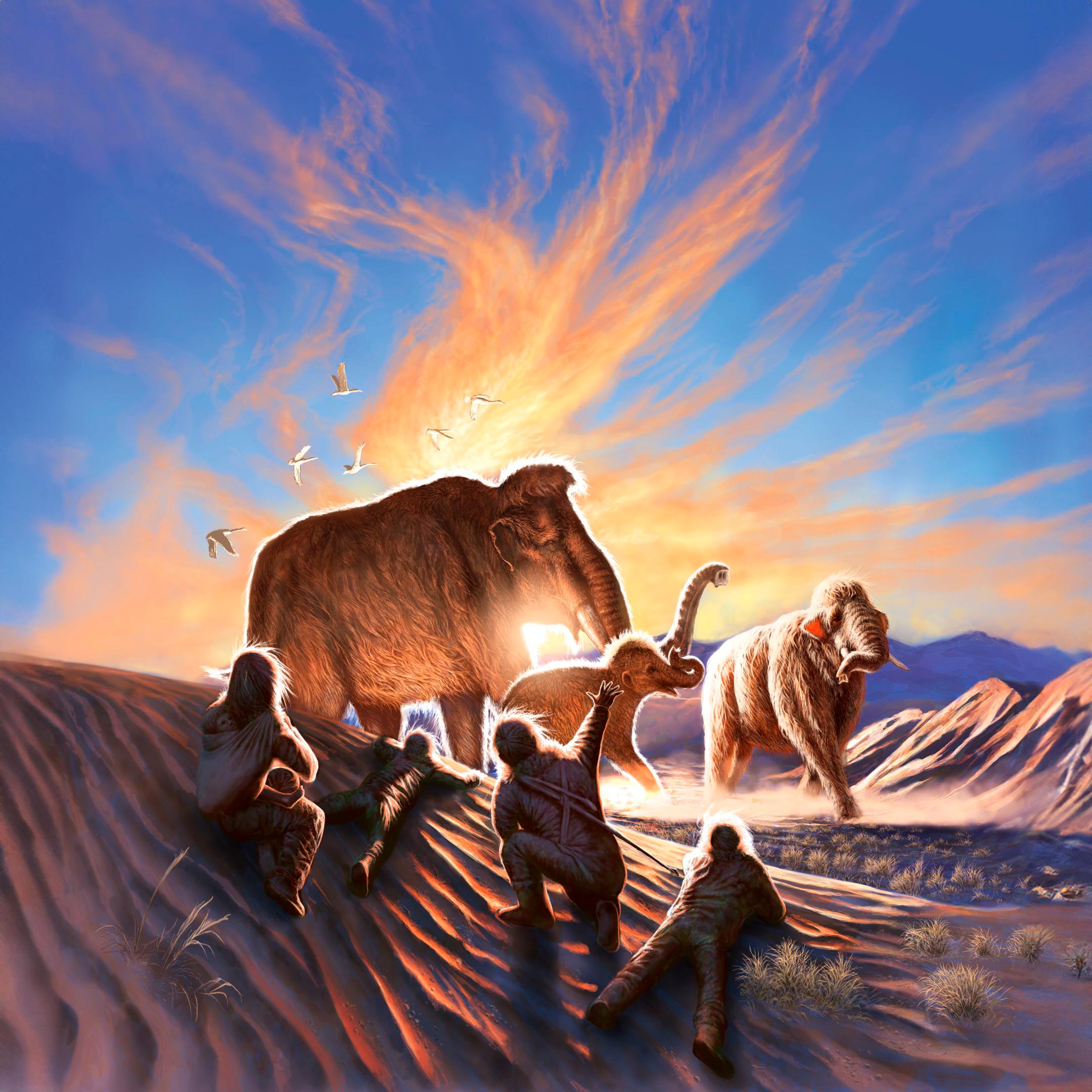
Scientists have linked the movements of a 14,000-year-old woolly mammoth with early human settlements in Alaska. Analysis of the mammoth’s tusk revealed a journey that overlapped with human hunting areas, indicating a close relationship between these early settlers and mammoths.
Researchers have linked the travels of a 14,000-year-old woolly mammoth with the oldest known human settlements in Alaska, providing clues about the relationship between the iconic species and some of the earliest people to travel across the Bering Land Bridge.
Tracing a Mammoth’s Journey
Scientists made those connections by using isotope analysis to study the life of a female mammoth, named Élmayųujey’eh, by the Healy Lake Village Council. A tusk from Elma was discovered at the Swan Point archaeological site in Interior Alaska. Samples from the tusk revealed details about Elma and the roughly 1,000-kilometer journey she took through Alaska and northwestern Canada during her lifetime.
Isotopic data, along with DNA from other mammoths at the site and archaeological evidence, indicates that early Alaskans likely structured their settlements to overlap with areas where mammoths congregated. Those findings, highlighted in the journal Science Advances, provide evidence that mammoths and early hunter-gatherers shared habitat in the region. The long-term predictable presence of woolly mammoths would have attracted humans to the area.
Insights From a Tusk
“She wandered around the densest region of archaeological sites in Alaska,” said Audrey Rowe, a University of Alaska Fairbanks Ph.D. student and lead author of the paper. “It looks like these early people were establishing hunting camps in areas that were frequented by mammoths.”
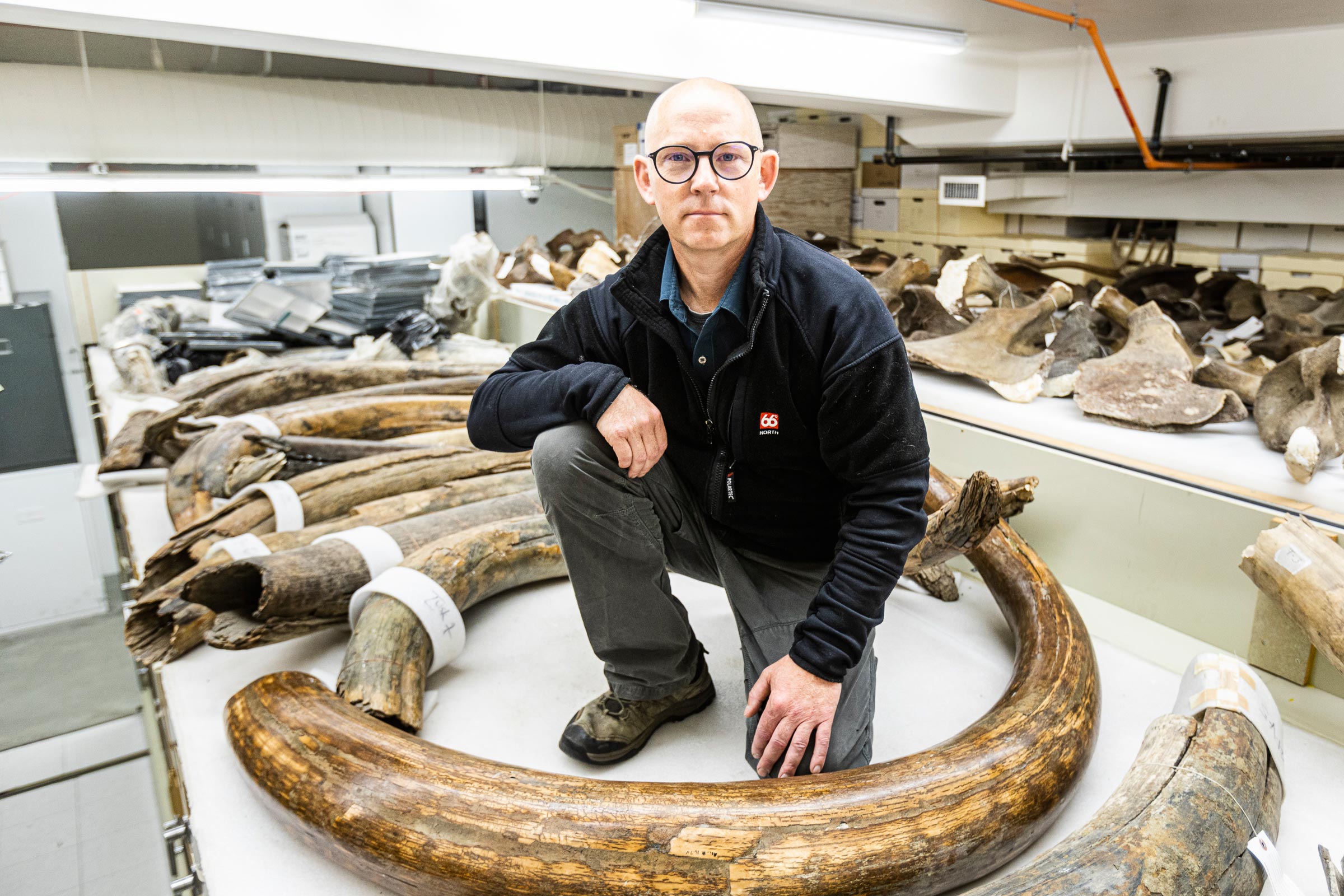
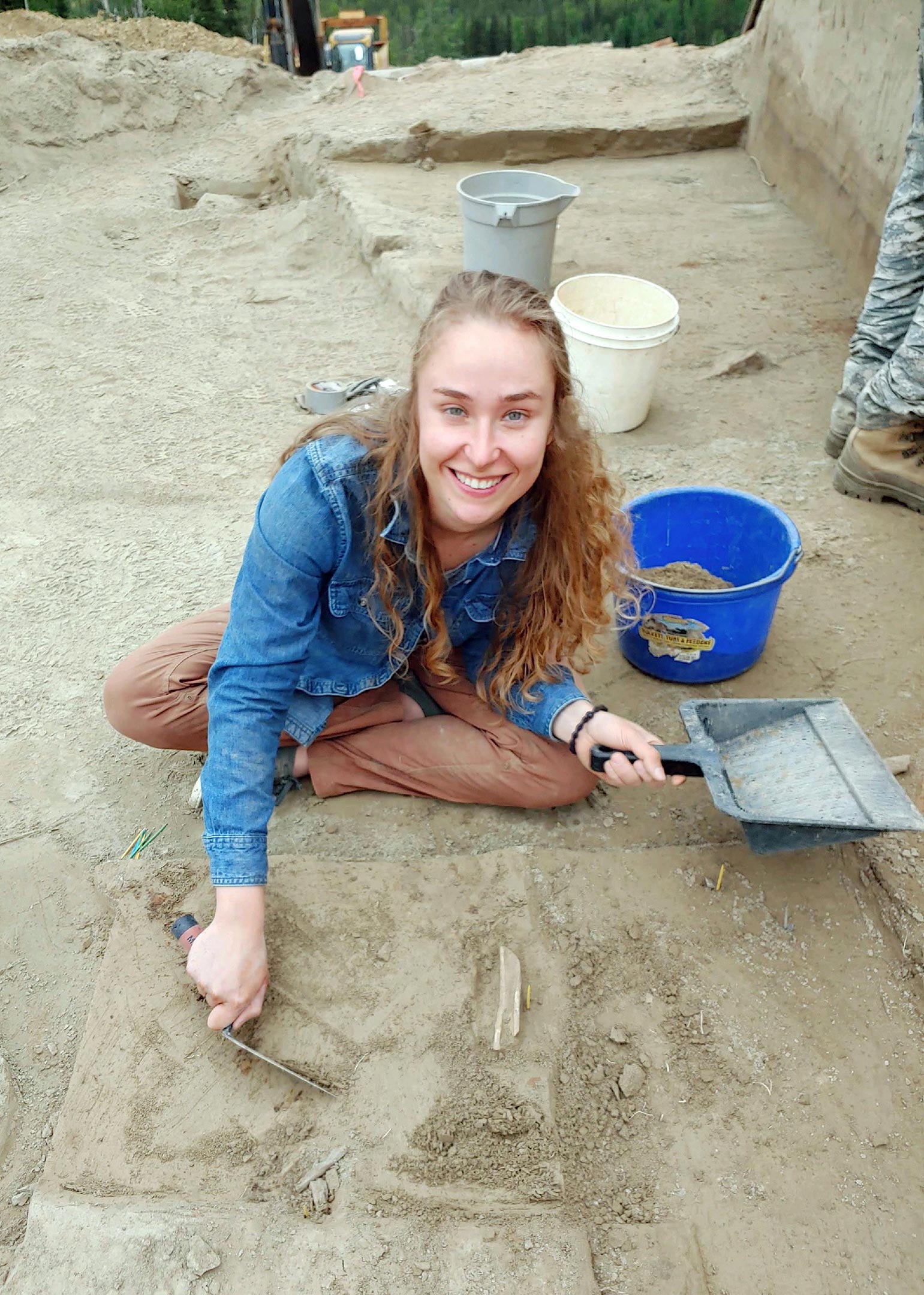
The mammoth tusk was excavated and identified in 2009 by Charles Holmes, affiliate research professor of anthropology at UAF, and François Lanoë, research associate in archaeology at the University of Alaska Museum of the North. They found Elma’s tusk and the remains of two related juvenile mammoths, along with evidence of campfires, the use of stone tools, and butchered remains of other game. All of this “indicates a pattern consistent with human hunting of mammoths,” said Ben Potter, an archaeologist and professor of anthropology at UAF.
Researchers at UAF’s Alaska Stable Isotope Facility then analyzed thousands of samples from Elma’s tusk to recreate her life and travels. Isotopes provide chemical markers of an animal’s diet and location. The markers are then recorded in the bones and tissues of animals and remain even after they die.
Mammoth tusks are well-suited to isotopic study because they grew throughout the ancient animals’ lives, with clearly visible layers appearing when split lengthwise. Those growth bands give researchers a way to collect a chronological record of a mammoth’s life by studying isotopes in samples along the tusk.
Much of Elma’s journey overlapped with that of a previously studied male mammoth who lived 3,000 years earlier, demonstrating long-term movement patterns by mammoths over several millennia. In Elma’s case, they also indicated she was a healthy 20-year-old female.
Climate Change and Mammoth Habitat
“She was a young adult in the prime of life. Her isotopes showed she was not malnourished and that she died in the same season as the seasonal hunting camp at Swan Point where her tusk was found,” said senior author Matthew Wooller, who is director of the Alaska Stable Isotope Facility and a professor at UAF’s College of Fisheries and Ocean Sciences.
The era in which Elma lived may have compounded the challenges posed by the relatively recent appearance of humans. The grass- and shrub-dominated steppe landscape that had been common in Interior Alaska was beginning to shift toward more forested terrain.
“Climate change at the end of the ice age fragmented mammoths’ preferred open habitat, potentially decreasing movement and making them more vulnerable to human predation,” Potter said.
For more on this research:
- Rewriting the Story of Woolly Mammoths and American Colonization
- Lifetime Travels of Woolly Mammoth That Lived More Than 14,000 Years Ago Chronicled
Reference: “A female woolly mammoth’s lifetime movements end in an ancient Alaskan hunter-gatherer camp” by Audrey G. Rowe, Clement P. Bataille, Sina Baleka, Evelynn A. Combs, Barbara A. Crass, Daniel C. Fisher, Sambit Ghosh, Charles E. Holmes, Kathryn E. Krasinski, François Lanoë, Tyler J. Murchie, Hendrik Poinar, Ben Potter, Jeffrey T. Rasic, Joshua Reuther, Gerad M. Smith, Karen J. Spaleta, Brian T. Wygal and Matthew J. Wooller, 17 January 2024, Science Advances.
DOI: 10.1126/sciadv.adk0818
Other contributors to the study included the University of Alaska Anchorage, University of Ottawa, McMaster University, University of Alaska Museum of the North, University of Michigan Museum of Paleontology, Adelphi University, University of Arizona, Hakai Institute, and the Healy Lake Village Council.
Never miss a breakthrough: Join the SciTechDaily newsletter.
Follow us on Google and Google News.