
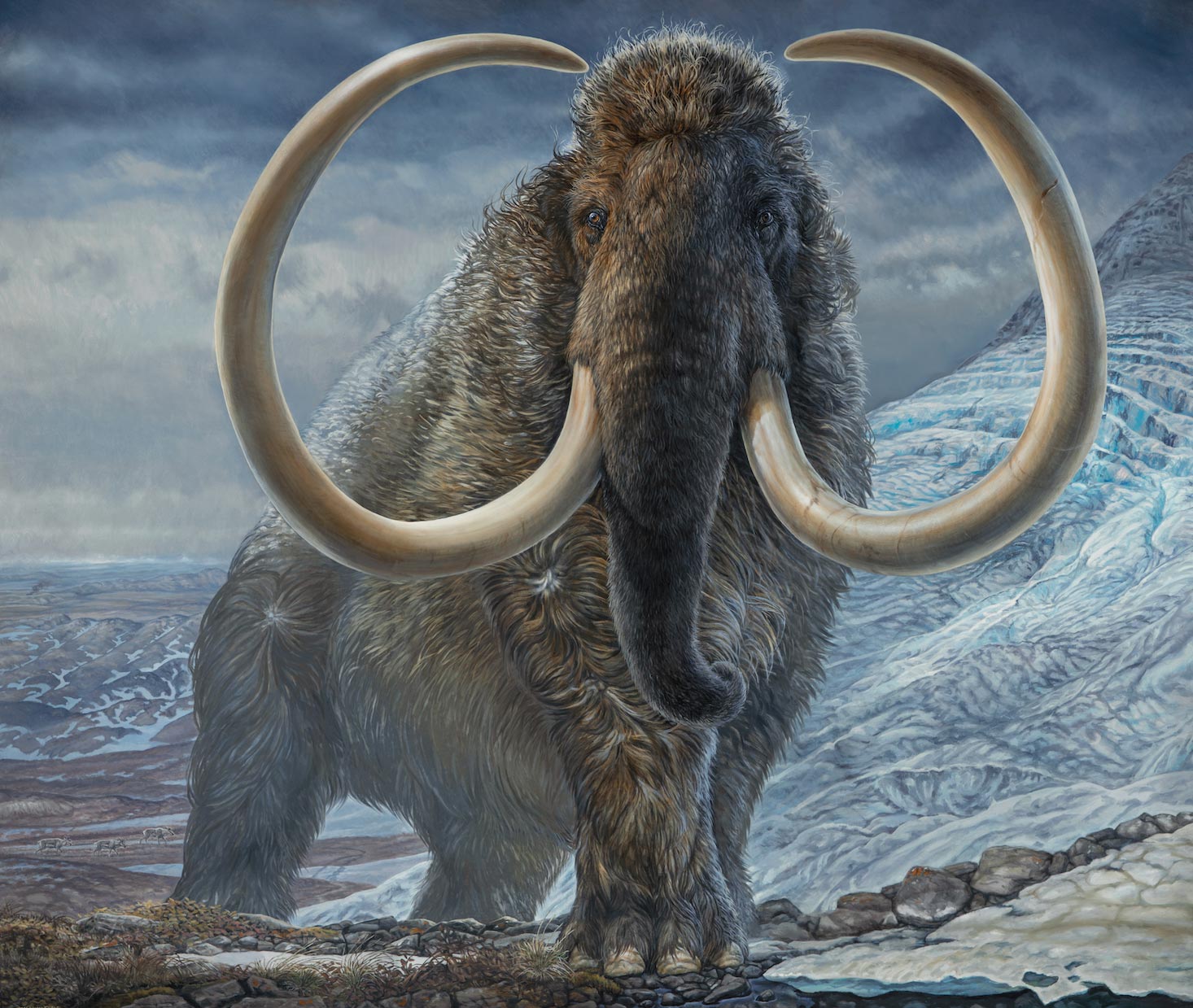
A woolly mammoth’s tusk reveals it roamed Alaska extensively and likely died of starvation—offering clues for modern climate adaptation.
An international research team has retraced the astonishing lifetime journey of an Arctic woolly mammoth, which covered enough of the Alaska landscape during its 28 years to almost circle the Earth twice.
Scientists gathered unprecedented details of its life through analysis of a 17,000-year-old fossil from the University of Alaska Museum of the North. By generating and studying isotopic data in the mammoth’s tusk, they were able to match its movements and diet with isotopic maps of the region.
Few details have been known about the lives and movements of woolly mammoths, and the study offers the first evidence that they traveled vast distances. An outline of the mammoth’s life is detailed in the new issue of the journal Science.
“It’s not clear-cut if it was a seasonal migrator, but it covered some serious ground,” said University of Alaska Fairbanks researcher Matthew Wooller, senior and co-lead author of the paper. “It visited many parts of Alaska at some point during its lifetime, which is pretty amazing when you think about how big that area is.”
Reading a Tusk Like a Diary
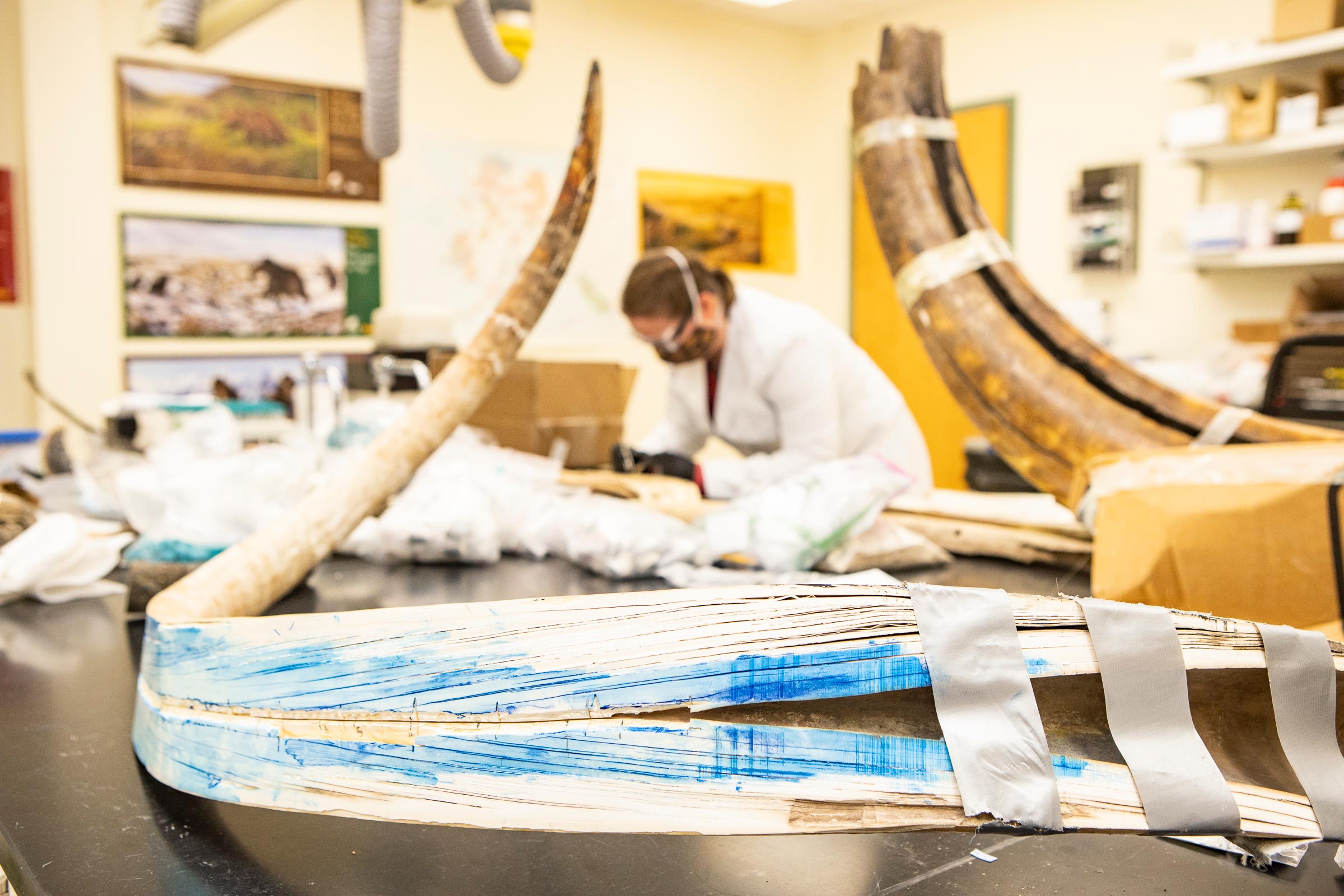
Researchers at the Alaska Stable Isotope Facility, where Wooller is director, split the 6-foot tusk lengthwise and generated about 400,000 microscopic data points using a laser and other techniques.
The detailed isotope analyses they made are possible because of the way that mammoth tusks grew. Mammoths steadily added new layers on a daily basis throughout their lives. When the tusk was split lengthwise for sampling, these growth bands looked like stacked ice cream cones, offering a chronological record of an entire mammoth’s life.
“From the moment they’re born until the day they die, they’ve got a diary and it’s written in their tusks,” said Pat Druckenmiller, a paleontologist and director of the UA Museum of the North. “Mother Nature doesn’t usually offer up such convenient and life-long records of an individual’s life.”
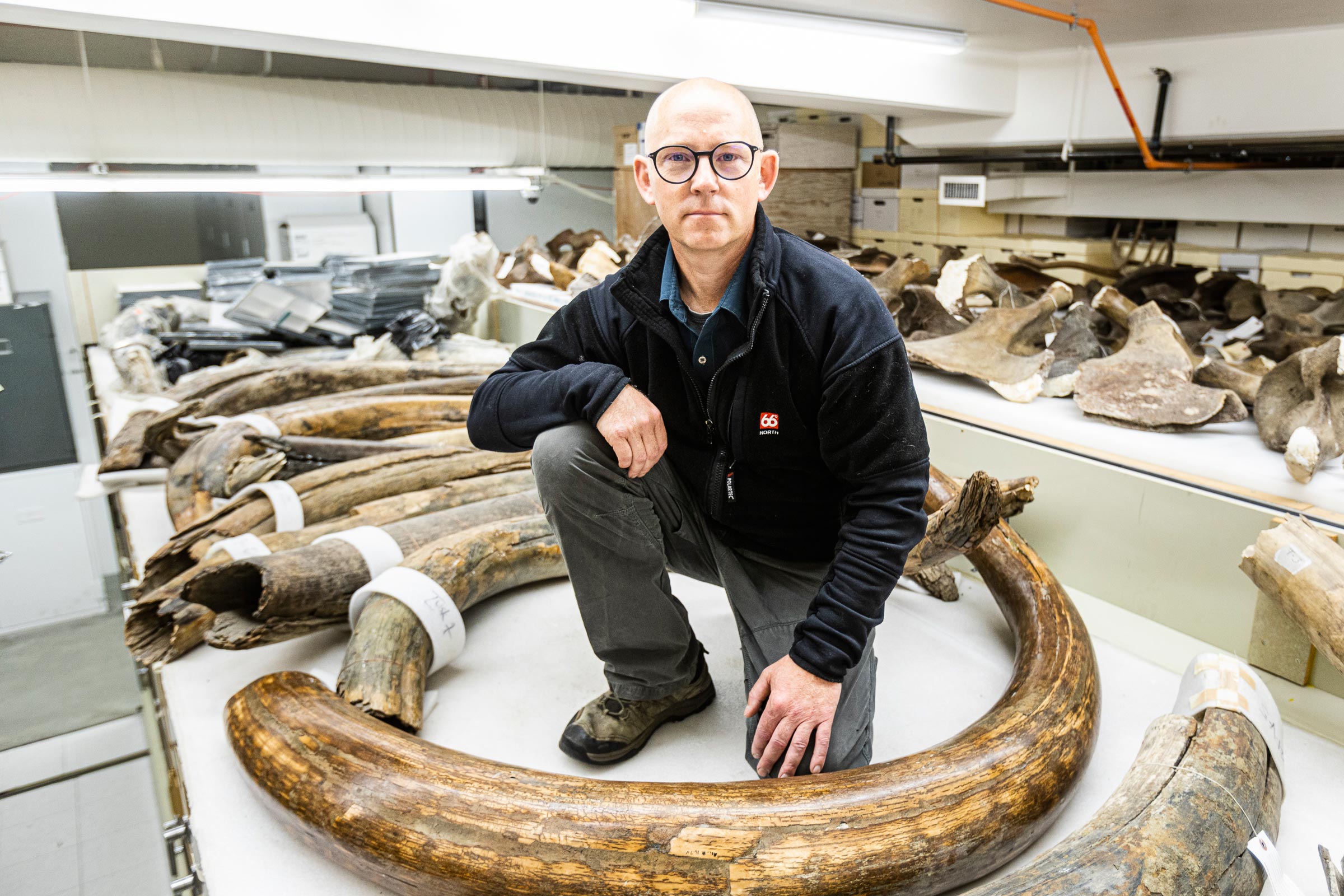
Scientists knew that the mammoth died on Alaska’s North Slope above the Arctic Circle, where its remains were excavated by a team that included UAF’s Dan Mann and Pam Groves, who are among the co-authors of the study.
Mapping Movement Through Isotopic Signatures
Researchers pieced together the mammoth’s journey up to that point by analyzing isotopic signatures in its tusk from the elements strontium and oxygen, which were matched with maps predicting isotope variations across Alaska. Researchers created the maps by analyzing the teeth of hundreds of small rodents from across Alaska held in the museum’s collections. The animals travel relatively small distances during their lifetimes and represent local isotope signals.
Using that local dataset, they mapped isotope variation across Alaska, providing a baseline to trace the mammoth movements. After taking geographic barriers into account and the average distance it traveled each week, researchers used a novel spatial modeling approach to chart the likely routes the animal took during its life.
Ancient DNA preserved in the mammoth’s remains allowed the team to identify it as a male that was related to the last group of its species that lived in mainland Alaska. Those details provided more insight into the animal’s life and behavior, said Beth Shapiro, who led the DNA component of the study.
For example, an abrupt shift in its isotopic signature, ecology and movement at about age 15 probably coincided with the mammoth being kicked out of its herd, mirroring a pattern seen in some modern-day male elephants.

“Knowing that he was male provided a better biological context in which we could interpret the isotopic data,” said Shapiro, a professor at the University of California Santa Cruz and investigator at the Howard Hughes Medical Institute.
Starvation Likely Caused Final Winter Death
Isotopes also offered a clue about what led to the animal’s demise. Nitrogen isotopes spiked during the final winter of its life, a signal that can be a hallmark of starvation in mammals.
“It’s just amazing what we were able to see and do with this data,” said co-lead author Clement Bataille, a researcher from the University of Ottawa who led the modeling effort in collaboration with Amy Willis at the University of Washington.
Discovering more about the lives of extinct species satisfies more than curiosity, said Wooller, a professor in the UAF College of Fisheries and Ocean and Institute of Northern Engineering. Those details could be surprisingly relevant today as many species adapt their movement patterns and ranges with the shifting climate.
“The Arctic is seeing a lot of changes now, and we can use the past to see how the future may play out for species today and in the future,” Wooller said. “Trying to solve this detective story is an example of how our planet and ecosystems react in the face of environmental change.”
Reference: “Lifetime mobility of an Arctic woolly mammoth” by Matthew J. Wooller, Clement Bataille, Patrick Druckenmiller, Gregory M. Erickson, Pamela Groves, Norma Haubenstock, Timothy Howe, Johanna Irrgeher, Daniel Mann, Katherine Moon, Ben A. Potter, Thomas Prohaska, Jeffrey Rasic, Joshua Reuther, Beth Shapiro, Karen J. Spaleta and Amy D. Willis, 12 August 2021, Science.
DOI: 10.1126/science.abg1134
Other institutions contributing to the study included Florida State University, Montanuniversität Leoben, Liaocheng University and the National Park Service.
Never miss a breakthrough: Join the SciTechDaily newsletter.
Follow us on Google and Google News.
8 Comments
wonderful///
The Science article you cite is not accessable by the public.
In ALL such cases you should state whether the research had any public funding.
If the article was publicly funded, but not publicly accessable, then you should
REDACT the name of the journal with the above explanation and add a click-to-donate
button to fund a class-action lawsuit and smear campaign.
It’s an International research team. You’re being pretty damn picky. The rest of us appreciate the study and it’s wonder.
If, if, if. You’re no doubt also a conspiracy theorist.
Perhaps conspiracy theorists has no moral or practical problems with smearing and harassing perfectly fine science with violent methods – and since the science managed to get published in Science it is more than fine!
This is simply fascinating information. Thank you University of Alaska & University of Alaska Fairbanks folks.
To common sense: “accessible doesn’t necessarily mean free. You can pay AAAS for a membership and get your very own copy of Science. Just as in the case of wanting to read a research article on some subject in physics, you would have to pay to subscribe to the journal.
If you are strapped, go to a library.
The – of course no-responsibility anonymous – nym seems chosen with care since he or she must know that adage that ‘common sense has no place in science’ (c.f. quantum field theory with its not-seen-in-daily-life effects).