
Close Menu
    Facebook X (Twitter) Instagram
    SciTechDaily
    • Biology
    • Chemistry
    • Earth
    • Health
    • Physics
    • Science
    • Space
    • Technology
    Facebook X (Twitter) Pinterest YouTube RSS
    SciTechDaily
    Home»Health»Gaining Weight While Pregnant Can Raise Your Risk of Heart Disease
    Health

    Gaining Weight While Pregnant Can Raise Your Risk of Heart Disease

    By Mary Ann Liebert, Inc./Genetic Engineering NewsJune 13, 2022No Comments3 Mins Read
    Facebook Twitter Pinterest Telegram LinkedIn WhatsApp Email Reddit
    Share
    Facebook Twitter LinkedIn Pinterest Telegram Email Reddit
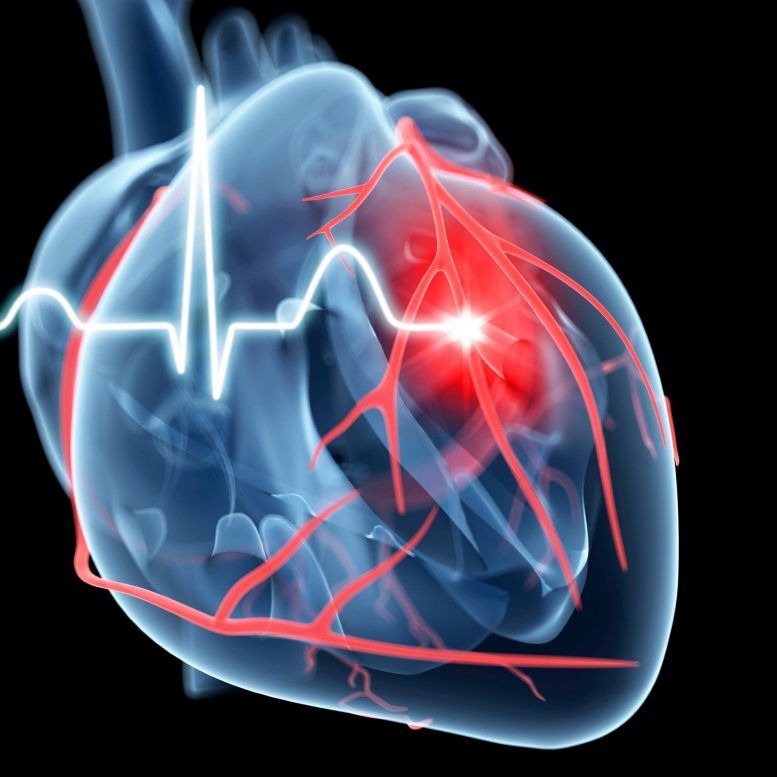
    Heart Attack Illustration
    A new study from the University of Pittsburgh has revealed that pregnant women with excessive gestational weight gain had a higher cardiovascular risk later in life.

    Excessive Gestational Weight Gain Raises the Risk of Maternal Cardiovascular Disease

    In the United States, heart disease is the leading cause of death. The phrase “heart disease” refers to a variety of heart conditions. The most prevalent kind of heart disease in the United States is coronary artery disease, which can lead to a heart attack.

    High blood pressure, high blood cholesterol, and smoking are among the factors that can increase your risk for heart disease. Recent research has also revealed that excessive weight gain while pregnant could also raise your risk.

    According to a new study published recently in the peer-reviewed Journal of Women’s Health, pregnant women with significant gestational weight gain had a greater cardiovascular risk profile in midlife.

    Higher Cardiovascular Risk Profile in Women with Excessive Gestational Weight Gain

    Franya Hutchins, Ph.D., of the University of Pittsburgh Graduate School of Public Health, and colleagues used two main measures to determine a woman’s cardiovascular disease risk: the atherosclerotic cardiovascular disease (ASCVD) risk score and a measure of C-reactive protein (CRP), an inflammatory biomarker. The researchers assessed these factors at baseline and at 10 follow-up visits during a 20-year period.

    Having a history of excessive gestational weight gain was associated with a 29.6% higher ASCVD risk score at baseline. “In the model including confounders and midlife abdominal obesity, excessive gestational weight gain remained associated with a 9.1% higher ASCVD score,” stated the investigators. Excessive gestational weight gain was associated with an 89.2% higher baseline CRP level. With the addition of cofounders and midlife abdominal obesity, excessive gestational weight gain remained associated with a 31.5% higher mean CRP.

    “In this group of women, a history of excessive gestational weight gain was associated with a small but statistically significant higher ASCVD score and a moderate, statistically significant higher mean CRP level into midlife,” says Journal of Women’s Health Editor-in-Chief Susan G. Kornstein, MD, Executive Director of the Virginia Commonwealth University Institute for Women’s Health, Richmond, VA.

    Research reported in this publication was supported by the National Institutes of Health under Award Numbers U01NR004061, U01AG012505, U01AG012535, U01AG02531, U01AG012539, U01AG012546, U01AG012553. The content is solely the responsibility of the authors and does not necessarily represent the official views of the National Institutes of Health.

    Reference: “Excessive Gestational Weight Gain and Long-Term Maternal Cardiovascular Risk Profile: The Study of Women’s Health Across the Nation” by Franya Hutchins, Samar R. El Khoudary, Janet Catov, Robert Krafty, Alicia Colvin, Emma Barinas-Mitchell and Maria M. Brooks, 18 April 2022, Journal of Women’s Health.
    DOI: 10.1089/jwh.2021.0449

    Never miss a breakthrough: Join the SciTechDaily newsletter.
    Follow us on Google and Google News.

    Cardiovascular Heart National Institutes of Health Pregnancy University of Pittsburgh Weight Gain
    Share. Facebook Twitter Pinterest LinkedIn Email Reddit

    Related Articles

    Be Careful of Overeating While Pregnant: Maternal Obesity Greatly Increases a Child’s Risk of Heart Problems

    Only 40% of Women Giving Birth in the U.S. Had Good Heart Health Prior to Pregnancy

    Eating Vegetables Does NOT Protect Against Heart Disease

    COVID-19 Increases Risk of Pregnancy Complications

    Loneliness and Social Isolation Increase Heart Disease Risk in Senior Women

    COVID-19 Vaccination Does Not Affect the Chances of Conceiving a Child

    Eating Peanuts May Lower Risk of Cardiovascular Disease and Stroke Among Asians

    High Lipid Levels in Early Pregnancy Linked With Congenital Heart Disease in Children

    Eating Food With Isoflavones – Such as Tofu, Chickpeas and Peanuts – May Lower Heart Disease Risk

    Leave A Reply Cancel Reply

    • Facebook
    • Twitter
    • Pinterest
    • YouTube

    Don't Miss a Discovery

    Subscribe for the Latest in Science & Tech!

    Trending News

    Scientists Discover Game-Changing New Way To Treat High Cholesterol

    This Small Change to Your Exercise Routine Could Be the Secret to Living Longer

    Scientists Discover 430,000-Year-Old Wooden Tools, Rewriting Human History

    AI Could Detect Early Signs of Alzheimer’s in Under a Minute – Far Before Traditional Tests

    What if Dark Matter Has Two Forms? Bold New Hypothesis Could Explain a Cosmic Mystery

    This Metal Melts in Your Hand – and Scientists Just Discovered Something Strange

    Beef vs. Chicken: Surprising Results From New Prediabetes Study

    Alzheimer’s Breakthrough: Scientists Discover Key Protein May Prevent Toxic Protein Clumps in the Brain

    Follow SciTechDaily
    • Facebook
    • Twitter
    • YouTube
    • Pinterest
    • Newsletter
    • RSS
    SciTech News
    • Biology News
    • Chemistry News
    • Earth News
    • Health News
    • Physics News
    • Science News
    • Space News
    • Technology News
    Recent Posts
    • Milk Nanoparticles Could Revolutionize Treatment for Deadly Bile Duct Cancer
    • Largest-Ever Study Finds Medicinal Cannabis Ineffective for Anxiety, Depression, PTSD
    • Scientists Reveal Why a Common Drug Causes Birth Defects and Autism
    • A Medieval Japanese Diary Just Helped Scientists Detect a Dangerous Solar Event
    • Humans Returned to Britain 500 Years Earlier Than Scientists Thought
    Copyright © 1998 - 2026 SciTechDaily. All Rights Reserved.
    • Science News
    • About
    • Contact
    • Editorial Board
    • Privacy Policy
    • Terms of Use

    Type above and press Enter to search. Press Esc to cancel.