
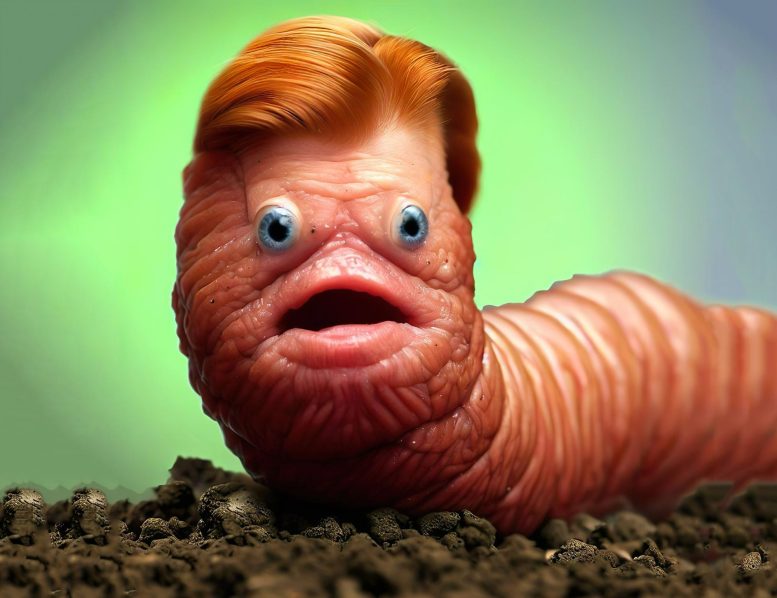
A nemertean worm, Carcinonemertes conanobrieni, discovered by a Clemson University biologist, is suspected to negatively impact the reproduction of Caribbean spiny lobsters, thereby contributing to their decreased numbers. The worm’s effect on the lobster’s reproductive cycle could have significant implications for the marine ecosystem and the lobster industry.
A species of nemertean worm discovered by a Clemson University marine biologist five years ago affects the reproductive performance of Caribbean spiny lobsters, a critical species in the Caribbean Sea and the Gulf of Mexico.
Antonio Baeza, an associate professor in the Department of Biological Sciences, discovered the new worm while researching parental behaviors of the spiny lobster Panulirus argus in the Florida Keys. Baeza good-naturedly named the worm Carcinonemertes conanobrieni after comedian Conan O’Brien because of its physical characteristics — long-bodied and pale with a slight tint of orange.
The worm has been found off the coast of the Colombian and West Indies.
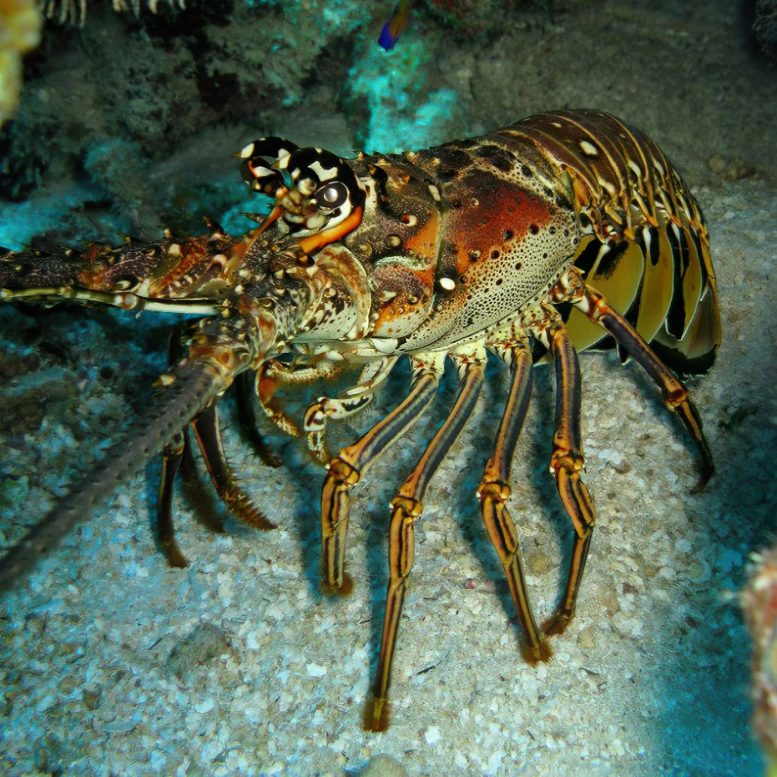
Caribbean spiny lobsters, which get their name from the forward-pointing spines that cover their bodies, live in the Atlantic Ocean’s tropical and subtropical waters as far north as North Carolina, as well as the Caribbean Sea and the Gulf of Mexico. They are one of the Caribbean’s most ecologically significant and commercially lucrative species.
Caribbean spiny lobster landings have decreased over the past decade. Scientists don’t know why, although they have identified several possibilities – overfishing, declining water quality, global climate change, and environmental degradation.
A new study published in the journal BMC Zoology shows the worm discovered by Baeza is likely a contributor, too.
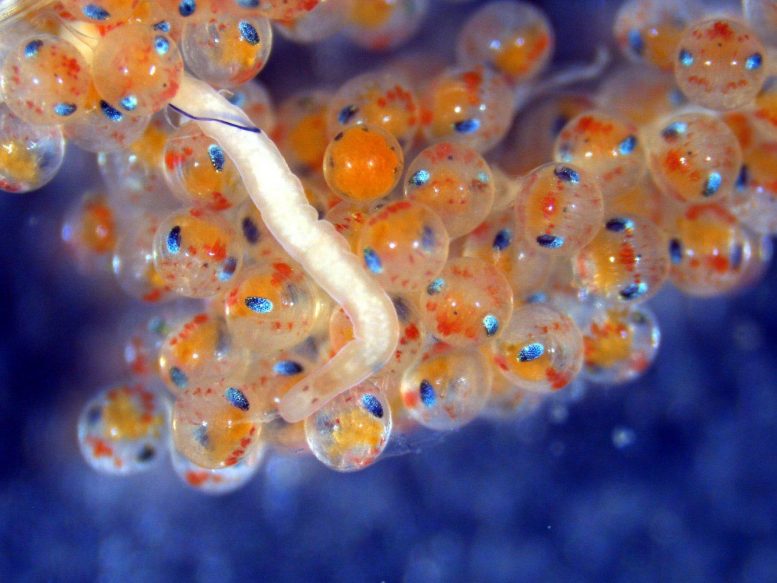
Artisan fishers caught 90 egg-bearing spiny lobsters near Pueblo Viejo, Magdalena, Colombia, to determine whether C. conanobrieni affected embryo mortality, fecundity, and reproductive output in brooding females.
Of the 90 lobsters, nearly 88% had either nemertean worms or worm cysts and egg masses.
Embryo mortality, indicated by empty capsules and dead embryos, ranged between 0% and 43.81% in infected gravid females. Embryo mortality was absent in non-infected gravid female lobsters.
Researchers also confirmed that the presence of the worm impacted reproductive output.

“The effect of the parasite varies from female to female. Some may be heavily affected; others may not. We don’t know why yet,” Baeza said. “We know the egg predator is affecting the population level, but we cannot say for how much of an effect yet, whether it will be bad or devastating because we don’t have that data yet.”
Carcinonemertes worms have been responsible for the collapse of crustacean fisheries on the west coast of North America.
Caribbean spiny lobsters are vital for the marine ecosystem because they are prey for many predators, including sharks, large fish such as grouper and snapper, turtles, and octopuses. They are predators, too, and eat snails, crabs, and clams. The clams are part of a different tropic chain, so when lobsters eat them, they link tropic networks and energy flow through the entire ecosystem.
“A whole industry and coastal communities along the entire Caribbean basin rely on this species,” Baeza said.
Baeza said if researchers can understand the prevalence of the egg predator and its effects, a modeling approach might predict future landings and inform those managing the fishery to minimize adverse effects.
In addition to Baeza, Clemson graduate student Natalie Stephens and researchers from Colombia and Chile contributed to the study. Their findings are detailed in the paper “The effect of the egg-predator Carcinonemertes conanobrieni (Nemertea) on the reproductive performance of the Caribbean spiny lobster Panulirus argus.”
Reference: “The effect of the egg-predator Carcinonemertes conanobrieni (Nemertea) on the reproductive performance of the Caribbean spiny lobster Panulirus argus” by Amanda Berben, Natalie C. Stephens, Jaime Gonzalez-Cueto, Yulibeth Velasquez, Sigmer Quiroga, María Teresa González and J. Antonio Baeza, 26 June 2023, BMC Zoology.
DOI: 10.1186/s40850-023-00165-w
Never miss a breakthrough: Join the SciTechDaily newsletter.
Follow us on Google and Google News.