
Close Menu
    Facebook X (Twitter) Instagram
    SciTechDaily
    • Biology
    • Chemistry
    • Earth
    • Health
    • Physics
    • Science
    • Space
    • Technology
    Facebook X (Twitter) Pinterest YouTube RSS
    SciTechDaily
    Home»Biology»Yale Study Examines Evolutionary Cradle for Antarctica Marine Life
    Biology

    Yale Study Examines Evolutionary Cradle for Antarctica Marine Life

    By Bill Hathaway, Yale UniversityJuly 24, 2017No Comments3 Mins Read
    Facebook Twitter Pinterest Telegram LinkedIn WhatsApp Email Reddit
    Share
    Facebook Twitter LinkedIn Pinterest Telegram Email Reddit
    Study Examines Evolutionary Cradle for Antarctica Marine Life
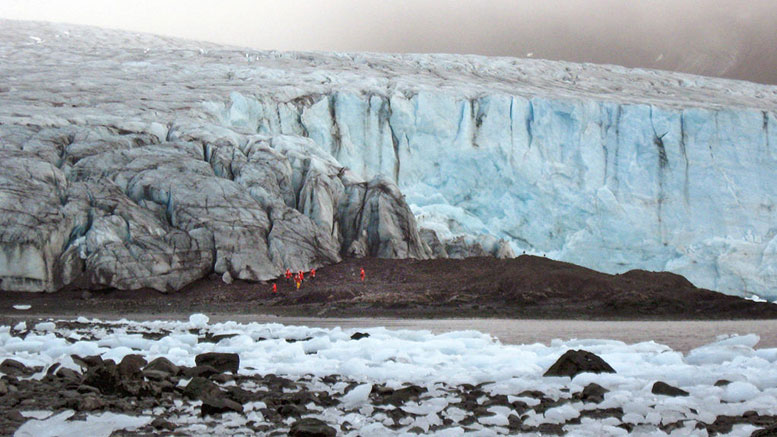
    Recent scientific studies have discovered that the mostly desolate islands extending north from Antarctica are the place of origin for numerous contemporary marine species.

    New research from Yale University and the North Carolina Museum of Natural Sciences reveals that the largely barren islands reaching north from Antarctica are actually the birthplace of many modern species of marine life.

    “We used to think diversity was generated on continents and spread to islands,” said Thomas Near, professor of ecology and evolutionary biology and the Bingham Oceanographic Curator at the Peabody Museum of Natural History, and senior author of the paper appearing July 24 in the journal Nature Ecology and Evolution. “But in Antarctica, it is the islands that hold seeds of diversity and the continent that is home to the youngest species.”

    For the past 40 million years, the Antarctic has been insulated from other ecosystems by a cold water thermal barrier. As a result, one lineage of fish adapted to cold water has come to dominate the entire continental region. Almost all species of fish in Antarctica are from the notothenioid lineage, which includes the Chilean sea bass, a restaurant staple.

    A genetic analysis conducted by researchers from the Peabody Museum at Yale and the North Carolina Museum of Natural Sciences shows that during periodic advances of glacial ice, many species of marine life retreated to the Scotia Arc, the archipelago that extends northward into the Southern Ocean. It is there that new species arose and, as ice retreated again, repopulated areas of the continent.

    “Imagine if Florida and the Bahamas were the places that repeatedly gave rise to North America’s animal species,” said Alex Dornburg, research, curator of ichthyology at the North Carolina Museum of Natural Sciences, and lead author of the study. “It would put an entirely different emphasis on our conservation efforts and resource management strategies.”

    Much like Florida, the Antarctic northern peninsula is now threatened by the arrival of new “colonists,” and these invading species have the potential to fundamentally alter the food web of this fragile marine ecosystem, the authors say. Also, the fishes of the Southern Ocean are the basis of a multi-billion dollar international economy and a major source of food for whales, seals, penguins, and albatrosses.

    “In an elegant twist of fate, the source area for Antarctica’s marine fish species is now a point of entry for invading colonists,” said Dornburg. “We may be seeing the reversal of a major evolutionary process.”

    This ancient pattern found by the team is already threatened by climate change and the arrival in the Scotia Arc of invasive species such as king crabs, a predator that promises to disrupt the delicate balance of marine life.

    “The system is very fragile, and marine life have had only limited predators to deal with,” Near said. “Now it’s an all-you-can-eat buffet.”

    Primary funding for the research was provided by National Science Foundation.

    Other authors of the paper included Sarah Federman of Yale University, April Lamb of North Carolina State University and the North Carolina Museum of Natural Sciences, and Christopher Jones of National Oceanic and Atmospheric Administration.

    Reference: “Cradles and museums of Antarctic teleost biodiversity” by Alex Dornburg, Sarah Federman, April D. Lamb, Christopher D. Jones and Thomas J. Near, 24 July 2017, Nature Ecology & Evolution.
    DOI: 10.1038/s41559-017-0239-y

    Never miss a breakthrough: Join the SciTechDaily newsletter.
    Follow us on Google and Google News.

    Earth Science Ecology Evolutionary Biology Marine Biology Yale University
    Share. Facebook Twitter Pinterest LinkedIn Email Reddit

    Related Articles

    Study Projects How Climate Change Will Affect the Functions Birds in Ecosystems Worldwide

    Barb Geometry of Asymmetrical Feathers Sheds Light on Evolution of Flight

    Yale Study Details Recent Shifts in Occurrence, Cause, and Magnitude of Mass Animal Die-Offs

    Scientists Detail the Evolutionary Success of Spiny-Rayed Fishes

    Antibiotics Might Contribute to the Health Problems of the Bee Colonies

    Genetic Analysis Reveals New Family Tree for Ray-Finned Fish

    Extinctions Due to Habitat Loss are Proportional to the Area Destroyed

    Evolution Shapes Ecology of Dammed Connecticut Lakes

    “Map of Life” to Illustrate All Living Things Geographically

    Leave A Reply Cancel Reply

    • Facebook
    • Twitter
    • Pinterest
    • YouTube

    Don't Miss a Discovery

    Subscribe for the Latest in Science & Tech!

    Trending News

    Popular Vitamin B3 Supplements May Help Cancer Cells Survive, Scientists Warn

    Scientists Discover Strange Property of Rice and Turn It Into a Smart Material

    NASA Artemis II Skips Burn As Astronaut Captures Stunning View of Earth

    NASA’s Artemis II: Humans Just Left Earth Orbit for the First Time Since 1972

    What Causes Chronic Pain? Scientists Identify Key Culprit in the Brain

    Semaglutide Shows Surprising Mental Health Benefits in Massive 100,000-Person Study

    This Liquid Snapped Instead of Flowing and Scientists Were Shocked

    Breakthrough Alzheimer’s Drug Rewires the Brain Instead of Just Clearing Plaques

    Follow SciTechDaily
    • Facebook
    • Twitter
    • YouTube
    • Pinterest
    • Newsletter
    • RSS
    SciTech News
    • Biology News
    • Chemistry News
    • Earth News
    • Health News
    • Physics News
    • Science News
    • Space News
    • Technology News
    Recent Posts
    • Astronomers Discover the Most Pristine Star Ever Found
    • New Study Suggests Gravitational Waves May Have Created Dark Matter
    • Scientists Solve 60-Year-Old Mystery of Strange Magnetic Surges Above the Moon
    • Scientists Discover How Multiple Sclerosis Kills Brain Cells
    • Scientists Discover Why the Brain Gets Stuck in Schizophrenia
    Copyright © 1998 - 2026 SciTechDaily. All Rights Reserved.
    • Science News
    • About
    • Contact
    • Editorial Board
    • Privacy Policy
    • Terms of Use

    Type above and press Enter to search. Press Esc to cancel.