
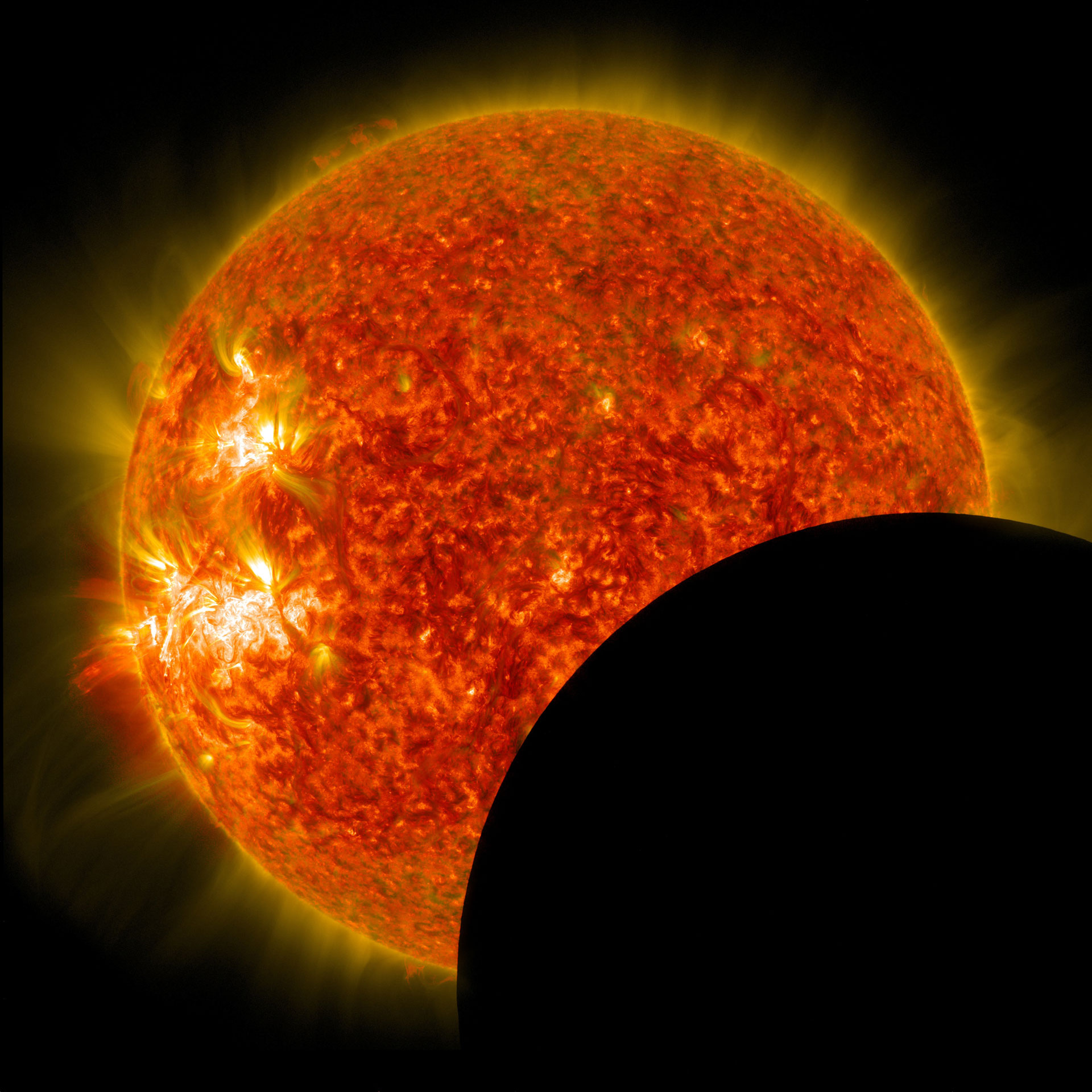
NASA has released information and safety tips for viewing the upcoming August 21st solar eclipse.
More than 300 million people in the United States potentially could directly view the August 21st total solar eclipse, and NASA wants everyone who will witness this celestial phenomenon to do so safely.
That Monday, a partial eclipse will be visible in every state. A total solar eclipse, which is when the Moon completely covers the Sun, will occur across 14 states in the continental U.S. along a 70-mile-wide (112-kilometer-wide) swath of the country.
It’s common sense not to stare directly at the Sun with your naked eyes or risk damaging your vision, and that advice holds true for a partially eclipsed Sun. But, only with special-purpose solar filters, such as eclipse glasses or a handheld solar viewer, you can safely look directly at the Sun.
NASA recommends that people who plan to view the eclipse should check the safety authenticity of viewing glasses to ensure they meet basic proper safety viewing standards.
Eclipse viewing glasses and handheld solar viewers should meet all the following criteria:
- Have certification information with a designated ISO 12312-2 international standard
- Have the manufacturer’s name and address printed somewhere on the product
- Not be used if they are older than three years, or have scratched or wrinkled lenses
- Not use homemade filters
- Ordinary sunglasses — even very dark ones — should not be used as a replacement for eclipse viewing glasses or handheld solar viewers
“While NASA isn’t trying to be the eclipse safety glasses ‘police,’ it’s our duty to inform the public about safe ways to view what should be a spectacular sky show for the entire continental United States,” said Alex Young, associate director for science in the Heliophysics Science Division at NASA’s Goddard Space Flight Center in Greenbelt, Maryland. “It’s important that individuals take the responsibility to check they have the proper solar eclipse viewing glasses. With the eclipse a month away today, it’s prudent to practice ahead of time.”
An alternative method for safe viewing of the partially-eclipsed Sun is with a pinhole projector. With this method, sunlight streams through a small hole – such as a pencil hole in a piece of paper, or even the space between your fingers – onto a makeshift screen, such as a piece of paper or the ground. It’s important to only watch the screen, not the Sun. Never look at the Sun through the pinhole — it is not safe.
NASA has coordinated with medical and science professionals to provide additional safety information. For details, visit: https://eclipse2017.nasa.gov/safety
More than 6,800 libraries across the U.S. are distributing safety-certified glasses. Many are working with scientists to hold viewing events and activities before and during the eclipse. For a listing of participating libraries, visit: https://www.starnetlibraries.org/2017eclipse
NASA Television is offering a special live program, “Eclipse Across America: Through the Eyes of NASA” with real-time coverage of the event from coast to coast. The nearly four-hour program will include unprecedented images of the August 21st eclipse from numerous spacecraft — including the International Space Station – high-altitude aircraft and balloons, and ground observations. Each will offer a unique vantage point for the eclipse. Additionally, the broadcast will include live coverage of activities in parks, libraries, stadiums, festivals and museums across the nation, and on social media. To watch the August 21st NASA TV eclipse broadcast online and access interactive web content and views of the eclipse from these assets, visit: https://www.nasa.gov/eclipselive
Never miss a breakthrough: Join the SciTechDaily newsletter.
Follow us on Google and Google News.