
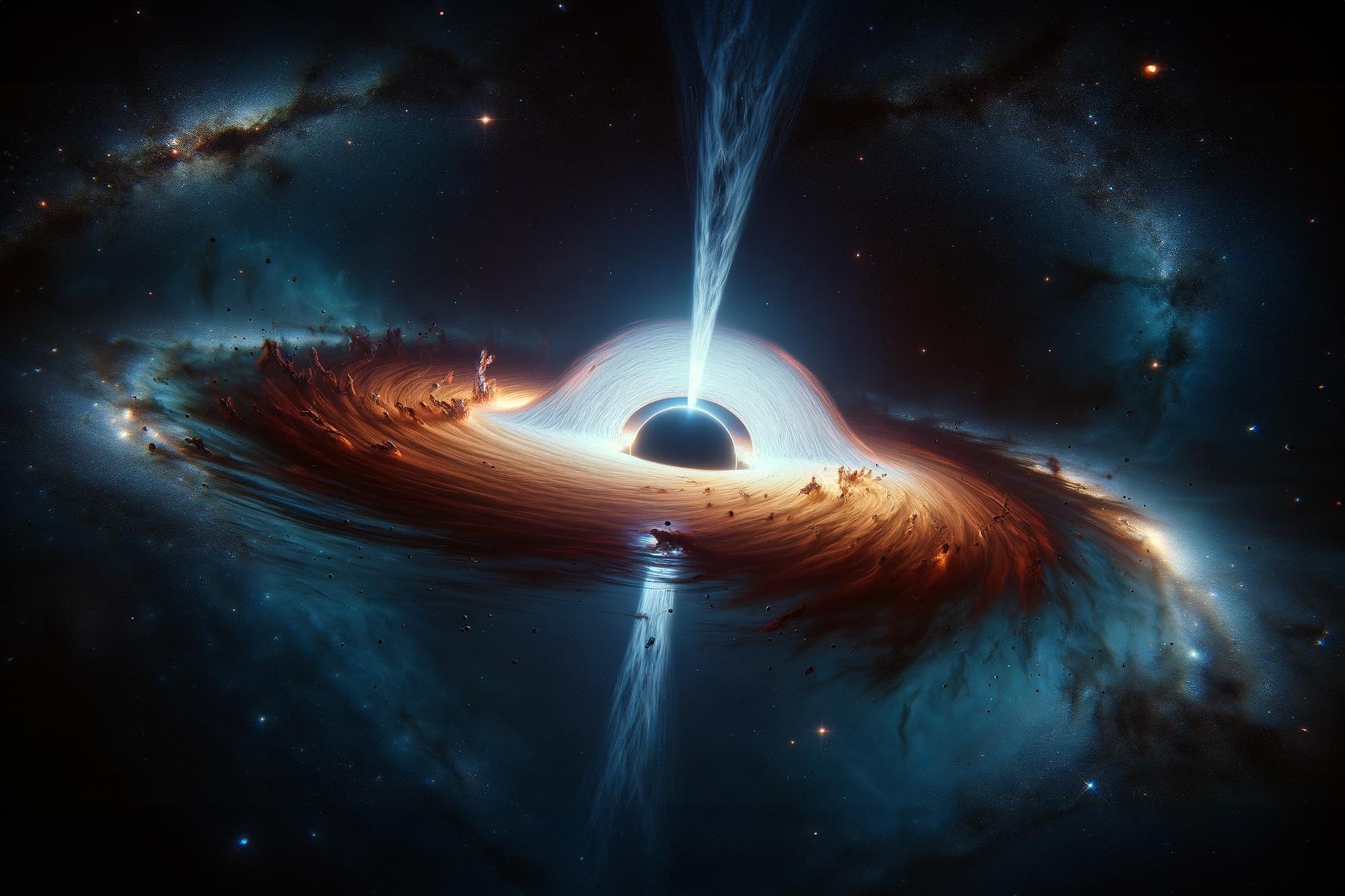
Radio observations of Compact Symmetric Objects (CSOs) provide new clues about their origins.
A new investigation into an obscure class of galaxies known as Compact Symmetric Objects, or CSOs, has revealed that these objects are not entirely what they seem. CSOs are active galaxies that host supermassive black holes at their cores. Out of these monstrous black holes spring two jets traveling in opposite directions at nearly the speed of light. But in comparison to other galaxies that boast fierce jets, these jets do not extend out to great distances—they are much more compact. For many decades, astronomers suspected that CSOs were simply young and that their jets would eventually travel out to greater distances.
Now, reporting in three different papers in The Astrophysical Journal, a Caltech-led team of researchers has concluded that CSOs are not young but rather lead relatively short lives.
A Distinct Galactic Phenomenon
“These CSOs are not young,” explains Anthony (Tony) Readhead, the Robinson Professor of Astronomy, Emeritus, who led the investigation. “You wouldn’t call a 12-year-old dog young even though it has lived a shorter life than an adult human. These objects are a distinct species all of their own that live and die out in thousands of years rather than the millions of years that are common in galaxies with bigger jets.”
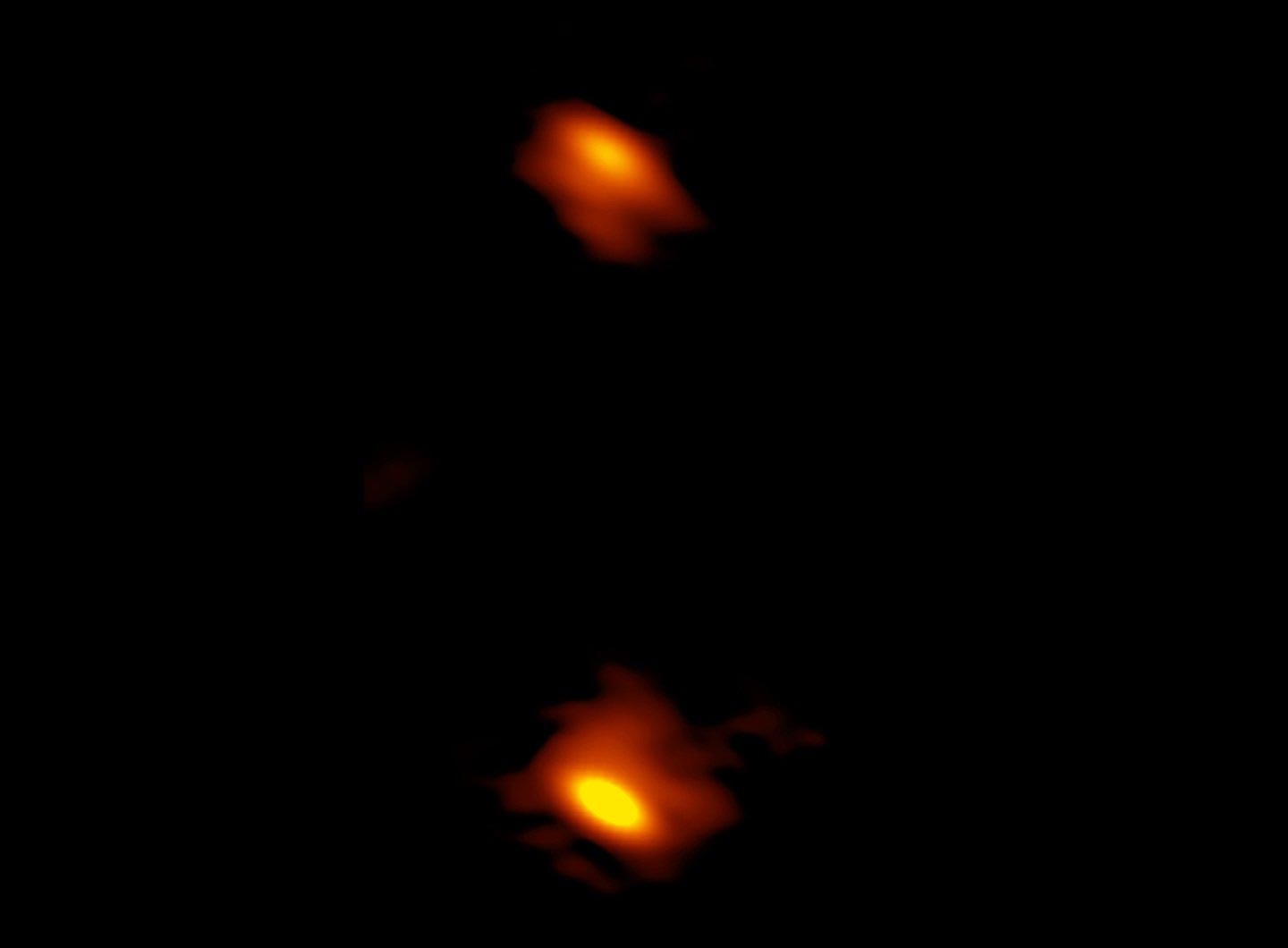
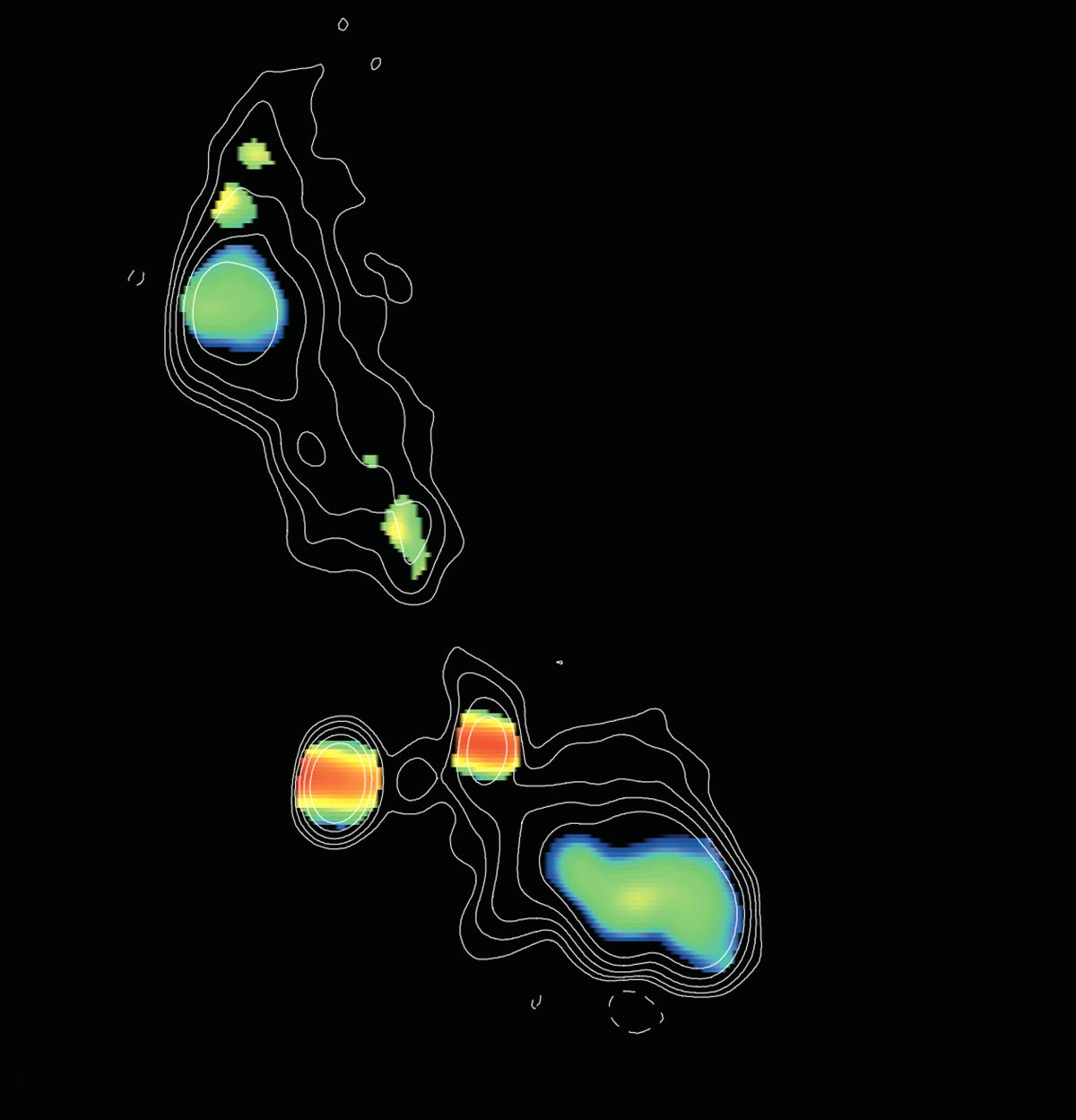
In the new studies, the team reviewed literature and past observations of more than 3,000 CSO candidates, verifying 64 as real and identifying an additional 15 CSOs. All these objects had been previously observed by the National Radio Astronomy Observatory’s Very Long Baseline Array (VLBA), funded by the National Science Foundation (NSF), and some had been observed by other high-resolution radio telescopes. “The VLBA observations are the most detailed in astronomy, providing images with details equivalent to measuring the width of a human hair at a distance of 100 miles,” Readhead says.
The Ephemeral Life of CSOs
The team’s analysis concludes that CSOs expel jets for 5,000 years or less and then die out. “The CSO jets are very energetic jets but they seem to shut off,” says Vikram Ravi, assistant professor of astronomy at Caltech and a co-author of one of the studies. “The jets stop flowing from the source.”
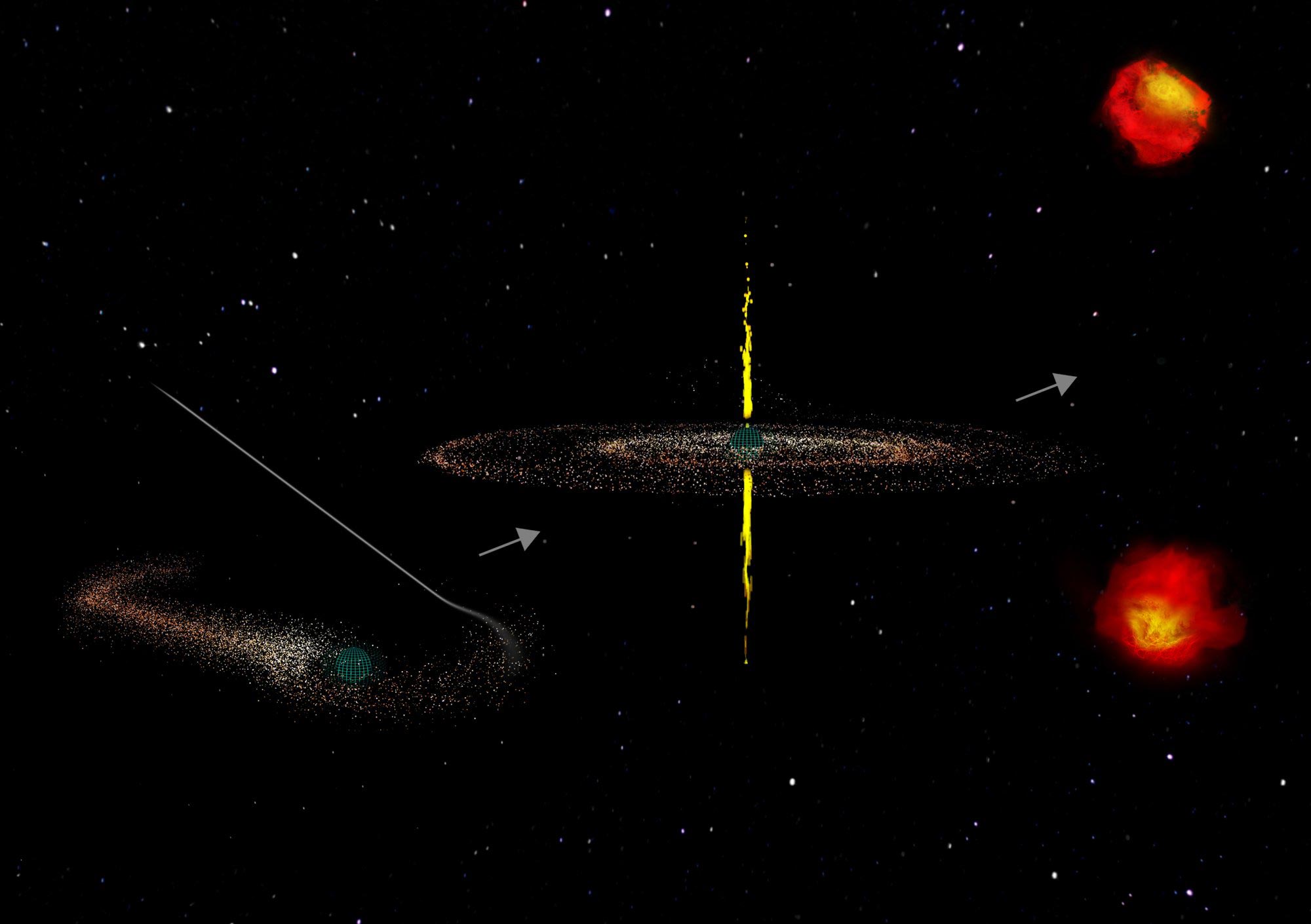
As for what is fueling the short-lived jets, the scientists believe the cause is a tidal disruption event (TDE), which occurs when a single star wanders too close to a supermassive black hole and is devoured.
Tidal Disruption Events: Powering the CSOs
“We think that a single star gets ripped apart, and then all that energy is channeled into jets along the axis the black hole is spinning around,” Readhead says. “The giant black hole starts out invisible to us, and then when it consumes a star, boom! The black hole has fuel, and we can see it.”
Cosmic objects called Compact Symmetric Objects (CSOs) likely form when a single, massive star wanders too close to a supermassive black hole and is shredded to pieces. The process, highlighted in this animation, results in fierce bipolar jets that last up to 5,000 years. Credit: B. Saxton/NRAO/AUI/NSF
Readhead first suspected that CSOs might be fueled by TDEs back in the 1990s, but he says the idea went largely unnoticed by the scientific community. “The hypothesis was all but forgotten because years went by before observational evidence began to mount for TDEs,” he says. At the time of his original hypothesis, only three CSOs had been found.
Rediscovering and Defining CSOs
Fast forward to 2020. Readhead, who had paused his studies of CSOs to delve into different problems in radio astronomy, decided it was time to revisit the topic. He gathered some of his colleagues together on Zoom, and they decided to comb through literature and weed out objects that had been misclassified as CSOs. Over the next two years, the team investigated more than 3,000 CSO candidates, narrowing the group down to only dozens that had the criteria to be real CSOs.
Ultimately, a picture began to emerge of CSOs as an entirely distinct family with jets that die out much sooner than their gigantic brethren, such as those of the extremely powerful Cygnus A, a galaxy that shoots out extremely powerful jets that glow brightly at radio wavelengths. These jets stretch to distances of about 230,000 light-years in each direction and last tens of millions of years. In contrast, the CSO jets extend to about 1,500 light-years at most and die out by about 5,000 years.

A New Avenue for Galactic Study
According to the astronomers, the CSO jets likely form when a supermassive black hole snacks on not just any star, but a substantial one.
“The TDEs we’ve previously seen only lasted for a few years,” Ravi says. “We think that the remarkable TDEs powering CSOs last far longer because the disrupted stars are very large in size, very massive, or both.”
By analyzing the varied collection of CSO radio images, the researchers say they can trace how the objects age over time, almost like looking at a photo album of a CSO’s life to observe how its jets evolve. The younger CSOs have shorter jets that are closer to the black holes, while the older objects have jets that extend further out from their black hole. Though most of the jets die out, the scientists estimate that one in 100 will go onto to become long-lived like those of Cygnus A. In those rare cases, the galaxies are likely merging with other galaxies, a turbulent process that provides a large quantity of fuel.
If the discoveries of Readhead and his team are confirmed with additional observations, the CSOs will provide a whole new avenue for studying how massive stars at the centers of galaxies interact with supermassive black holes.
“These objects are indeed a distinct population with their own distinct origin, and it is up to us now to learn more about them and how they came to be,” Readhead says. “Being able to study these objects on timescales of years to decades rather than millions of years has opened the door to a whole new laboratory for studying supermassive black holes and the many unexpected and unpredictable surprises they hold.”
The three studies are, “Compact Symmetric Objects – I Towards a Comprehensive Bona Fide Catalog,” “Compact Symmetric Objects – II Confirmation of a Distinct Population of High-Luminosity Jetted Active Galaxies,” and “Compact Symmetric Objects – III Evolution of the High-Luminosity Branch and a Possible Connection with Tidal Disruption Events.”
References:
“Compact Symmetric Objects. I. Toward a Comprehensive Bona Fide Catalog” by S. Kiehlmann, M. L. Lister, A. C. S Readhead, I. Liodakis, Sandra O’Neill, T. J. Pearson, Evan Sheldahl, Aneta Siemiginowska, K. Tassis, G. B. Taylor and P. N. Wilkinson, 31 January 2024, The Astrophysical Journal.
DOI: 10.3847/1538-4357/ad0c56
“Compact Symmetric Objects. II. Confirmation of a Distinct Population of High-luminosity Jetted Active Galaxies” by S. Kiehlmann, A. C. S. Readhead, S. O’Neill, P. N. Wilkinson, M. L. Lister, I. Liodakis, S. Bruzewski, V. Pavlidou, T. J. Pearson, E. Sheldahl, A. Siemiginowska, K. Tassis and G. B. Taylor, 31 January 2024, The Astrophysical Journal.
DOI: 10.3847/1538-4357/ad0cc2
“Compact Symmetric Objects. III. Evolution of the High-luminosity Branch and a Possible Connection with Tidal Disruption Events” by A. C. S Readhead, V. Ravi, R. D. Blandford, A. G. Sullivan, J. Somalwar, M. C. Begelman, M. Birkinshaw, I. Liodakis, M. L. Lister, T. J. Pearson, G. B. Taylor, P. N. Wilkinson, N. Globus, S. Kiehlmann, C. R. Lawrence, D. Murphy, S. O’Neill, V. Pavlidou, E. Sheldahl, A. Siemiginowska and K. Tassis, 31 January 2024, The Astrophysical Journal.
DOI: 10.3847/1538-4357/ad0c55
The studies were funded by NSF, NASA, Caltech, the Max Planck Institute for Radio Astronomy in Bonn, Germany, and the European Research Council.
Never miss a breakthrough: Join the SciTechDaily newsletter.
Follow us on Google and Google News.