
Close Menu
    Facebook X (Twitter) Instagram
    SciTechDaily
    • Biology
    • Chemistry
    • Earth
    • Health
    • Physics
    • Science
    • Space
    • Technology
    Facebook X (Twitter) Pinterest YouTube RSS
    SciTechDaily
    Home»Science»Could the “Lost” Islands of Ancient Welsh Folklore Really Have Existed? Scientists Say Yes
    Science

    Could the “Lost” Islands of Ancient Welsh Folklore Really Have Existed? Scientists Say Yes

    By Swansea UniversitySeptember 12, 20223 Comments4 Mins Read
    Facebook Twitter Pinterest Telegram LinkedIn WhatsApp Email Reddit
    Share
    Facebook Twitter LinkedIn Pinterest Telegram Email Reddit
    Old Map Islands
    The study was inspired by the Gough map, which depicts two “lost” islands in Cardigan Bay offshore west Wales, United Kingdom.

    A new study of coastal geography finds that the lost islands mentioned in Welsh folklore and poetry are plausible.

    New evidence on the evolution of west Wales’ coastline has shown a Welsh tradition going back to the medieval era of a landscape lost to the sea is plausible.

    The researchers from Swansea University and the University of Oxford suggest how two islands came into being and subsequently vanished using geological data and a medieval map.

    The study was inspired by the Gough Map, the oldest surviving map of Great Britain. The map is believed to have potentially originated from the thirteenth century and is currently housed in Oxford’s Bodleian Library.

    The map depicts two lost islands in Cardigan Bay in west Wales. Each of them is roughly one-quarter the size of the north Wales island of Anglesey. One is between Aberystwyth and Aberdovey, while the other is between there and Barmouth to the north.
    Cardigan Bay Erosion
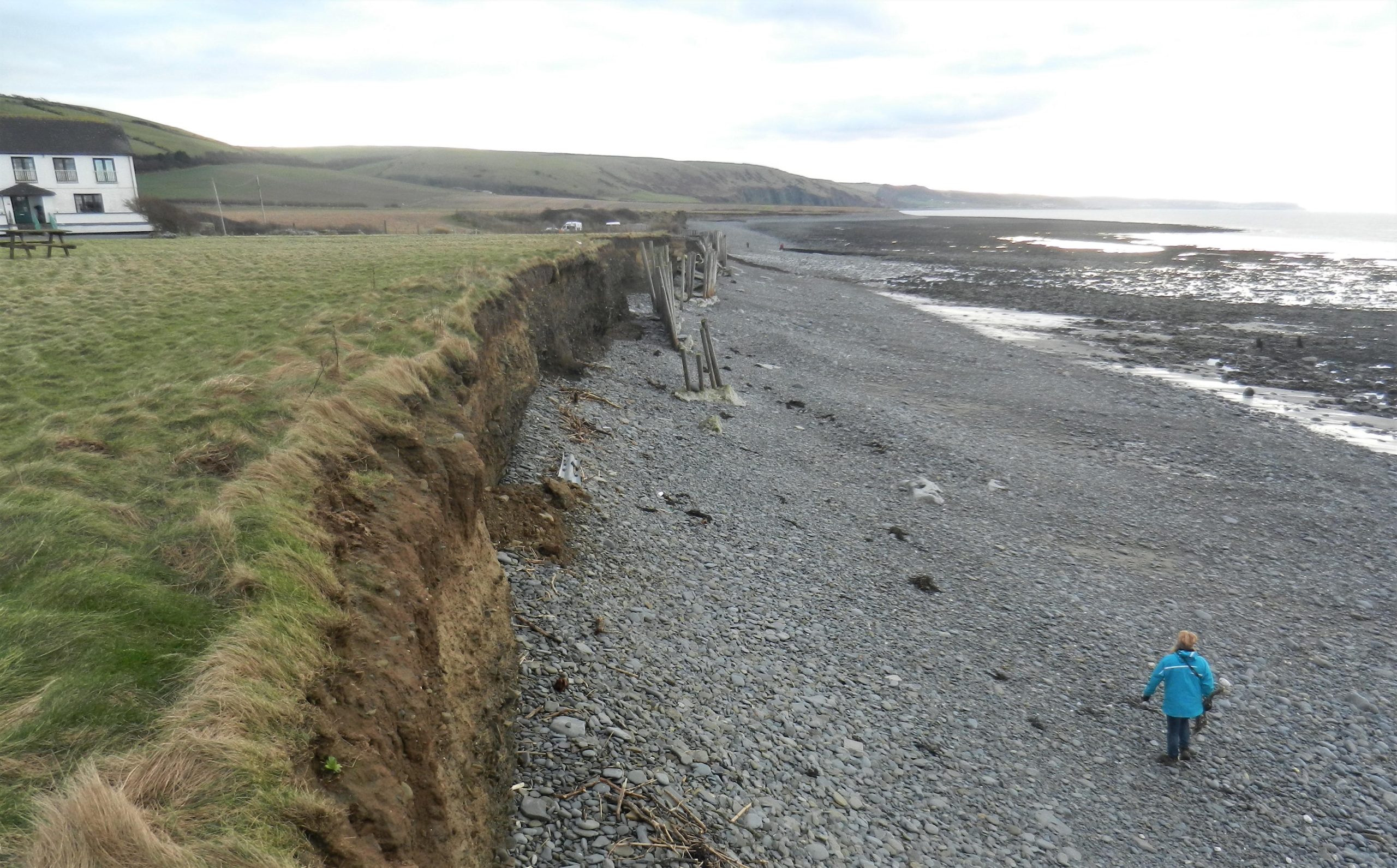
    New research has shown that “lost islands” mentioned in Welsh folklore, could be the remnants of a low-lying landscape underlain by soft glacial deposits laid down during the last ice age. Since then, forces of erosion have worn away the land, reducing it to islands, before these too were worn away and disappeared by the sixteenth century. Credit: Prof Simon Haslett, Swansea University

    Simon Haslett, Honorary Professor of Physical Geography at Swansea University, and David Willis, Jesus Professor of Celtic at the University of Oxford, conducted the research.

    Their research analyzes historical sources as well as geological evidence from the seafloor and shoreline. It suggests a model for how the coast has grown since the last ice age 10,000 years ago, which provides a possible explanation for the ‘lost’ islands.

    Black Book of Carmarthen
    The Black Book of Carmarthen (1250 approx) is believed to be the earliest surviving complete manuscript written in the Welsh language. This extract says, in Welsh: “Stand forth, Seithenhin, and look upon the fury of the sea; it has covered Maes Gwyddneu.” The new research on the evolution of the coastline in west Wales suggests that claims such as this of a drowned land are plausible. Credit: Llyfrgell Genedlaethol Cymru/National Library of Wales

    Erosion and Disappearance of Islands

    They speculate that the islands are the remains of a low-lying terrain underlain by soft glacial deposits from the last ice age. Since then, erosional processes have worn away the land, reducing it to islands, before these too were worn away and disappeared by the sixteenth century.

    As finer sediments of glacial deposits are eroded away, the larger gravel and boulder component is left on the seafloor. The position of the islands coincides with the location of submarine accumulations of gravel and boulders, known locally as sarns.
    Simon Haslett and David Willis
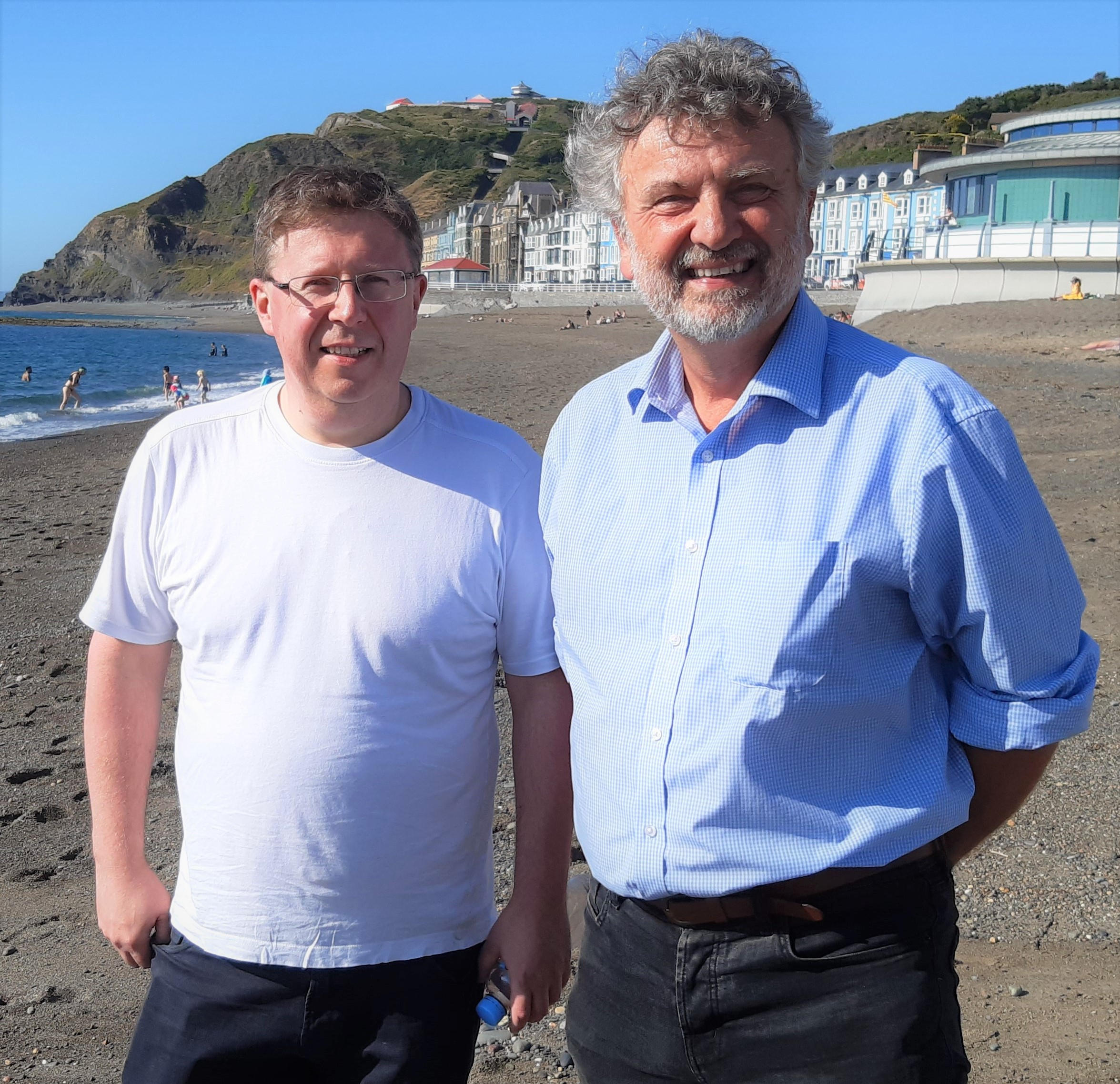
    Prof David Willis (l), Jesus Professor of Celtic at the University of Oxford, and Prof Simon Haslett (r) Emeritus professor of geography at Swansea University. Their research showed that myths about lost islands on the west Wales coast were plausible. Credit: Prof Simon Haslett, Swansea University

    Modern Coastal Changes and Future Implications

    Professor Simon Haslett of Swansea University Department of Geography said: “We know that the west Wales coast has changed significantly over time. Evidence from the Roman cartographer Ptolemy suggests the coastline 2000 years ago may have been some 13 km (8 mi) further out to sea than it is today. The Gough Map is extraordinarily accurate considering the surveying tools they would have had at their disposal at that time, and the two islands are clearly marked.”

    He continues, “Our research increases our understanding of potential coastal processes acting along the coast of Cardigan Bay. It can also help with future research on post-glacial evolution of similar lowlands in other parts of northwest Europe. Understanding coastline dynamics has never been more important. Some towns along the area we studied are vulnerable to climate and sea-level change, and it has been suggested that it may lead to some of the first climate change refugees in the UK.”

    David Willis, Jesus Professor of Celtic Studies at the University of Oxford, said: “Our evidence may provide an explanation of how the story of Cantre’r Gwaelod (‘The Hundred of the Bottom’) may have arisen. This lost land is said to have suffered a catastrophic inundation and is referred to in poetry in the Black Book of Carmarthen and in later folklore.”

    Reference: “The ‘lost’ islands of Cardigan Bay, Wales, UK: insights into the post-glacial evolution of some Celtic coasts of northwest Europe” by Simon K. Haslett and David Willis, 11 June 2022, Atlantic Geoscience.
    DOI: 10.4138/atlgeo.2022.005

    Never miss a breakthrough: Join the SciTechDaily newsletter.
    Follow us on Google and Google News.

    Popular Swansea University University of Oxford
    Share. Facebook Twitter Pinterest LinkedIn Email Reddit

    Related Articles

    Decoding a 200-Year-Old Mystery: Research Sheds New Light on the Evolution of Animals

    Scientists Solve 200-Year-Old Biodiversity Mystery Through Analysis of Over 400,000 Fossils

    Decoding the Past – Scientists Uncover the Origin of Mysterious Giant Extinct Marine Reptile Graveyard

    500 Million Year-Old Fossils Solve a Centuries-Old Riddle in the Evolution of Life on Earth

    “A Genealogy for All of Humanity” – University of Oxford Researchers Create Largest Ever Human Family Tree

    Finally Revealed: Gargantuan True Size of Legendary Prehistoric Mega-Shark Megalodon

    Your Eyes Can Reveal if You’ve Suffered a Traumatic Experience in the Past

    Egyptologist Discovers Mysterious Head of a Pharaoh

    Scientists Believe Humans Will One Day Colonize the Universe

    3 Comments

    1. Malcolm Novar on September 15, 2022 7:15 am

      Along the east coast of Suffolk, England, there was a city called Dunwich. Over the centuries, through erosion and storms, Dunwich slowly fell into the sea…
      An interesting article follows….
      https://www.bbc.com/news/uk-england-suffolk-35549952

      Reply
    2. Anthony Grubb on September 15, 2022 8:11 am

      The article would’ve meant a lot more to me if they’d lined up the ancient map beside a current map. I looked up the coast of Wales, many of the islands, found Cardigan, but nothing seems to remotely line up. Thus the words of the article drone on for me. It’s accepted that a picture is worth a thousand words, and where we’re talking about changes and many centuries of erosion, comparison pictures become all the more pertinent.

      Reply
      • Mindbreaker on September 16, 2022 4:07 pm

        I presume this is the map: https://en.wikipedia.org/wiki/Gough_Map

        Reply
    Leave A Reply Cancel Reply

    • Facebook
    • Twitter
    • Pinterest
    • YouTube

    Don't Miss a Discovery

    Subscribe for the Latest in Science & Tech!

    Trending News

    Popular Sugar-Free Sweetener Linked to Liver Disease, Study Warns

    What Is Hantavirus? The Deadly Disease Raising Alarm Worldwide

    Scientists Just Discovered How the Universe Builds Monster Black Holes

    Scientists Unveil New Treatment Strategy That Could Outsmart Cancer

    A Simple Vitamin May Hold the Key to Treating Rare Genetic Diseases

    Scientists Think the Real Fountain of Youth May Be Hiding in Your Gut

    Ravens Don’t Follow Wolves, They Predict Them

    This Common Knee Surgery May Be Doing More Harm Than Good

    Follow SciTechDaily
    • Facebook
    • Twitter
    • YouTube
    • Pinterest
    • Newsletter
    • RSS
    SciTech News
    • Biology News
    • Chemistry News
    • Earth News
    • Health News
    • Physics News
    • Science News
    • Space News
    • Technology News
    Recent Posts
    • Popular Supplement Ingredient Linked to Shorter Lifespan in Men
    • Scientists May Have Found a Way To Repair Nerve Damage in Multiple Sclerosis
    • GLP-1 Weight Loss Linked To Dramatically Lower Risk of Sleep Apnea, Kidney Disease and More
    • Scientists Uncover the Surprising Source of Strange Clouds Near the Milky Way’s Supermassive Black Hole
    • This Dazzling Green Snake Was Hiding in Plain Sight for Decades
    Copyright © 1998 - 2026 SciTechDaily. All Rights Reserved.
    • Science News
    • About
    • Contact
    • Editorial Board
    • Privacy Policy
    • Terms of Use

    Type above and press Enter to search. Press Esc to cancel.