
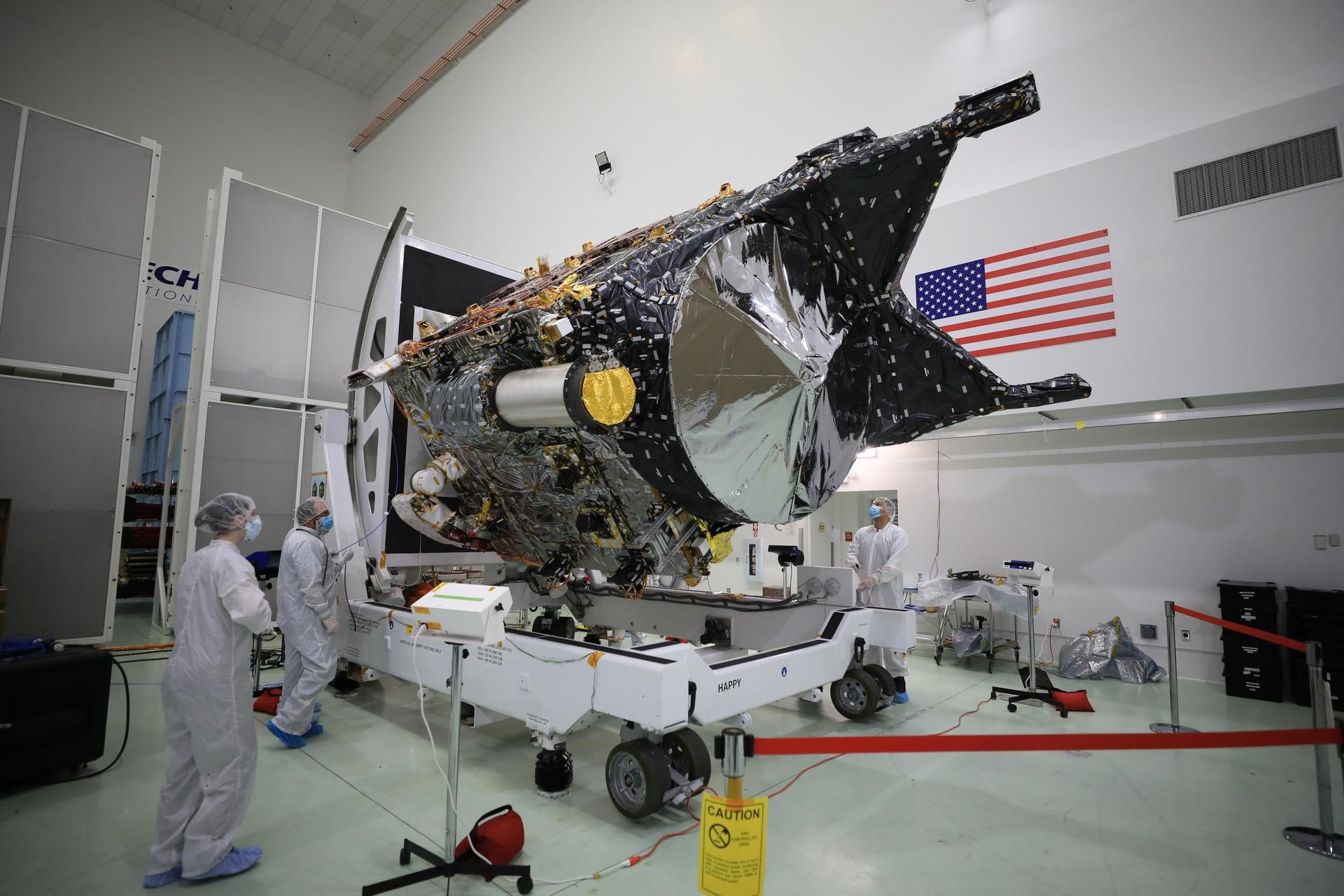
NASA’s Deep Space Optical Communications experiment also interfaced with the Psyche spacecraft’s communication system for the first time, transmitting engineering data to Earth.
Riding aboard NASA’s Psyche spacecraft, the agency’s Deep Space Optical Communications technology demonstration continues to break records. While the asteroid-bound spacecraft doesn’t rely on optical communications to send data, the new technology has proven that it’s up to the task. After interfacing with the Psyche’s radio frequency transmitter, the laser communications demo sent a copy of engineering data from over 140 million miles (226 million kilometers) away, 1½ times the distance between Earth and the Sun.
This achievement provides a glimpse into how spacecraft could use optical communications in the future, enabling higher-data-rate communications of complex scientific information as well as high-definition imagery and video in support of humanity’s next giant leap: sending humans to Mars.
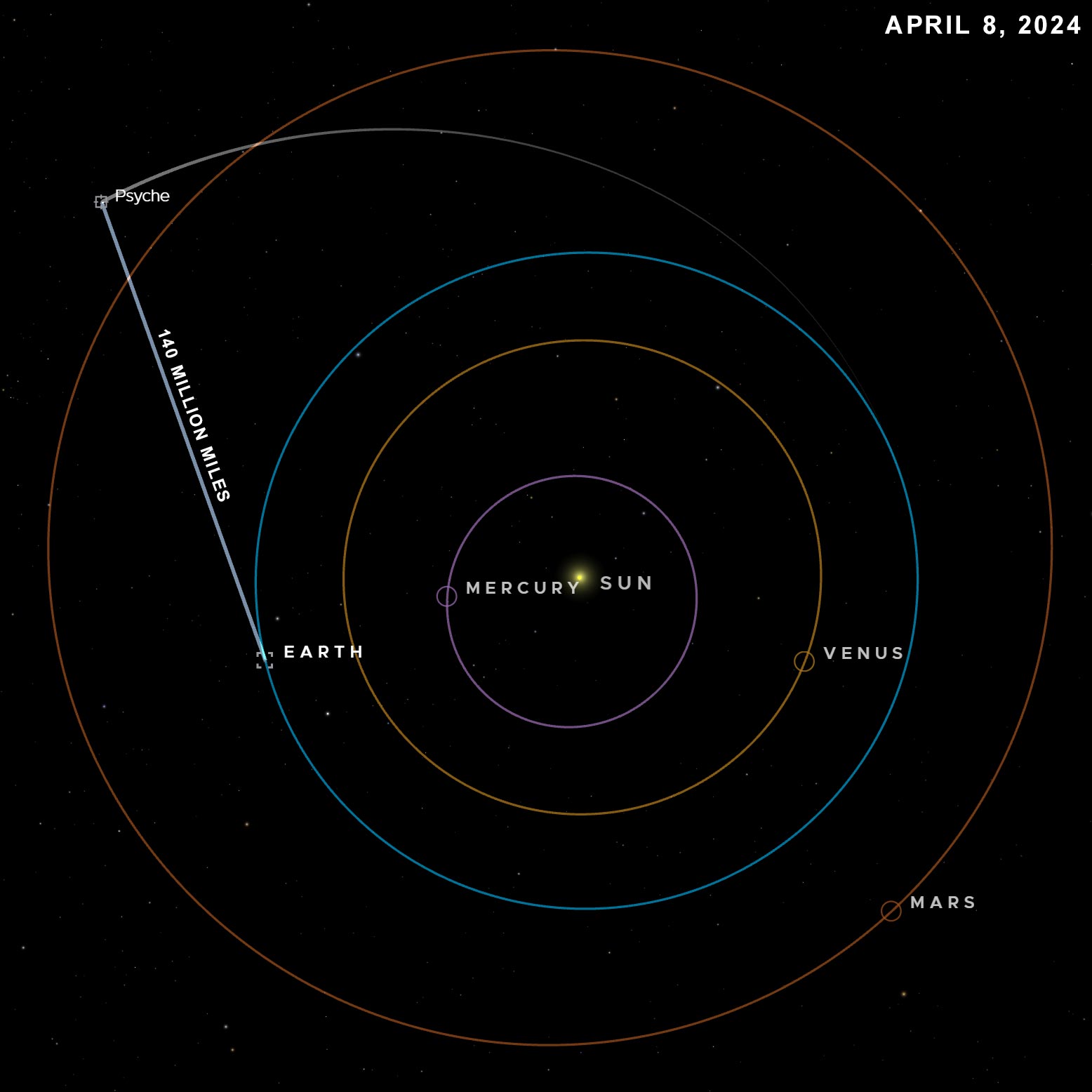
“We downlinked about 10 minutes of duplicated spacecraft data during a pass on April 8,” said Meera Srinivasan, the project’s operations lead at NASA’s Jet Propulsion Laboratory in Southern California. “Until then, we’d been sending test and diagnostic data in our downlinks from Psyche. This represents a significant milestone for the project by showing how optical communications can interface with a spacecraft’s radio frequency comms system.”
The laser communications technology in this demo is designed to transmit data from deep space at rates 10 to 100 times faster than the state-of-the-art radio frequency systems used by deep space missions today.
After launching on October 13, 2023, the spacecraft remains healthy and stable as it journeys to the main asteroid belt between Mars and Jupiter to visit the asteroid Psyche.
Surpassing Expectations
NASA’s optical communications demonstration has shown that it can transmit test data at a maximum rate of 267 megabits per second (Mbps) from the flight laser transceiver’s near-infrared downlink laser — a bit rate comparable to broadband internet download speeds.
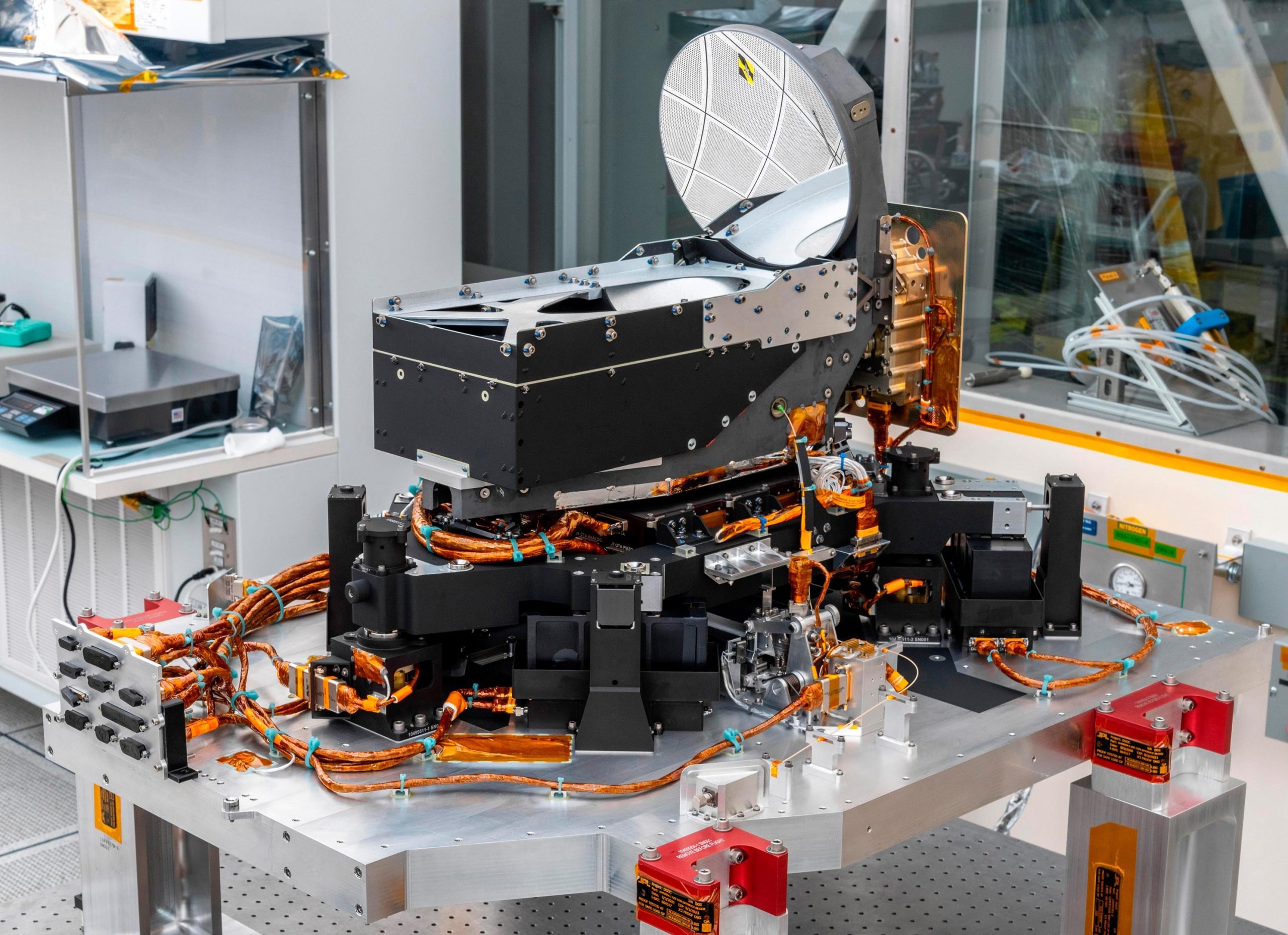
That was achieved on December 11, 2023, when the experiment beamed a 15-second ultra-high-definition video to Earth from 19 million miles away (31 million kilometers, or about 80 times the Earth-Moon distance). The video, along with other test data, including digital versions of Arizona State University’s Psyche Inspired artwork, had been loaded onto the flight laser transceiver (see image below) before Psyche launched last year.
Now that the spacecraft is more than seven times farther away, the rate at which it can send and receive data is reduced, as expected. During the April 8 test, the spacecraft transmitted test data at a maximum rate of 25 Mbps, which far surpasses the project’s goal of proving at least 1 Mbps was possible at that distance.
The project team also commanded the transceiver to transmit Psyche-generated data optically. While Psyche was transmitting data over its radio frequency channel to NASA’s Deep Space Network (DSN), the optical communications system simultaneously transmitted a portion of the same data to the Hale Telescope at Caltech’s Palomar Observatory in San Diego County, California — the tech demo’s primary downlink ground station.
“After receiving the data from the DSN and Palomar, we verified the optically downlinked data at JPL,” said Ken Andrews, project flight operations lead at JPL. “It was a small amount of data downlinked over a short time frame, but the fact we’re doing this now has surpassed all of our expectations.”
Fun With Lasers
After Psyche launched, the optical communications demo was initially used to downlink pre-loaded data, including the Taters the cat video. Since then, the project has proven that the transceiver can receive data from the high-power uplink laser at JPL’s Table Mountain facility, near Wrightwood, California. Data can even be sent to the transceiver and then downlinked back to Earth on the same night, as the project proved in a recent “turnaround experiment.”
This experiment relayed test data — as well as digital pet photographs — to Psyche and back again, a round trip of up to 280 million miles (450 million kilometers). It also downlinked large amounts of the tech demo’s own engineering data to study the characteristics of the optical communications link.
“We’ve learned a great deal about how far we can push the system when we do have clear skies, although storms have interrupted operations at both Table Mountain and Palomar on occasion,” said Ryan Rogalin, the project’s receiver electronics lead at JPL. (Whereas radio frequency communications can operate in most weather conditions, optical communications require relatively clear skies to transmit high-bandwidth data.)
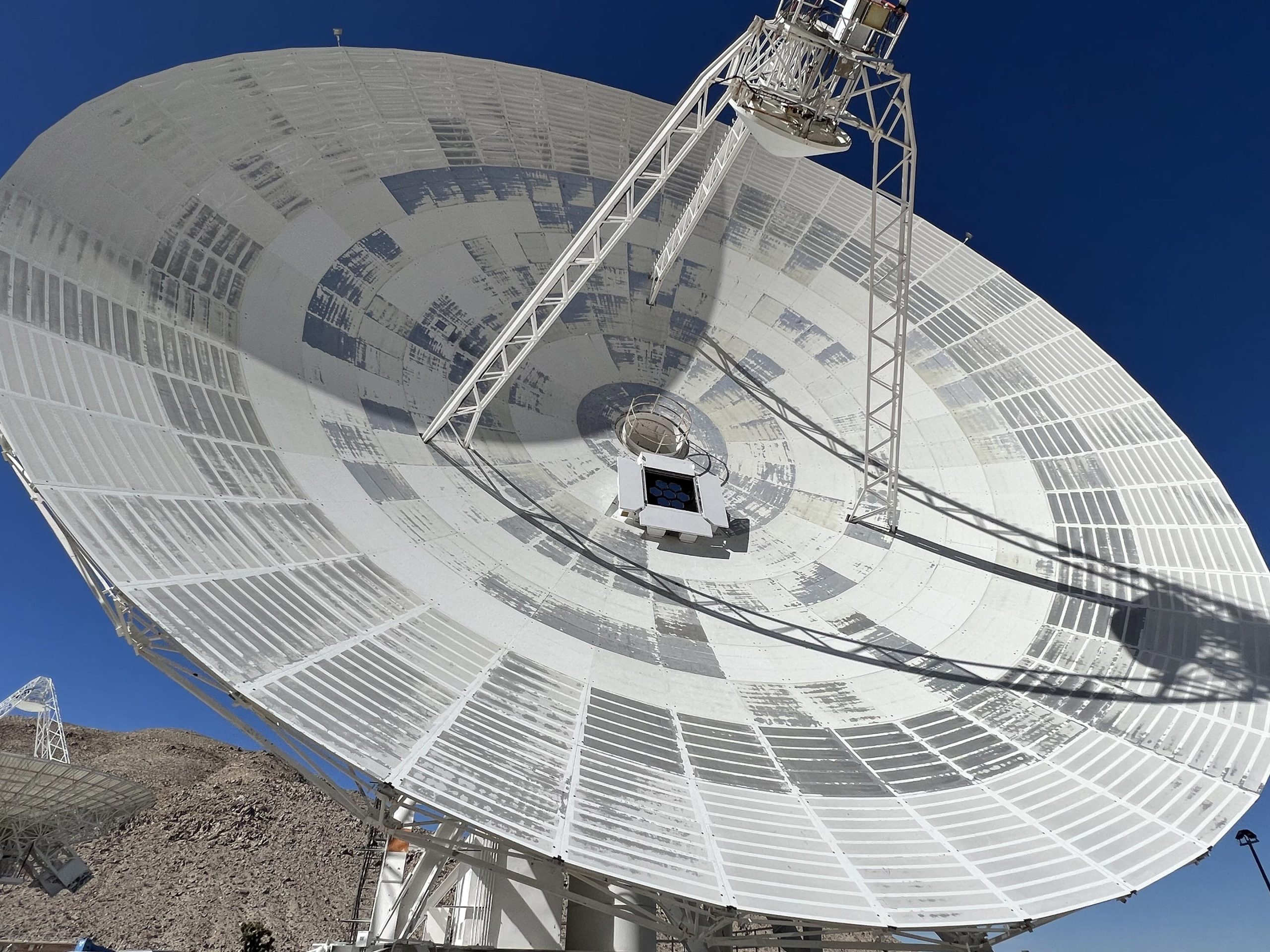
JPL recently led an experiment to combine Palomar, the experimental radio frequency-optical antenna at the DSN’s Goldstone Deep Space Communications Complex in Barstow, California, and a detector at Table Mountain to receive the same signal in concert. “Arraying” multiple ground stations to mimic one large receiver can help boost the deep space signal. This strategy can also be useful if one ground station is forced offline due to weather conditions; other stations can still receive the signal.
More About the Mission
Managed by JPL, this demonstration is the latest in a series of optical communication experiments funded by the Technology Demonstration Missions (TDM) program under NASA’s Space Technology Mission Directorate and the agency’s SCaN (Space Communications and Navigation) program within the Space Operations Mission Directorate. Development of the flight laser transceiver is supported by MIT Lincoln Laboratory, L3 Harris, CACI, First Mode, and Controlled Dynamics Inc., and Fibertek, Coherent, and Dotfast support the ground systems. Some of the technology was developed through NASA’s Small Business Innovation Research program.
Arizona State University leads the Psyche mission. JPL is responsible for the mission’s overall management, system engineering, integration and test, and mission operations. Psyche is the 14th mission selected as part of NASA’s Discovery Program under the Science Mission Directorate, managed by the agency’s Marshall Space Flight Center in Huntsville, Alabama. NASA’s Launch Services Program, based at the agency’s Kennedy Space Center in Florida, managed the launch service. Maxar Technologies provided the high-power solar electric propulsion spacecraft chassis from Palo Alto, California.
Never miss a breakthrough: Join the SciTechDaily newsletter.
Follow us on Google and Google News.