
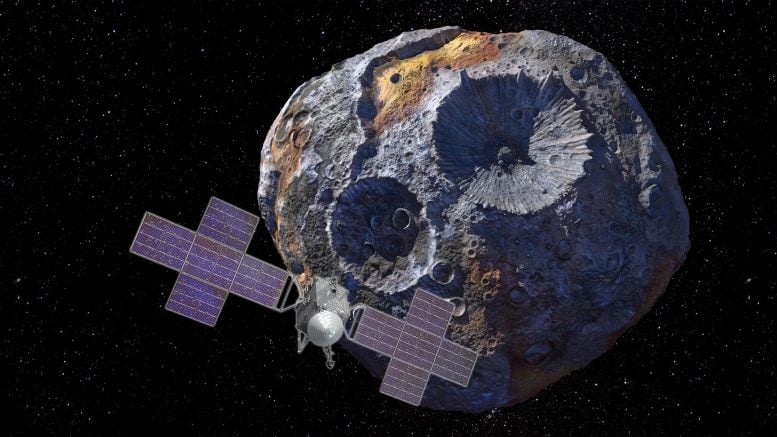
Review Board: NASA-JPL Psyche Progress Outstanding, Launch on Track
An independent review board praised the “world-class” efforts of NASA’s Jet Propulsion Laboratory and Caltech in addressing issues that caused a delay in the Psyche mission’s launch, originally scheduled for 2022. These efforts included staff reorganization, improved management oversight, and institutional changes, positioning the mission for a successful launch in October 2023.
An independent review board finds JPL’s response to address factors contributing to the mission’s 2022 launch delay has been ‘world class.’
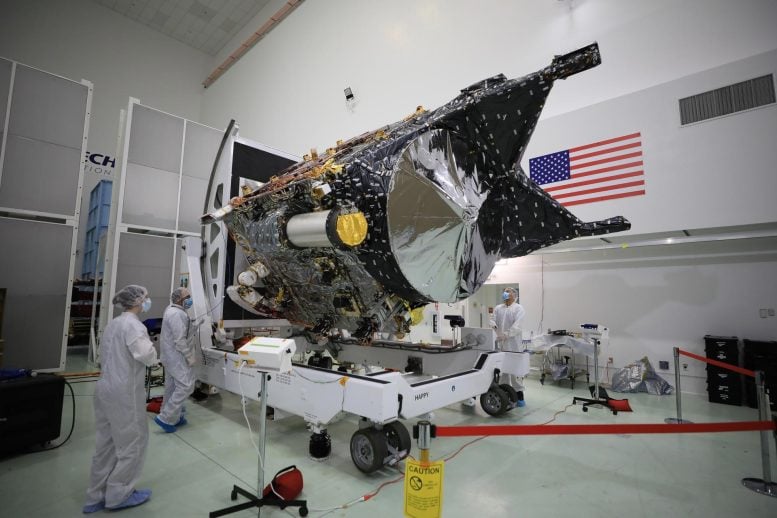
Steps taken by NASA, the agency’s Jet Propulsion Laboratory in Southern California, and Caltech, to put the Psyche mission on track for an October 2023 launch have been outstanding, according to an independently appointed review board. NASA and JPL convened the board last summer after the Psyche mission team requested to delay the spacecraft’s August 2022 launch to a metal-rich asteroid of the same name.
In its November 2022 report, the independent review board made extensive recommendations to address both project and JPL institutional issues that contributed to the launch delay. After thorough follow-up reviews with the Psyche project, JPL, and Caltech, the board’s May 30 report finds the actions taken since November exceeded expectations. Caltech manages JPL for NASA.
“I am pleased with the independent review board’s resoundingly positive assessment of JPL’s hard work in correcting the issues outlined in the board’s original report,” said Nicola Fox, associate administrator of NASA’s Science Mission Directorate in Washington. “We know the work is not over. As we move forward, we will work with JPL to ensure these implemented changes continue to be prioritized to position Psyche and the other missions in JPL’s portfolio for success.”
Led by retired aerospace executive A. Thomas Young, the Psyche independent review board concluded in its initial report that while JPL workforce issues related to the COVID-19 pandemic contributed to the launch delay, additional factors, ranging from staffing to communication to management oversight, contributed as well.
In response to the review board’s recommendations, JPL moved to directly address the concerns regarding the Psyche project as well as the laboratory as an institution. The Psyche mission added experienced team members, reorganized a large part of its workforce, and adopted comprehensive metrics to monitor progress toward launch and operational readiness. The report also noted improvements to senior management’s oversight of the mission.
“The independent review board is extraordinarily impressed by the accomplishments of the total JPL organization and Caltech,” the report authors noted. “Engagement in and leadership of the overall response process by the JPL director and senior leadership is deemed ‘world class.’”
Institutionally, JPL moved rapidly to update its hybrid work policy to increase the number of days team members spend together onsite each week to improve collaboration and communication. The laboratory, according to the report, was also “exceptional” in its efforts to attract and retain experienced engineering staff, with the Psyche mission being among the beneficiaries.
In addition, JPL leadership focused on clarifying roles, responsibilities, and technical skillsets within its engineering organization while ensuring flight project team members were aware of pathways to raise concerns. Lessons learned from the Psyche mission also are applicable to other flight projects, including Europa Clipper and Mars Sample Return. JPL also revamped monthly project status reviews to ensure risks are well understood at all levels of the organization.
“We convened this board weeks after I stepped in as director and addressing the issues it raised has been a central focus in my first year as director of JPL. The results are gratifying,” said JPL Director Laurie Leshin. “Our goals went beyond getting Psyche to the launch pad to improving JPL across the board as we work on missions that will help us better understand Earth, explore the solar system and the universe, and search for signs of life. Our strong response to the board’s findings reinforces the notion that JPL can solve any problem with the right focus and attention.”
The board also determined in its report NASA and its management centers need to more clearly define the responsibilities of its standing review boards, which help ensure appropriate program and project management oversight to increase the likelihood of mission success.
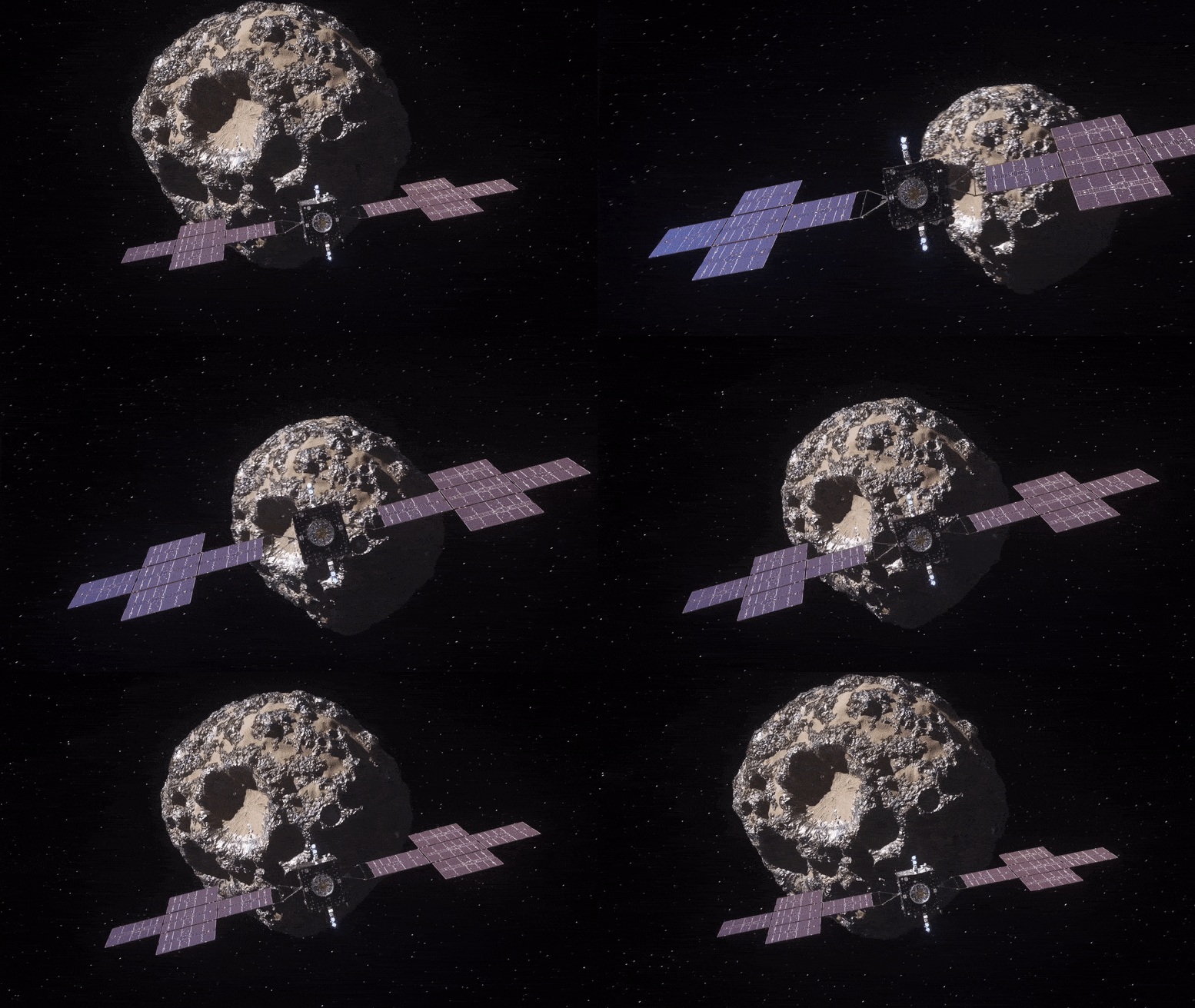
The spacecraft will reach asteroid Psyche in August 2029, orbiting it for 26 months to gain insights into planetary formation, better understand the interior of terrestrial planets like Earth, and examine a world that is made largely of metal.
Never miss a breakthrough: Join the SciTechDaily newsletter.
Follow us on Google and Google News.