
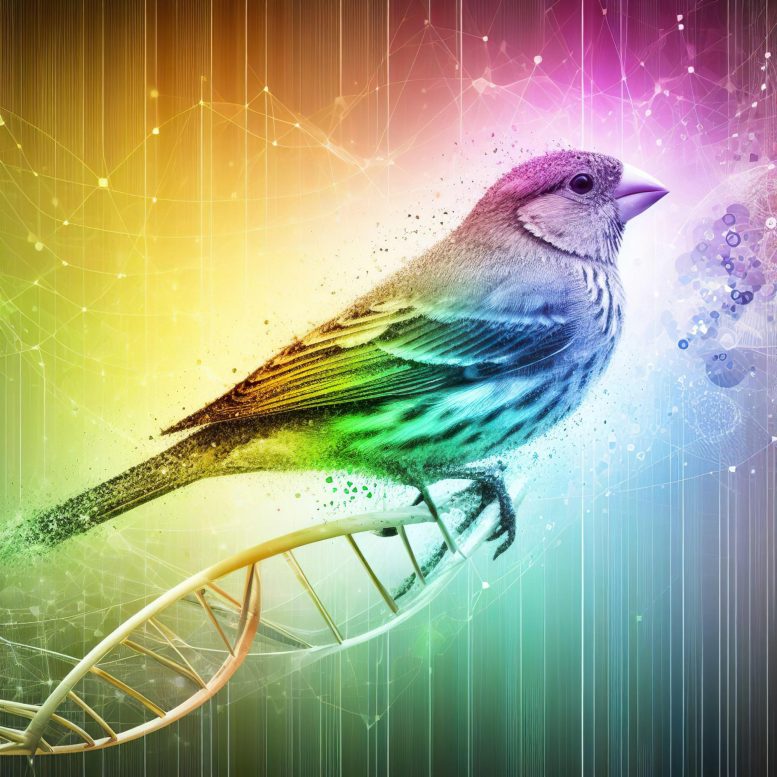
Genomic research on Darwin’s finches reveals key genetic factors driving rapid adaptation.
An international team of researchers has recently published a landmark study on contemporary evolutionary change in natural populations. Utilizing one of the most extensive genomic datasets for animals in their natural habitats, comprising nearly 4,000 of Darwin’s finches, the research revealed the genetic basis of adaptation in this iconic group. The findings were recently published in the journal Science.
Ever since Darwin wrote about the finches of the Galápagos Islands, biologists have studied these small songbirds to understand the mechanisms of evolution. One ancestral species has evolved into 18 different species in the last million years. The strength of Darwin’s finches as a study organism lies in what they can show about the early stages of speciation.
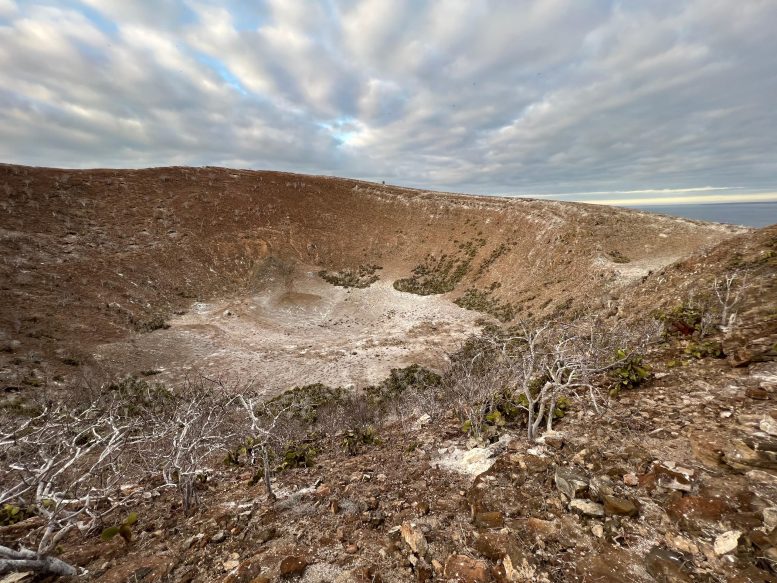
Peter and Rosemary Grant (Princeton University) tracked nearly every individual on Daphne Major starting in the 1970s. Their work demonstrates that the finches of Daphne Major evolved in response to changes in the environment and interactions among species. An international team has sequenced the genomes of nearly every finch studied on Daphne and revealed the genetic architecture of adaptive change.
“I think it’s a really exciting opportunity to tie together our understanding of evolutionary change in the deep past with observations in current time,” says Erik Enbody, the lead author of the study and former post-doctoral fellow at Uppsala University. “Genomic data is a powerful tool to take our observations of birds in the field and learn about the factors that have shaped their evolution,” adding that this kind of study at this scale couldn’t be possible without the decades of research on Galápagos.
How a Few Genes Drive Beak Variation
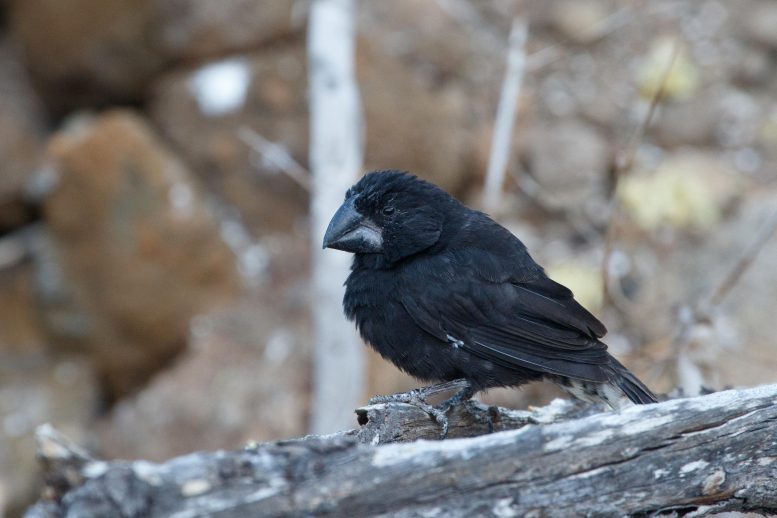
“One of the remarkable things we found is that only a few genetic loci explain a great deal of the variation in the beak of the finch,” says Leif Andersson (Uppsala University and Texas A&M University), senior author of the study. “It seems that one of the ways these genetic changes evolve is by bundling together multiple genes, which are then subject to natural selection as the environment changes.”
These results may surprise human geneticists, where many genetic variants are only responsible for a small amount of variation in human height, for instance.
Over the three decades studied, the beak of the Medium Ground-Finch has become smaller. Using the genomes of all the finches on Daphne, the researchers show that this results from genes transferring from the Small Ground-Finch through hybridization and periods of drought where individuals with smaller beaks survived better.
“This study highlights the value of long-term studies to understand the mechanism of evolutionary change,” says Peter Grant.

The researchers collected a drop of blood from the wing vein and banded each bird. This allowed them to track them and determine how long they survived, who they mated with, and their offspring.
“By collecting blood samples throughout the study, we had the samples available for genomic study when the technology became available,” adds Rosemary Grant.
A Window Into the Future of Evolution
The researchers studied not only the Medium Ground-Finch, but the entire community of four species of finches present on the island. The Common Cactus-Finch experienced a gradual change towards blunter beaks as conditions on the island changed and hybridization with the Medium Ground-Finch increased. This study paints a dynamic picture of how species adapt to changing environments through a combination of genetic changes of large phenotypic effects that are sometimes transferred between species. As the global environment continues to change, the finches of the Galápagos island will provide a valuable window into understanding how birds, their genetic constitution, and their environment interact to shape the future of wild populations.
Reference: “Community-wide genome sequencing reveals 30 years of Darwin’s finch evolution” by Erik D. Enbody, Ashley T. Sendell-Price, C. Grace Sprehn, Carl-Johan Rubin, Peter M. Visscher, B. Rosemary Grant, Peter R. Grant and Leif Andersson, 29 September 2023, Science.
DOI: 10.1126/science.adf6218
Never miss a breakthrough: Join the SciTechDaily newsletter.
Follow us on Google and Google News.