

In the dark depths of the ocean, scientists have confirmed that deep-sea mesopelagic fish produce carbonate minerals just like their shallow-water relatives.
This hidden process plays a critical role in the ocean’s carbon cycle, affecting how carbon is stored and moved through marine systems. The discovery strengthens climate and ocean chemistry models, revealing these fish as unrecognized yet essential players in maintaining Earth’s chemical balance.
A Hidden Force in the Deep
A recent study has provided the first direct proof that mesopelagic fish, which make up as much as 94 percent of the world’s total fish biomass, release carbonate minerals at rates similar to fish living in shallower waters. This discovery supports earlier global models indicating that marine fish are a major source of biogenic carbonate in the ocean.
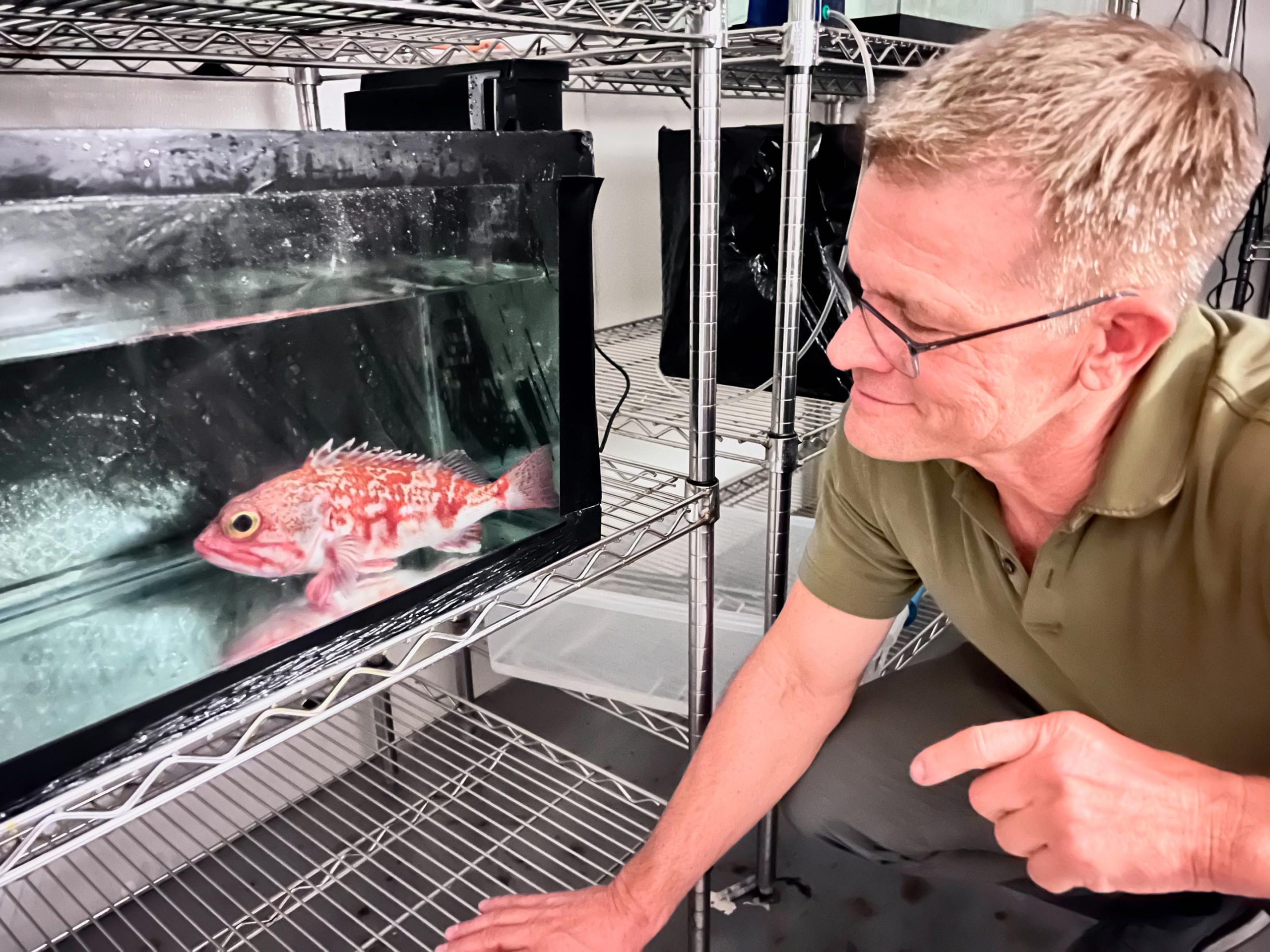
Researchers from the University of Miami’s Rosenstiel School of Marine, Atmospheric, and Earth Science focused on the blackbelly rosefish (Helicolenus dactylopterus), a deep-sea species found at depths of 350 to 430 meters (1,148 to 1,410 feet). Their goal was to determine whether the species produces and expels intestinal carbonate, known as ichthyocarbonate. This process, seen in many marine fish, is important for regulating internal salt and water balance in salty environments and plays a significant role in how carbon moves through ocean systems.
The Fish That Defied Expectations
“Mesopelagic fish live in deep, cold, high-pressure environments, and until now, it was unclear if they produced carbonate like shallow water fish do— or at what rate,” Martin Grosell, the lead author of the study and chair of the Department of Marine Biology and Ecology at the Rosenstiel School, said. “This study is the first to confirm that they do and that the mechanisms and characteristics of ichthyocarbonate formation are remarkably consistent across depths.”
The blackbelly rosefish proved to be an excellent subject for the study. Unlike many of its deep-sea relatives, it does not have a swim bladder and can survive both capture and acclimation to laboratory conditions. Scientists kept the fish in water at 6 degrees Celsius to mimic its natural environment and found that it produced about 5 milligrams of ichthyocarbonate per kilogram per hour, matching predictions from thermal and metabolic scaling models.
A Carbon Connection That Matters
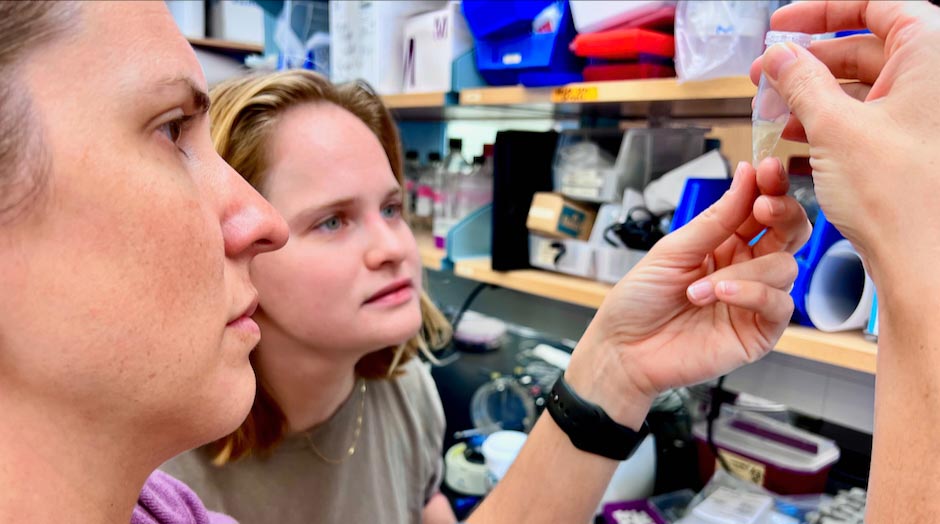
“This research fills a major gap in our understanding of ocean chemistry and carbon cycling,” Amanda Oehlert, co-author and assistant professor in the Department of Marine Geosciences, said. “With mesopelagic fish playing such a significant role, their contribution to carbonate flux—and how it might change with warming oceans—deserves greater attention.”
Key Findings Include:
- Deep-sea blackbelly rosefish produce carbonate at rates and compositions comparable to shallower fish, confirming that depth and pressure do not inhibit ichthyocarbonate formation.
- These results strengthen global estimates of fish-derived carbonate production, confirming that mesopelagic fish are substantial contributors to the ocean’s carbonate budget.
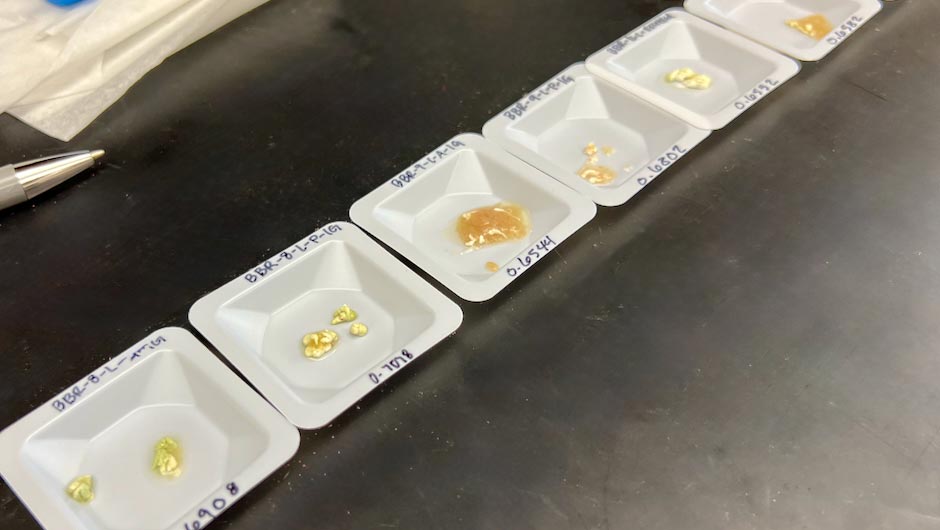
- Ichthyocarbonate composition is similar regardless of the depth at which it forms, which influences how and where it is stored or dissolved in the ocean.
Ocean Engineers in the Shadows
“These results offer strong support for global models of fish-derived carbonate production, which had assumed—but not verified—that mesopelagic species contribute at similar rates,” Grosell said. “Mesopelagic fish aren’t just prey; they’re chemical engineers of the ocean.”
The study underscores the importance of ichthyocarbonate in the ocean carbon cycle, especially given the vast, underexplored biomass of the mesopelagic zone.
The authors say the findings open new avenues for studying deep-sea carbon dynamics and may improve Earth system models, which are sophisticated computer models that incorporate interactions between physical, chemical, and biological processes, such as biological carbon production and export.
The study, titled “Osmoregulation by the gastro-intestinal tract of marine fish at depth—implications for the global carbon cycle,” was published on July 15, 2025, in the Journal of Experimental Biology. The authors are Martin Grosell, Bret Marek, Sarah Wells, Carolyn Pope, Cameron Sam, Rachael M. Heuer, and Amanda M. Oehlert, all from the University of Miami Rosenstiel School of Marine, Atmospheric, and Earth Science.
Reference: “Osmoregulation by the gastro-intestinal tract of marine fish at depth – implications for the global carbon cycle” by Martin Grosell, Bret Marek, Sarah Walls, Carolyn Pope, Cameron Sam, Rachael M. Heuer and Amanda M. Oehlert, 12 June 2025, Journal of Experimental Biology.
DOI: 10.1242/jeb.249834
Funding for the study was provided by the National Science Foundation Chemical Oceanography Program and Earth Sciences Instrumentation and Facilities, and the University of Miami Rosenstiel School’s Departments of Marine Biology and Ecology and Marine Geosciences.
Never miss a breakthrough: Join the SciTechDaily newsletter.
Follow us on Google and Google News.
4 Comments
“Ichthyocarbonate composition is similar regardless of the depth at which it forms, which influences how and where it is stored or dissolved in the ocean.”
What about the crystal structure? Calcite and aragonite have different solubilities. Maybe the team needs to at least consult with a chemist or mineralogist.
Go touch grass
Just what contribution are you trying to make, but failed to do?
Good point. Perhaps the external pressures have little effect on the internal biological functions of fish organs?
I’m really not into fish poop. So IDK.