
Scientists studying ancient ocean sediments discovered a surprising link between the shrinking of West Antarctica’s ice and the Southern Ocean’s ability to absorb carbon dioxide.
A new study published today (February 2) in Nature Geoscience finds that shifts in the West Antarctic Ice Sheet (WAIS) closely followed changes in marine algae growth in the Southern Ocean during past ice ages. However, the relationship did not work in the way scientists long assumed.
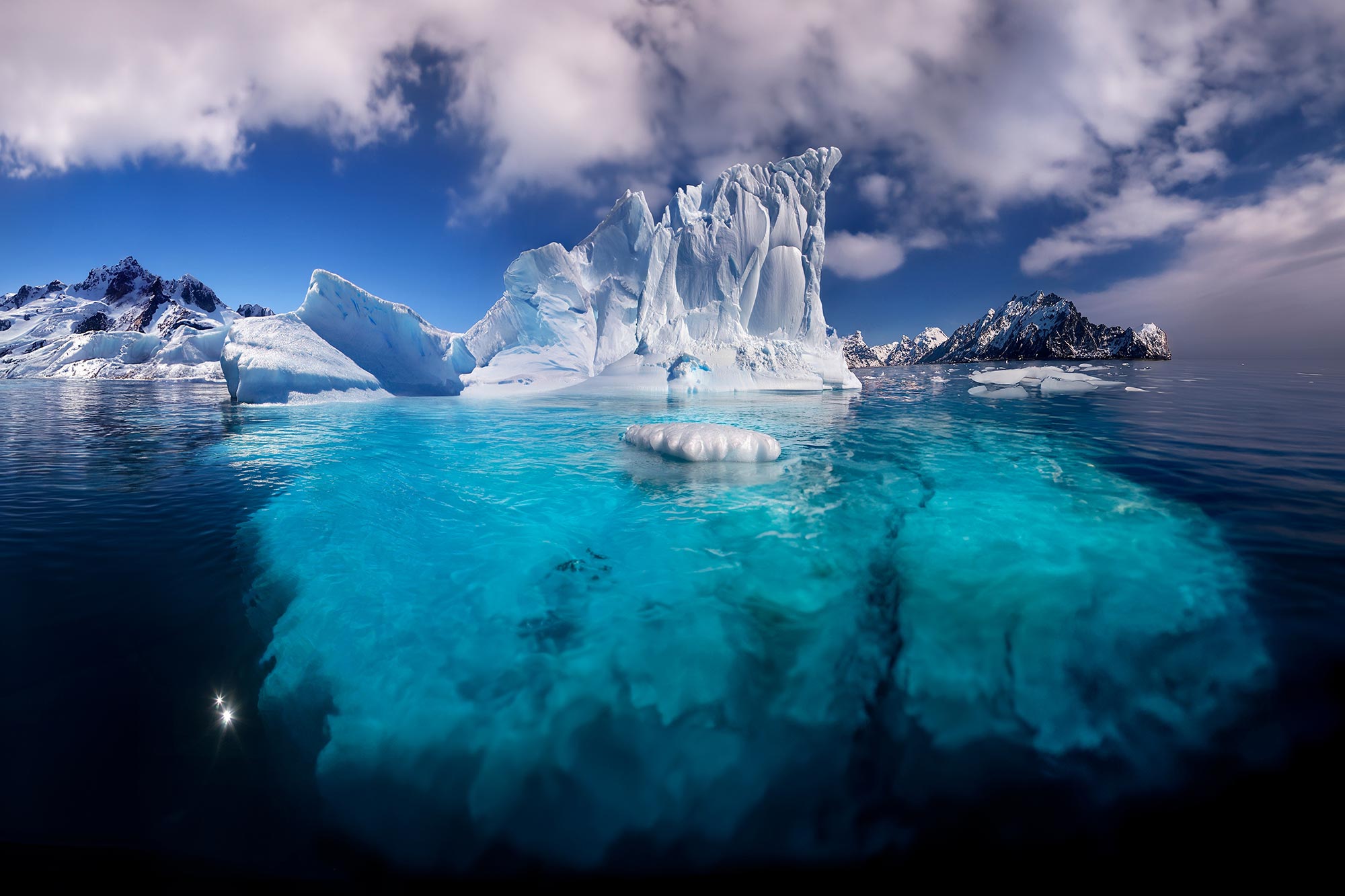
The link centers on iron-rich sediment carried into the ocean by icebergs breaking away from West Antarctica.
Iron typically acts as a nutrient that supports algae growth. But when researchers examined a sediment core collected in 2001 from the Pacific sector of the Southern Ocean, taken from more than three miles below the ocean surface, they found something surprising. Even when iron levels were high, algae growth did not increase.
“Normally, an increased supply of iron in the Southern Ocean would stimulate algae growth, which increases the oceanic uptake of carbon dioxide,” says lead author Torben Struve of the University of Oldenburg. Struve worked as a visiting postdoctoral research scientist in 2020 at the Lamont-Doherty Earth Observatory, which is part of the Columbia Climate School.
Why Iceberg Iron Did Not Boost Algae Growth
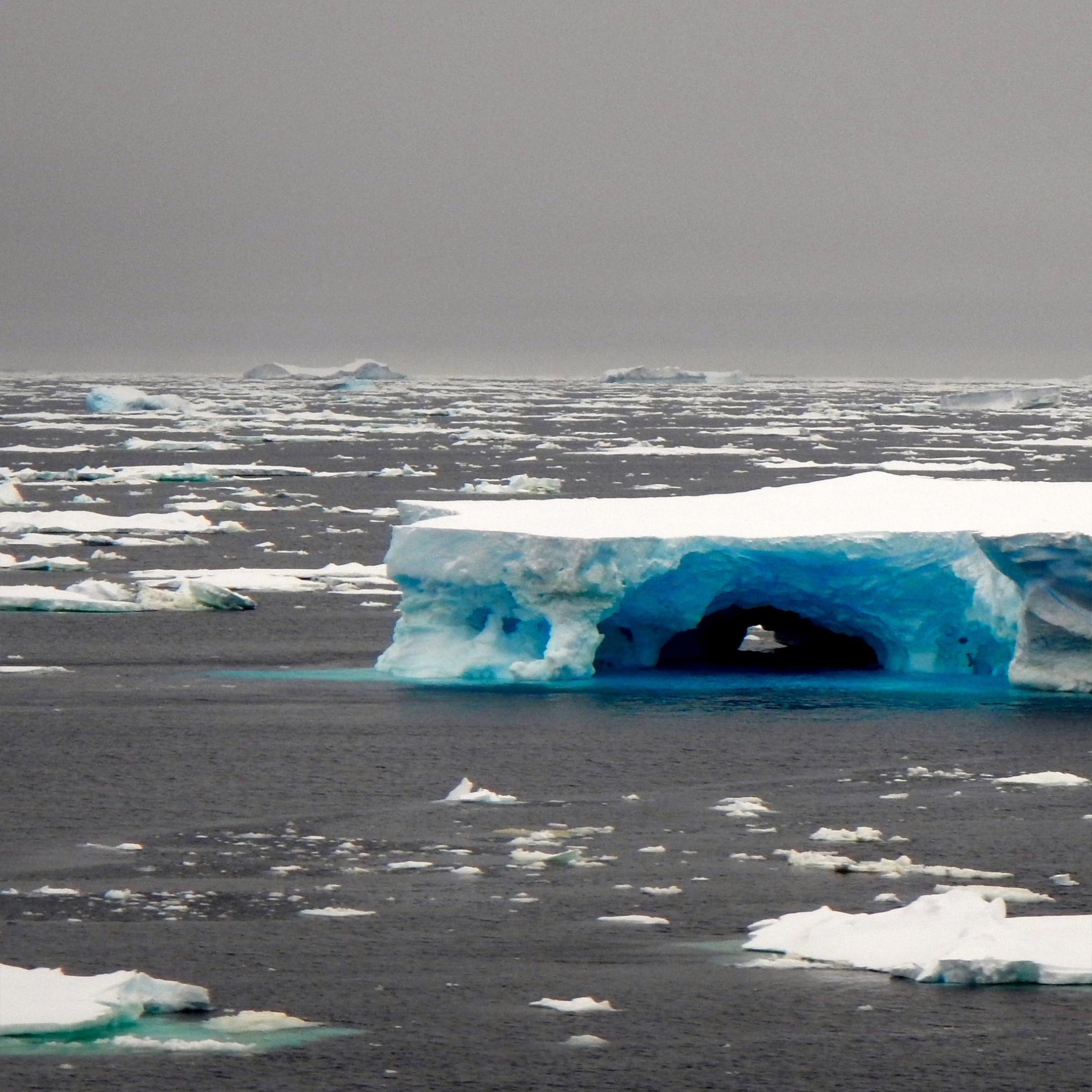
To explain the mismatch, the research team examined the chemical makeup of the sediment delivered by icebergs. Their analysis showed that much of the iron was highly “weathered,” meaning it had been chemically altered over long periods of time. During earlier warm phases, when more ice broke off from West Antarctica and drifted northward, much of the iron reaching the ocean was in this poorly soluble form.
Because algae struggle to use this type of iron, the increased supply did not lead to higher biological productivity.
Based on these findings, the researchers conclude that continued shrinking of the West Antarctic Ice Sheet could reduce the Southern Ocean’s ability to absorb carbon dioxide in the future.
How Iron Usually Fuels Ocean Carbon Uptake
In waters surrounding Antarctica, iron is often the nutrient that limits algae growth. Previous research has shown that during glacial periods, strong winds carried iron-rich dust from continental landmasses into the ocean. In areas north of the Antarctic Polar Front—a boundary where cold Antarctic waters meet warmer waters to the north—that dust helped fertilize algae.
As algae growth increased, the ocean absorbed more carbon dioxide from the atmosphere. This additional carbon uptake contributed to global cooling as ice ages began.
The new study focuses instead on waters south of the Antarctic Polar Front. There, sediment evidence shows that iron delivery peaked during warmer periods rather than during glacial phases. The size and composition of particles in the core also revealed that the primary source of iron was not windblown dust, but icebergs calved from West Antarctica.
“This reminds us that the ocean’s ability to absorb carbon isn’t fixed,” says co-author Gisela Winckler, a professor at the Columbia Climate School and a geochemist at the Lamont-Doherty Earth Observatory.

Evidence of Past Antarctic Ice Retreat
The findings also shed light on how sensitive the West Antarctic Ice Sheet is to rising temperatures. According to Struve, several recent studies suggest that this region experienced large-scale ice retreat during the last interglacial period about 130,000 years ago, when global temperatures were similar to today.
“Our results also suggest that a lot of ice was lost in West Antarctica at that time,” says Struve.
As the ice sheet, which reached several miles thick in some areas, broke apart, it produced large numbers of icebergs. These icebergs scraped sediment from the rock beneath the ice and released it into the ocean as they drifted north and melted. The sediment core indicates especially high iceberg activity at the end of glacial periods and during peak interglacial conditions.
Why the Chemistry of Iron Matters
“What matters here is not just how much iron enters the ocean, but the chemical form it takes,” says Winckler. “These results show that iron delivered by icebergs can be far less bioavailable than previously assumed, fundamentally altering how we think about carbon uptake in the Southern Ocean.”
The researchers believe that beneath the West Antarctic Ice Sheet lies a layer of very old, heavily weathered rock. When the ice sheet retreated during earlier interglacial periods, icebergs carried large amounts of these weathered minerals into the nearby South Pacific. Despite the increased iron supply, algae growth remained low.
“We were very surprised by this finding because in this area of the Southern Ocean, the total amount of iron input was not the controlling factor for algae growth,” Struve says.
What This Means for Future Climate Change
As global warming continues, further thinning of the West Antarctic Ice Sheet could recreate conditions similar to those of the last interglacial period.
“Based on what we know so far, the ice sheet is not likely to collapse in the near future, but we can see that the ice there is already thinning,” says Struve.
Continued retreat could speed up the erosion of weathered rock by glaciers and icebergs. That process could further reduce carbon uptake in the Pacific sector of the Southern Ocean compared with today — a feedback that could further amplify climate change.
Reference: “South Pacific carbon uptake controlled by West Antarctic Ice Sheet dynamics” by Torben Struve, Frank Lamy, Frederik Gäng, Johann P. Klages, Gerhard Kuhn, Oliver Esper, Lester Lembke-Jene and Gisela Winckler, 2 February 2026, Nature Geoscience.
DOI: 10.1038/s41561-025-01911-0
Never miss a breakthrough: Join the SciTechDaily newsletter.
Follow us on Google and Google News.
46 Comments
“But when researchers examined a sediment core collected in 2001 from the Pacific sector of the Southern Ocean, taken from more than three miles below the ocean surface, they found something surprising. Even when iron levels were high, algae growth did not increase.”
Could that be because at three miles depth there is no sunlight for the algae?
So, they were wrong, but what they think now will definitely be right. Never mind that they could be wrong about the ancient past, too. Or, could it be that maybe there are things that they do or don’t know that come into play or not that have an effect on algae? But, I always find it funny how the stuff only tends to work in favor of a certain narrative. Wonder why that is. 🤔
Because that’s how science works. Its never satisfied.
Rigged? I don’t think so. Forecast model was over 130 billion years ago. I don’t believe anybody was driving cars. Dinosaurs died. N̈OT from anything we did or didnt do.
When the world changes there is nothing we can do about.
Nature, we’re just Part of it
Earth didn’t exist 130 billion years ago
Yes there is something. When humans die off it will be because of banning hemp. Before 1930 hemp seeds were baked into everything. Hemp oil was in all medicine. Along came synthetic medicine and hemp ban. Chronic disease was 7% world wide. Now it is not sitting but it’s at 70% worldwide. Just by the math the human race becomes non-existent in another 100 years. The reason is Hemp is not an ordinary medicine or has 113 cannabinoids that interact with the Central Nervous System and balances offsets promoting homeostasis. Demonized and criminalized and banned to promote a crisis that’s out off hand. Just Google what I posted here look at the facts
Icebergs calved?
Why does the article say in one place Iron fred algae and in another sentence it inhibits algae. More real study is needed, I think for the truth.
“BS”
Original not having hemp doesn’t make you gay I’m gay I use hemp still hay so post your lies somewhere else I just looked it up your a lier bro
Well said Phil.
You all were looking for oil stop trying to fool people. Just because some people put their trust in the people we are suppose trust, who are not trust worthy doesn’t make anybody stupid. Only people trying to be law-abiding citizens following a set of rules that aren’t being followed by the people for set the laws.
…….Seriously?? Ok man, I’ll explain what the article was actually saying! They weren’t talking about how much algae they found 3 miles deep in the ice…..they were saying that even though they found a larger amount of iron 3 miles deep in the ice (which would tell them with fairly good accuracy how long ago this ice had formed, and therefore that this time frame showed higher levels of iron. However, they did not see an increase in the algae growth during that same period. You with me so far?! Ok, now during that particular time period, the ice they were recently sampling for the iron content and algae activity was in the areas closer to the surface, not 3 miles deep! Since that time, hundreds, if not a thousand or more years, ice has built on top of the surface from that time, in the amount of about 3 miles worth of ice. They weren’t looking for live algae 3 miles deep within the ice!
You’re not totally on track with what you read either. Reread.
Also, suggestion, be nice in the way you try to help someone else understand further. Especially as your reply shows some comprehension holes; looks silly and mean. Seriously…
It might be cleater if you just try reading the article once more. The study was ocean sediments collected 3 miles below the surface of the ocean. The Pacific sector of the southern seas I believe. Not samples of ice cores. Samples of sediment in the deep ocean.
The comments are about a 3-mile deep sediment core, NOT an ice core.
Totally correct. Only thing I can think of for this to make appropriate sense is “miles” was supposed to be “meters”
So science was wrong again. No body held responsible yet those same wrong scientists are richer today
Yes Scientists love climate change, so much well paid work in exotic locations and they can never be proved wrong.
I got a great question or 2. Antarctic has 30 million km of ice. Ice is from frozen fresh water. How can anything grow from fresh water that survives in salt water? Second question is how can an area have that much ice?
I agree they assume these changes are taking place and the planet thinks for it self and does what the planet needs not what we want just like god he will give us what we need not what we want just an ice age climatic control shut down through planettery changes out of our hands it doesn’t stop people from trying to learn how the planetrery system works just like our jet stream
When you drill into anything you, cause fractures. That’s common sense. In the name of science, scientist randomly drill 3 miles into a unstable ice chunk. Then you all say it’s global warming.
If you want ice to melt faster you separate it.
They were drilling and retrieving a sediment core, NOT an ice core.
The article only said that that type of iron didn’t increase algae. It did not say or provide an argument for a decrease in algae. Possibly their research points to that outcome, but this story doesn’t.
Totally correct. Only thing I can think of for this to make appropriate sense is “miles” was supposed to be “meters”
The article only said that that type of iron didn’t increase algae. It did not say or provide an argument for a decrease in algae. Possibly their research points to that outcome, but this story doesn’t.
So, the “old model” was WRONG, but now, somehow, they are SURE that the “new model” is RIGHT? What hubris!
Since temperature is a limiting factor on algae growth its not especially surprising its limited at the poles.
How and why do you (Max) and Scott Foote say exactly the same thing?
Just one more reminder the policy of open borders and unsustainable population growth is really going to come back and bite us.
Maybe the earth will continue to look after itself as it has done for millenia. Long before people made paying jobs out of explaining something they have no control over anyway!
Ohh the climate didn’t do what we said it would..
Okay, go manipulate some more data until it does
Climate change is a huge hoax. The Earth has been around for four billion years. It isn’t going anywhere
yeah but if ee dont figure out how to sustainably change the model….we will go somewhere, and not somewhere good yeah?
Unless the sun does what it’s supposed to do. Get bigger, heat the earth then slowly burn out. Stars have been doing that for millions of years without ‘our’ pollution.
We have to find a new place to move to, like we did in past civilizatione.
The article does not tell us any specifics about the “type” of iron in question. I am not a chemist but I understand iron can Fe be in different states of “oxydation” ie + or ++ or +++ and this relates to what it is/can be compunded with or ionically bonded to. So anyway, the Fe eroded from under the West Antactic ice sheet was 150K or so years ago was not easily utilised by microalgae.
This info was obtained from looking at *sediment* ontained from 3 miles/4 Km(?) down. IE the amont of fossil algae _in the sediment_ was not increased above the previous concentration even though the icron containing substances _were_ increased.
Given that oceanic microalgae AKA phytoplankton absorb as much as 1/2 of the carbon dioxide released into the atmosphere, the implication of this article is that the rate of such absorbtion in the Southern Ocean is _not_ going to increase as anthropogenic global warming continues apace.
I am disappointed that it is mostly climate change deniers who seem to make comments here. I ask myself: why do people who do not seem to understand, never mind respect, scientific method even bother to read science related articles?
I’m not great with science, but the article said that the type of iron that feeds the algae is carried from sand and sediment across the globe? So could we put some of the “good” useable iron into the ocean to help algae growth?
I’m also wondering if the fertilizers and pesticides that are dumping into the oceans through our rivers are harming the growth as well. I know it’s harming the wildlife.
Maybe because all the scientists who claim we are experiencing “man made global cooling”, receive 100 percent of their funding from government subsidies, which means they are depend on government to keep their jobs, so naturally they will say whatever they need to say to keep the funding coming. The co founder of the weather channel, and thousands of independent scientists will tell you it’s all bullshit. Why is it you are so naive to believe anything government tells you. If we learned anything in the last 10 years, it’s that the US Government is more corrupt then Chinese or Russian government. Do t believe me? Just look at what the Democratic party has done under Obama’s three terms (Biden was Obama’s third term) we all know that.
Because the deniers are tired of having climate theory shoved down our throats as if it were fact, only to have it be proven, again, that the scientists were wrong.
These scientists could not name the iron compound/s? Why did not this reporter ask for specific compounds rather than accept “weathered iron”? Another example of poor writing.
I am going to just go ahead and say it. There is no man made global cooling. Is cyclical. The planet heats up and the planet cools down. It’s all about government controlling more and more of our lives.
Smd?
Heinrich Event 1 was caused by ice sheets in North America falling into the Atlantic Ocean, followed by a return to coldest Ice Age conditions. Why would not the ice sheets in Antarctica cause global cooling in the Southern Hemishere for maybe 500 years?
Original not having hemp doesn’t make you gay I’m gay I use hemp still hay so post your lies somewhere else I just looked it up your a lier bro
Is this gonna bu a Subnautica future then? uh oh