
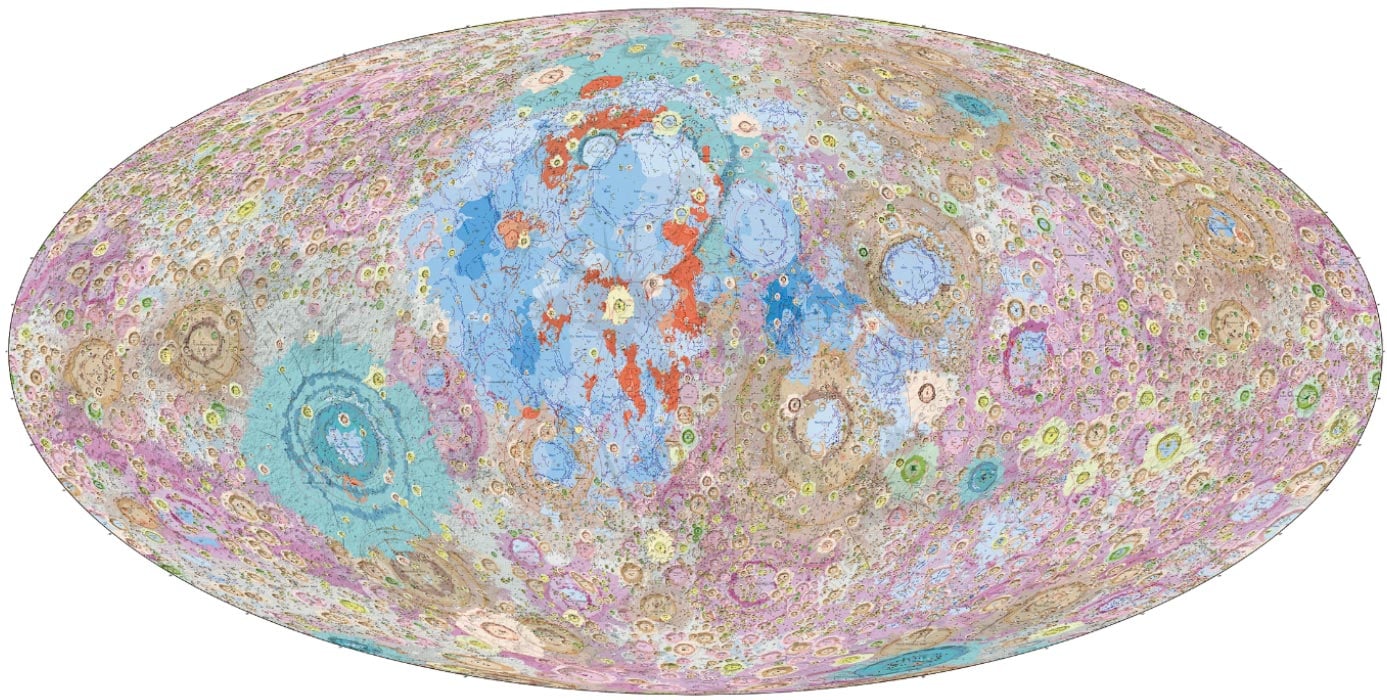
New lunar geologic atlas offers detailed maps and updated geological insights to aid in Moon exploration.
The world’s first high-definition geologic atlas of the whole Moon, scaled at 1:2.5 million, was officially released on April 21.
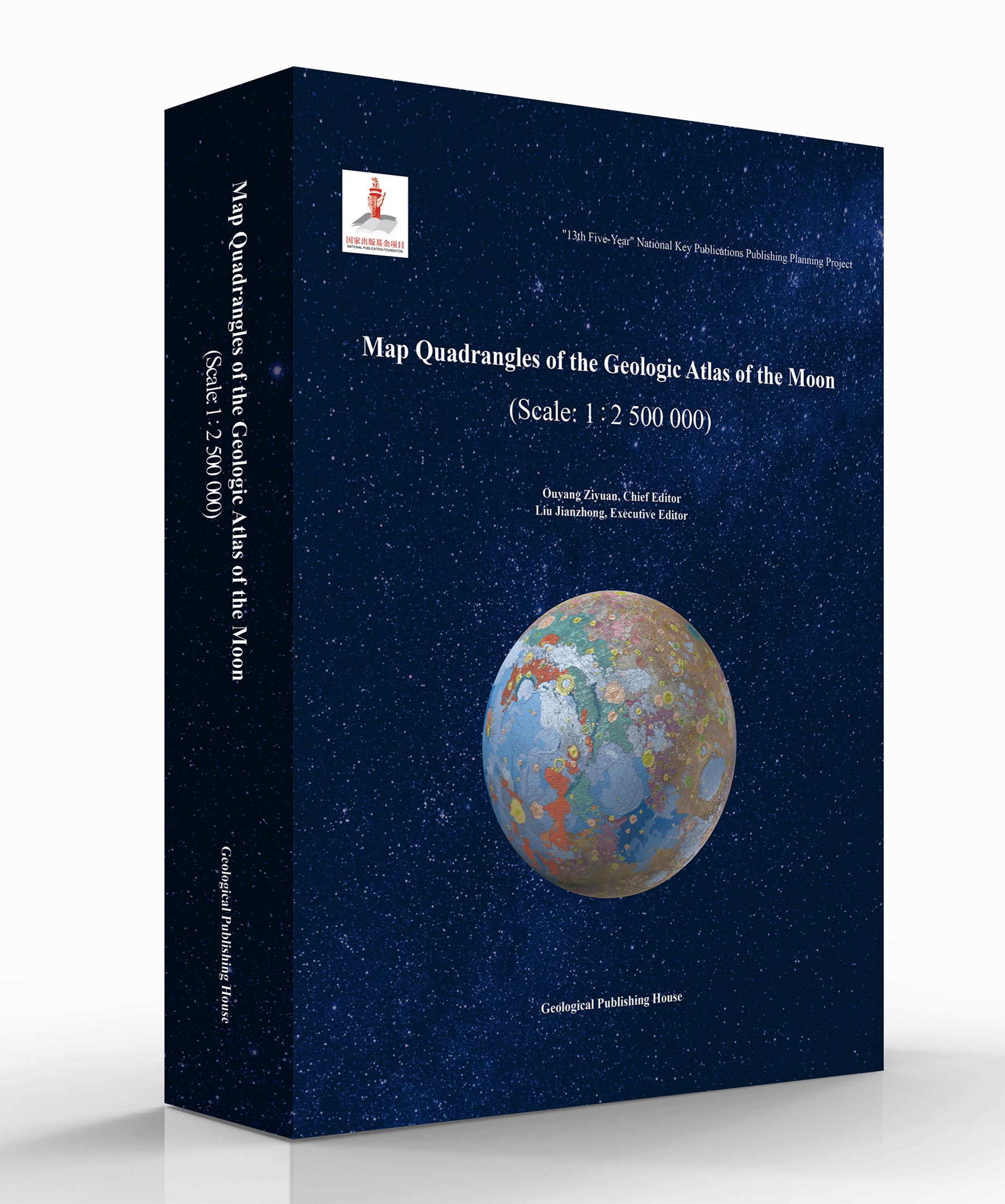
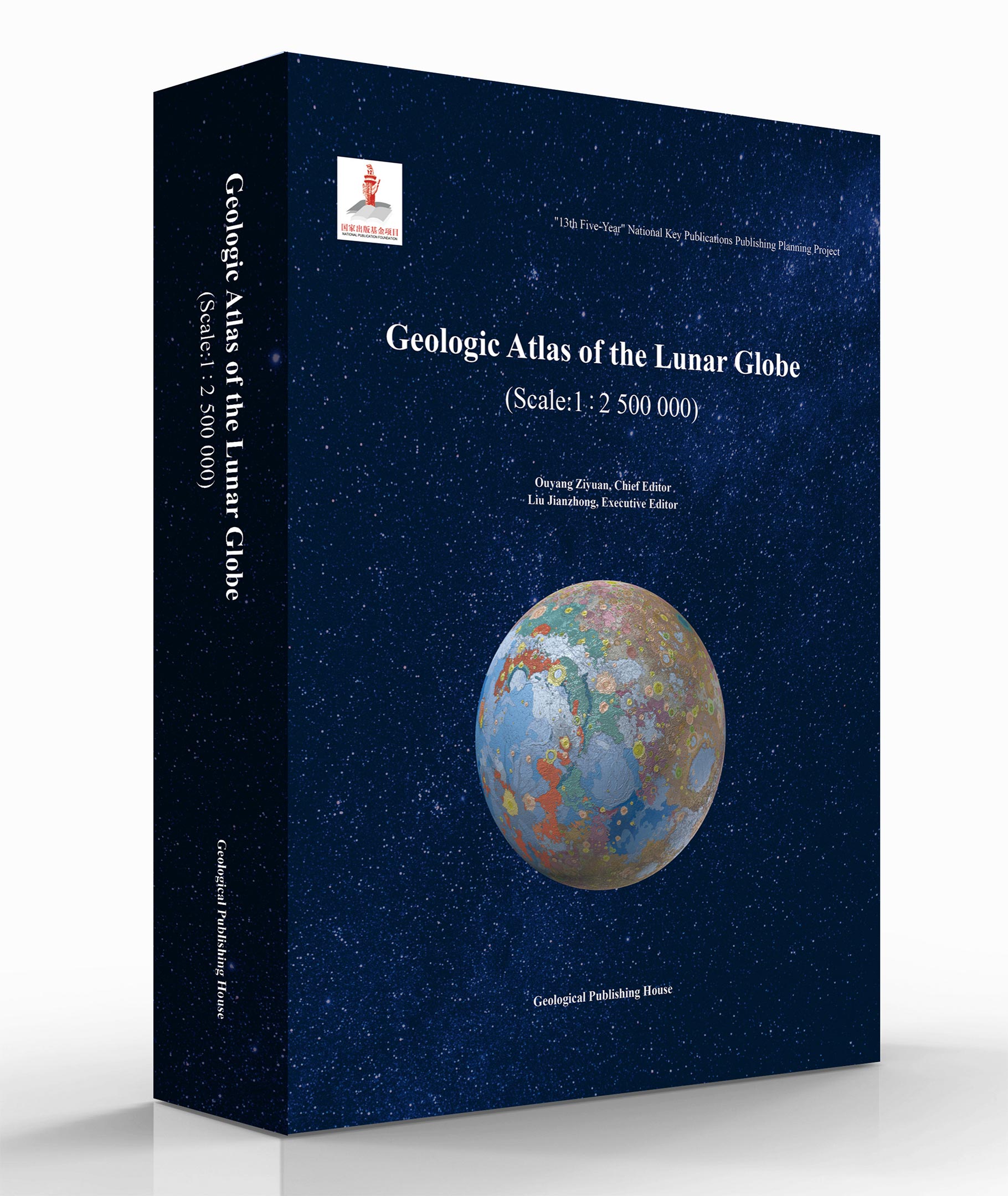
The atlas, available in both Chinese and English, contains the Geologic Atlas of the Lunar Globe and the Map Quadrangles of the Geologic Atlas of the Moon (including an explanatory manual).
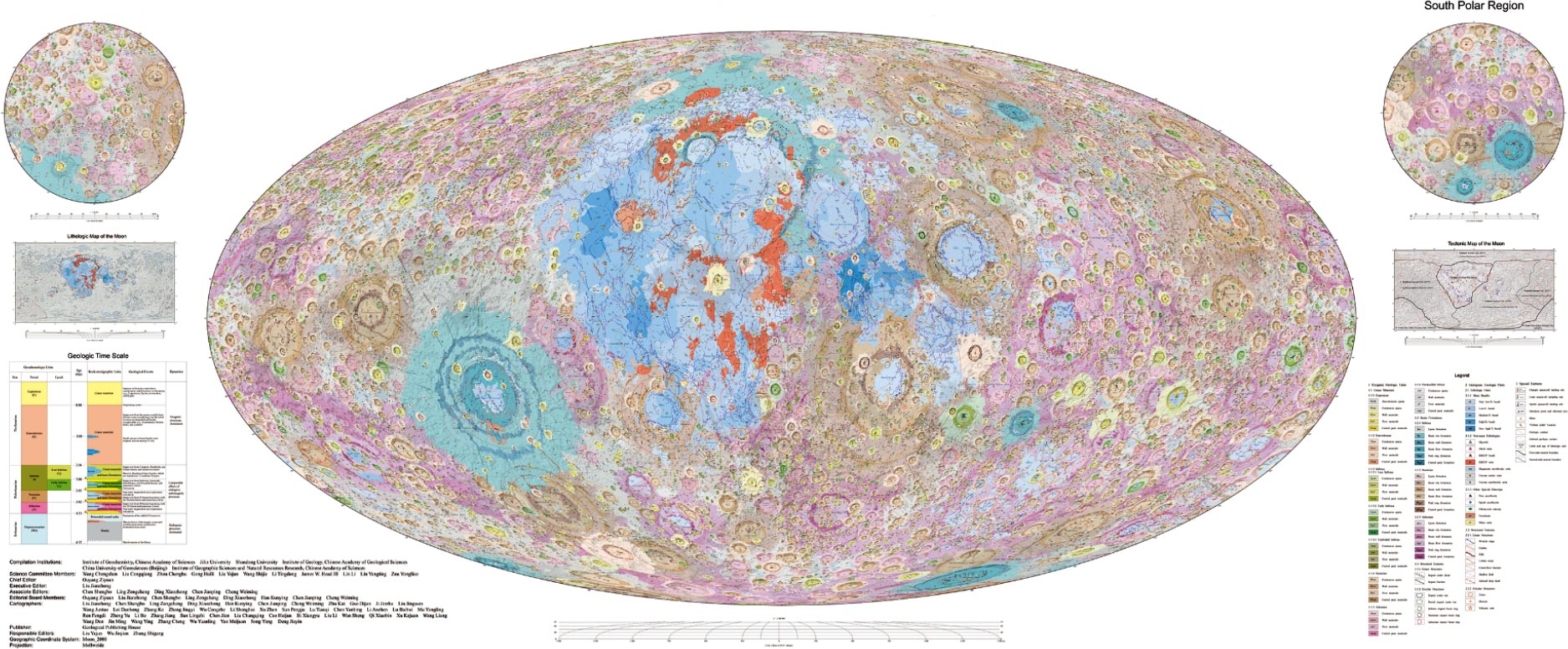
The Geologic Atlas of the Lunar Globe includes the Geologic Map of the Moon, the Lithologic Map of the Moon, and the Tectonic Map of the Moon. The Map Quadrangles of the Geologic Atlas of the Moon includes 30 standard-sized quadrangles.
Evolution of Lunar Geological Mapping
Since the Apollo program in the 1960s, significant progress has been made in lunar exploration and scientific research. However, lunar geological research still uses lunar geological maps developed during the Apollo era.
“With the accumulation of data and research results, these lunar geological maps may no longer meet future scientific research and lunar exploration needs,” said Liu Jianzhong, a researcher from the Institute of Geochemistry of the Chinese Academy of Sciences (IGCAS) and also editor-in-chief of the atlas.
Research and Development of the New Atlas
Research and compilation of a 1:2.5-million-scale geologic map of the Moon began in 2012, led by IGCAS, in collaboration with Jilin University, Shandong University, the Institute of Geology, the Chinese Academy of Geological Sciences, the China University of Geosciences (Beijing), the Institute of Geographical Sciences and Natural Resources Research of the Chinese Academy of Sciences, and other organizations.
Through studying and compiling elements such as lunar rocks, geological structures, and geological ages, the research team independently developed intellectual property (IP) in the form of technical specifications and standards for lunar geological mapping. They subsequently completed a series of geological maps of the Moon at a 1:2.5-million scale using that IP.
Enhancements in Lunar Geological Understanding
Based on data from China’s Chang’e Project and other existing lunar geological information and research achievements, this atlas provides basic information and a scientific reference for lunar exploration projects. Additionally, it fills the gap in China’s research on the geological mapping of the Moon, thus contributing to the study of the origin and evolution of the Moon and the evolution of the Solar System, according to Liu.
The team developed a new lunar time scale—“Three Eons and Six Periods”—based on the history of lunar dynamic evolution, which provides a more objective depiction of lunar geological evolution than previous lunar time scales.
“Classification schemes of structures and rock types were established based on the evolving importance of endogenic and exogenic processes, which are more clearly expressed in the evolution characteristics of lunar structures and rocks,” said Liu.
Technical Achievements and Educational Implications
The mapping team proposed a classification system of lunar impact basins and basin formation, established the evolutionary sequence for basins, and proposed the identifying features of basin formation. In addition, they developed a new framework for terrestrial planetary evolution driven by both endogenic and exogenic dynamic geological processes.
The team has identified and marked 12,341 impact craters, 81 impact basins, 17 types of rocks, and 14 types of structures, and established a unified classification system for basin formation subclasses. At the same time, the atlas also shows some special elements such as landing sites and special elevation points.
Atlas Features and Future Applications
The atlas’s explanatory manual provides a detailed introduction to data used for mapping, principles for selecting map scales, content represented in maps, how the “Three Eons and Six Periods” timescale is divided, the classification system for structures and rocks, and the evolutionary history of the Moon.
This set of atlases will support lunar scientific research, science education, as well as landing site selection, lunar resource exploration, and trajectory planning for China’s future lunar exploration projects.
The program was supported by the 13th Five-year Strategic Planning Program of IGCAS, the Key Frontier Sciences Research Program of the Chinese Academy of Sciences, and the National Science and Technology Infrastructure Program of the Ministry of Science and Technology.
Never miss a breakthrough: Join the SciTechDaily newsletter.
Follow us on Google and Google News.