

Close Menu
    Facebook X (Twitter) Instagram
    SciTechDaily
    • Biology
    • Chemistry
    • Earth
    • Health
    • Physics
    • Science
    • Space
    • Technology
    Facebook X (Twitter) Pinterest YouTube RSS
    SciTechDaily
    Home»Health»Do Women Age Differently From Men?
    Health

    Do Women Age Differently From Men?

    By Max Planck Institute for Biology of AgeingJanuary 25, 20231 Comment3 Mins Read
    Facebook Twitter Pinterest Telegram LinkedIn WhatsApp Email Reddit
    Share
    Facebook Twitter LinkedIn Pinterest Telegram Email Reddit
    Old Woman Eye
    Rapamycin is a drug that has been studied for its potential anti-aging properties. It is an immunosuppressant drug that is primarily used to prevent the rejection of transplanted organs, but it has also been found to have properties that can extend the lifespan of various organisms, including mice and fruit flies. While Rapamycin is an FDA-approved drug, it’s important to note that it is not yet approved for anti-aging use and more research is needed to understand the long-term effects and safety of the drug.

    Research on fruit flies has uncovered how the sex of the individual affects the response to the anti-aging drug rapamycin.

    The impact of medications can vary greatly between women and men, and this is also true for the promising anti-aging drug rapamycin, as a recent study from researchers at the Max Planck Institute for Biology of Ageing in Cologne and University College London has shown. The study found that rapamycin only extends the lifespan of female fruit flies, but not that of males.

    Additionally, the study revealed that rapamycin only delayed the onset of age-related pathological changes in the gut of female fruit flies. The researchers concluded that biological sex plays a crucial role in determining the effectiveness of anti-aging drugs.

    The life expectancy of women is significantly higher than that of men. However, women also suffer more often from age-related diseases and adverse drug reactions.

    “Our long-term goal is to make men live as long as women and also women as healthy as men in late life. But for that, we need to understand where the differences come from”, explains Yu-Xuan Lu, one of the leading authors of the study.

    Rapamycin Extends Lifespan Only in Female Flies

    The researchers gave the anti-aging drug rapamycin to male and female fruit flies to study the effect on the different sexes. Rapamycin is a cell growth inhibitor and immune regulator that is normally used in cancer therapy and after organ transplantations. They found that rapamycin extended the lifespan and slowed age-related intestinal pathologies in female flies but not in males.
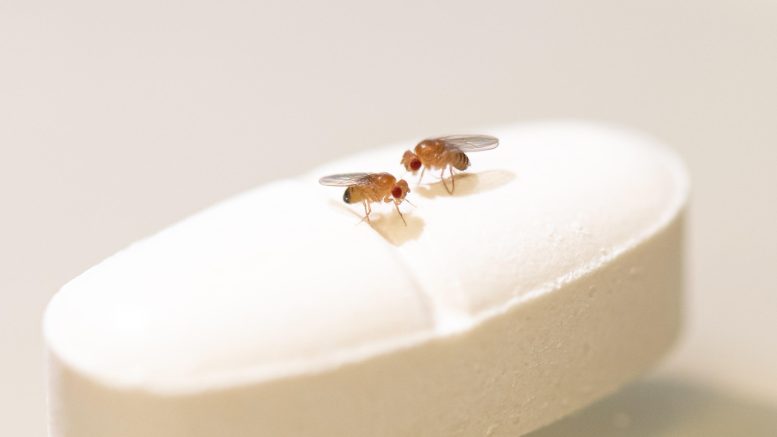
    Rapamycin Fruit Flies
    Rapamycin prolongs lifespan only in female fruit flies. Credit: K. Link/Max Planck Institute for Biology of Ageing

    Healthier Life Due to More Autophagy

    The researchers observed that rapamycin increased autophagy – the cell’s waste disposal process – in the female intestinal cells. Male intestinal cells, however, already seem to have a high basal autophagy activity, which cannot be further increased by rapamycin.

    The scientists could also see this effect of rapamycin in mice. Female mice showed increased autophagy activity after treatment with rapamycin. “Previous studies found that females had greater responses to rapamycin on lifespan extension than did males in mice, we now uncover an underlying mechanism of these differences using flies”, says Yu-Xuan Lu.

    Sex-Specific, Personalized Treatments

    “Sex can be a decisive factor for the effectiveness of anti-aging drugs. Understanding the processes that are sex-specific and determine response to therapeutics will improve the development of personalized treatments”, explains Linda Partridge, senior author of the study.

    Reference: “Sexual identity of enterocytes regulates autophagy to determine intestinal health, lifespan and responses to rapamycin” by Jennifer C. Regan, Yu-Xuan Lu, Enric Ureña, Ralf L. Meilenbrock, James H. Catterson, Disna Kißler, Jenny Fröhlich, Emilie Funk and Linda Partridge, 1 December 2022, Nature Aging.
    DOI: 10.1038/s43587-022-00308-7

    Never miss a breakthrough: Join the SciTechDaily newsletter.
    Follow us on Google and Google News.

    Aging Anti-Aging Lifespan Max Planck Institute University College London
    Share. Facebook Twitter Pinterest LinkedIn Email Reddit

    Related Articles

    Increasing Lifespan by 10%: Scientists Identify a New Promising Anti-Aging Drug

    Not Effective? Popular Anti-Aging Treatments Shown To Have a Limited Impact on Aging

    Scientists Identify Factor in “Young Blood” That Helps Rejuvenate Aging Muscle

    Greenery May Be the Secret to Slowing the Biological Aging Process – At Least for Women

    New Drug Molecules Could Prevent Skin Aging Caused by Ultraviolet Sun Exposure

    Scientists Develop New Gene Therapy Strategy to Delay Aging and Extend Lifespan

    Revitalizing the Aging Brain by Activating Immune Cells

    Intermittent Fasting and Manipulating Mitochondrial Networks May Increase Lifespan

    Naturally Occurring Molecule Enhances Defense Mechanisms Against Neurodegenerative Diseases

    1 Comment

    1. kamir bouchareb st on January 25, 2023 11:58 pm

      goooooooood

      Reply
    Leave A Reply Cancel Reply

    • Facebook
    • Twitter
    • Pinterest
    • YouTube

    Don't Miss a Discovery

    Subscribe for the Latest in Science & Tech!

    Trending News

    Why Popular Diabetes Drugs Like Ozempic Don’t Work for Everyone: The “Genetic Glitch”

    Scientists Stunned After Finding Plant Thought Extinct for 60 Years

    Scientists Discover Tiny New Spider That Hunts Prey 6x Its Size

    Natural Component From Licorice Shows Promise for Treating Inflammatory Bowel Disease

    Scientists Warn: Popular Sweetener Linked to Dangerous Metabolic Effects

    Monster Storms on Jupiter Unleash Lightning Beyond Anything on Earth

    Scientists Create “Liquid Gears” That Spin Without Touching

    The Simple Habit That Could Help Prevent Cancer

    Follow SciTechDaily
    • Facebook
    • Twitter
    • YouTube
    • Pinterest
    • Newsletter
    • RSS
    SciTech News
    • Biology News
    • Chemistry News
    • Earth News
    • Health News
    • Physics News
    • Science News
    • Space News
    • Technology News
    Recent Posts
    • Ancient Bacteria Turned a DNA System Into a Cell Skeleton
    • Researchers Finally Solve 50-Year-Old Blood Group Mystery
    • Scientists Discover “Molecular Switch” That Fuels Alzheimer’s Brain Inflammation
    • Hidden Ocean Currents Revealed in Stunning Detail by AI
    • Trees Emit Tiny Lightning Flashes During Storms and Scientists Finally Prove It
    Copyright © 1998 - 2026 SciTechDaily. All Rights Reserved.
    • Science News
    • About
    • Contact
    • Editorial Board
    • Privacy Policy
    • Terms of Use

    Type above and press Enter to search. Press Esc to cancel.