
Close Menu
    Facebook X (Twitter) Instagram
    SciTechDaily
    • Biology
    • Chemistry
    • Earth
    • Health
    • Physics
    • Science
    • Space
    • Technology
    Facebook X (Twitter) Pinterest YouTube RSS
    SciTechDaily
    Home»Space»Dome A in Antarctica Is the Best Site for Optical Astronomical Observation on Earth
    Space

    Dome A in Antarctica Is the Best Site for Optical Astronomical Observation on Earth

    By Chinese Academy of SciencesNovember 12, 2020No Comments3 Mins Read
    Facebook Twitter Pinterest Telegram LinkedIn WhatsApp Email Reddit
    Share
    Facebook Twitter LinkedIn Pinterest Telegram Email Reddit
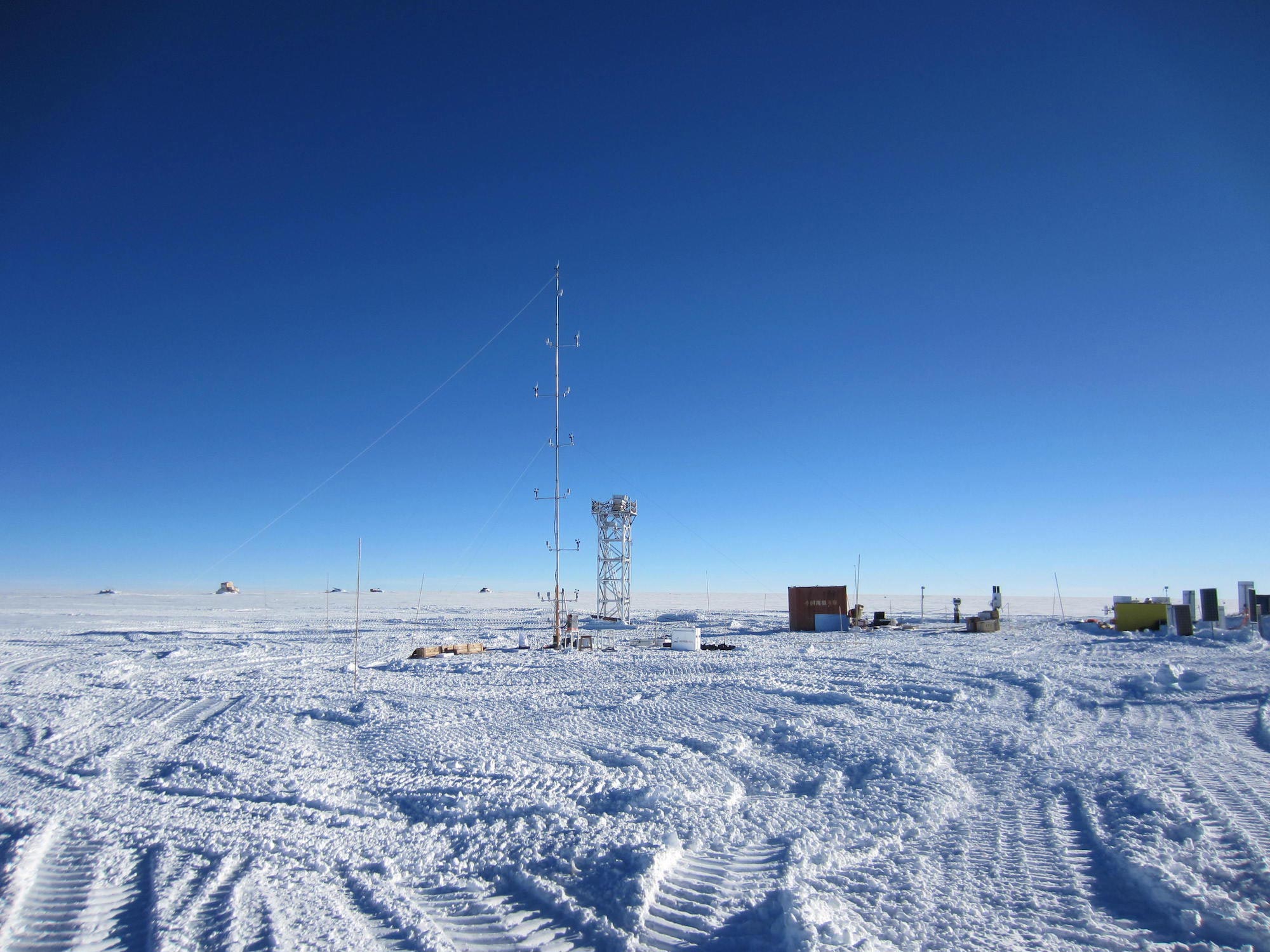
    Dome A Astronomy Site
    The site for astronomy at Dome A. Credit: SHANG Zhaohui

    A research team led by Prof. SHANG Zhaohui from National Astronomical Observatories of the Chinese Academy of Sciences (NAOC) has proved that Dome A in Antarctica is the best site for optical astronomical observation on Earth. The study was published in Nature.

    Seeing reflects the atmospheric turbulence that makes stars twinkle or smears star images observed by telescopes. At an observatory with good seeing, weak turbulence results in a smaller seeing value and sharper images. This is especially good for viewing faint objects. A small-aperture telescope at such a site can compete with a larger one at other sites.

    Due to the geographic and atmospheric properties at Dome A, atmosphere turbulence usually resides in the near-ground, shallow boundary layer, above which is the very stable free atmosphere with superb seeing.

    The researchers reported a seeing measurement as good as 0.13 arcseconds and a median free-atmosphere seeing of 0.31 arcseconds, measured with instruments on an 8-m-high tower.
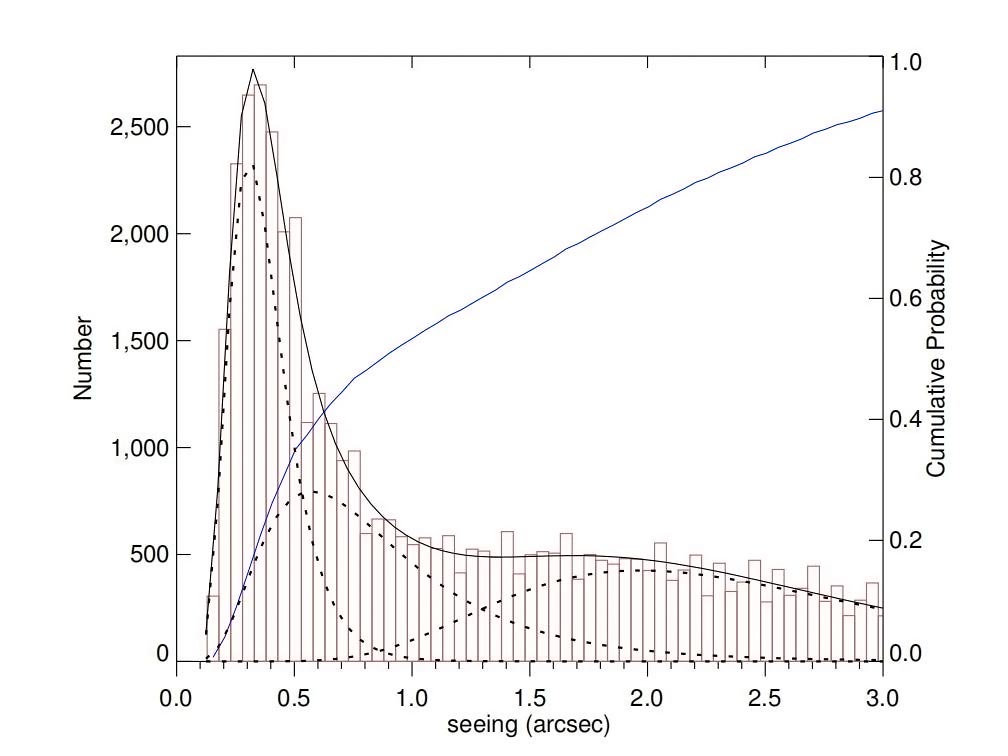
    Median Free Atmosphere Seeing
    The peak in the data historgram indicates the median free-atmosphere seeing of 0.31 arcseconds. Credit: MA Bin

    Currently, the best telescopes are located at good sites in Hawaii and Northern Chile, with seeing in the range of 0.6 to 0.8 arcseconds. It is clear that Dome A has the potential to host a good astronomical observatory.

    In addition, the median boundary layer thickness is about 14m at Dome A, compared to 30m at Dome C in Antarctica, making Dome A more feasible and cost-efficient for future construction.

    Dome A is the highest place on the polar ice cap, with an altitude of 4093m. Kunlun Station is the only station there, but has not yet been developed into a winterover station. Therefore, the team had to design and build unattended instruments to cope with temperatures as low as -80? and frosting problems.
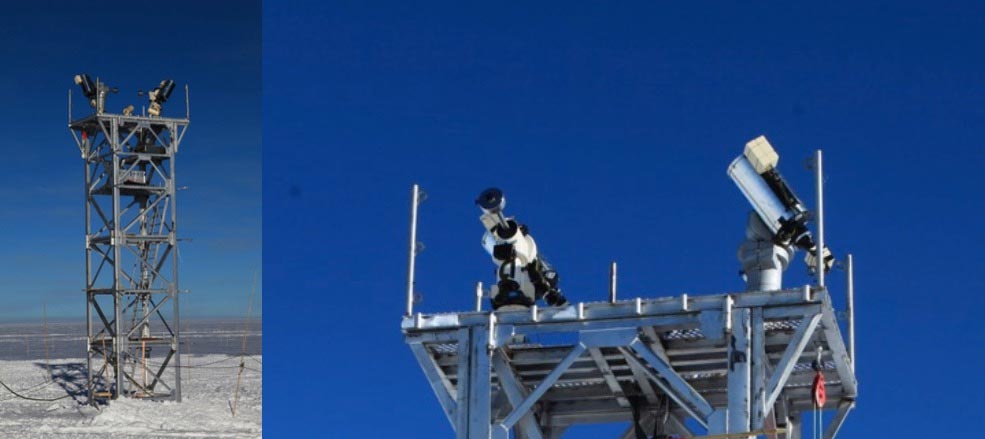
    Two Redundant KL-DIMMs
    Two redundant KL-DIMMs and their 8m-high tower. Credit: SHANG Zhaohui

    The research team developed the instrument KL-DIMM independently, and participated in the 35th Chinese National Antarctic Research Expedition (CHINARE) in November 2018 to the inland Kunlun Station. Two redundant KL-DIMMs started to take data in January 2019. They worked fully automatically through winter and obtained precious nighttime seeing measurement data.

    Dome A was first visited by humans in January 2005 via overland traverse from Zhongshan Station by the 21st CHINARE. CHINARE is managed and carried out by the Chinese Arctic and Antarctic Administration (CAA) and the Polar Research Institute of China (PRIC), and has consistently supported the astronomy program at Dome A.

    The combination of high altitude, low temperature, long periods of continuous darkness, and an exceptionally stable superb seeing makes Dome A a very attractive location for optical and infrared astronomy.

    Read Best Place on Earth to See Stars and Astronomers Pinpoint the Best Place on Earth for a Telescope for more on this research.

    Reference: “Night-time measurements of astronomical seeing at Dome A in Antarctica” by Bin Ma, Zhaohui Shang, Yi Hu, Keliang Hu, Yongjiang Wang, Xu Yang, Michael C. B. Ashley, Paul Hickson & Peng Jiang, 29 July 2020, Nature.
    DOI: 10.1038/s41586-020-2489-0

    Never miss a breakthrough: Join the SciTechDaily newsletter.
    Follow us on Google and Google News.

    Antarctica Astronomy Atmospheric Science Chinese Academy of Sciences Stars
    Share. Facebook Twitter Pinterest LinkedIn Email Reddit

    Related Articles

    Astronomers Propose New Method of Measuring Galaxy Distances

    Unlocking the Mystery of the Stellar Initial Mass Function: A New Breakthrough Discovery

    Weird New Type of Stars – Covered in Helium Burning Ashes – Discovered by Astronomers

    New Breakthrough Towards Understanding Dark Energy

    Solving a Martian Climate Puzzle: Icy Clouds Could Have Kept Early Mars Warm Enough for Rivers and Lakes

    New Formation Mechanism Proposed for Solar Coronal Rain

    Chinese Astronomers Discover 591 High Velocity Stars – 43 of Them Can Even Escape From the Galaxy

    One of the “Coolest” Places in the World: Astronomers Pinpoint the Best Place on Earth for a Telescope

    Best Place on Earth to See Stars – Where They Can Finally Be Seen Without Their Twinkle

    Leave A Reply Cancel Reply

    • Facebook
    • Twitter
    • Pinterest
    • YouTube

    Don't Miss a Discovery

    Subscribe for the Latest in Science & Tech!

    Trending News

    Monster Storms on Jupiter Unleash Lightning Beyond Anything on Earth

    Scientists Create “Liquid Gears” That Spin Without Touching

    The Simple Habit That Could Help Prevent Cancer

    Millions Take These IBS Drugs, But a New Study Finds Serious Risks

    Scientists Unlock Hidden Secrets of 2,300-Year-Old Mummies Using Cutting-Edge CT Scanner

    Bread Might Be Making You Gain Weight Even Without Eating More Calories

    Scientists Discover Massive Magma Reservoir Beneath Tuscany

    Europe’s Most Active Volcano Just Got Stranger – Here’s Why Scientists Are Rethinking It

    Follow SciTechDaily
    • Facebook
    • Twitter
    • YouTube
    • Pinterest
    • Newsletter
    • RSS
    SciTech News
    • Biology News
    • Chemistry News
    • Earth News
    • Health News
    • Physics News
    • Science News
    • Space News
    • Technology News
    Recent Posts
    • New Brain Discovery Challenges Long-Held Theory of Teenage Brain Development
    • Sharks Are Overheating as Warming Oceans Push Them to the Edge
    • Scientists Discover Plants “Scream” – We Just Couldn’t Hear Them Until Now
    • 25-Year Study Uncovers Hidden Paths and Early Warning Signs of Blood Cancer
    • Not Just Snoring – New Research Reveals Sleep Apnea May Be Damaging Your Muscles
    Copyright © 1998 - 2026 SciTechDaily. All Rights Reserved.
    • Science News
    • About
    • Contact
    • Editorial Board
    • Privacy Policy
    • Terms of Use

    Type above and press Enter to search. Press Esc to cancel.