
Close Menu
    Facebook X (Twitter) Instagram
    SciTechDaily
    • Biology
    • Chemistry
    • Earth
    • Health
    • Physics
    • Science
    • Space
    • Technology
    Facebook X (Twitter) Pinterest YouTube RSS
    SciTechDaily
    Home»Space»Don’t Be Fooled by the Peaceful Look of This Vast Galaxy — It Keeps a Violent Secret
    Space

    Don’t Be Fooled by the Peaceful Look of This Vast Galaxy — It Keeps a Violent Secret

    By ESA/HubbleMarch 31, 20201 Comment1 Min Read
    Facebook Twitter Pinterest Telegram LinkedIn WhatsApp Email Reddit
    Share
    Facebook Twitter LinkedIn Pinterest Telegram Email Reddit
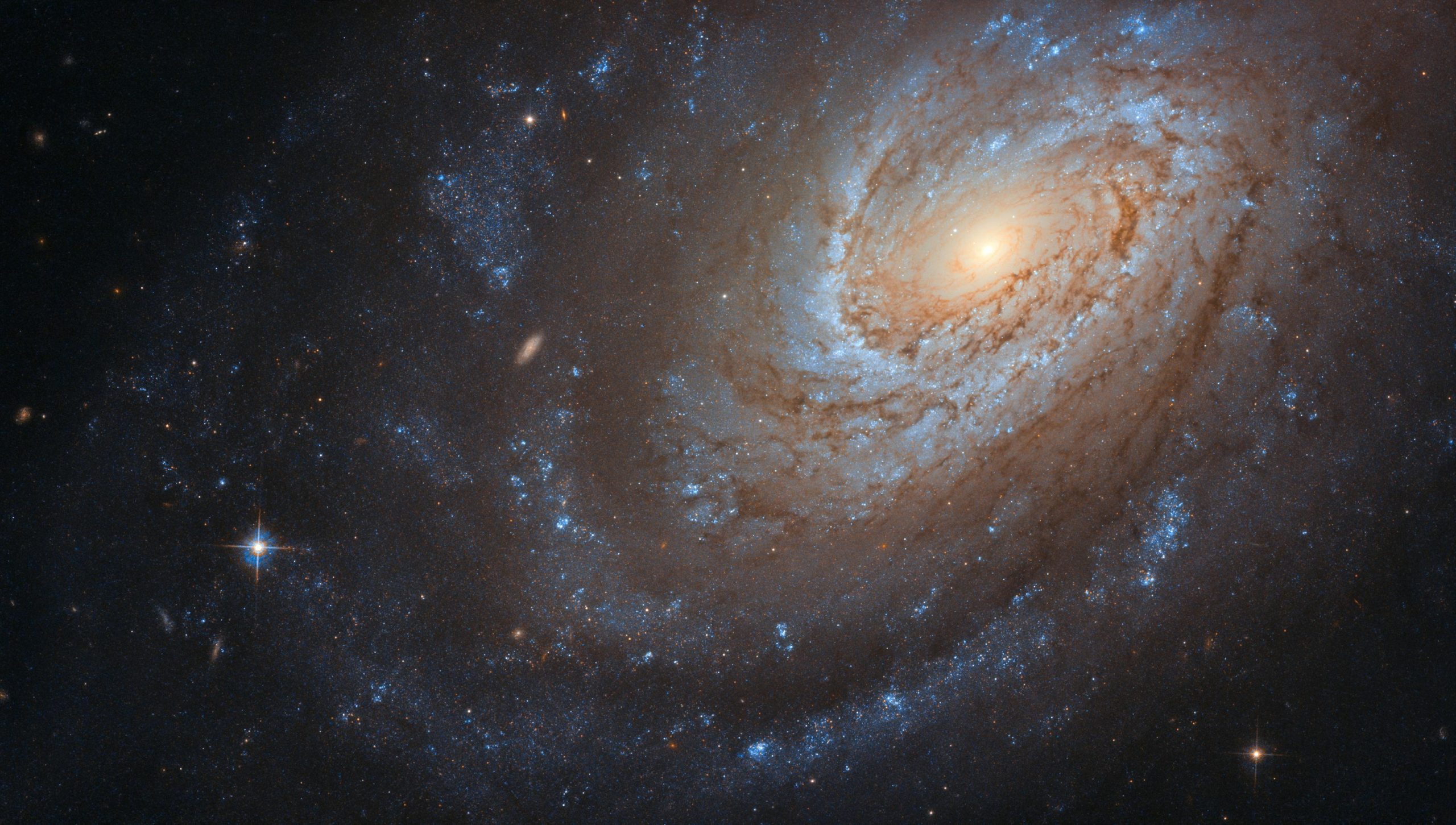
    Galaxy NGC 4651 Hubble Telescope
    Hubble Space Telescope image of the glittering spiral galaxy NGC 4651. Credit: ESA/Hubble & NASA, D. Leonard

    This remarkable spiral galaxy, known as NGC 4651, may look serene and peaceful as it swirls in the vast, silent emptiness of space, but don’t be fooled — it keeps a violent secret. It is believed that this galaxy consumed another smaller galaxy to become the large and beautiful spiral that we observe today.

    Although only a telescope like the NASA/ESA Hubble Space Telescope, which captured this image, could give us a picture this clear, NGC 4651 can also be observed with an amateur telescope — so if you have a telescope at home and a star-gazing eye, look out for this glittering carnivorous spiral.

    Never miss a breakthrough: Join the SciTechDaily newsletter.
    Follow us on Google and Google News.

    Astronomy European Space Agency Hubble Space Telescope NASA Popular
    Share. Facebook Twitter Pinterest LinkedIn Email Reddit

    Related Articles

    NASA’s Hubble Accidentally Witnesses a Comet Shattering in Space

    Hubble’s Newest Discovery Isn’t a Star, It’s a Window Into the Dark Universe

    Hubble Celebrates 34th Anniversary With a Spectacular View of the Little Dumbbell Nebula

    Hubble Captures Face-On Image of Messier 61

    Hubble Views an Ongoing Cosmic Collision

    Hubble Views Newborn Stars in Galaxy IC 5052

    New XDF Image, The Deepest-Ever View of the Universe

    Hubble Zooms in on the Center of M4

    Hubble Image of Peculiar Galaxy Pair Arp 116

    1 Comment

    1. Michael L A David on November 4, 2020 12:21 pm

      How big is the Universe? A question I am sure that you get asked frequently. But a justifiable one nevertheless, and the answer you give is probably the standard one, “No one actually knows?” And fair enough I suppose! And Astronomical Science as a whole cannot in fact answer that simplest of questions satisfactorily. But what it does say is, that the Galaxies are rushing away from each other, and technically that is true, but in fact they are rushing away from its centre, and I believe that to be for a reason, the place where everything allegedly started. But has it always been the case? Space is expanding naturally, and over approximately thirteen and a half billion years that has been the case and will continue to be, and as those Galaxies formed and developed over that time, they were caught up in that expansion, just like leaves on a pond are when a stone has been thrown into it. So that expansion is natural obviously. But here is my question, why? Why is it not only naturally expanding as would be expected, but apparently it is inexplicably speeding up, could it in fact be, that something other than the conventional theories of ‘Dark Energy’ empowered Gravity, is causing it, or could it be, that ‘The Big Bang’ as it is colloquially called, is still in fact ‘banging’? In other words, could whatever it was that generated the Universe originally, still be ‘pumping’ fresh energy out only to be converted into fresh matter E=mc squared and all that, no matter how slowly in Astronomical terms that is of course, out into the Universe causing a speeding up of that initial expansion, resulting in the appearance and in actuality the separating of Galaxies as a result as that expansion progresses, just like spots on an expanding balloon? So if that is indeed the case, another one of their ‘theories’ cannot be right, that eventually everything will just fade into nothingness, and space will just be one big empty expanse. But if there is a continual stream of fresh energy entering the Universe at its point of creation, just like a slowly bubbling fountain, meaning that there will never be a ‘drying up’ of existing matter, but rather there is a continual creation of new Stars, Galaxies and everything in between, then instead of it disappearing, the Universe will continue on ad infinitum, because I believe that you cannot contain, limit, nor stop Creation once started, let alone end it, and anyway, why would you want to!?

      Reply
    Leave A Reply Cancel Reply

    • Facebook
    • Twitter
    • Pinterest
    • YouTube

    Don't Miss a Discovery

    Subscribe for the Latest in Science & Tech!

    Trending News

    Could Low Vitamin D Be Making Your Pain Worse?

    Scientists Discover Once-Weekly Workout That Melts Belly Fat Surprisingly Effectively

    Scientists Just Tested a Thruster Powerful Enough for Human Missions to Mars

    Doctors Say Your Ice Pack Might Be Making Injuries Worse

    Scientists Discover 43-Foot Sea Reptile Twice the Size of a Great White Shark

    Bees and Birds Are Drinking Alcohol From Flowers

    Scientists Discover How Obesity May Trigger Alzheimer’s Disease

    Scientists Confirm Alcohol Causes Widespread Health Damage

    Follow SciTechDaily
    • Facebook
    • Twitter
    • YouTube
    • Pinterest
    • Newsletter
    • RSS
    SciTech News
    • Biology News
    • Chemistry News
    • Earth News
    • Health News
    • Physics News
    • Science News
    • Space News
    • Technology News
    Recent Posts
    • Scientists Stop Pancreatic Cancer Before It Starts in Landmark Preclinical Study
    • Scientists Discover Surprising Anti-Aging Power Hidden in Aged Garlic
    • Just Minutes of Intense Exercise Could Slash Disease Risk by 50%
    • People Who Stop Ozempic Often Don’t Gain the Weight Back
    • Why More People in Their 30s Are Suddenly Getting Colon Cancer
    Copyright © 1998 - 2026 SciTechDaily. All Rights Reserved.
    • Science News
    • About
    • Contact
    • Editorial Board
    • Privacy Policy
    • Terms of Use

    Type above and press Enter to search. Press Esc to cancel.