
New research reveals how bacterial proteins self-organize by destruction, aiding synthetic material design.
How does matter, lifeless by definition, self-organize and make us alive? One of the hallmarks of life, self-organization, is the spontaneous formation and breakdown of biological active matter. However, while molecules constantly fall in and out of life, one may ask how they ‘know’ where, when, and how to assemble, and when to stop and fall apart.
A team of researchers led by Professor Anđela Šarić and PhD student Christian Vanhille Campos at the Institute of Science and Technology Austria (ISTA) have addressed these questions in the context of bacterial cell division.
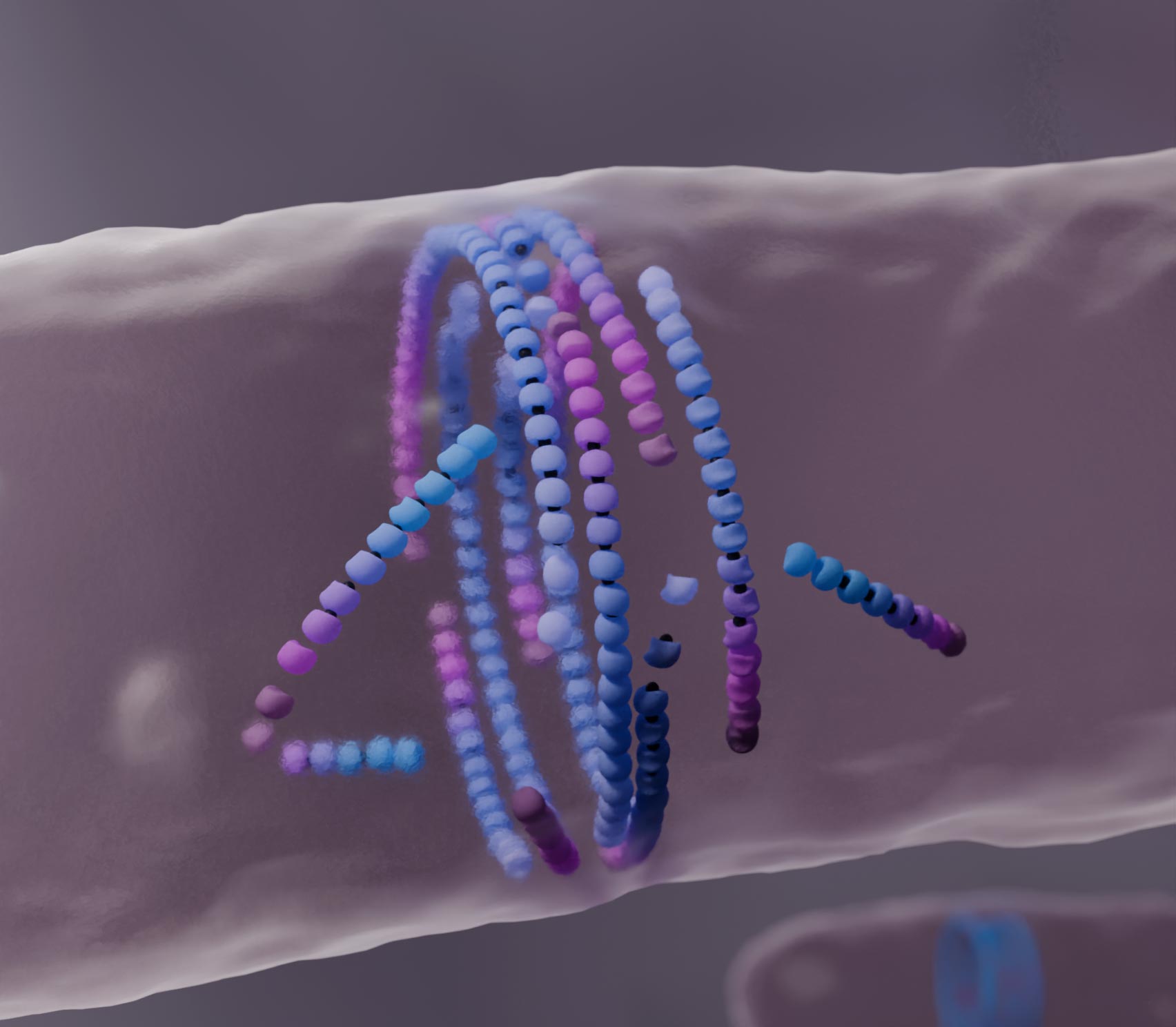
Computational simulation of FtsZ treadmilling shows the death of misaligned filaments. Credit: © Christian Vanhille Campos, Šarić lab, ISTA
Unveiling New Mechanisms of Protein Assembly
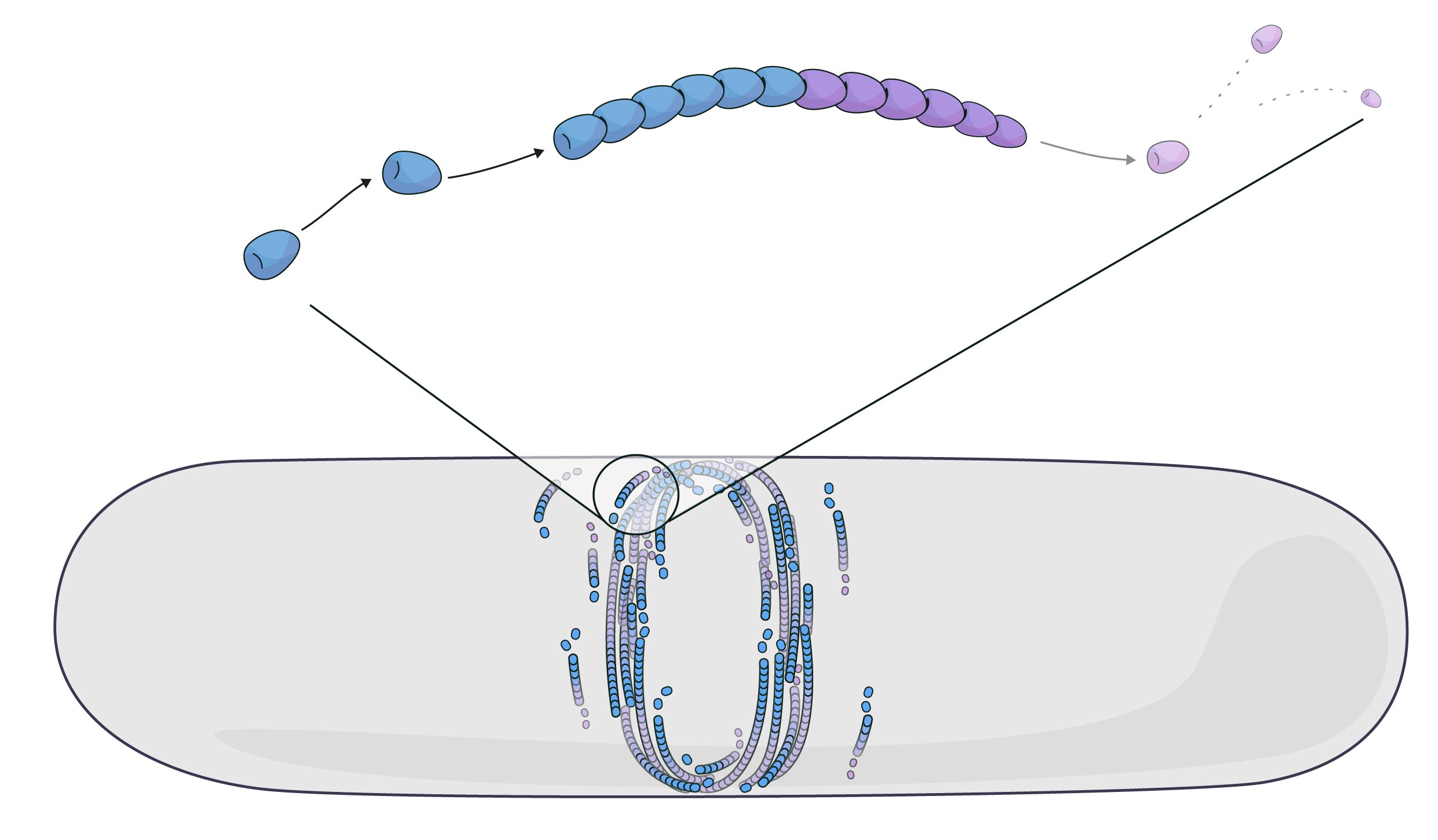
The researchers developed a computational model for the assembly of a protein called FtsZ, an example of active matter. During cell division, FtsZ self-assembles into a ring structure at the center of the dividing bacterial cell. This FtsZ ring–called the bacterial division ring–was shown to help form a new ‘wall’ that separates the daughter cells. However, essential physical aspects of FtsZ self-assembly remain unknown.
Computational simulation and atomic force microscopy (AFM) experiment on in vitro assemblies. Credit: © Christian Vanhille Campos, Šarić lab, including an AFM video by Philipp Radler, Loose lab, ISTA
In a new study, recently published in Nature Physics, computational modelers from the Šarić group team up with experimentalists from Séamus Holden’s group at The University of Warwick, UK, and Martin Loose’s group at ISTA to reveal an unexpected self-assembly mechanism. Their computational work demonstrates how misaligned FtsZ filaments react when they hit an obstacle. By ‘dying’ and re-assembling, they favor the formation of the bacterial division ring, a well-aligned filamentous structure. These findings could have applications in the development of synthetic self-healing materials.
The Role of Treadmilling in Cellular Structures
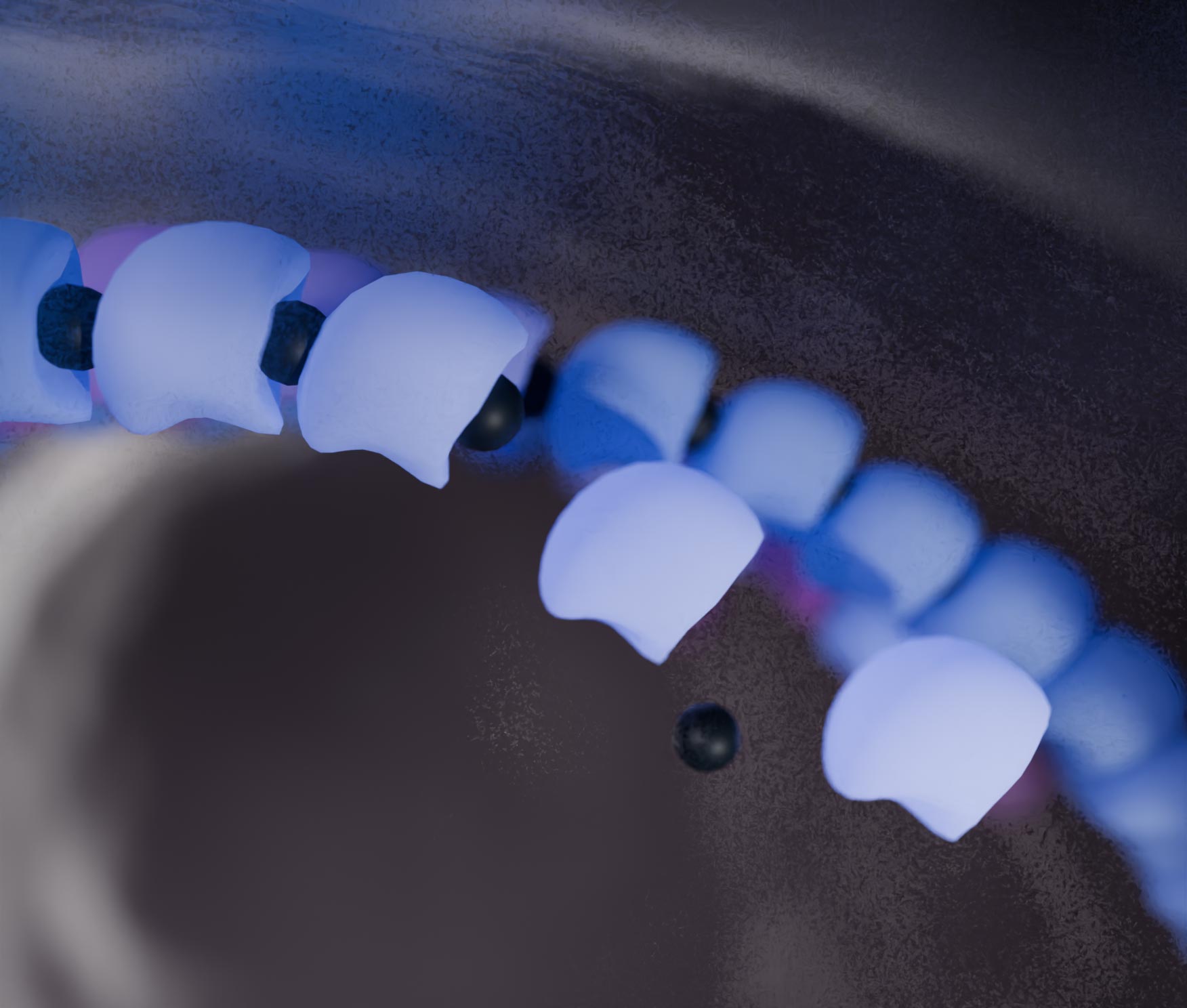
FtsZ forms protein filaments that self-assemble by growing and shrinking in a continuous turnover. This process, called ‘treadmilling,’ is the constant addition and removal of subunits at opposite filament ends. Several proteins have been shown to treadmill in multiple life forms – such as bacteria, animals, or plants. Scientists have previously thought of treadmilling as a form of self-propulsion and modeled it as filaments that move forward. However, such models fail to capture the constant turnover of subunits and overestimate the forces generated by the filaments’ assembly.
Computational simulation and live cell imaging in the bacterium Bacillus subtilis. Credit: © Christian Vanhille Campos, Šarić lab, ISTA, including live cell images by Kevin D. Whitley, Holden lab
Thus, Šarić and her team set out to model how FtsZ subunits interact and spontaneously form filaments by treadmilling. “Everything in our cells is in a constant turnover. Thus, we need to start thinking of biological active matter from the prism of molecular turnover and in a way that adapts to the outside environment,” says Šarić.
What they found was striking. In contrast to self-propelled assemblies that push the surrounding molecules and create a ‘bump’ felt at long molecular distances, they saw that misaligned FtsZ filaments started ‘dying’ when they hit an obstacle. “Active matter made up of mortal filaments does not take misalignment lightly. When a filament grows and collides with obstacles, it dissolves and dies,” says first author Vanhille Campos.
Šarić adds, “Our model demonstrates that treadmilling assemblies lead to local healing of the active material. When misaligned filaments die, they contribute to a better overall assembly.” By incorporating the cell geometry and filament curvature into their model, they showed how the death of misaligned FtsZ filaments helped form the bacterial division ring.
Collaborative Breakthroughs in Experimental Validation
Driven by the physical theories of molecular interactions, Šarić and her team soon made two independent encounters with experimental groups that helped confirm their results. At a diverse and multidisciplinary conference called ‘Physics Meets Biology,’ they met Séamus Holden, who worked on imaging bacterial ring formation in live cells. At this meeting, Holden presented exciting experimental data showing that the death and birth of FtsZ filaments were essential for the formation of the division ring. This suggested that treadmilling had a crucial role in this process.
“Satisfyingly, we found that FtsZ rings in our simulations behaved in the same way as the Bacillus subtilis division rings that Holden’s team imaged,” says Vanhille Campos.
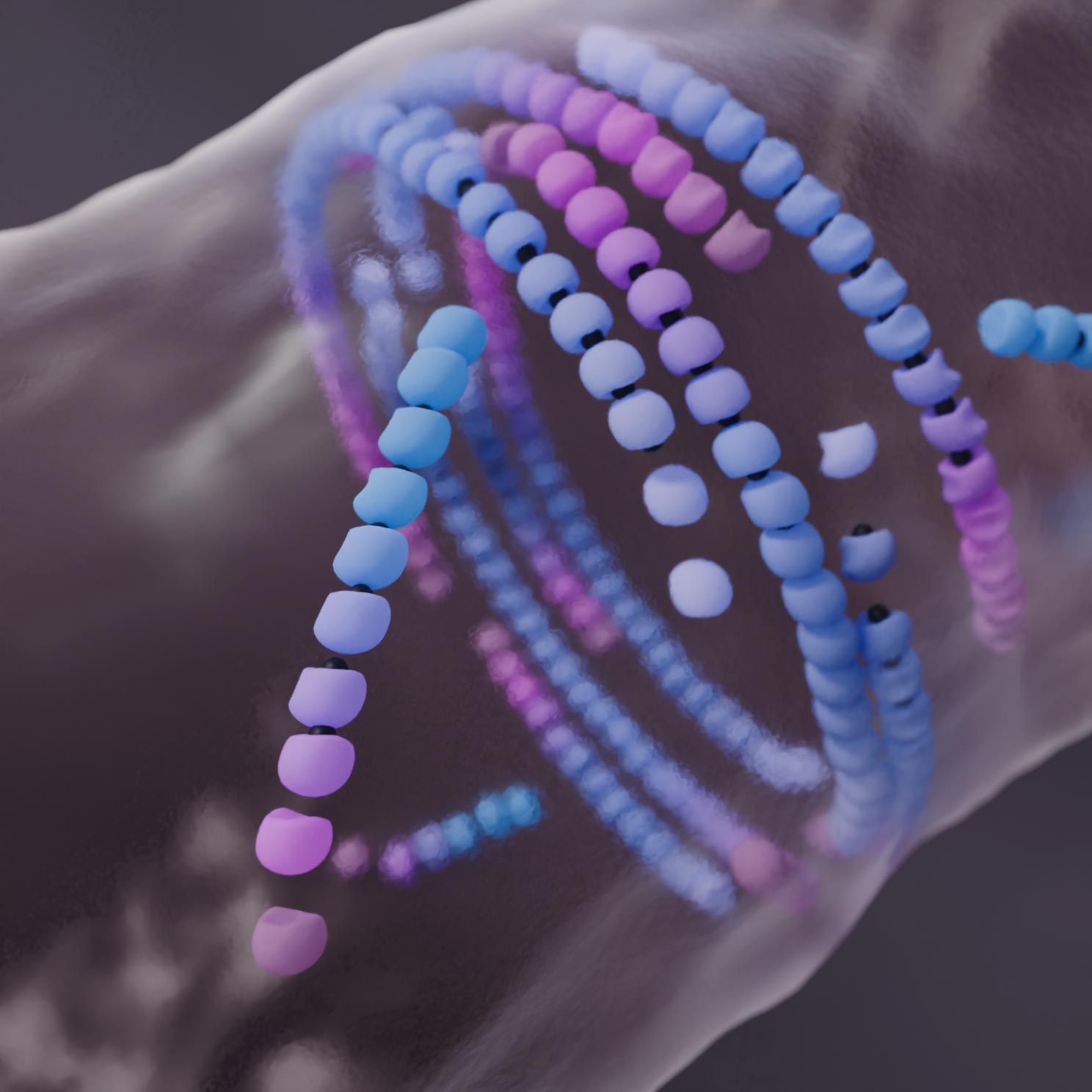
In a similar strike of luck, relocating from University College London to ISTA allowed Šarić and her group to team up with Martin Loose, who had been working on assembling FtsZ filaments in a controlled experimental setup in vitro. They saw that the in vitro results closely matched the simulations and further confirmed the team’s computational results. Underlining the cooperation spirit and synergy between the three groups, Šarić says, “We are all stepping outside our usual research fields and going beyond what we normally do. We openly discuss and share data, views, and knowledge, which allows us to answer questions we cannot tackle separately.”
Implications for Synthetic Self-Healing Materials
Energy-driven self-organization of matter is a fundamental process in physics. The team led by Šarić now suggests that FtsZ filaments are a different type of active matter that invests energy in turnover rather than motility. “In my group, we ask how to create living matter from non-living material that looks living. Thus, our present work could facilitate the creation of synthetic self-healing materials or synthetic cells,” says Šarić.
As a next step, Šarić and her team seek to model how the bacterial division ring helps build a wall that will divide the cell into two. Holden and Šarić will continue to investigate this question with the help of a recent 3.7 million Euro grant awarded by the Wellcome Trust.
Reference: “Self-organization of mortal filaments and its role in bacterial division ring formation” by Christian Vanhille-Campos, Kevin D. Whitley, Philipp Radler, Martin Loose, Séamus Holden and Anđela Šarić, 12 August 2024, Nature Physics.
DOI: 10.1038/s41567-024-02597-8
Never miss a breakthrough: Join the SciTechDaily newsletter.
Follow us on Google and Google News.
1 Comment
Amazing hypothesis constructs, observation based AFM, but, mechanisms unexplained..just processes…begs the question; where did the mechanisms come from? All this expense to solve what human problem? Is this man’s
Attempt to unscrew the inscruitable?