
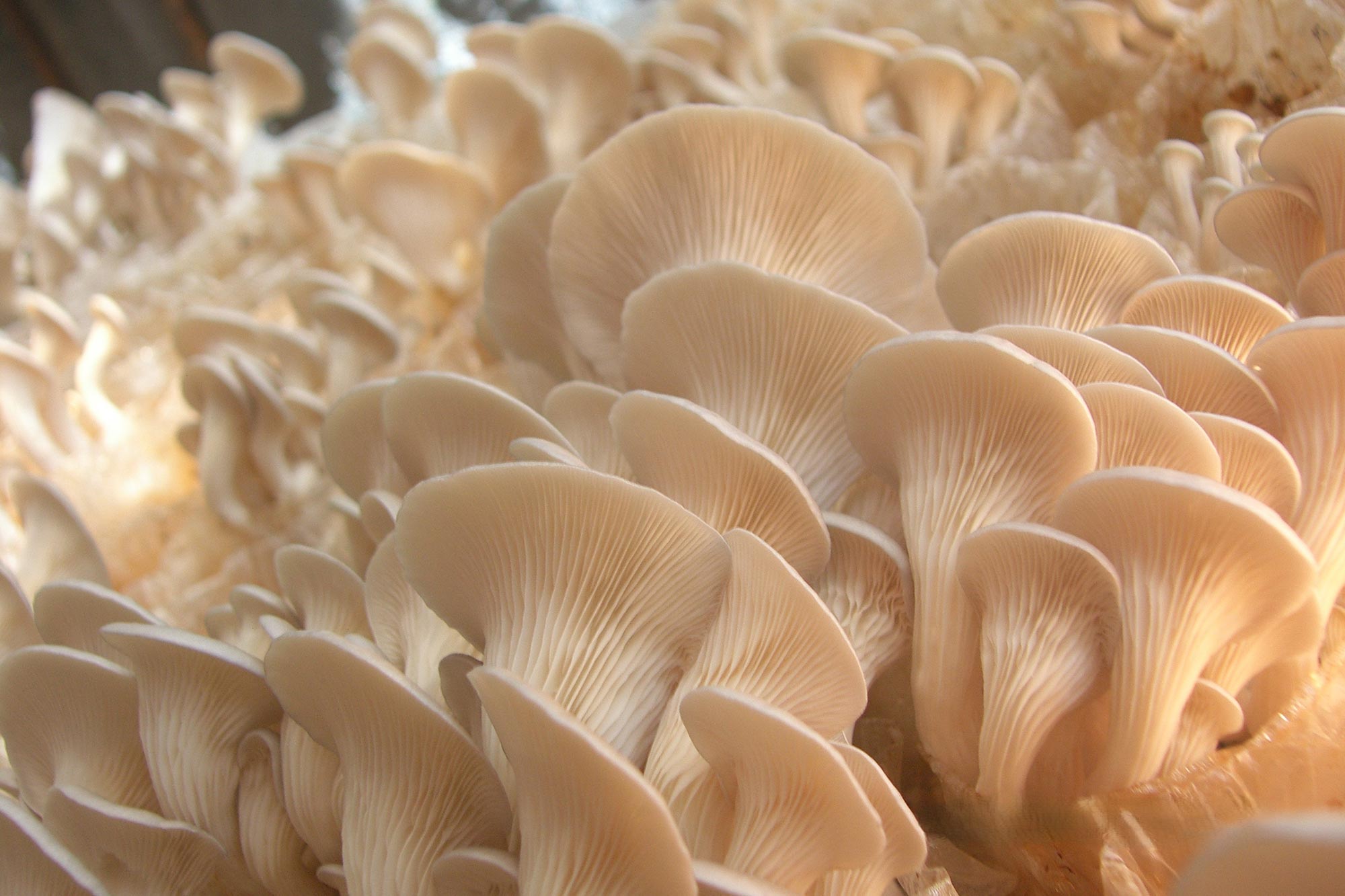
Scientists have discovered that fungi emerged hundreds of millions of years before plants. These ancient fungi may have built the first habitable land, working with algae to cycle nutrients and create primitive soils.
A new study in Nature Ecology & Evolution provides fresh insight into the origins and diversification of fungi, revealing their significant role in shaping some of the earliest land-based ecosystems. The work, carried out by researchers from the Okinawa Institute of Science and Technology (OIST) along with international collaborators, suggests that fungi began branching into different forms hundreds of millions of years before plants appeared on land.
The Five Independent Pathways to Complex Life
Professor Gergely J. Szöllősi, a coauthor of the study and head of the Model-Based Evolutionary Genomics Unit at OIST, outlines the broader context. “Complex multicellular life — organisms made of many cooperating cells with specialized jobs — evolved independently in five major groups: animals, land plants, fungi, red algae, and brown algae. On a planet once dominated by single-celled organisms, a revolutionary change occurred not once, but at least five separate times: the evolution of complex multicellular life. Understanding when these groups emerged is fundamental to piecing together the history of life on Earth.”
The appearance of multicellular organisms involved far more than cells gathering into clusters. It marked the beginning of true organisms, in which cells specialized for different tasks and became organized into tissues and organs, similar to what we see in our own bodies. Achieving this transformation required advanced adaptations: strong molecular systems that allowed cells to stick together and intricate communication networks that coordinated their activity. These innovations arose independently in each of the five groups.
Fossil Clues and the Puzzle of Fungi
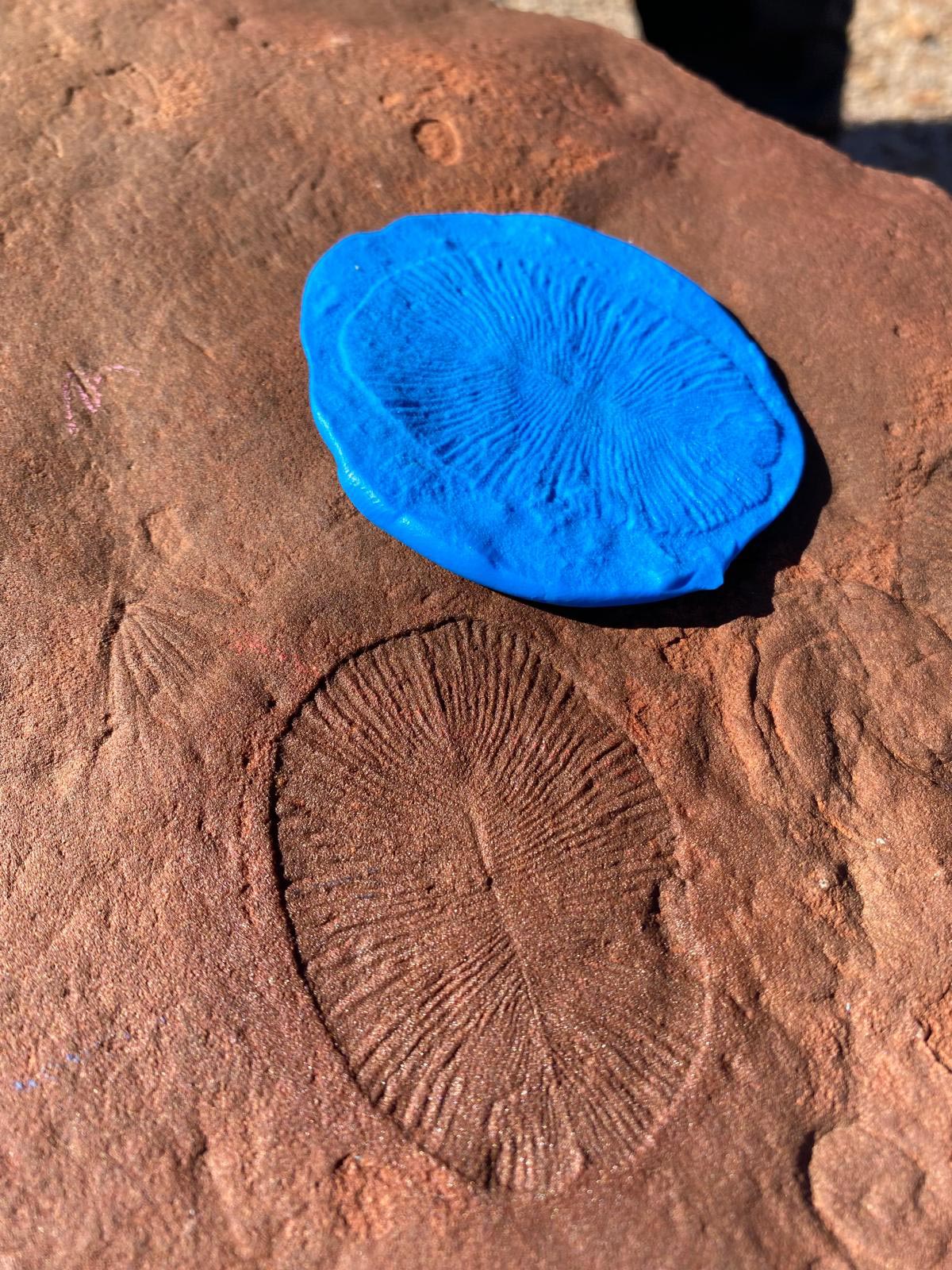
For most of these groups, the fossil record acts as a geological calendar, providing anchor points in deep time. For example, red algae show up possibly as early as about 1.6 billion years ago (in candidate seaweed-like fossils from India); animals appear by around 600 million years ago (Ediacaran fossils such as the quilted pancake like Dickinsonia); land plants take root roughly 470 million years ago (tiny fossil spores); and brown algae (kelp-like forms) diversified tens to hundreds of millions of years later still. Based on this evidence, a chronological picture of life’s complexity emerges.
There is, however, a notable exception to this fossil-based timeline: fungi. The fungal kingdom has long been an enigma for paleontologists. Their typically soft, filamentous bodies mean they rarely fossilize well. Furthermore, unlike animals or plants, which appear to have a single origin of complex multicellularity, fungi evolved this trait multiple times from diverse unicellular ancestors, making it difficult to pinpoint a single origin event in the sparse fossil record.
Unlocking the Molecular Clock
To overcome the gaps in the fungal fossil record, scientists use a “molecular clock.” The concept is that genetic mutations accumulate in an organism’s DNA at a relatively steady rate over generations, like the ticking of a clock. By comparing the number of genetic differences between two species, researchers can estimate how long ago they diverged from a common ancestor.
However, a molecular clock is uncalibrated; it can reveal relative time but not absolute years. To set the clock, scientists need to calibrate it with “anchor points” from the fossil record. Given the scarcity of fungal fossils, this has always been a major challenge. The OIST-led team addressed this by incorporating a novel source of information: rare gene “swaps” between different fungal lineages, a process known as horizontal gene transfer (HGT).
Genes That Jump Through Time
Prof. Szöllősi explains this concept. “While genes are normally passed down “vertically” from parent to child, HGT is like a gene jumping “sideways” from one species to another. These events provide powerful temporal clues,” he says. “If a gene from lineage A is found to have jumped into lineage B, it establishes a clear rule: the ancestors of lineage A must be older than the descendants of lineage B.”
By identifying 17 such transfers, the team established a series of “older than/younger than” relationships that, alongside fossil records, helped to tighten and constrain the fungal timeline.
A Revised Timeline for Fungi
The analysis suggests a common ancestor of living fungi dating to roughly 1.4–0.9 billion years ago—well before land plants. That timing supports a long prelude of fungi–algae interactions that helped set the stage for life on land.
Co-first author on this study, Dr. Lénárd L. Szánthó, emphasizes the importance of these findings. “Fungi run ecosystems—recycling nutrients, partnering with other organisms, and sometimes causing disease. Pinning down their timeline shows fungi were diversifying long before plants, consistent with early partnerships with algae that likely helped pave the way for terrestrial ecosystems.”
Preparing the World for Plants
This revised timeline fundamentally reframes the story of life’s colonization of land. It suggests that for hundreds of millions of years before the first true plants took root, fungi were already present, likely interacting with algae in microbial communities. This long, preparatory phase may have been essential for making Earth’s continents habitable. By breaking down rock and cycling nutrients, these ancient fungi could have been the first true ecosystem engineers, creating the first primitive soils and fundamentally altering the terrestrial environment. In this new view, plants did not colonize a barren wasteland, but rather a world that had been prepared for them over eons by the ancient and persistent activity of the fungal kingdom.
Reference: “A timetree of Fungi dated with fossils and horizontal gene transfers” by Lénárd L. Szánthó, Zsolt Merényi, Philip Donoghue, Toni Gabaldón, László G. Nagy, Gergely J. Szöllősi and Eduard Ocaña-Pallarès, 1 October 2025, Nature Ecology & Evolution.
DOI: 10.1038/s41559-025-02851-z
About the authors
This work grew from the OIST Model-Based Evolutionary Genomics Unit, co-led by Prof. Gergely J. Szöllősi and Dr. Eduard Ocaña-Pallarès, with Dr. Lénárd L. Szánthó and Zsolt Merényi as first authors. They teamed up with colleagues across Europe, including Professor László G. Nagy’s group, which includes Zsolt Merényi, at the HUN-REN Biological Research Centre in Szeged, Hungary—a team known for fungal evolutionary genomics and the evolution of multicellularity. Further collaborators on this study include Prof. Philip Donoghue, who heads the University of Bristol’s Paleobiology Group, UK, and Prof. Toni Gabaldón, of the Institute for Research in Biomedicine (IRB) and the Barcelona Supercomputing Centre (BSC), Spain, an expert in comparative genomics.
Never miss a breakthrough: Join the SciTechDaily newsletter.
Follow us on Google and Google News.
2 Comments
Fabulous Fungi.
In my opinion, ‘a planet once dominated by single celled organisms’ is just a myth. Just compare it with the evolution of computers. Initially, these were medium sized machines to store and process dats. The size became smaller and smaller as our technology evolved. Then these smaller units were incorporated into large structures.
Similarly, cell walls and multicellular life emerged from primitive life that has no distinct borders. Single-celled organisms are later arrivals. These gradually evolved into highly efficient viruses. The multicellular organisms gradually evolved into fungi, plants and animals.