
Close Menu
    Facebook X (Twitter) Instagram
    SciTechDaily
    • Biology
    • Chemistry
    • Earth
    • Health
    • Physics
    • Science
    • Space
    • Technology
    Facebook X (Twitter) Pinterest YouTube RSS
    SciTechDaily
    Home»Technology»Efficient Brain-Based Computing Using Graphene-Based Memory Resistors
    Technology

    Efficient Brain-Based Computing Using Graphene-Based Memory Resistors

    By Penn State UniversityOctober 29, 2020No Comments3 Mins Read
    Facebook Twitter Pinterest Telegram LinkedIn WhatsApp Email Reddit
    Share
    Facebook Twitter LinkedIn Pinterest Telegram Email Reddit
    Graphene Memristor
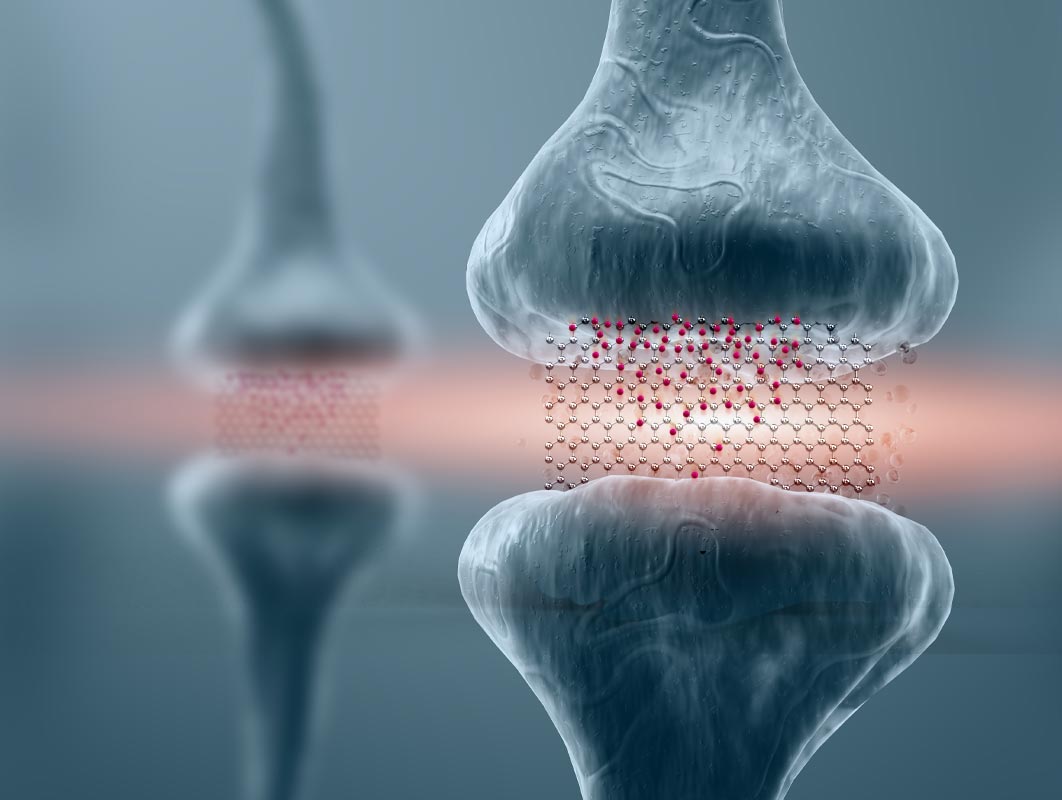
    Graphene memristors open doors for biomimetic computing. Credit: Jennifer M. McCann/Penn State

    As progress in traditional computing slows, new forms of computing are coming to the forefront. At Penn State, a team of engineers is attempting to pioneer a type of computing that mimics the efficiency of the brain’s neural networks while exploiting the brain’s analog nature.

    Modern computing is digital, made up of two states, on-off or one and zero. An analog computer, like the brain, has many possible states. It is the difference between flipping a light switch on or off and turning a dimmer switch to varying amounts of lighting.

    Neuromorphic or brain-inspired computing has been studied for more than 40 years, according to Saptarshi Das, the team leader and Penn State assistant professor of engineering science and mechanics. What’s new is that as the limits of digital computing have been reached, the need for high-speed image processing, for instance for self-driving cars, has grown. The rise of big data, which requires types of pattern recognition for which the brain architecture is particularly well suited, is another driver in the pursuit of neuromorphic computing.

    “We have powerful computers, no doubt about that, the problem is you have to store the memory in one place and do the computing somewhere else,” Das said.

    The shuttling of this data from memory to logic and back again takes a lot of energy and slows the speed of computing. In addition, this computer architecture requires a lot of space. If the computation and memory storage could be located in the same space, this bottleneck could be eliminated.

    “We are creating artificial neural networks, which seek to emulate the energy and area efficiencies of the brain,” explained Thomas Schranghamer, a doctoral student in the Das group and first author on a paper recently published in Nature Communications. “The brain is so compact it can fit on top of your shoulders, whereas a modern supercomputer takes up a space the size of two or three tennis courts.”

    Like synapses connecting the neurons in the brain that can be reconfigured, the artificial neural networks the team is building can be reconfigured by applying a brief electric field to a sheet of graphene, the one-atomic-thick layer of carbon atoms. In this work they show at least 16 possible memory states, as opposed to the two in most oxide-based memristors, or memory resistors.

    “What we have shown is that we can control a large number of memory states with precision using simple graphene field effect transistors,” Das said.

    The team thinks that ramping up this technology to a commercial scale is feasible. With many of the largest semiconductor companies actively pursuing neuromorphic computing, Das believes they will find this work of interest.

    In addition to Das and Schranghamer, the additional author on the paper, titled “Graphene Memristive Synapses for High Precision Neuromorphic Computing,” is Aaryan Oberoi, a doctoral student in engineering science and mechanics.

    Reference: “Graphene memristive synapses for high precision neuromorphic computing” by Thomas F. Schranghamer, Aaryan Oberoi and Saptarshi Das, 29 October 2020, Nature Communications.
    DOI: 10.1038/s41467-020-19203-z

    The Army Research Office supported this work. The team has filed for a patent on this invention.

    Never miss a breakthrough: Join the SciTechDaily newsletter.
    Follow us on Google and Google News.

    Artificial Intelligence Computer Science Graphene Penn State University
    Share. Facebook Twitter Pinterest LinkedIn Email Reddit

    Related Articles

    Researchers Use Graphene in Photodetectors

    AI Framework Predicts Better Patient Health Care and Reduces Cost

    Triangular Layers of Tungsten Disulfide May Have Applications in Optical Technology

    Algorithm Analyzes Information From Medical Images to Identify Disease

    Halide, A New and Improved Programming Language for Image Processing Software

    New Algorithm Enables Wi-Fi Connected Vehicles to Share Data

    Algorithm Enables Robots to Learn and Adapt to Help Complete Tasks

    New Approach Uses Mathematics to Improve Automated Security Monitoring

    Mathematical Framework Formalizes Loop Perforation Technique

    Leave A Reply Cancel Reply

    • Facebook
    • Twitter
    • Pinterest
    • YouTube

    Don't Miss a Discovery

    Subscribe for the Latest in Science & Tech!

    Trending News

    289-Million-Year-Old Reptile Mummy Reveals Origin of Human Breathing System

    New Brain Discovery Challenges Long-Held Theory of Teenage Brain Development

    Scientists Discover Plants “Scream” – We Just Couldn’t Hear Them Until Now

    Scientists Discover a Surprising Reason Intermittent Fasting Extends Life

    This Simple Fruit Wash Could Make Produce Safer and Last Days Longer

    Scientists Say Adding This Unusual Seafood to Your Diet Could Reverse Signs of Aging

    Scientists Say a Hidden Structure May Exist Inside Earth’s Core

    Doctors Surprised by the Power of a Simple Drug Against Colon Cancer

    Follow SciTechDaily
    • Facebook
    • Twitter
    • YouTube
    • Pinterest
    • Newsletter
    • RSS
    SciTech News
    • Biology News
    • Chemistry News
    • Earth News
    • Health News
    • Physics News
    • Science News
    • Space News
    • Technology News
    Recent Posts
    • Scientists Propose Radical New Way To Detect Alien Life – Without Traditional Biosignatures
    • Scientists Just Discovered Light Can Actually Slow Plant Growth
    • Scientists Finally Solved One of Water’s Biggest Mysteries
    • 7,000-Year-Old DNA Rewrites the Story of the “Neolithic Revolution”
    • Missing Medieval Relic of Legendary English King Found After Being Missing for 40 Years
    Copyright © 1998 - 2026 SciTechDaily. All Rights Reserved.
    • Science News
    • About
    • Contact
    • Editorial Board
    • Privacy Policy
    • Terms of Use

    Type above and press Enter to search. Press Esc to cancel.