
Close Menu
    Facebook X (Twitter) Instagram
    SciTechDaily
    • Biology
    • Chemistry
    • Earth
    • Health
    • Physics
    • Science
    • Space
    • Technology
    Facebook X (Twitter) Pinterest YouTube RSS
    SciTechDaily
    Home»Biology»Electric Signals Between Individual Cardiac Cells Regulate Heartbeat – “Nature Is Much, Much Smarter Than Human Beings”
    Biology

    Electric Signals Between Individual Cardiac Cells Regulate Heartbeat – “Nature Is Much, Much Smarter Than Human Beings”

    By American Institute of PhysicsJuly 13, 2021No Comments3 Mins Read
    Facebook Twitter Pinterest Telegram LinkedIn WhatsApp Email Reddit
    Share
    Facebook Twitter LinkedIn Pinterest Telegram Email Reddit
    Heart Diagram Proteins
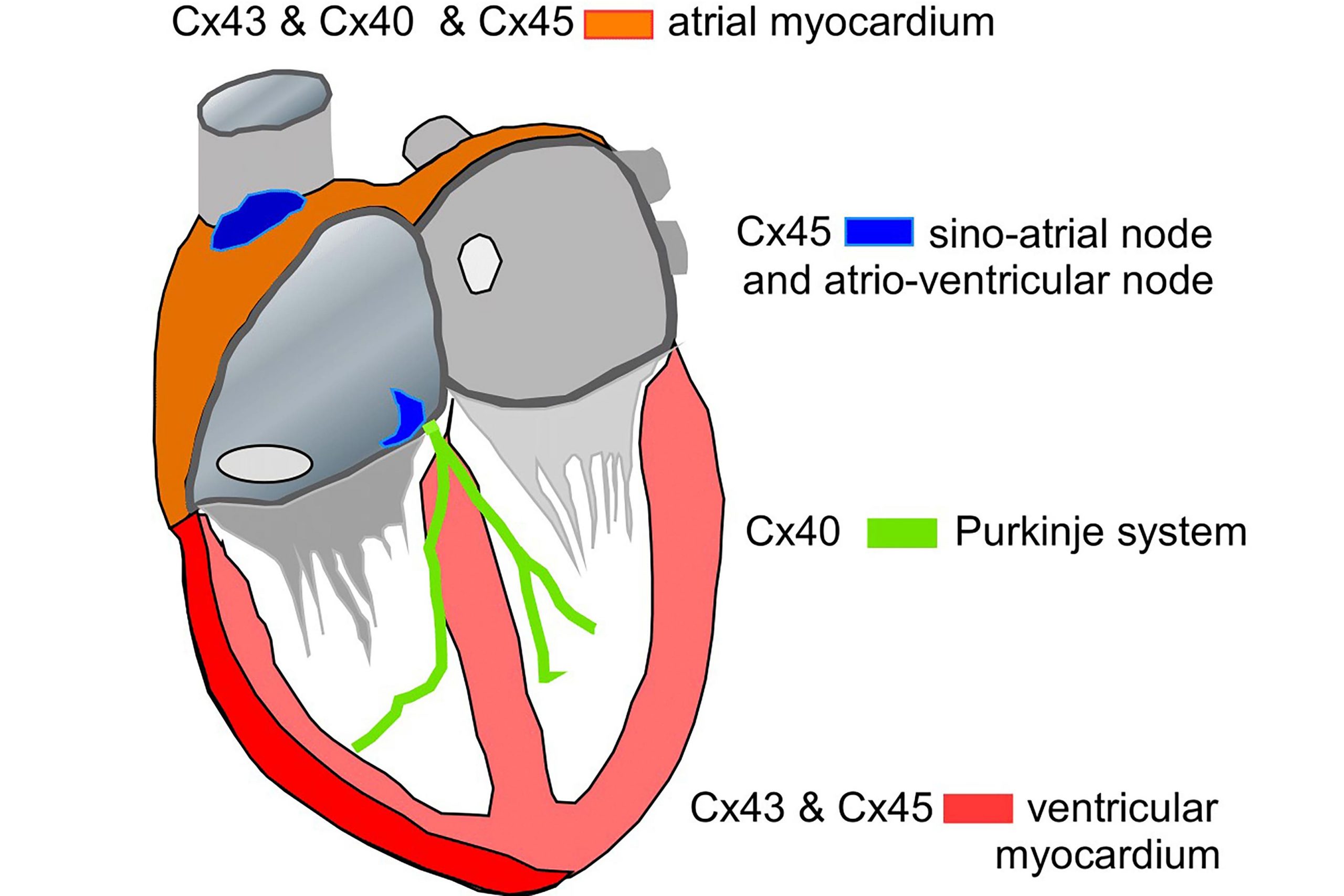
    A diagram of the heart. Colors show the different types of proteins that connect cells, allow electricity to flow, and cause the heart to beat. Credit: André G. Kléber

    Cells are connected by gap junctions, which are vital for a healthy heart.

    The rhythm in a working heart is regulated by electrical impulses. Disturbances of this bioelectrical process can result in cardiac arrhythmias, or irregularities in heartbeat — a common ailment that can lead to illness and death.

    In Biophysics Reviews, by AIP Publishing, researchers from Harvard Medical School provide a state-of-the-art update on how electrical impulses in the heart travel from cell to cell.

    A functioning heart contracts to pump blood to the body and the lungs. Within the heart, a pacemaker acts as an electrical clock, sending out a signal that tells the heart when to contract. The whole muscle moves together, because each individual cell inside of it contracts in a coordinated manner and within a short time interval.

    In order to do so, the initial electrical impulse, sent by the pacemaker, rapidly spreads through cells across the heart.

    “If one cell is excited electrically and the other is not, the excited cell becomes positively charged inside, and the resting cell is still negatively charged inside. As a consequence, a voltage gradient builds up between the cells,” said author André Kléber. “If you have a voltage gradient and a pathway with a low electrical resistance, a local current will flow.”

    Gap Junctions in Electrical Conduction

    The connections between cells forming the low resistance pathway and facilitating the current flow are called gap junctions. Each consists of many channels, which are formed when specific proteins from one cell dock and fuse to the proteins from another cell. Kléber said the fusing proteins look like placing the tips of your fingers on one hand to the fingers on the other hand.

    The scientists delve into the properties of gap junctions and their constituent proteins, the so-called connexins. Kléber said one reason gap junction channels are interesting is because they are a highly dynamic system in equilibrium. The creation, or synthesis, of the channels equals the destruction.

    “The turnover is very short,” he said. “On one hand, the system is very stable during your whole life. On the other hand, if you measure it, it is constantly cycling in periods of a few hours.”

    Multifunctionality of Connexin Proteins Beyond Communication

    The proteins found in gap junctions are important for processes not directly related to cell-cell connections, like mitochondrial function, which creates energy, and trafficking, which transports molecules from the site of synthesis to their site of action in the cell interior.

    “You have to refrain from the idea that if you define the role of a protein in the body, that it has only a single function,” said Kléber. “Nature is much, much smarter than human beings.”

    Reference: “Coupling between cardiac cells – an important determinant of electrical impulse propagation and arrhythmogenesis” by André G. Kléber and Qianru Jin, 13 July 2021, Biophysics Reviews.
    DOI: 10.1063/5.0050192

    Never miss a breakthrough: Join the SciTechDaily newsletter.
    Follow us on Google and Google News.

    American Institute of Physics Biomechanics Biophysics Cardiology Heart
    Share. Facebook Twitter Pinterest LinkedIn Email Reddit

    Related Articles

    Scientists Grow Tiny Brains in 3D-Printed Bioreactor

    Antiarrhythmic Protection: Alligator Hearts Keep Beating No Matter What

    COVID-19 Warning: Humid Air Can Extend Lifetime of Virus-Laden Aerosol Droplets

    Virtually Captured: Biomechanical Snapping Mechanisms of the Venus Flytrap Revealed

    Study Shows Hydroxychloroquine’s Harmful Effects on Heart Rhythm – Urges for COVID-19 Use Restrictions

    Artificial Intelligence Composes New Proteins – The Building Blocks of Life – as Musical Scores

    High-Speed Video Reveals Bumblebees Carry Heavy Loads in Energy-Efficient “Economy Mode”

    A Better Suction Cup Design – That Works on Rough Surfaces – Inspired by Northern Clingfish

    Human Cardiac Cells Derived From Stem Cells Could Repair Damaged Hearts

    Leave A Reply Cancel Reply

    • Facebook
    • Twitter
    • Pinterest
    • YouTube

    Don't Miss a Discovery

    Subscribe for the Latest in Science & Tech!

    Trending News

    Just a Few Breathless Minutes a Day Could Slash Your Risk of 8 Major Diseases

    This Simple Habit Could Cut Your Risk of Dementia by 30%

    Scientists Debunk Rattlesnake Myth That Fooled Hikers and Doctors for Decades

    Scientists Discover Plants Can “Count” – and May Be Smarter Than We Thought

    New Research Reveals Ancient Mars May Have Been Warm, Wet – and Possibly Alive

    This Surprising Daily Habit Could Cut Dementia Risk by 35%

    Just 10 Minutes a Day: Scientists Say This Ancient Chinese Practice Shows Powerful Blood Pressure Benefits

    Scientists Say This Popular Food Could Help Your Body Get Rid of Microplastics

    Follow SciTechDaily
    • Facebook
    • Twitter
    • YouTube
    • Pinterest
    • Newsletter
    • RSS
    SciTech News
    • Biology News
    • Chemistry News
    • Earth News
    • Health News
    • Physics News
    • Science News
    • Space News
    • Technology News
    Recent Posts
    • A Simple Nose Swab Could Detect Alzheimer’s Years Before Symptoms Appear
    • Scientists Warn: Vaping Likely Causes Cancer
    • Irregular Bedtimes Could Double Your Risk of Heart Attack and Stroke
    • Scientists Just Rewrote the Timeline of Complex Life on Earth
    • 160,000 Years Ago, Hominins in China Were Far More Advanced Than We Thought
    Copyright © 1998 - 2026 SciTechDaily. All Rights Reserved.
    • Science News
    • About
    • Contact
    • Editorial Board
    • Privacy Policy
    • Terms of Use

    Type above and press Enter to search. Press Esc to cancel.