
Close Menu
    Facebook X (Twitter) Instagram
    SciTechDaily
    • Biology
    • Chemistry
    • Earth
    • Health
    • Physics
    • Science
    • Space
    • Technology
    Facebook X (Twitter) Pinterest YouTube RSS
    SciTechDaily
    Home»Technology»Engineers Create Tiny Robot “Bugs” That Can Go Just About Anywhere
    Technology

    Engineers Create Tiny Robot “Bugs” That Can Go Just About Anywhere

    By University of PittsburghMarch 4, 2022No Comments3 Mins Read
    Facebook Twitter Pinterest Telegram LinkedIn WhatsApp Email Reddit
    Share
    Facebook Twitter LinkedIn Pinterest Telegram Email Reddit
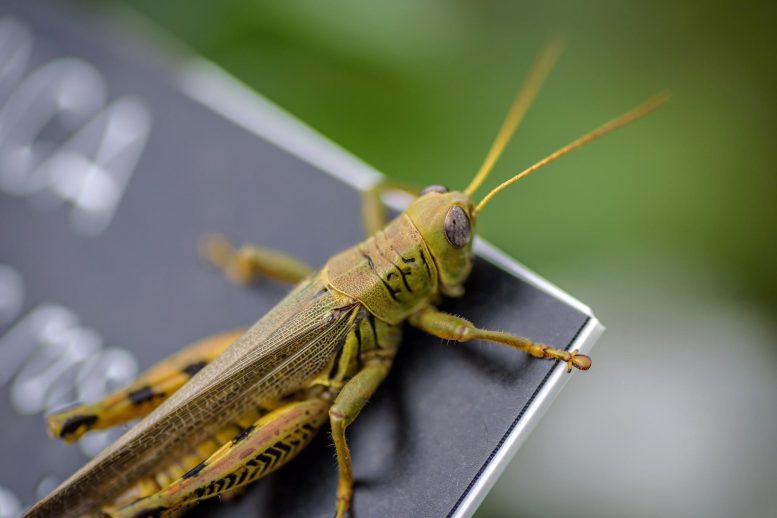
    Grasshopper Macro
    Insects inspire tiny robots that can carry out tasks in hard-to-reach spaces and inhospitable environments.

    University of Pittsburgh Engineers Create Insect-Inspired Robots That Can Monitor Hard-to-Reach Spots.

    These ancient creatures can squeeze through the tiniest cracks, fit snugly into tight spaces and survive in harsh environments: There aren’t many spaces that are off-limits to an insect.

    That’s why researchers at the University of Pittsburgh have created tiny bug-inspired robots that can carry out tasks in hard-to-reach spaces and inhospitable environments.

    “These robots could be used to access confined areas for imaging or environmental evaluation, take water samples, or perform structural evaluations,” said Junfeng Gao, who led the work as a PhD student in industrial engineering at the Swanson School of Engineering. “Anywhere you want to access confined places—where a bug could go but a person could not—these machines could be useful.”

    For many creatures under a certain size—like trap-jaw ants, mantis shrimp, and fleas—jumping across a surface is more energy-efficient than crawling. Those impulsive movements were replicated in the robots, which are made of a polymeric artificial muscle.

    “It’s akin to loading an arrow into a bow and shooting it—the robots latch on to build up energy and then release it in an impulsive burst to spring forward,” explained M. Ravi Shankar, professor of industrial engineering at Pitt whose lab led the research. “Usually, actuation in the artificial muscles we work with is fairly slow. We were drawn to the question, ‘How do we take this artificial muscle and use it to generate a jumping actuation rather than slow actuation?’”
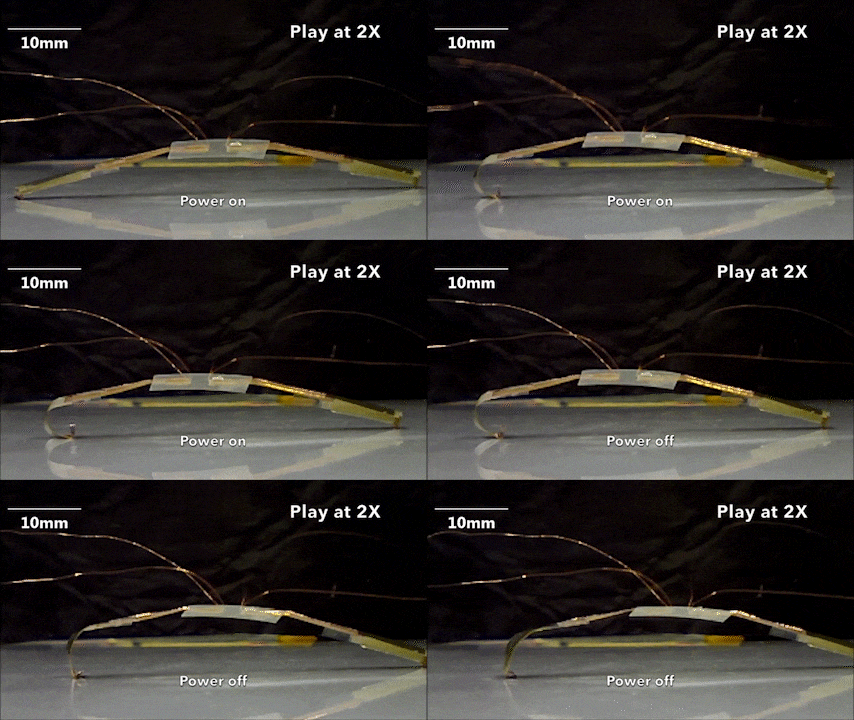
    Bug Inspired Robot
    The bug-inspired robot designed by M. Ravi Shankar’s Lab. Credit: The Shankar Research Group

    The answer lay in the interplay of molecular order and geometry.

    “The curved composite shape of the polymer muscle allows it to build energy when it is powered. The way the molecules are aligned in the muscle draws inspiration from the natural world, where their combined actuation builds energy into the structure,” said Mohsen Tabrizi, co-author of the study and PhD student in industrial engineering at the Swanson School. “This is accomplished using no more than a few volts of electricity.”

    The versatile movement and lightweight structure enables the robots—which are about the size of a cricket—to move along moving surfaces like sand as easily as hard surfaces, and even to hop across water.

    Reference: “Molecularly Directed, Geometrically Latched, Impulsive Actuation Powers Sub-Gram Scale Motility” by Junfeng Gao, Arul Clement, Mohsen Tabrizi and M. Ravi Shankar, 1 October 2021, Advanced Materials Technologies.
    DOI: 10.1002/admt.202100979

    Never miss a breakthrough: Join the SciTechDaily newsletter.
    Follow us on Google and Google News.

    Materials Science Robotics University of Pittsburgh
    Share. Facebook Twitter Pinterest LinkedIn Email Reddit

    Related Articles

    New Shape-Changing Robots Take on Changing Terrains

    ‘Robotic Skins’ Turn Inanimate Objects Into Multifunctional Robots

    Engineers Develop Soft Robot That Can Carry Its Own Power Supply

    Engineers Create 3D-Printed Smart Gel That Walks Underwater, Moves Objects

    MIT Engineers Design Transparent, Gel-Based Robots

    Researchers Develop Shape-Programmable Miniscule Robots

    Robotic Tentacles Have a Soft Enough Touch to Pick Up Flowers

    Light Activated Muscle Cells May Advance Biorobotics

    Elastomeric “Soft” Robots Running on Pneumatic Actuators

    Leave A Reply Cancel Reply

    • Facebook
    • Twitter
    • Pinterest
    • YouTube

    Don't Miss a Discovery

    Subscribe for the Latest in Science & Tech!

    Trending News

    Your Blood Pressure Reading Could Be Wrong Because of One Simple Mistake

    Astronomers Stunned by Ancient Galaxy With No Spin

    Physicists May Be on the Verge of Discovering “New Physics” at CERN

    Scientists Solve 320-Million-Year Mystery of Reptile Skin Armor

    Scientists Say This Daily Walking Habit May Be the Secret to Keeping Weight Off After Dieting

    New Therapy Rewires the Brain To Restore Joy in Depression Patients

    Giant Squid Detected off Western Australia in Stunning Deep-Sea Discovery

    Popular Sugar-Free Sweetener Linked to Liver Disease, Study Warns

    Follow SciTechDaily
    • Facebook
    • Twitter
    • YouTube
    • Pinterest
    • Newsletter
    • RSS
    SciTech News
    • Biology News
    • Chemistry News
    • Earth News
    • Health News
    • Physics News
    • Science News
    • Space News
    • Technology News
    Recent Posts
    • Scientists Revive Ancient Chemistry Trick To Engineer Next-Generation Glass
    • Scientists Use AI To Supercharge Ultrafast Laser Simulations by More Than 250x
    • Scientists Just Found a Surprising Way To Destroy “Forever Chemicals”
    • Popular Supplement Ingredient Linked to Shorter Lifespan in Men
    • Scientists May Have Found a Way To Repair Nerve Damage in Multiple Sclerosis
    Copyright © 1998 - 2026 SciTechDaily. All Rights Reserved.
    • Science News
    • About
    • Contact
    • Editorial Board
    • Privacy Policy
    • Terms of Use

    Type above and press Enter to search. Press Esc to cancel.