
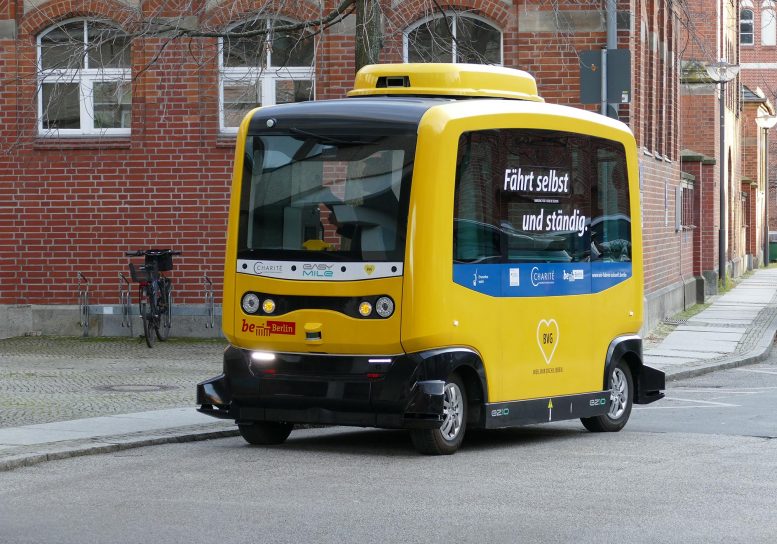
A new study from the University of Wisconsin-Madison shows that while autonomous vehicles (AVs) promise greater convenience and accessibility, they could lead to significant environmental costs if not properly managed.
Optimistic predictions expect reliable autonomous vehicles to be commercially available by 2030, at a time when mobility is undergoing a profound shift away from traditional modes of transportation and towards door-to-door services. Previous analysis suggested that public transport will lose market share to autonomous vehicles, but the environmental impact of changing transport use has hardly been considered. New research shows that the convenience of autonomous vehicles would likely come at an environmental cost.
A recent paper by researchers from the University of Wisconsin-Madison addresses the use-phase implications of autonomous vehicles using a stated preference survey to reveal the potential users of autonomous vehicles and the resulting level of competition with traditional modes of transport. The results show an expected increase in environmental impacts across all the categories studied, due to a shift from less carbon-intensive transportation options. The authors also confirm that the use of electric autonomous vehicles could change this environmental outcome. Their research is published today (May 18, 2021) in the IOP Publishing journal Environmental Research Letters.
The Tradeoff Between Convenience and Carbon
Autonomous vehicles are expected to offer significant benefits in terms of transport operations, safety and accessibility; however, these benefits may mask potential environmental impacts. Clearly, the adoption of autonomous vehicles will be accompanied by travel behavior changes, however, research to date has mostly focused on autonomous vehicle technology and not on the environmental impacts that will result from transport mode shifts. This new research therefore examines these impacts based on four categories: energy consumption, greenhouse gas emissions, particulates, and pollutants.
A survey conducted in Madison, Wisconsin, examined attitudes to transport modes and found that in choice experiments between private vehicles, autonomous taxis, buses, and bicycles, respondents would use autonomous vehicle taxis 31% of the time due to their desirable operational and modal attributes. By contrast, buses had a significantly longer access time due to walking and waiting, and personal vehicles were the midway choice. However, commuters who owned a personal vehicle were less likely to choose an autonomous vehicle, implying that autonomous vehicles primarily compete with public transport; therefore, policies aiming to reduce commuting in personal vehicles might not be fully successful in reducing environmental impacts.
The researchers then examined the impacts of policy and service changes via a series of simulations, which confirmed that autonomous vehicles primarily compete with the environmentally preferred transport mode, buses. They also showed that a decrease in bus travel times would result in a significant increase in bus usage. The environmental predictions showed increases of between 5.7% and 6.85% in the energy and pollution categories, a significant impact, given that transport accounts for 28% of the greenhouse gas emissions in the U.S.
Mitigating Impact Through Electrification
To offset the environmental impacts of autonomous vehicles, the researchers considered the use of electric autonomous vehicles, considering the use phase only. The results showed that electric autonomous vehicles can offset the environmental impact of autonomous vehicles, subject to a suitable mix of electricity generation methods, and if the adoption rate of electric autonomous vehicles is over about 40%.
This new research into the use-phase environmental impacts of autonomous vehicles will help researchers and policymakers to exploit the full potential of autonomous vehicles while taking any potential environmental implications into account. Cities seeking to deploy autonomous vehicles will need to steer their deployment in ways that both match consumer adoption patterns and are environmentally beneficial.
Author Wissam Kontar said: “The transportation system is on the verge of a major paradigm shift. Emerging technologies as autonomous and electric vehicles, along with change in commuting behavior will have significant operational and environmental impacts. It is of crucial importance that we consider those impacts conjointly, if we are to forge an efficient and sustainable mobility of the future.”
Reference: “Autonomous Vehicle Adoption: Use Phase Environmental Implications” by Wissam Kontar, Soyoung Ahn and Andrea Hicks, 18 May 2021, Environmental Research Letters.
DOI: 10.1088/1748-9326/abf6f4
Funding: Center for Transportation Equity, Decisions, and Dollars (CTEDD) funded by U.S. Department of Transportation Research and Innovative Technology Administration (OST-R)
Never miss a breakthrough: Join the SciTechDaily newsletter.
Follow us on Google and Google News.