
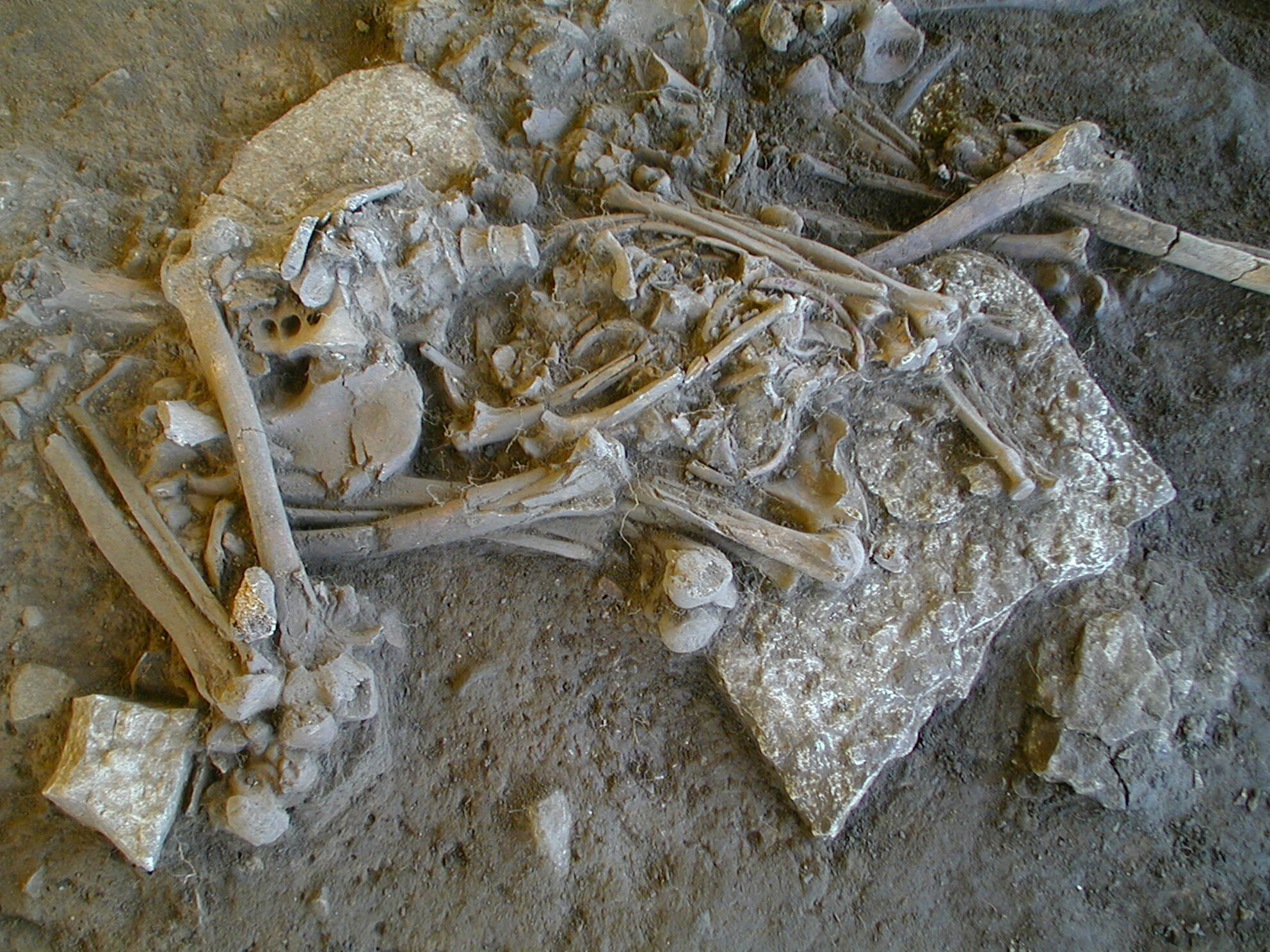
Ancient DNA extracted from bones and teeth suggests that the plague contributed to a decline in Stone Age populations. New research challenges earlier assumptions, indicating that the plague impacted Europe’s populations well before the significant outbreaks in the Middle Ages.
In 14th-century Europe, the so-called ‘Black Death’ devastated the population, wiping out nearly a third of its people.
But the plague arrived in Scandinavia several thousand years earlier, and despite several theories suggesting otherwise, the plague might have caused an epidemic, according to new research from the University of Copenhagen.
In collaboration with researchers from the University of Gothenburg in Sweden, researchers from the Globe Institute, have analyzed DNA from ancient teeth and bones of 108 individuals who died 5,000 years ago.
“The analyses show that 18 of these individuals, 17 percent, were infected with the plague when they died. Furthermore, our results suggest that the youngest plague strain we identify might have had epidemic potential,” says postdoc Frederik Seersholm, who led the DNA analysis.
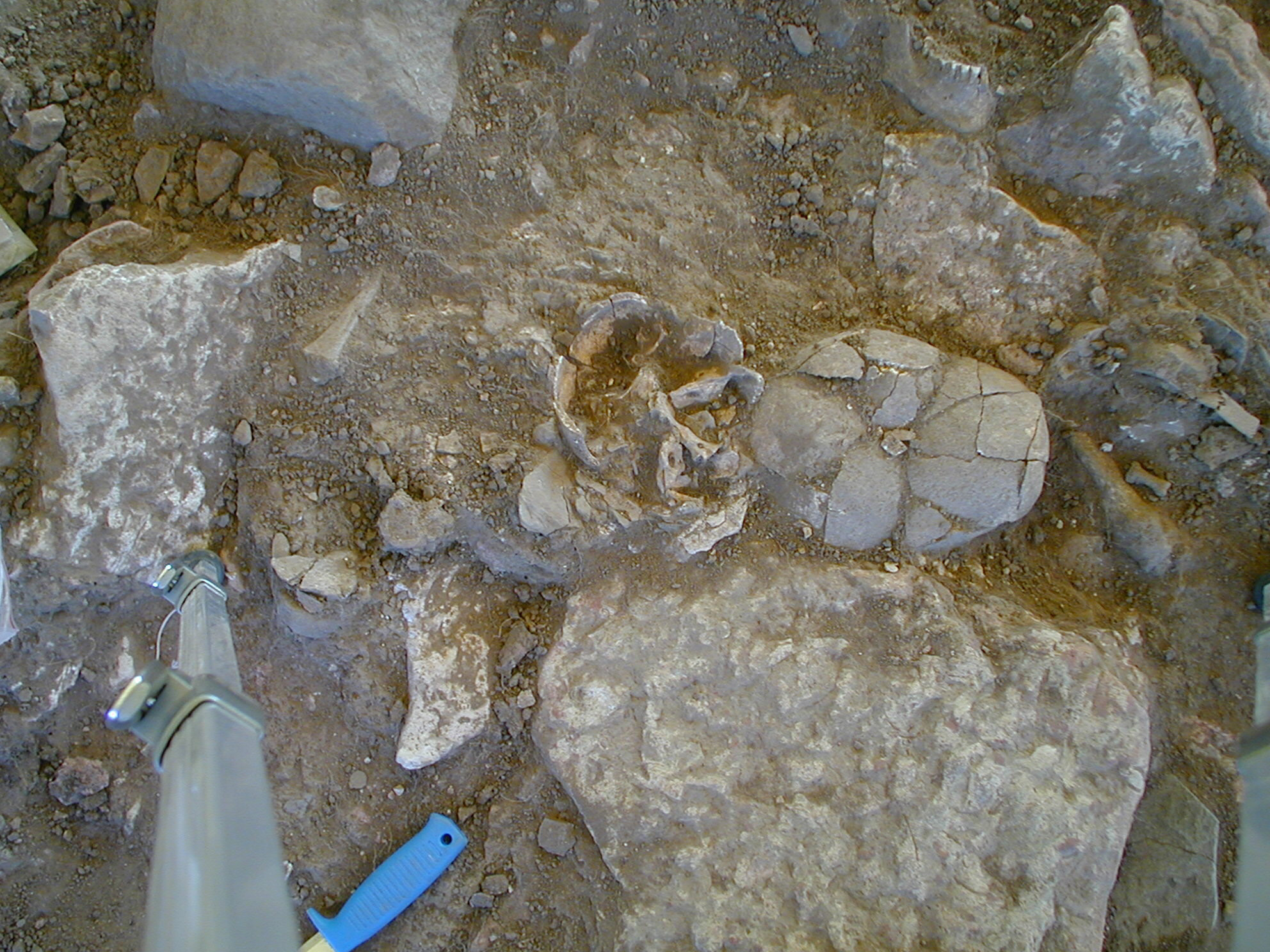
This means that the plague at that time may have been a contributing factor to the population collapse in the end of the Neolithic, known as the Neolithic decline. This population bust caused large parts of the farming population in Scandinavia and Northwestern Europe to disappear within just a few centuries, 5000 years ago.
“We cannot – yet – prove that this was exactly how it happened. But the fact that we can now show that it could have happened this way is significant. The cause of this population decline, which we have known about for a long time, has always been the subject of debate,” says Frederik Seersholm.
The archaeological material analyzed comes mainly from passage graves in Sweden, but one of the individuals is from a stone cist in Stevns, Denmark.
Ancient DNA provides answers
The analyses were conducted using a method called “deep shotgun sequencing,” which allows researchers to extract highly detailed information from archaeological material, even though ancient DNA is often heavily damaged or degraded. The researchers examined DNA from tooth and bone material from the Neolithic time period, studying both familial relations and diseases in the individuals.
“We have been able to carry out a comprehensive mapping of plague lineages, and a detailed description of other microbes in the DNA data. At the same time, through these analyses, we have been able to look at the human DNA from a broad perspective to a local one – and right down to the individual level, getting a picture of the social organization that existed back then,” says Associate Professor Martin Sikora at the Globe Institute, who is also behind the study.
The finding that 17 percent of the individuals whose DNA was analyzed had plague, indicates that the plague was common in Scandinavia during the late Stone Age.
In one of the analyzed families, at least three plague outbreaks were observed over the six generations in the family that researchers have been able to map.
“The question of possible kinship relations between individuals whose bones and teeth have been found in megalithic tombs has been debated for at least 200 years. There have been many theories and speculations, but now, thanks to DNA, we have data,” says Karl-Göran Sjögren, Associate Professor of Archaeology at the University of Gothenburg, who was also involved in the new study.
Frederik Seersholm believes that the new results rules out previous theories suggesting that the population decline could not have been caused by plague.
“In connection with the population decline at the end of the Neolithic, both war and outbreaks of infectious diseases, including plague, have been suggested. There have been several theories involving the plague, and one of them suggested that the plague could not have caused an epidemic – but that assumption no longer holds,” says Frederik Seersholm.
Reference: “Repeated plague infections across six generations of Neolithic Farmers” by Frederik Valeur Seersholm, Karl-Göran Sjögren, Julia Koelman, Malou Blank, Emma M. Svensson, Jacqueline Staring, Magdalena Fraser, Thomaz Pinotti, Hugh McColl, Charleen Gaunitz, Tatiana Ruiz-Bedoya, Lena Granehäll, Berenice Villegas-Ramirez, Anders Fischer, T. Douglas Price, Morten E. Allentoft, Astrid K. N. Iversen, Tony Axelsson, Torbjörn Ahlström, Anders Götherström, Jan Storå, Kristian Kristiansen, Eske Willerslev, Mattias Jakobsson, Helena Malmström and Martin Sikora, 10 July 2024, Nature.
DOI: 10.1038/s41586-024-07651-2
Never miss a breakthrough: Join the SciTechDaily newsletter.
Follow us on Google and Google News.
2 Comments
Transmission of plague across wide areas would indicate extensive trade and travel.
Especially if that trade was prostitution as the disease was neither as easily transmittable or as deadly as it became later.