

Close Menu
    Facebook X (Twitter) Instagram
    SciTechDaily
    • Biology
    • Chemistry
    • Earth
    • Health
    • Physics
    • Science
    • Space
    • Technology
    Facebook X (Twitter) Pinterest YouTube RSS
    SciTechDaily
    Home»Technology»Faster Whole-Genome Sequencing May Lead to Routine Use in Neonatal Intensive Care
    Technology

    Faster Whole-Genome Sequencing May Lead to Routine Use in Neonatal Intensive Care

    By SciTechDailyOctober 4, 2012No Comments3 Mins Read
    Facebook Twitter Pinterest Telegram LinkedIn WhatsApp Email Reddit
    Share
    Facebook Twitter LinkedIn Pinterest Telegram Email Reddit
    genome-sequence-ion-proton
    A team of researchers has introduced a rapid and user-friendly whole-genome sequencing system to identify significant mutations in genetic sequences, tailored for physicians lacking specialized genetic expertise.

    A new, faster DNA-sequencing machine, as well as streamlined analysis of its results, will allow physicians to diagnose genetic disorders in days rather than weeks. Up to a third of babies admitted to neonatal intensive care have a genetic disease, this may help pin down the genetic causes.

    The researchers published their findings in the journal Science Translational Medicine. There are thousands of genetic diseases, but there are relatively few tests that detect them and those may only detect the most common mutations. Whole-genome sequencing could test for many diseases at once.
    illumina-hiseq-2500

    In the past, the cost, the complexity involved, and the turnaround time needed limited the use of whole-genome sequencing. A research team led by Stephen Kingsmore at Children’s Mercy Hospital in Kansas City, Missouri, has implemented a much faster, simpler system in order to find relevant mutations in whole-genome sequences, which is designed for physicians without specialized genetic training.

    This could help hospitals bring sequencing into clinical care. Previously, it required several weeks and teams of experts to interpret the results. The new routine sequencing will be offered by the end of the year and will allow physicians to get results in two days.

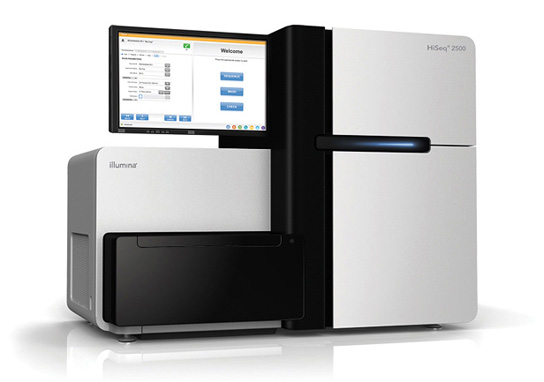
    To order a test, physicians will describe the infant’s symptoms from pull-down boxes and then the software compiles a list of potential suspect genes. Once the genome is sequenced, the software hunts for and analyzes mutations only in those genes, which allows it to compile list of possible causative mutations quickly. The team has been using a new DNA sequencing machine from Illumina, based in San Diego, which can sequence genomes within 25 hours. The entire test took 50 hours and cost $13,500 per child.

    This device will help limit, or even stop, costly and invasive tests used by physicians to hunt down a diagnosis.

    Reference: “Rapid Whole-Genome Sequencing for Genetic Disease Diagnosis in Neonatal Intensive Care Units” by Carol Jean Saunders, Neil Andrew Miller, Sarah Elizabeth Soden, Darrell Lee Dinwiddie, Aaron Noll, Noor Abu Alnadi, Nevene Andraws, Melanie LeAnn Patterson, Lisa Ann Krivohlavek, Joel Fellis, Sean Humphray, Peter Saffrey, Zoya Kingsbury, Jacqueline Claire Weir, Jason Betley, Russell James Grocock, Elliott Harrison Margulies, Emily Gwendolyn Farrow, Michael Artman, Nicole Pauline Safina, Joshua Erin Petrikin, Kevin Peter Hall and Stephen Francis Kingsmore, 3 October 2012, Science Translational Medicine.
    DOI: 10.1126/scitranslmed.3004041

    Never miss a breakthrough: Join the SciTechDaily newsletter.
    Follow us on Google and Google News.

    Disease DNA Genetics Genomics Infants Sequencing
    Share. Facebook Twitter Pinterest LinkedIn Email Reddit

    Related Articles

    Amgen to Purchase Icelandic deCODE Genetics

    New Genome Interpreter Aims to Address Privacy Concerns and Aid Clinicians

    Artificial-Enzyme Editing Rewrites Zebrafish DNA, Could be Useful in the Study of Diseases

    Genome Studies Indicate That “Junk” DNA Holds Clues to Common Diseases

    Extra Gaits in Horses Traced to Single Mutation

    DNA Storage Record Broken: 1 Gram Could Hold As Much as 455 Exabytes

    Cdt1 Protein Has a Role in DNA Replication and Mitosis

    Amplifier Chip Measures Nanopores With High Speed Precision

    Police Can Now Identify Your Eye Color from DNA

    Leave A Reply Cancel Reply

    • Facebook
    • Twitter
    • Pinterest
    • YouTube

    Don't Miss a Discovery

    Subscribe for the Latest in Science & Tech!

    Trending News

    Scientists Call for a Complete Rethink of Alzheimer’s Treatment

    Scientists Identify Molecular Switch That Lets Exercise Reverse Muscle Aging

    Why Your Most Vivid Dreams Might Be the Key to Deep, Restful Sleep

    A Bright Star Hid a Massive Secret for 50 Years: Mystery of Gamma Cassiopeiae Finally Solved

    Scientists Identify Protein That Slows Key Effects of Aging

    Revolutionary Submarine Mysteriously Disappears Without a Trace – Scientists Are Now Preparing for a Bold Return

    Why Drinking More Water Isn’t Enough To Stop Kidney Stones

    New Study Reveals Surprising Effect of Drinking Coffee at Night

    Follow SciTechDaily
    • Facebook
    • Twitter
    • YouTube
    • Pinterest
    • Newsletter
    • RSS
    SciTech News
    • Biology News
    • Chemistry News
    • Earth News
    • Health News
    • Physics News
    • Science News
    • Space News
    • Technology News
    Recent Posts
    • Your BMI Might Be Wrong: Study Finds Millions Are Misclassified
    • More Than Half of U.S. College Students Are Lonely, Major Study Reveals
    • Scientists Reveal Biological Signal Behind Mysterious Alzheimer’s Drug Side Effect
    • A Simple Blood Test Could Predict Dementia Risk 25 Years Early
    • Scientists Uncover Unexpected Behavior Deep Inside Earth’s Mantle
    Copyright © 1998 - 2026 SciTechDaily. All Rights Reserved.
    • Science News
    • About
    • Contact
    • Editorial Board
    • Privacy Policy
    • Terms of Use

    Type above and press Enter to search. Press Esc to cancel.