
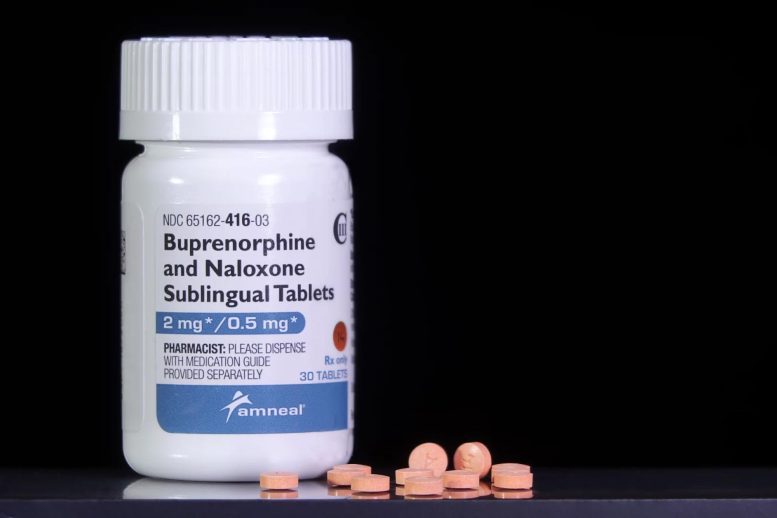
NIH-funded study suggests the need to reevaluate opioid addiction treatment recommendations in the era of fentanyl.
People with opioid use disorder who were prescribed a lower buprenorphine dose were 20% more likely to discontinue treatment than those on a higher dose. This is according to a study of patients prescribed buprenorphine in Rhode Island from 2016 to 2020, as fentanyl became widely available. The study was published on September 18 in JAMA Network Open. It was supported by the National Institute on Drug Abuse (NIDA), part of the National Institutes of Health, and conducted by researchers at Brown University, Providence, Rhode Island; NIDA and the Rhode Island Department of Health.
Dosing Recommendations and Patient Responses
Among patients newly initiating buprenorphine treatment for opioid use disorder, 59% of those prescribed the target daily dose of 16 milligrams recommended by the U.S. Food and Drug Administration (FDA) and 53% of those prescribed the higher 24 mg daily dose discontinued treatment within 180 days. A statistical analysis that allowed for multivariable comparison of these two dose groups showed patients prescribed the recommended dose (16 mg) were significantly more likely to discontinue treatment over 180 days compared to those prescribed 24 mg.
Medications for opioid use disorder such as buprenorphine can safely and effectively support reduction in opioid use and overdose as well as recovery by decreasing opioid cravings and easing withdrawal symptoms. These findings build upon accumulating evidence of the safety and efficacy of higher doses of buprenorphine. Studies have shown that more than 16 mg of buprenorphine is safe and well tolerated in people with opioid use disorder in emergency department and outpatient treatment settings.
The Need for Treatment Evolution Amidst the Fentanyl Crisis
“Effective treatment can save lives, but our proven treatments for opioid use disorders must evolve to match the challenges posed by the fentanyl crisis,” said NIDA Director, Nora Volkow, M.D. “If science continues to demonstrate that a higher dosage of buprenorphine increases treatment retention, we must reevaluate clinical guidelines to optimize treatment and help people achieve recovery.”
In 2021, of nearly 107,000 overdose deaths reported, more than 70,000 were primarily due to fentanyl, a synthetic opioid that is approximately 50 times stronger than heroin. The ubiquity of fentanyl in the drug supply and the resulting overdose death rate increase have raised questions about whether existing dosing guidelines for buprenorphine should be modified to better address the unique challenges posed by such a potent opioid. Currently, labeling approved by the FDA states that maintenance doses should range from 4 mg to 24 mg, with a recommended target dose of 16 mg per day for most patients. Recommended doses for treatment can also vary widely depending on the individual’s needs and response to the medication.
Study Parameters and Results
In this study, researchers retrospectively examined data from a statewide population of 6,499 Rhode Island residents initiating buprenorphine as part of treatment for opioid use disorder from 2016 to 2020, a period of fentanyl emergence and predominance. The goal was to estimate the association between patients’ daily buprenorphine dose and retention in treatment over 180 days, a time frame that aligns with the minimum treatment period considered by the U.S. Centers for Medicare and Medicaid Services to measure treatment continuity for opioid use disorder.
Most patients were aged 25 to 44 years, were male, and had private or Medicaid insurance. At the initiation of buprenorphine treatment, approximately 21% (1,343 patients) were prescribed 8 mg, 50% (3,264 patients) 16 mg, and 10% (668 patients) 24 mg. Those prescribed more than 24 mg were unable to be analyzed due to the small number (0.2%, or 15 patients) prescribed such doses during the study period.
Patients prescribed a 24 mg dose of buprenorphine were retained in treatment for a longer period than those prescribed the recommended target maintenance dose of 16 mg. A statistical analysis showed the latter group was 20% more likely to discontinue treatment than those prescribed 24 mg.
“The current recommended target dose of buprenorphine was derived from studies conducted prior to the widespread availability of fentanyl. Now, we’re seeing people with higher levels of tolerance to and dependence on opioids, and our findings suggest that a higher buprenorphine dose – up to 24 mg – may help improve treatment retention for these individuals,” said Rachel Wightman, M.D., Associate Professor of Emergency Medicine and Epidemiology at Alpert Medical School of Brown University and one of the principal investigators of the study. “We have a responsibility to set patients up for success.”
Future Research Directions
To continue this research, scientists aim to conduct a prospective randomized clinical trial to assess the impact of daily buprenorphine doses up to 24 mg in improving treatment retention and reducing the risk of overdose and death. Within this trial, the researchers will also investigate the role of other factors that may be associated with treatment retention, including clinician prescribing practices, as well as patient socio-demographics and life circumstances. Findings from this trial could ultimately help inform updates to opioid use disorder treatment standards.
Reference: “Buprenorphine Dose and Time to Discontinuation Among Patients With Opioid Use Disorder in the Era of Fentanyl” by Laura C. Chambers, PhD, MPH; Benjamin D. Hallowell, PhD, MPH; Andrew R. Zullo, PharmD, PhD; Taylor J. Paiva, MPH; Justin Berk, MD, MPH, MBA; Rachel Gaither, BS; Aidan J. Hampson, PhD; Francesca L. Beaudoin, MD, PhD and Rachel S. Wightman, MD, FACMT, 18 September 2023, JAMA Network Open.
DOI: 10.1001/jamanetworkopen.2023.34540
The study was funded by the National Institute on Drug Abuse, part of the National Institutes of Health under award number UG3DA056880. The content is solely the responsibility of the authors and does not necessarily represent the official views of the National Institutes of Health.
Never miss a breakthrough: Join the SciTechDaily newsletter.
Follow us on Google and Google News.
2 Comments
Sure is coincidental how our government does not prioritize cracking down on Fentanyl supply and distribution while big pharma is releasing more “treatments” to manage the addiction.
All a fuggin money making scam sponsored by our crooked politicians who get rich off their ties with big pharma.
Addicts should have access to opium to combat the heavy prevalence of fentanyl. Most addicts would prefer something designed by mother nature rather than fentanils designed by cartel chemists. Humans have also been using opium for longer than recorded history, why not go back to basics to combat both fentanil dependence and cartels?