
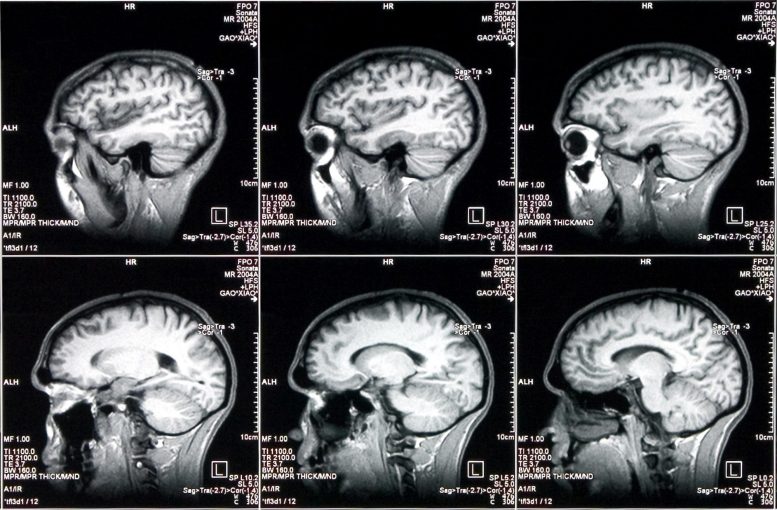
Each condition causes a different type of language impairment in primary progressive aphasia (PPA).
- Word comprehension is lost for some patients, others lose grammar
- Most extensive study to date on PPA
- Disease is often misdiagnosed in early stages, missing chance for treatment
- Not all dementia is caused by Alzheimer’s disease
There are five different diseases that attack the language areas in the left hemisphere of the brain that slowly cause progressive impairments of language known as primary progressive aphasia (PPA), reports a new Northwestern Medicine study.
Identifying Language Impairment Variations
“We’ve discovered each of these diseases hits a different part of the language network,” said lead author Dr. M. Marsel Mesulam, director of Northwestern’s Mesulam Center for Cognitive Neurology and Alzheimer’s Disease. “In some cases, the disease hits the area responsible for grammar, in others the area responsible for word comprehension. Each disease progresses at a different rate and has different implications for intervention.”
This study is based on the largest set of PPA autopsies — 118 cases — ever assembled.
It will be published today (April 20, 2022) in the journal Brain.
“The patients had been followed for more than 25 years, so this is the most extensive study to date on life expectancy, type of language impairment and relationship of disease to details of language impairment,” said Mesulam, also chief of behavioral neurology at Northwestern University Feinberg School of Medicine.
Patients with PPA were enrolled prospectively in a longitudinal research that included language testing as well as imaging of brain structure and function. Consent to brain donation at death was included in the study.
An estimated one in 100,000 people have PPA, Mesulam said.
Diagnostic Challenges and Underlying Diseases
The initial symptoms of PPA can be subtle and sometimes attributed to anxiety or throat problems. Even specialists may fail to make a diagnosis in a timely manner. In 40% of cases of PPA, the underlying disease is a very unusual form of Alzheimer’s disease. It’s unusual because it impairs language rather than memory, and because it can start much earlier when the person is under 65 years old.
In 60% of cases, the diseases causing PPA belong to an entirely different group of conditions called frontotemporal lobar degeneration (FTLD). Although most people have not heard of this, frontotemporal lobar degeneration conditions are responsible for about 50% of all dementias that start before the age of 65. Accurate diagnosis can now be achieved with new imaging and biochemical methods.
Treatment Approaches and Future Research Directions
Once the underlying disease is diagnosed, there are many different approaches at a disease level (medication) and symptomatic level.
“The trick is to approach PPA at both levels simultaneously,” Mesulam said.
If Alzheimer’s disease is the cause, a patient can be treated with medication and channeled into clinical trials. At the symptom level, an individual who has difficulty with grammar and word finding can receive targeted speech therapy. People with word comprehension would receive a different type of speech therapy or, perhaps, transcranial magnetic stimulation, which seems to work best for this particular deficit. Anxiety around word finding can be treated with anti-anxiety medication and behavioral therapy.
The next step in the research is to improve diagnostic accuracy through new biomarkers in order to identify if a patient’s PPA is caused by Alzheimer’s disease or FTLD. Northwestern scientists also want to find pharmacologic treatments suitable to each disease underlying PPA and individualize interventions. Another goal is to design symptomatic non-pharmacologic interventions based on the nature of the language impairment.
Reference: “Neuropathological fingerprints of survival, atrophy and language in primary progressive aphasia” by M -Marsel Mesulam, Christina A Coventry, Eileen H Bigio, Jaiashre Sridhar, Nathan Gill, Angela J Fought, Hui Zhang, Cynthia K Thompson, Changiz Geula, Tamar Gefen, Margaret Flanagan, Qinwen Mao, Sandra Weintraub and Emily J Rogalski, 20 April 2022, Brain.
DOI: 10.1093/brain/awab410
Other Northwestern authors include Christina Coventry, Eileen Bigio, Jaiashre Sridhar, Nathan Gill, Hui Zhang, Cynthia Thompson, Changiz Geula, Tamar Gefen, Margaret Flanagan, Sandra Weintraub and Emily Rogalski.
Funding was provided by grant R01DC008552 from the National Institute on Deafness and Communication Disorders, R01NS075075 and R01NS085770 from the National Institute on Neurological Disorders and Stroke, R01AG056258, R01AG62566, K08AG065463 and P30AG013854 from the National Institute on Aging, all of the National Institutes of Health, the Davee Foundation and the Jeanine Jones Fund.
Never miss a breakthrough: Join the SciTechDaily newsletter.
Follow us on Google and Google News.
1 Comment
When human experiment is criminal.1 violation of informed consent. 2 carry out contract
Lawbreaking researchers commit criminal acts. You disregard Nuremberg code : Human rights in human experimentation
You should be serious about protecting human dignity, privacy, freedom instead of exploiting using the victim as a guinea- pig generating real-time data through computerized digital technology. Your illegal misconducts caused permanent harm, enormous injury and damage and such misconducts places human society at risk even though your research is socially beneficial and financial gain.
Think about innocent victim who was victimized by the corrupt government. No one was born to be victimized Guinea-pig, No one has the right to exploit others even though it would save the world. Do you want to be victimized human subject? Do not do what you don’t want others to do unto you. That is the first requirement for you to live among fellow human beings, or you don’t deserve to live in human community. Moral bankruptcy bring community collapse and financial bankruptcy in the end. Therefore they say that criminal punishment is appropriate for law- breaking misconduct to protect individuals, communities, economy. Hope you Restore your conscience- conscience is the last protector for humanity- and restore moral obligation that is more important than your financial gain .and career competition. Please obey the law if you want to live among human society. That is your first duty and obligation. Don’t forget
the fact that you are human beings who seeks happiness and avoid pain instinctively like the victim.