
Close Menu
    Facebook X (Twitter) Instagram
    SciTechDaily
    • Biology
    • Chemistry
    • Earth
    • Health
    • Physics
    • Science
    • Space
    • Technology
    Facebook X (Twitter) Pinterest YouTube RSS
    SciTechDaily
    Home»Earth»Forecasting a Volcano’s Eruption Style Using Early Indicators of Magma Viscosity
    Earth

    Forecasting a Volcano’s Eruption Style Using Early Indicators of Magma Viscosity

    By Carnegie Institution for ScienceMay 12, 2021No Comments4 Mins Read
    Facebook Twitter Pinterest Telegram LinkedIn WhatsApp Email Reddit
    Share
    Facebook Twitter LinkedIn Pinterest Telegram Email Reddit
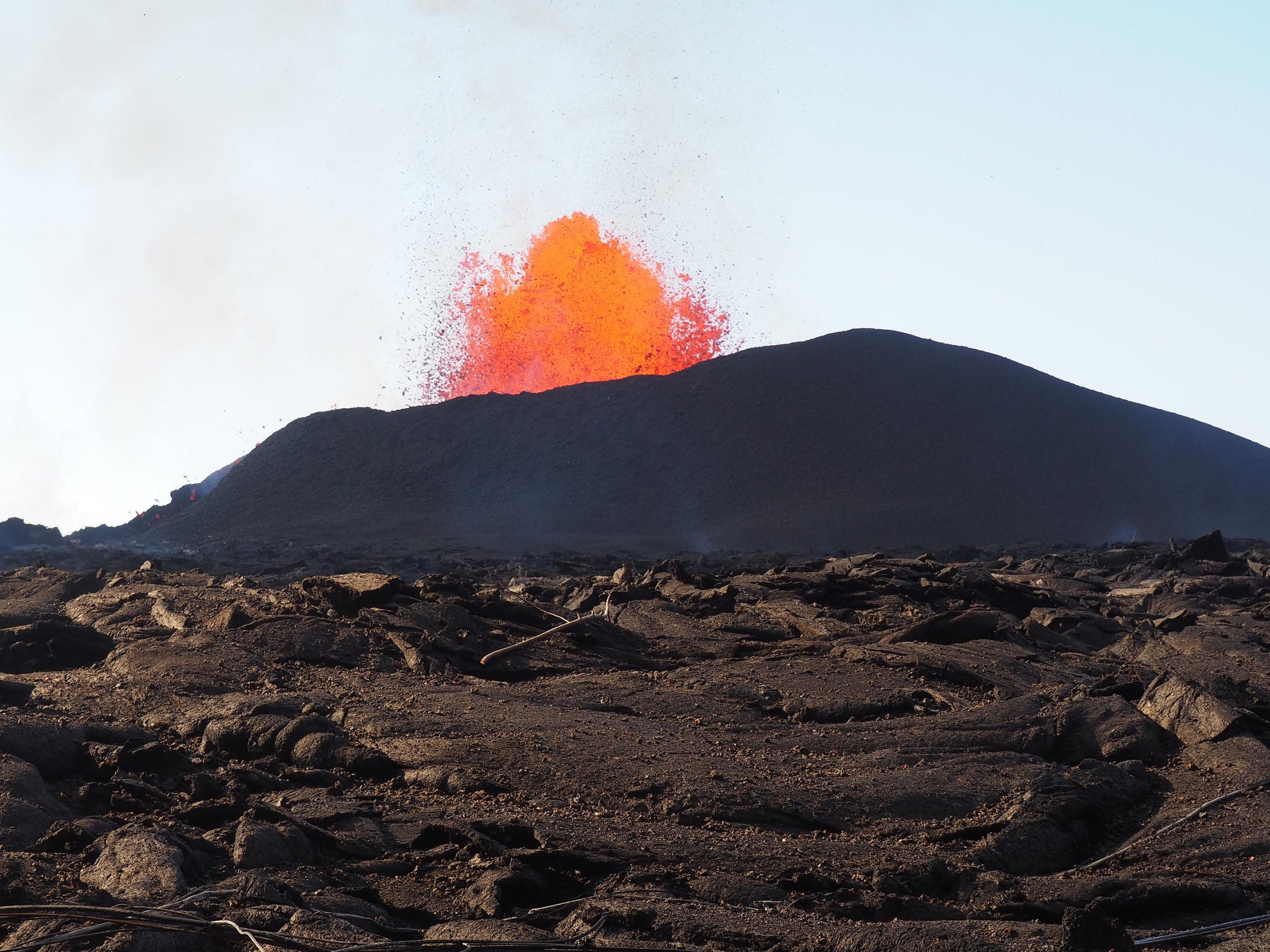
    Ahu'aila'au Lava Fountaining
    Lava fountaining from the most productive eruptive fissure, called fissure 8 at the time and now named Ahu’aila’au, built a cinder cone 55 meters high, about the height of a 10-story building. Most of the 2018 lower East Rift Zone eruption’s 0.8 cubic kilometers of lava erupted from this point. Credit: B. Shiro, USGS

    2018 eruption of Kīlauea Volcano in Hawai’i provided scientists with an unprecedented opportunity to identify new factors that could help forecast the hazard potential of future eruptions.

    The 2018 eruption of Kīlauea Volcano in Hawai’i provided scientists with an unprecedented opportunity to identify new factors that could help forecast the hazard potential of future eruptions.

    The properties of the magma inside a volcano affect how an eruption will play out. In particular, the viscosity of this molten rock is a major factor in influencing how hazardous an eruption could be for nearby communities.

    Very viscous magmas are linked with more powerful explosions because they can block gas from escaping through vents, allowing pressure to build up inside the volcano’s plumbing system. On the other hand, extrusion of more viscous magma results in slower-moving lava flows.

    Fault Movements Reveal Magma Characteristics

    “But magma viscosity is usually only quantified well after an eruption, not in advance,” explained Carnegie’s Diana Roman. “So, we are always trying to identify early indications of magma viscosity that could help forecast a volcano’s eruption style.”
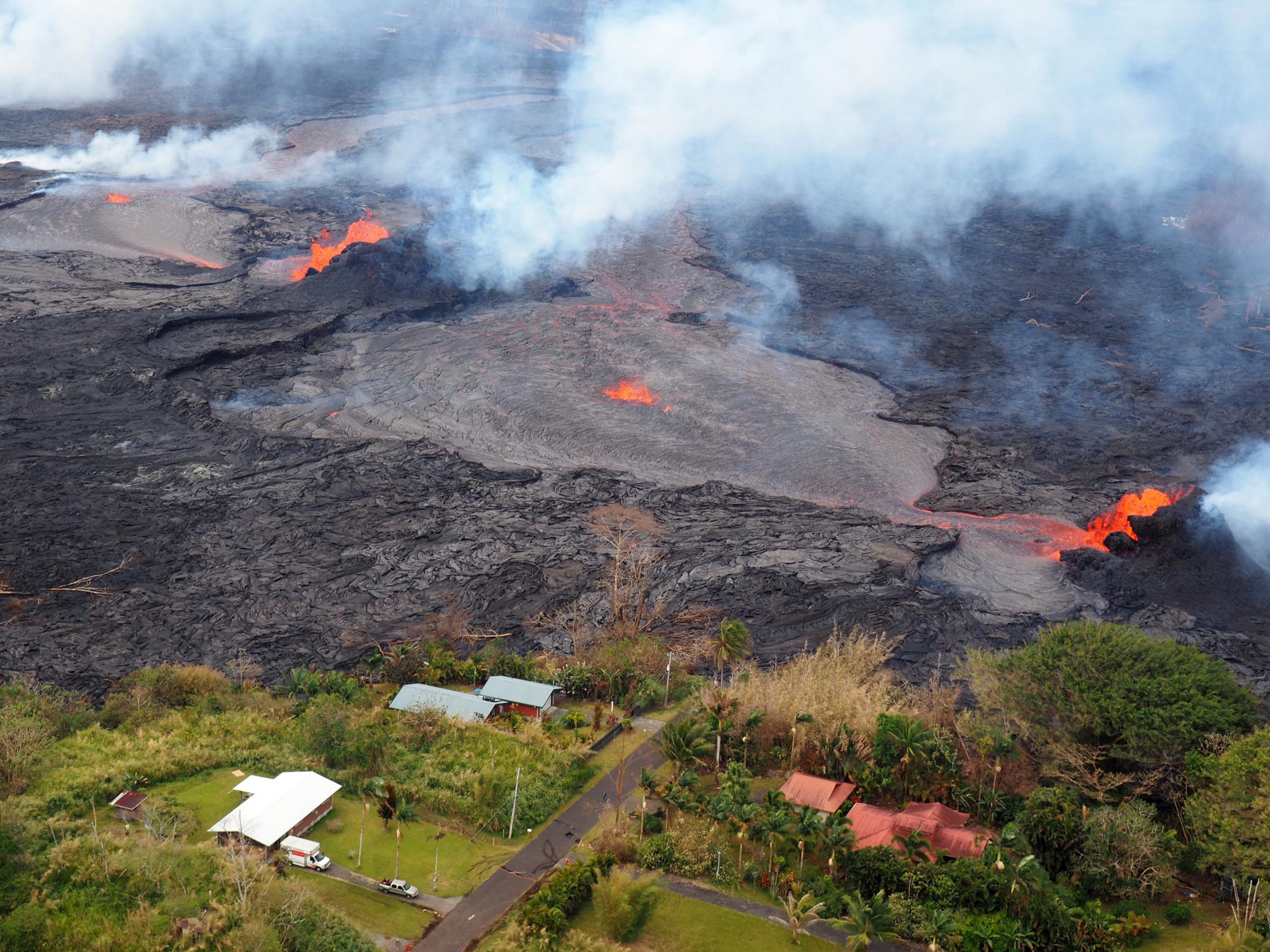
    Leilani Estates
    In May 2018, eruptive fissures opened and deposited lava within the Leilani Estates subdivision on the Island of Hawaii. Over 700 homes were destroyed, displacing more than 2,000 people. Credit: B. Shiro, USGS

    She led new work identifying an indicator of magma viscosity that can be measured before an eruption. This could help scientists and emergency managers understand possible patterns of future eruptions. The findings are published in Nature.

    The 2018 event included the first eruptive activity in Kīlauea’s lower East Rift Zone since 1960. The first of 24 fissures opened in early May, and the eruption continued for exactly three months. This situation provided unprecedented access to information for many researchers, including Roman and her colleagues–Arianna Soldati and Don Dingwell of Ludwig-Maximilians-University of Munich, Bruce Houghton of University of Hawai’i at Mānoa, and Brian Shiro of the U.S. Geological Survey’s Hawaiian Volcano Observatory.

    The event provided a wealth of simultaneous data about the behavior of both high- and low-viscosity magma, as well as about the pre-eruption stresses in the solid rock underlying Kīlauea.
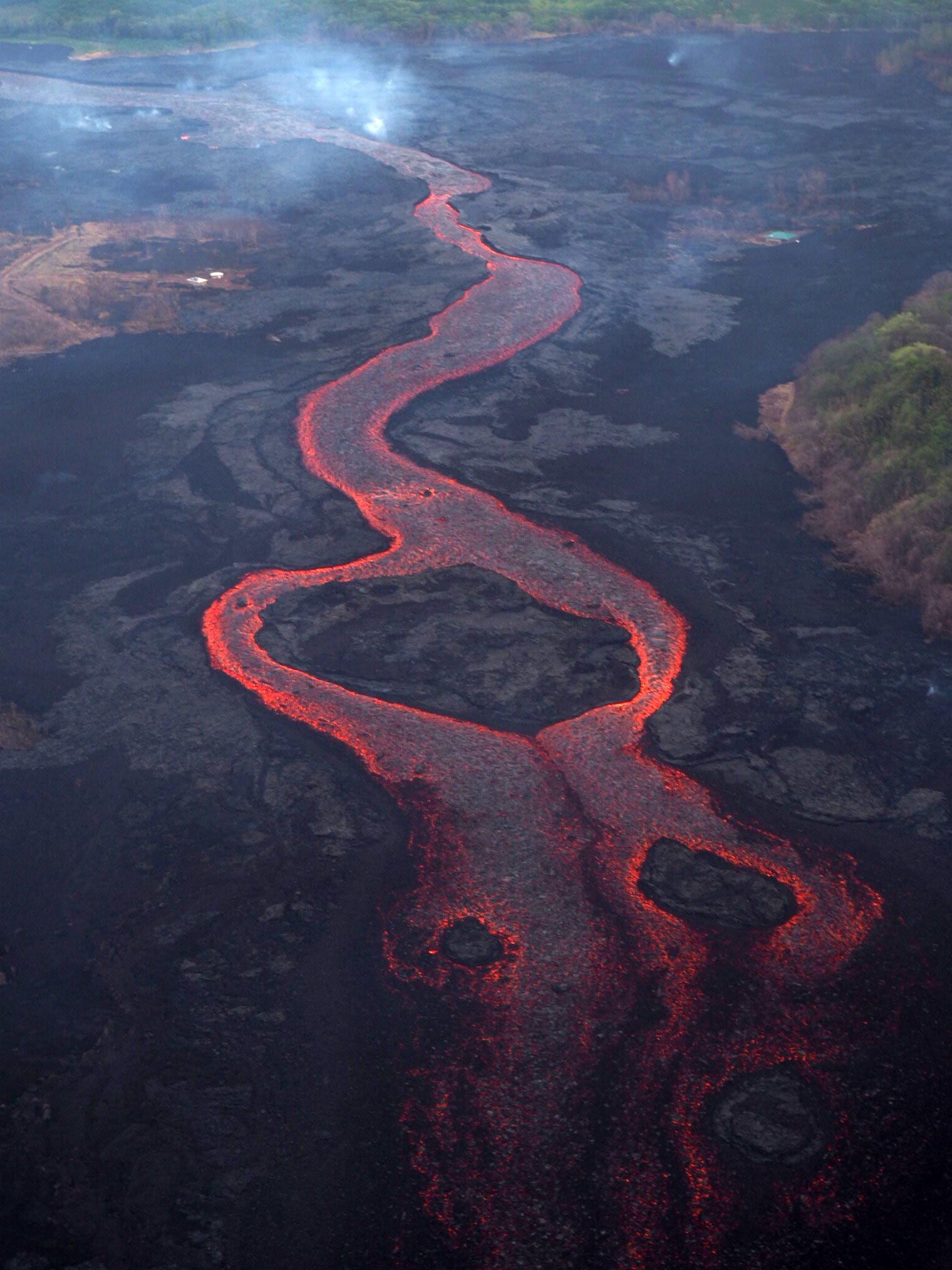
    Lava Channel
    A fast-moving lava channel flowed from the Ahu’aila’au cone about 10 kilometers away to the ocean, where it covered about 36 square kilometers of land along the way and created 3.5-square-kilometers of new land along the coast. Where the channel slowed down in flat areas, it spread out and formed a braided pattern, seen here. Credit: B. Shiro, USGS

    Linking Seismic Activity to Magma Behavior

    Tectonic and volcanic activity causes fractures, called faults, to form in the rock that makes up the Earth’s crust. When geologic stresses cause these faults to move against each other, geoscientists measure the 3-D orientation and movement of the faults using seismic instruments.

    By studying what happened in Kīlauea’s lower East Rift Zone in 2018, Roman and her colleagues determined that the direction of the fault movements in the lower East Rift Zone before and during the volcanic eruption could be used to estimate the viscosity of rising magma during periods of precursory unrest.

    “We were able to show that with robust monitoring we can relate pressure and stress in a volcano’s plumbing system to the underground movement of more viscous magma,” Roman explained. “This will enable monitoring experts to better anticipate the eruption behavior of volcanoes like Kīlauea and to tailor response strategies in advance.”

    Reference: “Earthquakes indicated magma viscosity during Kīlauea’s 2018 eruption” by D. C. Roman, A. Soldati, D. B. Dingwell, B. F. Houghton and B. R. Shiro, 7 April 2021, Nature.
    DOI: 10.1038/s41586-021-03400-x

    The research was supported by an Alexander von Humboldt postdoctoral fellowship, the European Research Council Advanced Grant 834225, the U.S. National Science Foundation, and U.S. Geological Survey Disaster Supplemental Research funding.

    Never miss a breakthrough: Join the SciTechDaily newsletter.
    Follow us on Google and Google News.

    Carnegie Institution for Science Geology Tectonic Plates Volcano
    Share. Facebook Twitter Pinterest LinkedIn Email Reddit

    Related Articles

    Earth’s Ancient Dance: New Evidence Suggests Plate Tectonics Occurred Over 4.2 Billion Years Ago

    Earth’s Mantle Provides New Clues To Explain Indonesia’s Explosive Volcanoes

    New Hazards of Earth’s Largest Volcano Uncovered

    Diamonds That Formed Deep in the Earth’s Mantle Contain Evidence of Deep-Earth Recycling Processes

    New Type of Rock Created During Exceptionally Hot Volcanic Eruptions Discovered Beneath the Pacific Ocean

    There’s Lots of Water in the Most Explosive Volcano in the World

    World’s Longest Erupting Supervolcanoes Fueled by Magma “Conveyor Belt”

    Pūhāhonu Revealed: The Largest and Hottest Shield Volcano on Earth

    A Tale of Two Kinds of Volcanoes – One Partially Responsible for a Civilization’s Demise

    Leave A Reply Cancel Reply

    • Facebook
    • Twitter
    • Pinterest
    • YouTube

    Don't Miss a Discovery

    Subscribe for the Latest in Science & Tech!

    Trending News

    Scientists May Have Found the Key to Jupiter and Saturn’s Moon Mystery

    Scientists Uncover Brain Changes That Link Pain to Depression

    Saunas May Do More Than Raise Body Temperature – They Activate Your Immune System

    Exercise in a Pill? Metformin Shows Surprising Effects in Cancer Patients

    Hidden Oceans of Magma Could Be Protecting Alien Life

    New Study Challenges Alzheimer’s Theories: It’s Not Just About Plaques

    Artificial Sweeteners May Harm Future Generations, Study Suggests

    Splashdown! NASA Artemis II Returns From Record-Breaking Moon Mission

    Follow SciTechDaily
    • Facebook
    • Twitter
    • YouTube
    • Pinterest
    • Newsletter
    • RSS
    SciTech News
    • Biology News
    • Chemistry News
    • Earth News
    • Health News
    • Physics News
    • Science News
    • Space News
    • Technology News
    Recent Posts
    • Scientists Discover Game-Changing New Way To Treat High Cholesterol
    • Breakthrough Drug Delays Rheumatoid Arthritis for Years After Treatment Ends
    • This Small Change to Your Exercise Routine Could Be the Secret to Living Longer
    • Physicists Discover a Strange New Kind of One-Dimensional Particle
    • Scientists Discover Unexpected Climate Benefit Hidden in Forest Soils
    Copyright © 1998 - 2026 SciTechDaily. All Rights Reserved.
    • Science News
    • About
    • Contact
    • Editorial Board
    • Privacy Policy
    • Terms of Use

    Type above and press Enter to search. Press Esc to cancel.