
Close Menu
    Facebook X (Twitter) Instagram
    SciTechDaily
    • Biology
    • Chemistry
    • Earth
    • Health
    • Physics
    • Science
    • Space
    • Technology
    Facebook X (Twitter) Pinterest YouTube RSS
    SciTechDaily
    Home»Biology»Genetic Comparison of 24 Coronaviruses – Including SARS-CoV-2 Viruses From the U.S. and China – Yields Clues to COVID-19 Treatments
    Biology

    Genetic Comparison of 24 Coronaviruses – Including SARS-CoV-2 Viruses From the U.S. and China – Yields Clues to COVID-19 Treatments

    By KAUSTJuly 26, 2020No Comments3 Mins Read
    Facebook Twitter Pinterest Telegram LinkedIn WhatsApp Email Reddit
    Share
    Facebook Twitter LinkedIn Pinterest Telegram Email Reddit
    COVID-19 Envelope Protein
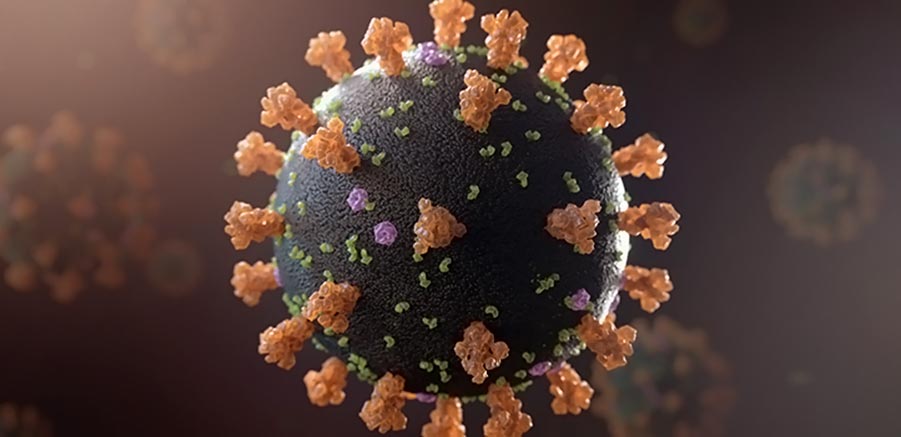
    This artistic representation of a SARS-CoV-2 virus shows the membrane protein (green) and envelope protein (purple) and the characteristic spike protein (orange). Credit: © KAUST; Xavier Pita

    Understanding any similarities between SARS and COVID-19 inflammation could help in a clinical setting. A protein in the viruses causing COVID-19 and SARS is almost identical. Researchers propose testing if targeting COVID-19 with FDA-approved drugs, already tested in mice infected with SARS, could improve the outcomes for COVID-19 patients experiencing severe respiratory symptoms.

    The finding was a collaborative effort from teams at KAUST following a comparison of Betacoronavirus genomes. “We have long-standing expertise in analyzing genomic data at KAUST’s Computational Bioscience Research Center,” says molecular biologist, Takashi Gojobori.

    Gojobori, Carlos M. Duarte, and a team of scientists compared the genomes of 24 Betacoronaviruses, including four SARS-CoV-2 viruses, which causes COVID-19. Two of the four were sequenced in the United States, while the other two were sequenced in China.

    “SARS-CoV-2 appears to have recently evolved from other related Betacoronaviruses, such as the ones causing SARS and Middle East respiratory syndrome (MERS),” explains Intikhab Alam, first author of the study. “We wanted to understand the genetic make up of SARS-CoV-2. Seeing what has changed might help find ways to detect the virus and understand its rapid spread. Seeing what remains conserved between these viruses might help predict if therapeutic approaches developed for other Betacoronaviruses could work on SARS-CoV-2,” he says.

    Their genomic comparisons followed by structural analyses found that a small protein that extends across the viral membrane, called envelope protein E, is almost identical in SARS-CoV-2 and the SARS virus (called SARS-CoV-1).

    A molecular component of this protein in the SARS virus helps trigger the release of inflammation-causing substances in its host. This inflammatory reaction causes fluids to accumulate in the lungs resulting in breathing difficulties, a condition called acute respiratory distress syndrome. Scientists studying the SARS virus have found that this reaction can be inhibited in mice by FDA-approved drugs. “Drugs that inhibit the envelope protein E of previous SARS viruses should also block the protein in COVID-19,” says Alam. “Even though these drugs won’t stop the virus from spreading, we hope they could attenuate or prevent acute respiratory distress syndrome and help save lives.”

    Reference: “Functional Pangenome Analysis Shows Key Features of E Protein Are Preserved in SARS and SARS-CoV-2” by Intikhab Alam, Allan A. Kamau, Maxat Kulmanov, Łukasz Jaremko, Stefan T. Arold, Arnab Pain, Takashi Gojobori and Carlos M. Duarte, 27 July 2020, Frontiers in Cellular and Infection Microbiology.
    DOI: 10.3389/fcimb.2020.00405

    The team is now looking for partner hospitals in Saudi Arabia to conduct trials of these drugs. They also aim to use their data to help efforts toward designing an effective vaccine. Their data is publicly accessible on their Betacoronavirus Pangenome Database. Like other research groups, they are openly sharing early research related to COVID-19 with the World Health Organization.

    Never miss a breakthrough: Join the SciTechDaily newsletter.
    Follow us on Google and Google News.

    COVID-19 Infectious Diseases KAUST Microbiology Popular Virology
    Share. Facebook Twitter Pinterest LinkedIn Email Reddit

    Related Articles

    This COVID Mutation Could Explain Your Brain Fog

    Watching SARS-CoV-2 Spread in Animal Models in Real Time Using New “Reporter Viruses”

    Probiotic Protection? Gut Bacteria Discovered That Protects the Intestine From Invasion of the COVID-19 Virus

    New COVID-19 “Mexican Variant” Identified: Increasingly Spreading Across North America

    Humanity’s Best Friend: How Dogs Could Be Our Next Allies in the Fight Against COVID-19

    First Global Atlas of How the COVID Coronavirus Interacts With Human Cells

    Nasal Spray May Prevent Coronavirus Infection in People Exposed to COVID-19

    COVID-19 Impacts Some Organs, But Not Others – Here’s Why

    Bad News – Coronavirus SARS-CoV-2 Infects Cells of the Intestine and Multiplies There

    Leave A Reply Cancel Reply

    • Facebook
    • Twitter
    • Pinterest
    • YouTube

    Don't Miss a Discovery

    Subscribe for the Latest in Science & Tech!

    Trending News

    The Strange “Spacetime Crystal” That Can Suddenly Turn Into a Black Hole

    The Surprising Way Asteroids May Have Helped Life Begin on Earth

    Vast Hidden Structure Discovered Under Miles of Ice in East Antarctica

    A Surprising Discovery Suggests Autism Is Not One Condition

    New Alzheimer’s Discovery Could Change How Scientists Fight the Disease

    Yale Discovery Overturns Long-Held “Evolutionary Dead End” Theory

    UCLA Scientists Uncover a “Hidden Weakness” in Some of the World’s Deadliest Cancers

    Humpback Whale Stuns Scientists With 15,000 Kilometer Journey Across Oceans

    Follow SciTechDaily
    • Facebook
    • Twitter
    • YouTube
    • Pinterest
    • Newsletter
    • RSS
    SciTech News
    • Biology News
    • Chemistry News
    • Earth News
    • Health News
    • Physics News
    • Science News
    • Space News
    • Technology News
    Recent Posts
    • Meet the Artemis III Astronauts Preparing for NASA’s Boldest Moon Mission Yet
    • Scientists Develop a New Way To Measure Gravitational Waves in the Expanding Universe
    • MIT’s New Dual-Mode Rocket System Could Send Tiny Satellites to Mars
    • Scientists Discover a Biological Clock Unlike Anything Seen Before
    • This “Zombie” Sea Creature Keeps Growing After Being Cut Apart
    Copyright © 1998 - 2026 SciTechDaily. All Rights Reserved.
    • Science News
    • About
    • Contact
    • Editorial Board
    • Privacy Policy
    • Terms of Use

    Type above and press Enter to search. Press Esc to cancel.