
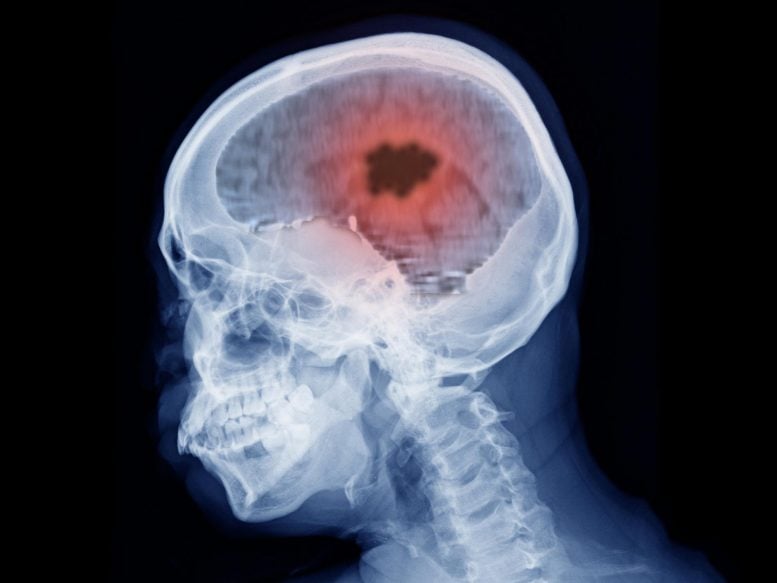
Scientists discovered how the H3K27M mutation drives DMG and used targeted drugs to slow its growth in lab models, offering hope for new treatments.
Geneticists from Trinity College Dublin have discovered how a specific genetic mutation called H3K27M causes a devastating, incurable childhood cancer, known as diffuse midline glioma (DMG), and — in lab studies working with model cell types — successfully reverse its effects to slow cancer cell growth with a targeted drug.
Their landmark work — just published in the leading international journal, Nature Genetics and supported by Worldwide Cancer Research and The Brain Tumour Charity — translates a crucial new understanding of the genetics of DMG progression into a highly promising, targeted therapeutic approach and offers significant hope of improved treatments in the future.
The scientists now call for clinical trials to begin imminently, in which an already approved class of drugs called “EZH2 inhibitors” can be assessed. These drugs target the same key biological pathway involved in DMG as they do successfully in lymphomas and sarcomas — two cancers common in adults.
Key Findings and Implications
The scientists behind this important work discovered:
- How a specific genetic mutation called H3K27M causes DMG
- How to target this cancer-causing gene with a drug that slows cancer cell growth
- They have also established a specific model cell line for evaluating further targeted DMG approaches
Adrian Bracken, Professor in Trinity’s School of Genetics and Microbiology, led the exciting research.
He said: “We’ve taken a huge step forward in our study of DMG tumors and hope that the insights will help us design and implement precision oncology-based treatment approaches in DMG patients in the future. Crucially, ‘EZH2 inhibitor’ drugs have already received approval from the United States Food and Drug Administration for the treatment of two types of adult cancer. We propose these drugs could be impactful for children with DMG and, as a result, call for clinical trials to begin next.
“Ultimately, we hope that our work — together with that of others focused in this area — will lead to curative clinical approaches for what is a truly terrible disease that can devastate families and for which there are currently no therapeutic options.”
Pediatric Gliomas — Harrowing, Devastating Cancers
Pediatric gliomas like DMG are among the most devastating of childhood cancers. Tumors typically arise in the brain and are very challenging to treat, with prognosis extremely poor. As such, effective therapeutic options are urgently needed.
Dr. Jane Pears, pediatric consultant oncologist at Our Lady’s Children’s Hospital, Crumlin, who treats children with this disease said: “Despite combined best efforts, these tumors remain a devastating diagnosis for children and their families. The best treatment we can currently offer may extend survival for a few months but is not curative. We are now entering an exciting era of expansion of our knowledge of this disease at a molecular level, which in turn will lead us towards more targeted treatments. Thanks to collaborative translational efforts between scientists, such as Prof. Bracken and his team working in the laboratory, and doctors in the clinical setting, this will hopefully lead to the improved outcomes that we all so dearly wish to see.”
Speaking to the importance of the work, Maeve Lowery, Professor of Translational Cancer Medicine at Trinity, and Academic Director of the Trinity St James’s Cancer Institute (TSJCI) said: “These findings have the potential to transform the treatment landscape of DMG tumors and improve outcomes for children with this challenging disease. Importantly, this pivotal work illustrates the success of a precision oncology approach — where understanding how cancers develop on a genomic level can accelerate the development of more effective treatments with fewer side effects. The Precision Oncology Research Program at TSJCI, led by Prof Bracken, will build on this success to continue to develop new and innovative treatment strategies for adult and childhood cancers.”
Dr. Becky Birch, Head of Research at The Brain Tumour Charity, which helped fund the study, said: “This is a really promising discovery that we hope will now pave the way for new and targeted treatments to be developed for children with diffuse midline gliomas (DMGs). With average survival still heartbreakingly short at less than 12 months, we urgently need to find new options to help slow the growth of this rare and often-inoperable cancer and give children diagnosed more time to live. It’s really exciting that we now better understand how a specific genetic mutation may be driving the disease, and even more so that drugs that may inhibit this process have already been tested in other cancers. If further research can now design EZH2 inhibitors to more effectively target DMG cells, we hope these drugs can be quickly advanced into clinical trials for children diagnosed with this devastating disease.”
Developing Cancer Treatments — Why This Research Is Different
Ordinarily, developing effective cancer treatments can take decades; indeed, it can take years before scientists are able to develop model systems in relevant cell types that afford them the chance to “look under the genetic bonnet.”
Such investigations can first help us understand how cancers function. That information then provides the all-important clues as to how we can fight them. Further lab-based studies can hone these approaches, ultimately opening the doors to clinical trials and, if we’re lucky, improved treatments.
The scientists behind this study have therefore taken great strides in the battle against DMG, having discovered key aspects of this disease at a genetic level; proposed an available strategy to target it; and created a model of the disease that can be used in continued work to advance further improved treatment strategies.
Reference: “Simultaneous disruption of PRC2 and enhancer function underlies histone H3.3-K27M oncogenic activity in human hindbrain neural stem cells” by Gerard L. Brien, Raul Bardini Bressan, Craig Monger, Dáire Gannon, Eimear Lagan, Anthony M. Doherty, Evan Healy, Hannah Neikes, Darren J. Fitzpatrick, Orla Deevy, Vivien Grant, Maria-Angeles Marqués-Torrejón, Neza Alfazema, Steven M. Pollard and Adrian P. Bracken, 22 July 2021, Nature Genetics.
DOI: 10.1038/s41588-021-00897-w
Never miss a breakthrough: Join the SciTechDaily newsletter.
Follow us on Google and Google News.