
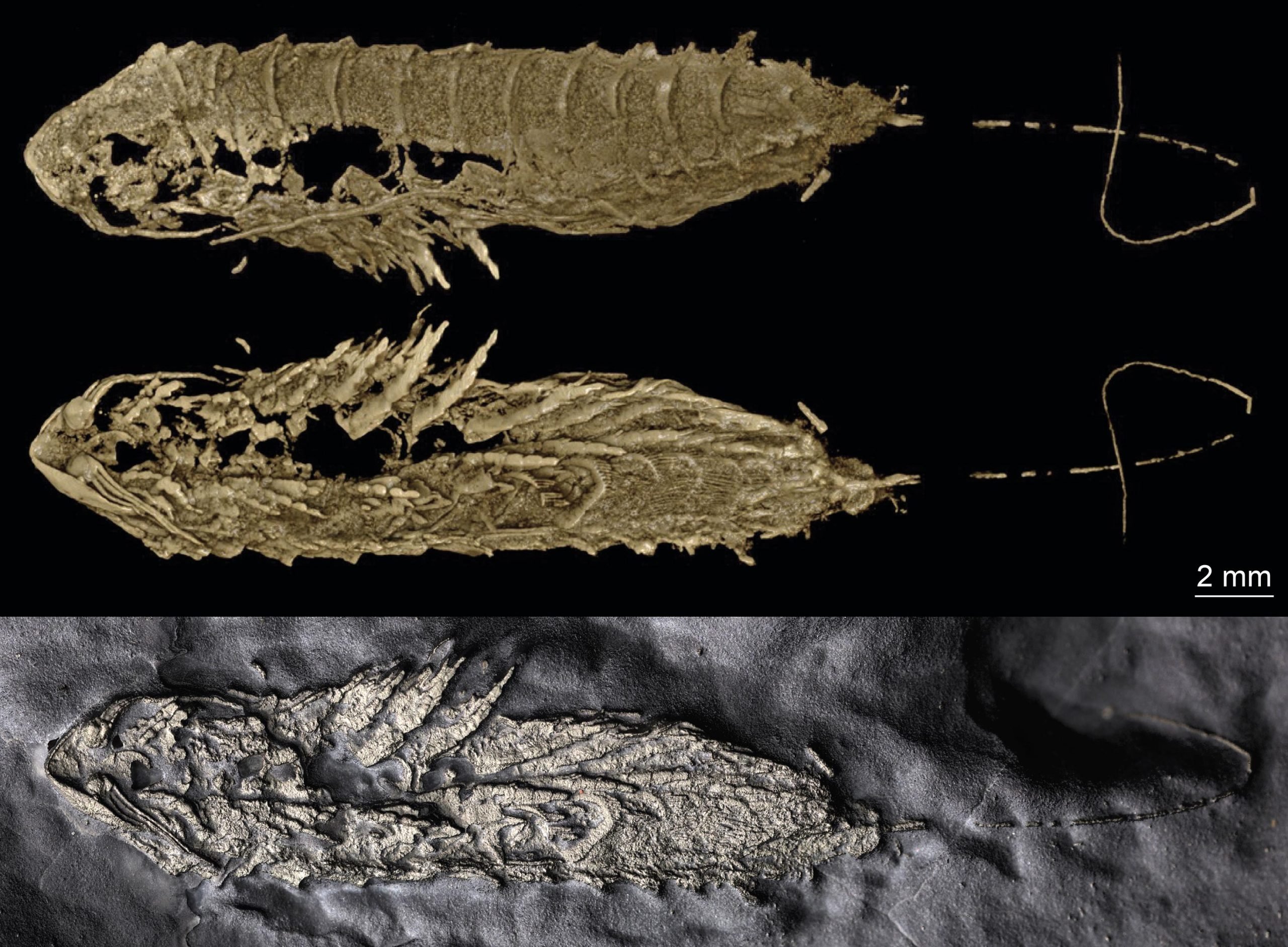
Researchers have unearthed an eye-catching, gold-colored fossil of a bug in New York, preserved in pyrite for 450 million years.
This specimen, Lomankus edgecombei, offers a unique glimpse into the life of ancient arthropods, showcasing its specialized appendages and shedding light on the evolutionary history preserved in Beecher’s Bed, a notable fossil-rich area.
Discovery of a Golden Ancient Species
Paleontologists have discovered fossils of an ancient bug species that has spent 450 million years preserved in a layer of fool’s gold in central New York.
This new species, named Lomankus edgecombei, is a distant ancestor of modern horseshoe crabs, scorpions, and spiders. It had no eyes, and its small front appendages were specialized for digging through dark ocean sediment, dating back to when New York state was submerged underwater.
The fossilized remains of Lomankus shine with a bright, golden hue thanks to layers of pyrite, commonly known as fool’s gold, that settled into its structure over time.
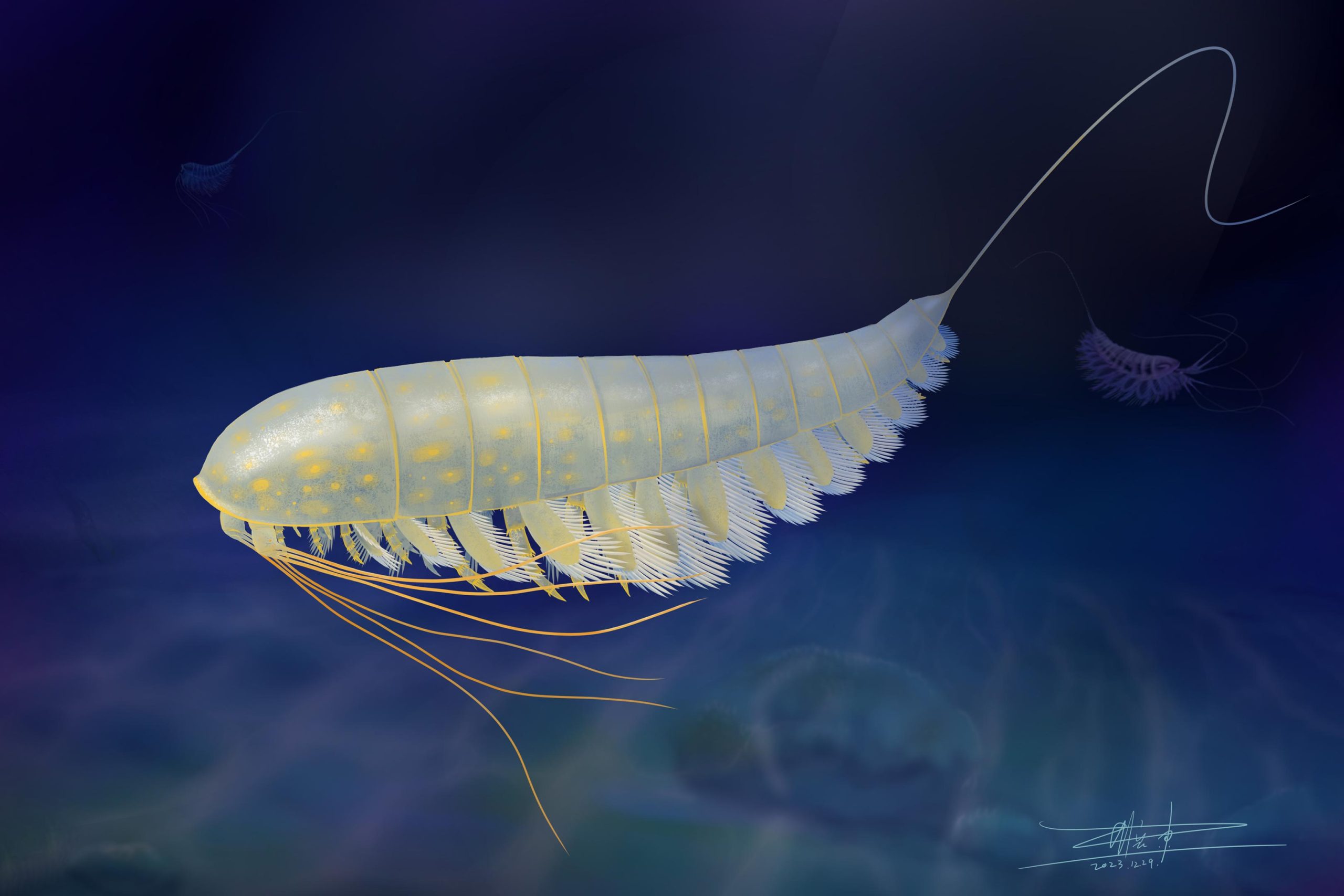
This golden coating isn’t just a visual marvel. The pyrite, found in a fossil-rich site near Rome, New York, called “Beecher’s Bed,” helped preserve Lomankus by gradually replacing its soft tissue as it decayed, preserving intricate details of the ancient creature.
“These remarkable fossils show how rapid replacement of delicate anatomical features in pyrite before they decay, which is a signature feature of Beecher’s Bed, preserves critical evidence of the evolution of life in the oceans 450 million years ago,” said Derek Briggs, the G. Evelyn Hutchinson Professor of Earth and Planetary Sciences in Yale’s Faculty of Arts and Sciences.
Evolutionary Insights From Lomankus Edgecombei
Briggs is co-author of a new study published today (October 29) in Current Biology describing the new species. He is also a curator at the Yale Peabody Museum.
Briggs and his co-authors said Lomankus, which is part of an extinct group of arthropods called Megacheira, is evolutionarily significant in several ways.
Like other Megacheirans, Lomankus is an example of an arthropod with an adaptable head and specialized appendages (a scorpion’s claws and a spider’s fangs are other examples). In the case of Lomankus, its front appendages bear a trio of long, flexible, whip-like flagella — which may have been used to perceive its surroundings and detect food.
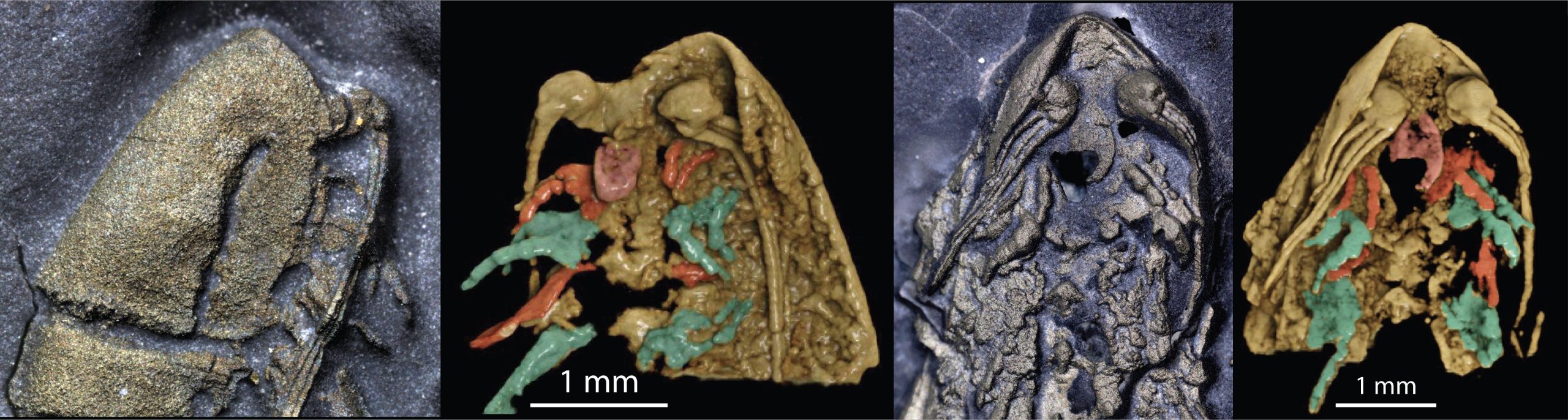
“Arthropods typically have one or more pairs of legs at the front of their bodies that are modified for specialized functions like sensing the environment and capturing prey,” said Luke Parry, a former Yale postdoctoral researcher who is now an associate professor at the University of Oxford, and co-corresponding author of the study. “These special legs make them very adaptable, somewhat like a biological Swiss army knife.”
In addition, the Lomankus fossils indicate that Megacheirans continued to evolve and diversify longer than previously thought. Lomankus is one of the only known Megacheirans to have survived past the Cambrian Period (485 to 541 million years ago) and into the Ordovician Period (443 to 485 million years ago). Paleontologists believe Megacheirans were largely extinct by the beginning of the Ordovician Period.
A Century of Paleontological Research at Yale
The new Lomankus fossils also have several ties to Yale’s paleontological efforts, going back more than a century.
The site where they were discovered, Beecher’s Bed, is named for Charles Emerson Beecher, who was head of the Yale Peabody Museum from 1899 until 1904. Beecher published classic papers on the anatomy and relationships of trilobites (one of the earliest arthropod groups) from the site, and his material was studied and expanded upon by other scientists for generations.
Briggs was one of them. His first paper on Beecher’s Bed fossils was published in 1991, and as curator of invertebrate paleontology at the Peabody in the early 2000s (and subsequently director of the museum), he arranged for Yale to lease the site for field studies until 2009.
Paleontologist Yu Liu of Yunnan University in China, co-corresponding author of the study, contacted Briggs about the new fossils from Beecher’s Bed, which he had acquired from a Chinese fossil collector. Briggs then brought in Parry, his former postdoc, with whom he was already collaborating on research about similar fossils at the Peabody.
“The preservation is remarkable,” Briggs said. “The density of the pyrite contrasts with that of the mudstone in which they were buried. Their details were extracted based on computed tomography [CT] scanning, which gave us 3D images of the fossils.”
The new fossil specimens have been donated to the Peabody.
Reference: “A pyritized Ordovician leanchoiliid arthropod” by Luke A. Parry, Derek E.G. Briggs, Ruixin Ran, Robert J. O’Flynn, Huijuan Mai, Elizabeth G. Clark and Yu Liu, 29 October 2024, Current Biology.
DOI: 10.1016/j.cub.2024.10.013
Never miss a breakthrough: Join the SciTechDaily newsletter.
Follow us on Google and Google News.
2 Comments
450,000,000
Years old, how is this? Glaciers scoured 25,000 years ago. The world ide flood, evidenced by mass sedimentation and rapid deposition and fluid dynamics, all say this is a young earth.
You are only looking at the most recent happenings on earth. The glaciers 25,000 years ago were only the most recent. There were several before that event. Tectonic plates caused the continents to come together and then move back apart. Ever heard of Pangea? 450,000,000 years ago there was life on earth. They were tiny one celled organisms, but they were alive and thriving. All this says the earth is as old as the article stated.