
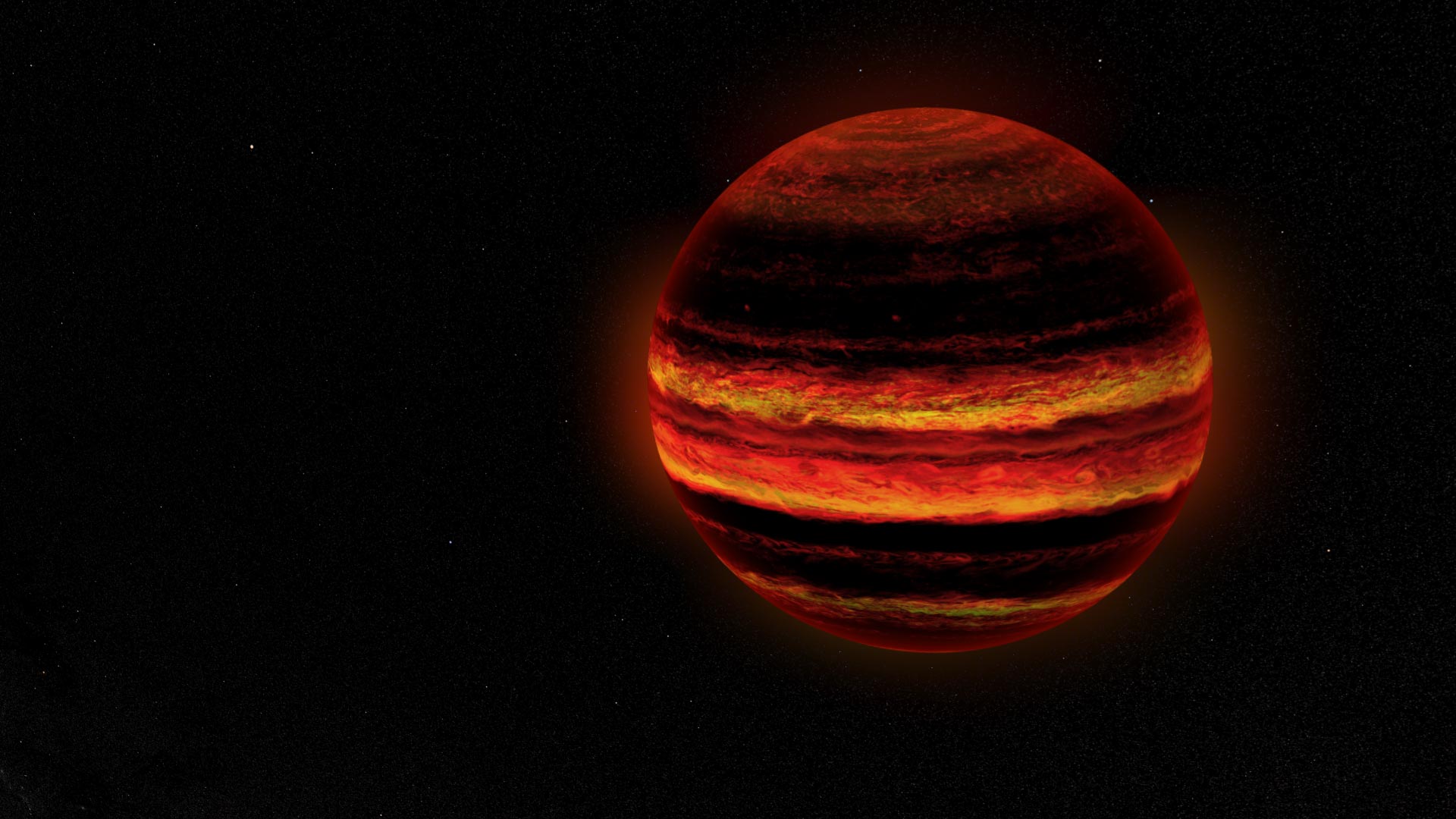
A Recent Study Directly Images Four New Brown Dwarfs
Brown dwarfs are mysterious celestial bodies that fall between the heaviest planets and the lightest stars, exhibiting both stellar and planetary traits. These perplexing objects’ hybrid nature makes them essential for advancing our knowledge of both large planets and stars.
Brown dwarfs orbiting a parent star from a sufficient distance away are particularly valuable because they may be photographed directly, unlike those that are too near to their star and hence obscured by their brightness. This gives researchers a rare chance to examine the finer points of the brown dwarf partners’ icy, planet-like atmospheres.
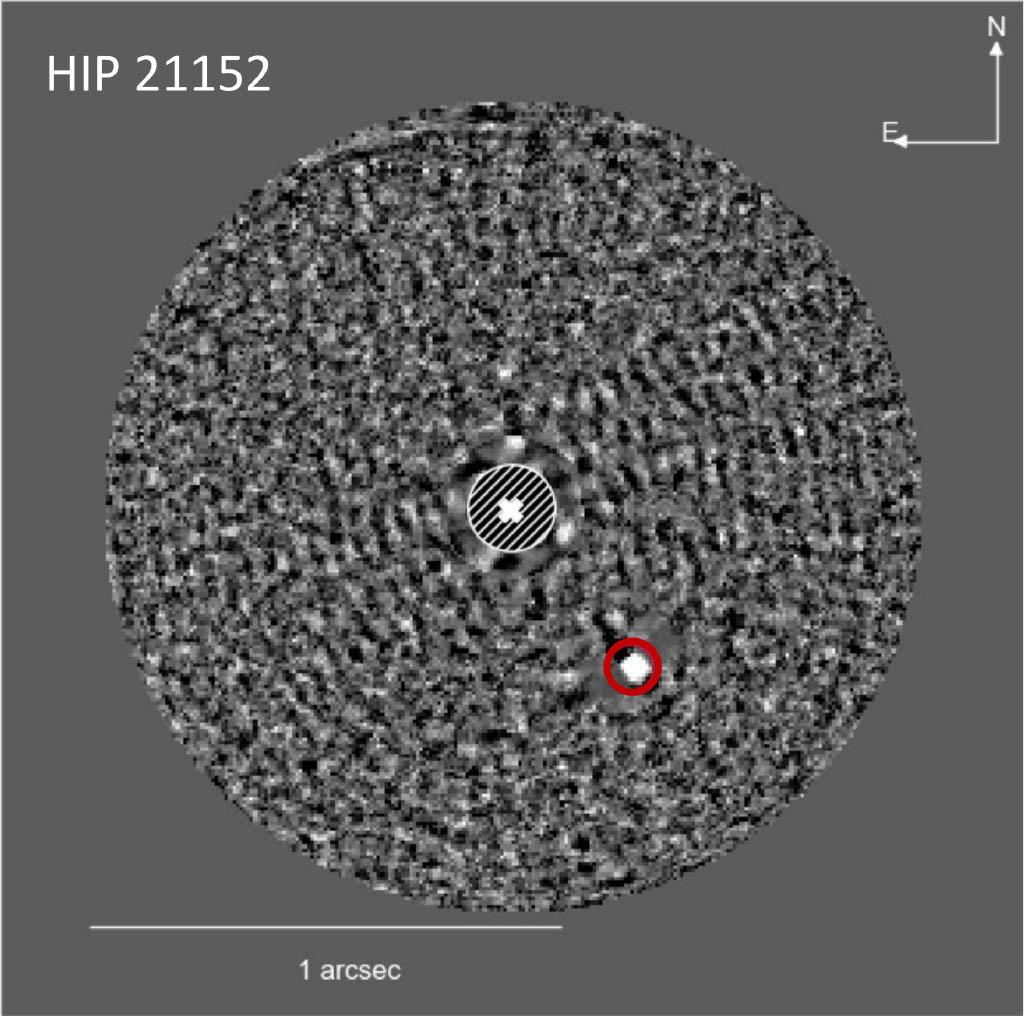
With just around 40 systems seen in over three decades of searching, direct detections of brown dwarf companions to stars have remained relatively sparse despite great efforts in the development of new observational equipment and image-processing technologies.
Direct images of four new brown dwarfs were taken by a team of researchers led by Mariangela Bonavita from the Open University and Clémence Fontanive from the Center for Space and Habitability (CSH) and the NCCR PlanetS at the University of Bern. Their findings were recently published in the journal Monthly Notices of the Royal Astronomical Society. This is the first time that multiple new systems with brown dwarf companions have been announced at the same time.
Innovative Search Method

“Wide-orbit brown dwarf companions are rare to start with, and detecting them directly poses huge technical challenges since the host stars completely blind our telescopes”, says Mariangela Bonavita. Most surveys conducted so far have been blindly targeting random stars from young clusters.
“An alternative approach to increase the number of detections is to only observe stars that show indications of an additional object in their system”, explains Clémence Fontanive. For example, the way a star moves under the gravitational tug of a companion can be an indicator of the existence of that companion, whether it is a star, a planet, or something in between.
“We developed the COPAINS tool which predicts the types of companions that could be responsible for observed anomalies in stellar motions”, Clémence Fontanive continues.
Applying the COPAINS tool the research team carefully selected 25 nearby stars that seemed promising for the direct detection of hidden, low-mass companions based on data from the Gaia spacecraft of the European Space Agency (ESA). Using then the SPHERE planet-finder at the Very Large Telescope in Chile to observe these stars, they successfully detected ten new companions with orbits ranging from that of Jupiter to beyond that of Pluto, including five low-mass stars, a white dwarf (a dense stellar remnant), and a remarkable four new brown dwarfs.
A Major Boost in Detection Rate
“These findings significantly advance the number of known brown dwarfs orbiting stars from large distances, with a major boost in detection rate compared to any previous imaging survey”, as Mariangela Bonavita explains.

While for now this approach is mostly limited to signatures from brown dwarf and stellar companions, future phases of the Gaia mission will push these methods to lower masses and allow for the discovery of new giant exoplanets. Clémence Fontanive adds: “On top of having so many new discoveries in one go, our program also demonstrates the power of these search strategies.”
“This result was only possible because we believed that, when combining space and ground-based facilities to directly image exoplanets, the whole is greater than the sum of its parts. We hope that this will be the start of a new era of synergy between different instruments and detection methods”, Mariangela Bonavita concludes.
Reference: “Results from The COPAINS Pilot Survey: four new BDs and a high companion detection rate for accelerating stars” by M. Bonavita, C. Fontanive, R. Gratton, K. Mužić, S. Desidera, D. Mesa, B. Biller, A. Scholz, A. Sozzetti and V. Squicciarini, 10 May 2022, Monthly Notices of the Royal Astronomical Society.
DOI: 10.1093/mnras/stac1250
Never miss a breakthrough: Join the SciTechDaily newsletter.
Follow us on Google and Google News.
1 Comment
Thats great, BUT, how many naked white dwarfs are within 100 ly of Sol ? My answer is 27…