
Close Menu
    Facebook X (Twitter) Instagram
    SciTechDaily
    • Biology
    • Chemistry
    • Earth
    • Health
    • Physics
    • Science
    • Space
    • Technology
    Facebook X (Twitter) Pinterest YouTube RSS
    SciTechDaily
    Home»Chemistry»Groundbreaking New Method Transforms Plastic Trash Into Chemistry Treasure
    Chemistry

    Groundbreaking New Method Transforms Plastic Trash Into Chemistry Treasure

    By Hokkaido UniversityFebruary 10, 2024No Comments3 Mins Read
    Facebook Twitter Pinterest Telegram LinkedIn WhatsApp Email Reddit
    Share
    Facebook Twitter LinkedIn Pinterest Telegram Email Reddit
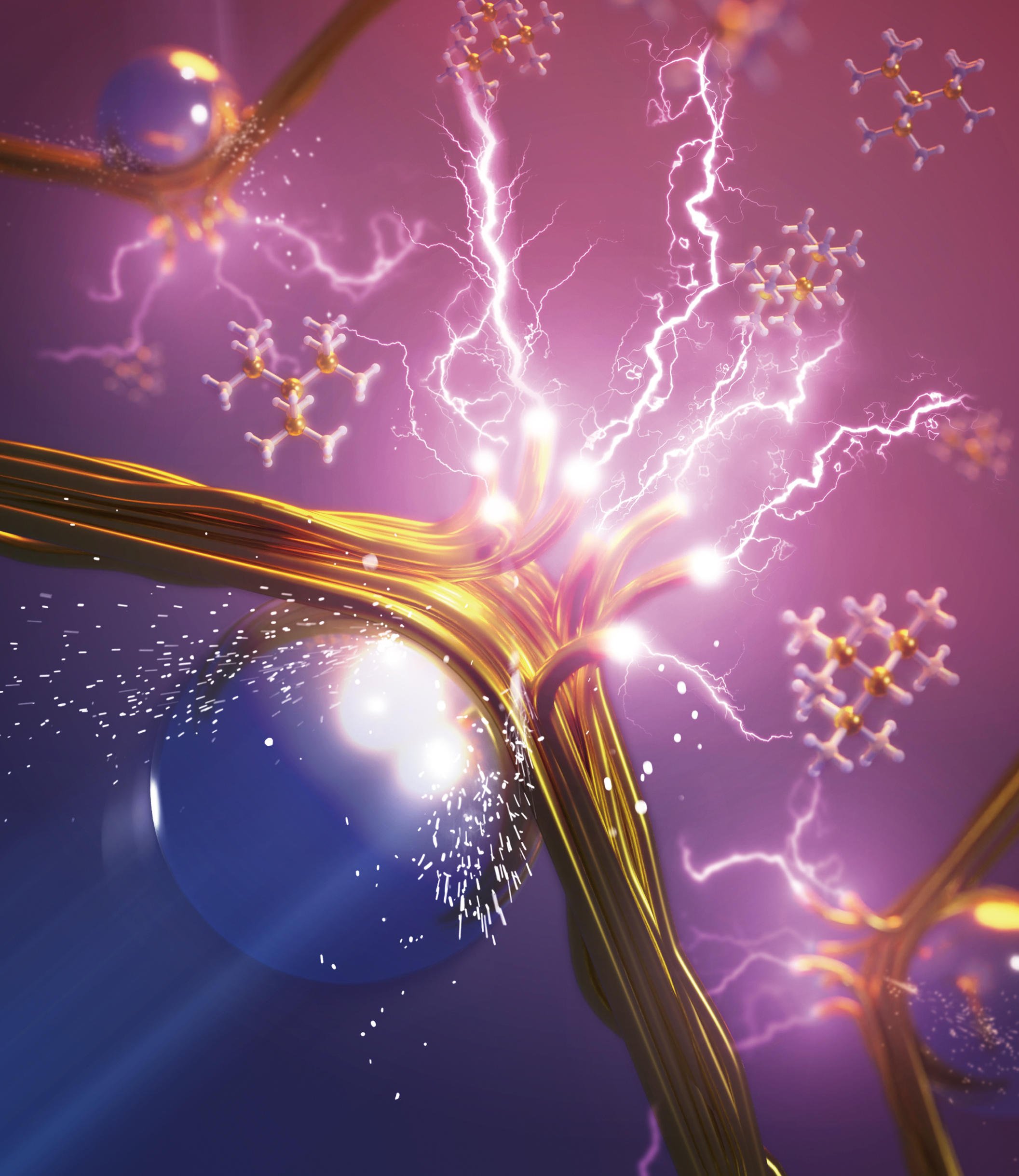
    Artistic Depiction of Radicals Being Generated From Plastic Fibers
    Hokkaido University researchers have developed a groundbreaking method to repurpose plastic waste by using it to initiate radical chain reactions for detoxifying hazardous chemicals. This approach, which enhances safety and efficiency while addressing the environmental issue of plastic waste, paves the way for sustainable and economically attractive chemical processes. Artistic depiction of extremely reactive molecules called radicals being generated from plastic fibers. Credit: Koji Kubota and Hajime Ito

    Scientists use everyday plastics to initiate innovative chain reactions, developing a method to recycle plastic waste and improve both safety and efficiency in the process.

    Single-use plastics are a major environmental concern, but now, rather than being disposed of as garbage, used plastic bags from the grocery stores could be utilized to carry out a reaction that can detoxify hazardous chemicals.

    A team led by researchers at the Institute for Chemical Reaction Design and Discovery (WPI-ICReDD), Hokkaido University has developed a method that uses common plastic materials instead of potentially explosive compounds to initiate radical chain reactions. This approach significantly increases the safety of the process while also providing a way to reuse common plastics such as polyethylene and polyvinyl acetate. These findings have been published in the Journal of the American Chemical Society.
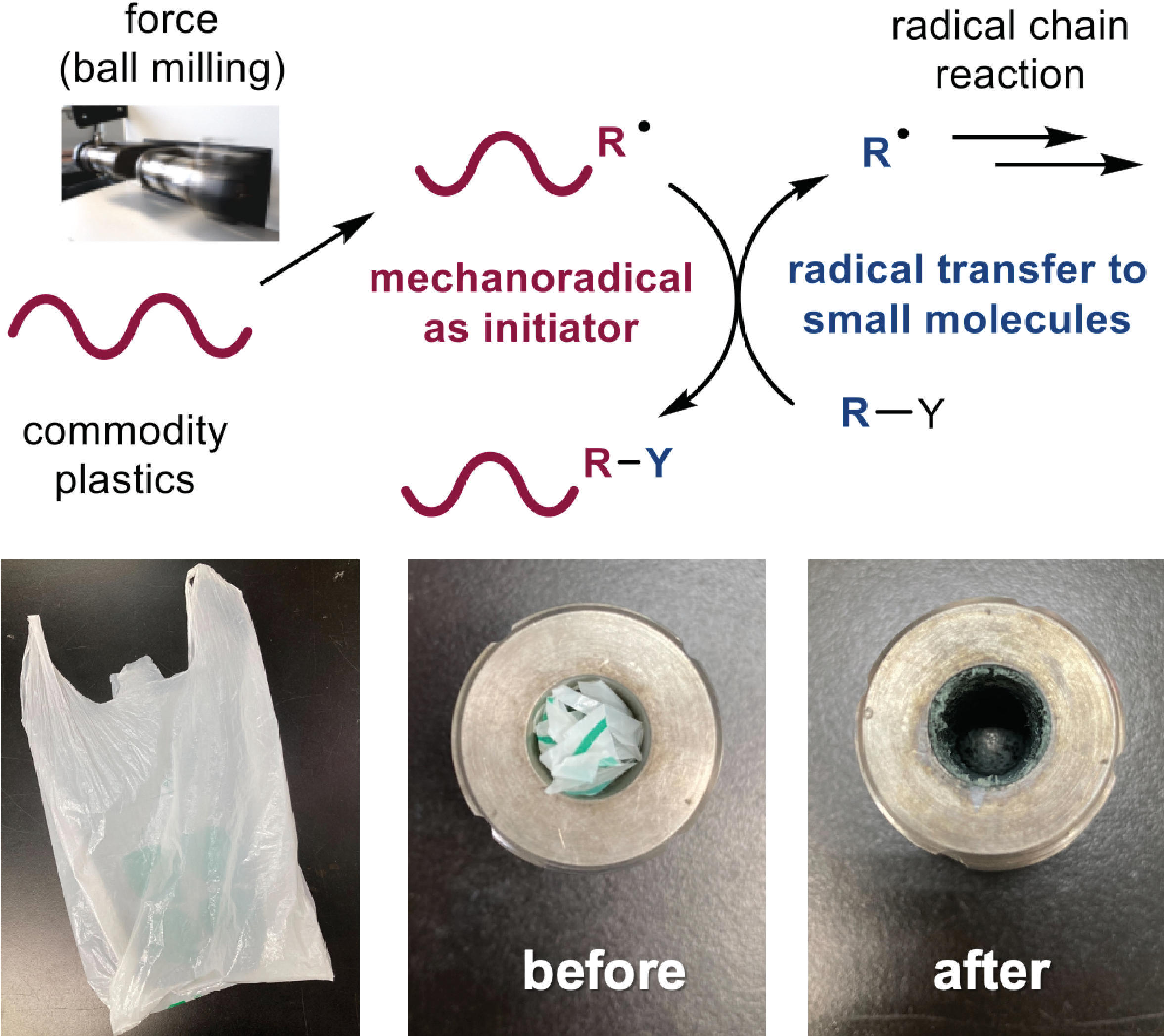
    Using Mechanical Force To Trigger a Radical Chain Reaction
    (Top) General scheme for using mechanical force to trigger a radical chain reaction. (Bottom) Shreds of a grocery bag were utilized to initiate a reaction in a ball mill jar. Credit: Koji Kubota, et al. Journal of the American Chemical Society. December 22, 2023

    Researchers utilized a ball mill, a machine that rapidly shakes a steel ball inside a steel jar to mix solid chemicals. When the ball slams into the plastic, the mechanical force breaks a chemical bond to form radicals, which have a highly reactive, unbonded electron. These radicals facilitated a self-sustaining chain reaction that promotes dehalogenation— i.e., the replacement of a halogen atom with a hydrogen atom—of organic halides.

    Enhancing Chemical Processes

    “The use of commodity plastics as chemical reagents is a completely new perspective on organic synthesis,” said Associate Professor Koji Kubota. “I believe that this approach will lead to not only the development of safe and highly efficient radical-based reactions, but also to a new way to utilize waste plastics, which are a serious social problem.”

    Koji Kubota and Hajime Ito
    Associate Professor Koji Kubota (left) and Professor Hajime Ito (right) of the research team at the Institute for Chemical Reaction Design and Discovery (WPI-ICReDD), Hokkaido University. Credit: WPI-ICReDD

    The reuse of waste plastic was demonstrated by adding plastic shreds of a common grocery bag to the ball mill jar and successfully carrying out the reaction. The team also showed their method could be applied to the treatment of highly toxic polyhalogenated compounds, which are widely used in industry. Polyethylene was employed to initiate a radical reaction that removed multiple halogen atoms from a compound commonly used as a flame retardant, thus reducing its toxicity.

    Researchers anticipate this method will garner the attention of the industry due to its advantages in cost and safety.

    “Our new approach using stable, cheap, and abundant plastic materials as initiators for radical chain reactions holds the significant potential to foster the development of industrially attractive, safe, and highly efficient chemical processes,” commented Professor Hajime Ito.

    The study was funded by the Japan Society for the Promotion of Science, the Japan Science and Technology Agency, and the Ministry of Education, Culture, Sports, Science and Technology of Japan

    Never miss a breakthrough: Join the SciTechDaily newsletter.
    Follow us on Google and Google News.

    Hokkaido University Organic Chemistry Plastic Recycling
    Share. Facebook Twitter Pinterest LinkedIn Email Reddit

    Related Articles

    Eco-Friendly Breakthrough: New Polymers Made From Plant Cellulose

    A New Approach for Recycling Plastics

    Revolutionary Eco-Friendly Plastic: The Future Looks Bright for Infinitely Recyclable Plastic

    Discovery of a New Molecule Advances Route to Chemically Recyclable Plastics

    Making Plastic More Recyclable Through Chemical and Biological Processes

    New Recycling Process Could Cut Down on Millions of Tons of Plastic Waste

    MIT Chemists Make Tough Thermoset Plastics Recyclable

    Ultrastable Catalyst Could Lead to More Efficient and Cheaper Production of Propylene From Propane

    Zeolite Catalyst Creates P-Xylene From Biomass

    Leave A Reply Cancel Reply

    • Facebook
    • Twitter
    • Pinterest
    • YouTube

    Don't Miss a Discovery

    Subscribe for the Latest in Science & Tech!

    Trending News

    Scientists May Have Found the Key to Jupiter and Saturn’s Moon Mystery

    Scientists Uncover Brain Changes That Link Pain to Depression

    Saunas May Do More Than Raise Body Temperature – They Activate Your Immune System

    Exercise in a Pill? Metformin Shows Surprising Effects in Cancer Patients

    Hidden Oceans of Magma Could Be Protecting Alien Life

    New Study Challenges Alzheimer’s Theories: It’s Not Just About Plaques

    Artificial Sweeteners May Harm Future Generations, Study Suggests

    Splashdown! NASA Artemis II Returns From Record-Breaking Moon Mission

    Follow SciTechDaily
    • Facebook
    • Twitter
    • YouTube
    • Pinterest
    • Newsletter
    • RSS
    SciTech News
    • Biology News
    • Chemistry News
    • Earth News
    • Health News
    • Physics News
    • Science News
    • Space News
    • Technology News
    Recent Posts
    • As Cities Invade the Amazon, Yellow Fever Makes a Dangerous Comeback
    • “Asian Flush” May Be a Hidden Trigger for Deadly Heart Damage
    • AI Could Detect Early Signs of Alzheimer’s in Under a Minute – Far Before Traditional Tests
    • What if Dark Matter Has Two Forms? Bold New Hypothesis Could Explain a Cosmic Mystery
    • Researchers Expose Hidden Chemistry of “Ore-Forming” Elements in Biology
    Copyright © 1998 - 2026 SciTechDaily. All Rights Reserved.
    • Science News
    • About
    • Contact
    • Editorial Board
    • Privacy Policy
    • Terms of Use

    Type above and press Enter to search. Press Esc to cancel.