

A group of Canadian undergrads is using plants to revolutionize medicine. Faced with soaring drug prices and global shortages, they created Phytogene, a sustainable biomanufacturing platform that uses tobacco plants to produce essential medications like Ozempic alternatives.
Their innovation could slash pharmaceutical pollution and cost, letting people grow life-saving drugs in their own backyards. After earning a gold medal at the iGEM Grand Jamboree in Paris, the team is now refining their work and aiming for real-world application, with hopes to reshape the future of medicine.
Tackling Medication Inequity with Plants
To address global disparities in access to essential medications, an issue particularly acute in developing countries, a team of undergraduate researchers at the University of Ottawa has created a new biomanufacturing platform called Phytogene. This innovative system uses a plant-based production method known as biopharming to offer a more sustainable and affordable way to produce peptide-based pharmaceuticals.
The project, led by fourth-year biotechnology and biomedical science students Victor Boddy and Teagan Thomas, is designed to help alleviate medication shortages and reduce the high cost of treatment, ultimately making vital drugs more accessible around the world.
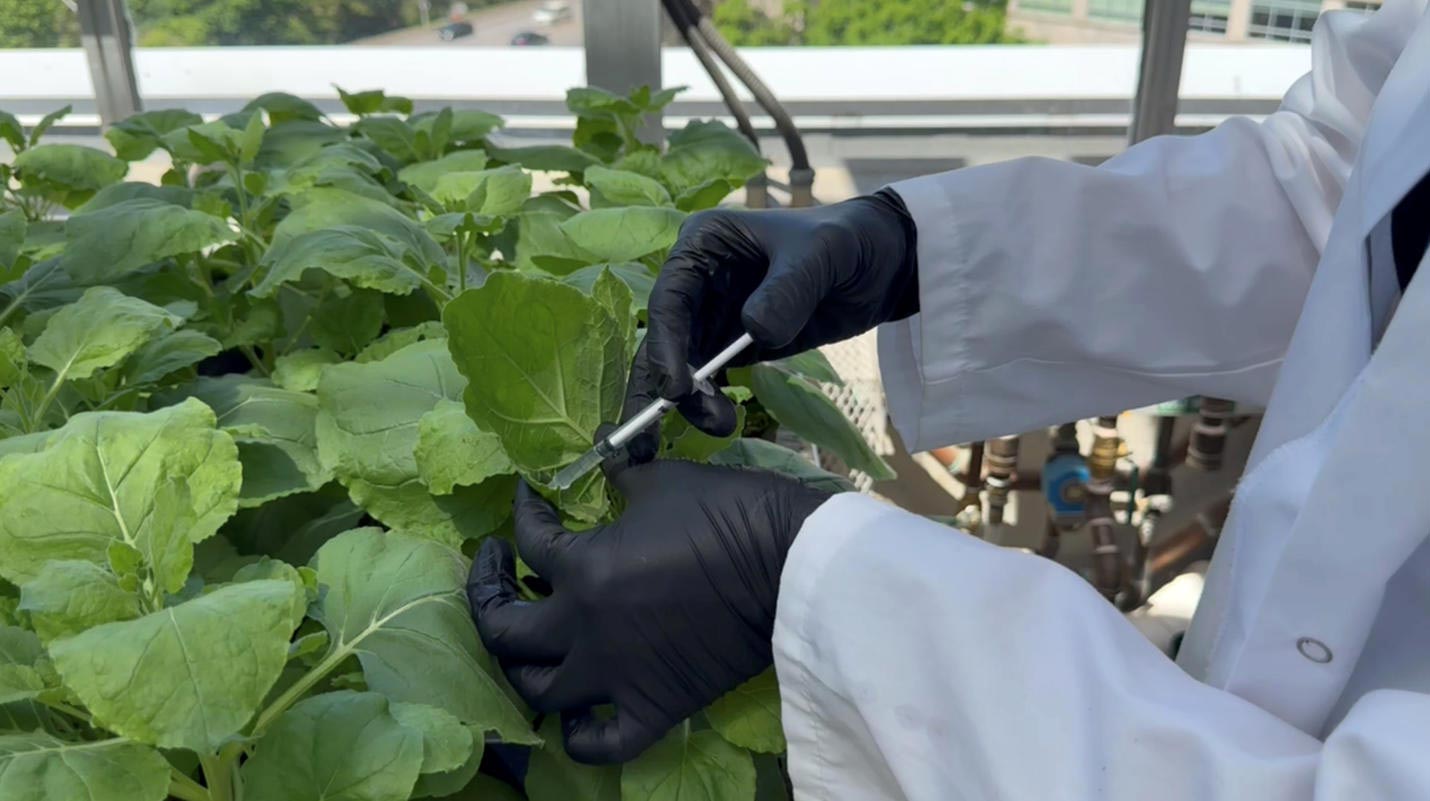
Green Tech Meets Drug Production
Phytogene uses Nicotiana benthamiana, a relative of the tobacco plant, to produce medications like GLP-1 receptor agonists, a class of drugs that includes the widely used type 2 diabetes treatment and weight-loss drug Ozempic. Compared to conventional pharmaceutical manufacturing, this plant-based approach has the potential to dramatically reduce greenhouse gas emissions and chemical waste.
“Inspired by the recent Ozempic shortage,” explains team leader Victor Boddy, “we built a proof-of-concept model system that expresses functional GLP-1 agonists in plants. We aim to create a future where people can reliably grow their own treatments at home, free from concerns about insurance, cost, or availability.”
Winning on the Global Stage
The team recently showcased their work at the iGEM Grand Jamboree in Paris, where they competed against over 430 international teams. Their exceptional performance earned them a gold medal and placed them among the top 5 teams within the biomanufacturing stream.
Teagan Thomas, co-leader of the project, highlights the potential impact: “Phytogene offers a unique, sustainable approach to biotechnology by providing an environmentally friendly solution to the critical crisis of medication access. We’re excited to further develop this concept into a commercially viable project with support from venture capitalists and scientific advisors.”
Tools for Global Collaboration
The research team has also published an open-source biopharming toolkit on the iGEM Parts Registry, enabling other researchers to build upon their work. This toolkit includes genetic tools for rapid screening of subcellular localizations in plants and various constructs for expression in multiple cell types.
The project, which began in late 2023, involved a collaborative effort from 23 uOttawa undergraduate students across various faculties, with guidance from Adam Damry, Assistant Professor, Department of Chemistry and Biomolecular Sciences, and Allyson Maclean, Associate Professor, Department of Biology. The team conducted their research in the bioGARAGE laboratory space and in collaboration with other university labs.
While the project shows great promise, it’s important to note that it is still in the testing phase. “The extract has not been tested on humans,” adds Boddy. The team is now working on optimizing protocols to be able to test the activity of these compounds. “We are currently analyzing blood glucose and insulin levels to assess response. We also plan to conduct bioactivity assays to test the drug’s effectiveness on human cells,” adds Thomas.
A Glimpse into a Greener, Healthier Future
As the world grapples with medication shortages and the environmental impact of pharmaceutical production, the Phytogene platform offers a promising solution. By harnessing the power of transgenic plants, this innovative approach could revolutionize the biopharmaceutical industry, making medications more accessible and sustainable for people around the globe.
For more information about Phytogene, please visit iGEM uOttawa.
Never miss a breakthrough: Join the SciTechDaily newsletter.
Follow us on Google and Google News.
2 Comments
Better be careful otherwise I fear these students could be “suicided”
Big pharma does not take kindly to anyone encroaching on their honey pots.
Can’t believe that this article has even seen the light of day. I’m sure that this research will prove to be non-viable / dangerous / erroneous and will quietly disappear for view.