
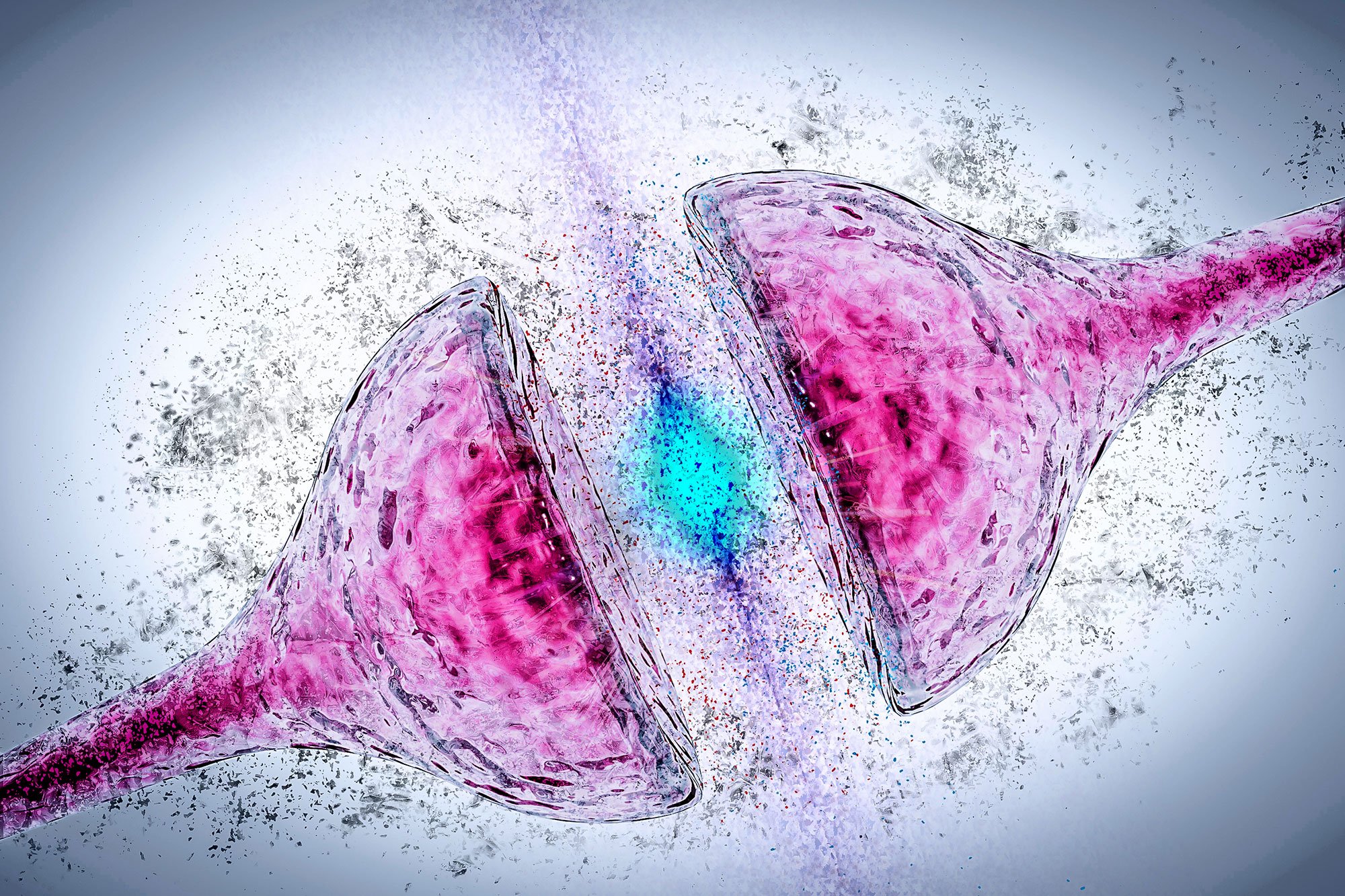
Research from UC Santa Cruz indicates that the P3 peptide—an alternative cleavage product of the amyloid precursor protein—may play a role in Alzheimer’s disease.
For many years, pharmaceutical companies have focused their Alzheimer’s drug development efforts on amyloid beta, a peptide known for forming sticky deposits in the brain. Billions of dollars and decades of research have gone into targeting these accumulations.
However, a biochemist at the University of California, Santa Cruz, says amyloid beta may not be the only peptide involved. A smaller and largely overlooked related peptide may also negatively affect brain cells.
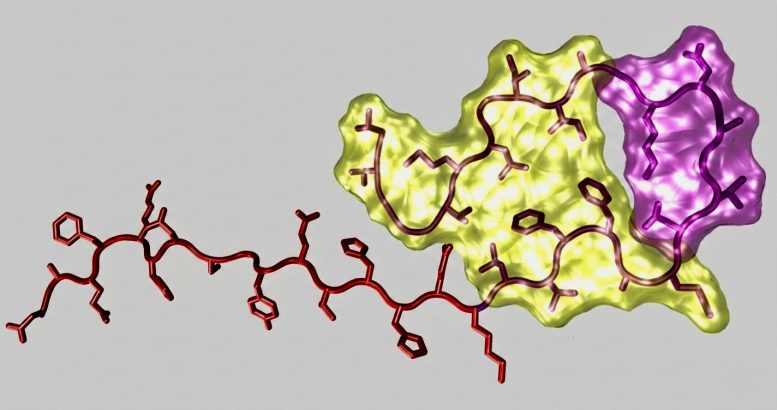
In a new commentary published in the journal ChemBioChem, UC Santa Cruz professor Jevgenij Raskatov highlights peer-reviewed studies conducted by his research group and others showing that a shorter peptide can also gather into microscopic clusters and fibrous structures. This peptide, called P3, may also interact with amyloid β (Aβ) in ways that influence how it builds up and how toxic it becomes, suggesting it could contribute to neurodegeneration as well.
“The P3 peptide is, most likely, not the innocent bystander it was commonly thought to be. There’s still more research to be done. But this could turn Alzheimer’s research on its head,” said Raskatov, whose lab researches amyloid peptides to discover new ways to block toxicity and inform better therapeutics for Alzheimer’s patients. “P3 is a distinct aggregating peptide that is itself potentially neurotoxic and may be contributing to Alzheimer’s disease.”
Alzheimer’s Disease Burden and Limits of Amyloid-Beta Therapies
Alzheimer’s disease is the most common neurodegenerative disorder worldwide. Around 35 million people currently live with the condition, and its global economic impact exceeds $800 billion each year. Researchers expect the number of patients to double by 2050. Despite the intense focus on amyloid beta, most of the more than 400 clinical trials aimed at treating Alzheimer’s by targeting Aβ have failed. Some that showed limited benefit were also associated with serious side effects such as hemorrhages and strokes.
The Aβ peptide forms when a larger protein embedded in brain cell membranes, called the Amyloid Precursor Protein (APP), is cut by two enzymes in sequence. First β-secretase cleaves the protein, followed by γ-secretase. This process produces peptides of different lengths. Among them, those containing 40 or 42 amino acids have received the most attention. These are known as Aβ40 and Aβ42, with Aβ42 being especially prone to forming aggregates and causing toxicity. Because of this, it has been the primary focus of Alzheimer’s drug development for many years.
Existing medications include cholinesterase inhibitors and N-methyl-D-aspartate (NMDA) receptor antagonists. These drugs can temporarily ease symptoms but do not stop the disease from worsening. More recently, antibody-based treatments that target Aβ, such as lecanemab and donanemab, have been approved with the goal of clearing the peptide from the brain.
P3 Peptide Formation and the Overlooked “Amyloid α”
According to Raskatov, however, these approaches have delivered only limited progress. “Progress has been extremely slow, and the current state of the art in Alzheimer’s therapy leaves much to be desired,” he said. “We need fundamentally new approaches to the problem.”
The P3 peptide represents another major fragment generated from the same amyloid precursor protein. In this pathway, the protein is cleaved by α-secretase, followed by γ-secretase. Raskatov refers to this version as “Amyloid α,” or Aα, to help distinguish it from Amyloid beta and clarify its properties. Earlier research had assumed, without directly testing the idea, that P3 could not form amyloid structures, was harmless to cells, and would dissolve easily in water, eventually disappearing from the brain.
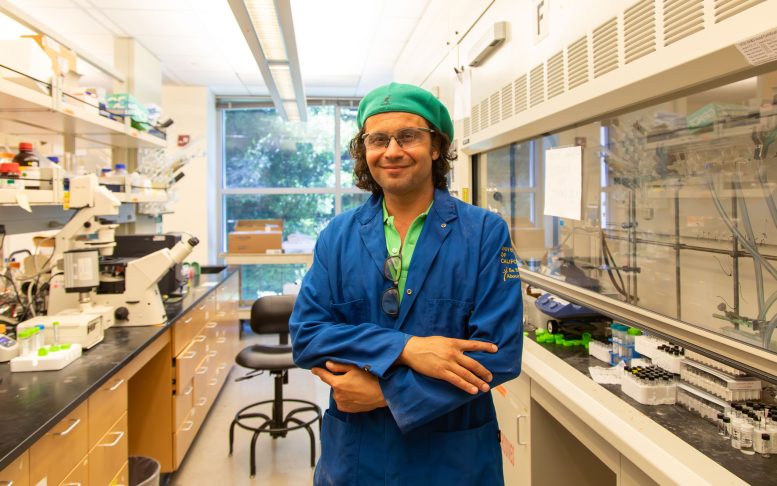
Because of those assumptions, the peptide received little scientific attention and was widely dismissed as irrelevant to Alzheimer’s disease. Raskatov, a peptide chemist, and members of his lab chose to challenge that long-standing belief. Over the past five years, they have published three major studies demonstrating clearly that P3 can form amyloid deposits just as readily as Aβ and can even generate them more quickly.
New Research Shows P3 Can Form Amyloid Deposits
Their research also suggests that P3 may damage neurons, although its toxicity appears to be lower than that of Aβ. Raskatov noted that an independent research group in the United Kingdom confirmed and expanded on these findings. At the same time, additional laboratories are beginning to explore how Aβ and Aα may influence one another.
David Teplow, an emeritus professor of neurology at UCLA and a prominent Alzheimer’s researcher, explained that amyloid beta has long been considered the primary cause of the disease. After reviewing Raskatov’s work independently, Teplow believes the field may be starting to reconsider that assumption.
“This reevaluation has far-reaching consequences for both basic science and clinical research into the causes and treatment of Alzheimer’s disease,” said Teplow, a founding editorial board member of the Journal of Molecular Neuroscience, the American Journal of Neurodegenerative Disease, and editor-in-chief of Progress in Molecular Biology and Translational Science.
Ongoing Confusion and the Need for Further Study
While examining recent studies from other researchers, Raskatov said he was surprised by how his group’s findings have sometimes been interpreted. He identified at least four papers published in respected peer-reviewed journals that cited his work as proof that P3 is harmless and does not form amyloid.
“This is exactly the opposite of what we have actually shown,” Raskatov said. “We remain in the dark on how this sort of grand confusion may have come about. Clearly, there is more work ahead of us.”
Reference: “Amyloid Alpha: The Neglected Cousin of Amyloid Beta” by Jevgenij A. Raskatov, 27 February 2026, ChemBioChem.
DOI: 10.1002/cbic.202500912
Never miss a breakthrough: Join the SciTechDaily newsletter.
Follow us on Google and Google News.