

Daily walnut consumption improved mental health and stress resilience in university students, supported by omega-3 ALA and tryptophan.
University life can be incredibly stressful, with 8 out of 10 students reporting regular bouts of stress and 61% seeking counseling for anxiety, depression, or other issues.[1]
A new research study found that eating two ounces of walnuts a day for 16 weeks in undergraduate university students improved self-reported mental health indicators, had a protective effect against some of the negative impacts of academic stress, and aided self-reported sleep quality in the longer term. The study, from researchers at the University of South Australia, was published recently in the journal Nutrients.[2]
“We’ve always known walnuts to be a health-promoting food, but because of the design and length of this study, the findings really paint a picture of how a simple food like walnuts can help combat stress,” explains Mauritz F. Herselman, a PhD student who worked on this study.
In this randomized clinical trial, the participant group who ate walnuts also experienced an increase in metabolic markers that are linked with protection against stress. The study was co-funded by the University of South Australia and the California Walnut Commission.
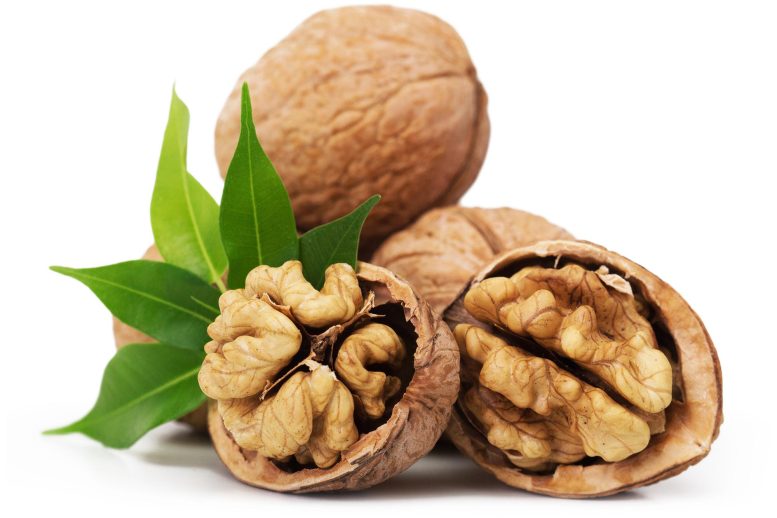
Additionally, in females only, eating walnuts may have countered the negative effects of academic stress on the diversity of the gut bacteria.
“University students are a unique population of people who transition into their adulthood while completing university degrees which can be challenging and stressful. The pressure to complete and find attractive jobs is high and can impact on students’ mental and physical health and overall well-being,” states Larisa Bobrovskaya, PhD, Associate Professor of Clinical and Health Sciences at the University of South Australia and lead researcher on the study.
“Thus, managing academic stress is important and various strategies can be adopted by students to get through their university journeys. Dietary intervention is one of such strategies that can boost students’ brain health but is often neglected by students,” she adds.
Study Overview
University students aged 18 to 35 were randomly selected to be in either a treatment group or control group for 16 weeks of this study.
The treatment group was provided with pre-portioned walnuts and asked to consume one portion (approximately 56 grams) per day. The control group was asked to refrain from consuming any type of nut or fatty fish for the same duration.
Participants provided blood and saliva samples and completed a series of self-reported questionnaires on mental health, mood, general well-being, and sleep habits three times during the study. A subgroup of participants also provided fecal samples at each clinical visit. A total of 60 participants, 30 in each group, completed the study.
Promising Results for Walnuts
The group eating walnuts seemed to experience a protective effect against some of the negative impacts of academic stress on mental health compared to the control group. A summary of the study findings can be found in the box below.
The effects of walnut consumption on mental health and general well-being in university students.
- Daily consumption of walnuts prevented the significant changes in mental health-related scores and scores of stress and depression. Walnuts may alleviate the negative effects of academic stress on mental health in university students.
- Daily consumption of walnuts increased total protein and albumin levels, thus may protect against the negative effects of academic stress on metabolic biomarkers.
- While academic stress did not change stress biomarkers such as cortisol and a-amylase, daily walnut consumption decreased a-amylase levels, further suggesting that walnuts may protect against the effects of stress.
- Academic stress was associated with lower gut microbial diversity in females. But, daily walnut consumption may alleviate the negative effects of academic stress on the diversity of the gut microbiota in females.
- Walnut consumption may improve sleep in the longer term.
Other emerging, but consistent evidence from observational and clinical research suggests eating walnuts is associated with:[3-5]
- Lower prevalence and frequency of depressive symptoms in U.S. adults
- Improved mood in otherwise healthy young adults and
- A greater likelihood of achieving overall health at an older age, with mental health as a domain of healthy aging
In fact, walnuts have a unique matrix of bioactive nutrients and phytochemicals that may underlie the beneficial effects on mental health seen in these studies.[6]
“While more supporting research is needed, evidence is becoming clear that consuming walnuts as a healthy eating pattern may have positive effects on cognition and mental health, potentially owing to their abundance in omega-3 ALA content,”* explains Bobrovskaya.
“Furthermore, research has shown that increasing dietary tryptophan, which the brain uses to make serotonin (a natural mood stabilizer), results in reduced symptoms of anxiety and depression.7 Thus, the presence of tryptophan in walnuts may have also contributed to these findings,” she notes.
These results are encouraging and support previous results found in similar populations, but there are limitations to the current study. Mainly, participants were not blinded to the walnut treatment. Additionally, the results could have been further influenced by the 2020 COVID-19 pandemic and stay-at-home orders, as clinical visits were disrupted during this period.
Further work is needed to improve the understanding of the complex pathways through which eating patterns that include walnuts can influence the brain or affect mental health.
Adding walnuts to daily eating patterns could be one small, versatile, simple, and accessible dietary change to promote brain health and overall well-being in university-aged students.
References:
- Stress in college. The American Institute of Stress website. https://www.stress.org/college-students. Accessed November 30, 2022.
- “The Effects of Walnuts and Academic Stress on Mental Health, General Well-Being and the Gut Microbiota in a Sample of University Students: A Randomised Clinical Trial” by Mauritz F. Herselman, Sheree Bailey, Permal Deo, Xin-Fu Zhou, Kate M. Gunn and Larisa Bobrovskaya, 11 November 2022, Nutrients.
DOI: 10.3390/nu14224776 - “Consumption of nuts at midlife and healthy aging in women” by Tania-Marisa Freitas-Simoes, Maude Wagner, Cecilia Samieri, Aleix Sala-Vila and Francine Grodstein, 7 January 2020, Journal of Aging Research.
DOI: 10.1155/2020/5651737 - “Lower depression scores among walnut consumers in NHANES” by Lenore Arab, Rong Guo and David Elashoff, 26 January 2019, Nutrients.
DOI: 10.3390/nu11020275 - “Effects of walnut consumption on mood in young adults—a randomized controlled trial” by Peter Pribis, 25 October 2016, Nutrients.
DOI: 10.3390/nu8110668 - Nutrients in one ounce of walnuts. California Walnut Commission website. https://walnuts.wpenginepowered.com/wp-content/uploads/2020/05/Nutrients-In-1OZ-Handout_Update.pdf. Accessed November 30, 2022.
- “The Effects of Dietary Tryptophan on Affective Disorders” by Glenda Lindseth, Brian Helland and Julie Caspers, 9 December 2014, Archives of Psychiatric Nursing.
DOI: 10.1016/j.apnu.2014.11.008
*Walnuts are the only nut with an excellent source of the omega-3 alpha-linolenic acid, or ALA, per serving (2.5 g ALA/oz).
Never miss a breakthrough: Join the SciTechDaily newsletter.
Follow us on Google and Google News.
7 Comments
I wonder if the walnuts were raw or roasted?
“The control group was asked to refrain from consuming any type of nut or fatty fish for the same duration.”
So it wasn’t testing the benefits of walnuts so much as the effects of Omega 3 deprivation on the “control” group.
“The study was co-funded by … the California Walnut Commission.”
And this explains why the study is so obviously invalid. Great “science” reporting there, people!
This study is not isolating walnuts as the variable because the control group was asked not to eat fatty fish or any type of nut. I agree with the previous comment. What kind of study introduces two new variables into the control arm?
Walnuts are not new.
This is not the first time you have published this so-called research re walnuts. Is there a great groundswell of demand to keep showing us? From the Walnut Growers of California? I prefer the research provided by Popeye and the can of spinach – that was science!
No one food can change the brain, heart, cells etc. It is virtually impossible to to study anyone or a group eating a foodstuff and strictly control their food environment. Yes, nuts can be part of a healthy diet, but adding walnuts to a diet rich in fast foods or processed foods will do nothing for anyones health
I wonder how walnuts compare with flax seeds? Is there a flax seed lobby? What is McDonald’s response to this study? Lots of unanswered questions.