
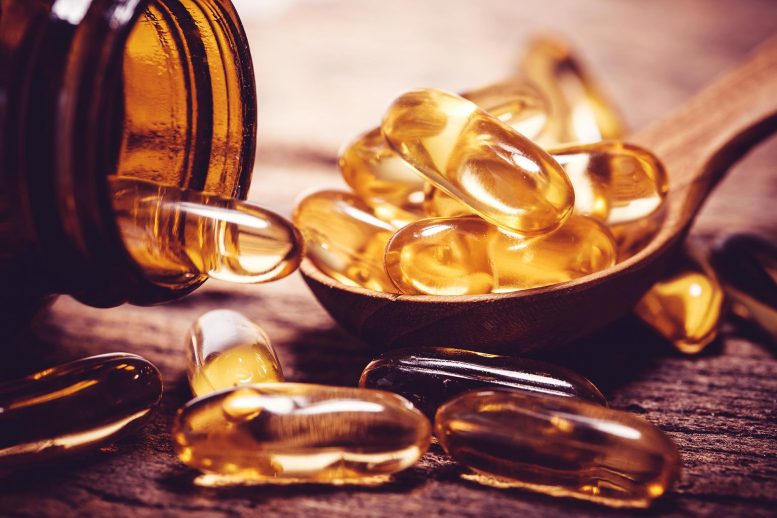
A clinical trial was conducted with 240 patients who were given 200,000 IU of vitamin D3 on admission to hospital. The supplementation did not reduce length of stay or affect the proportion requiring intensive care.
Can a high dose of vitamin D administered on admission to the hospital improve the condition of patients with moderate or severe COVID-19? The answer is no, according to a Brazilian study published in the Journal of the American Medical Association (JAMA).
The article reports a randomized, double-blind, placebo-controlled clinical trial, the kind of study considered the gold standard to evaluate drug efficacy. It was conducted with FAPESP’s support by researchers at the University of São Paulo’s Medical School (FM-USP), who recruited 240 patients treated at Hospital das Clínicas (HC), the hospital complex run by FM-USP, and the Ibirapuera field hospital in São Paulo City in June-August 2020.
“In vitro studies or trials with animals had previously shown that in certain situations vitamin D and its metabolites can have anti-inflammatory and anti-microbial effects, as well as modulating the immune response. We decided to investigate whether a high dose of the substance could have a protective effect in the context of an acute viral infection, reducing either the inflammation or the viral load,” Rosa Pereira, principal investigator for the project, told Agência FAPESP.
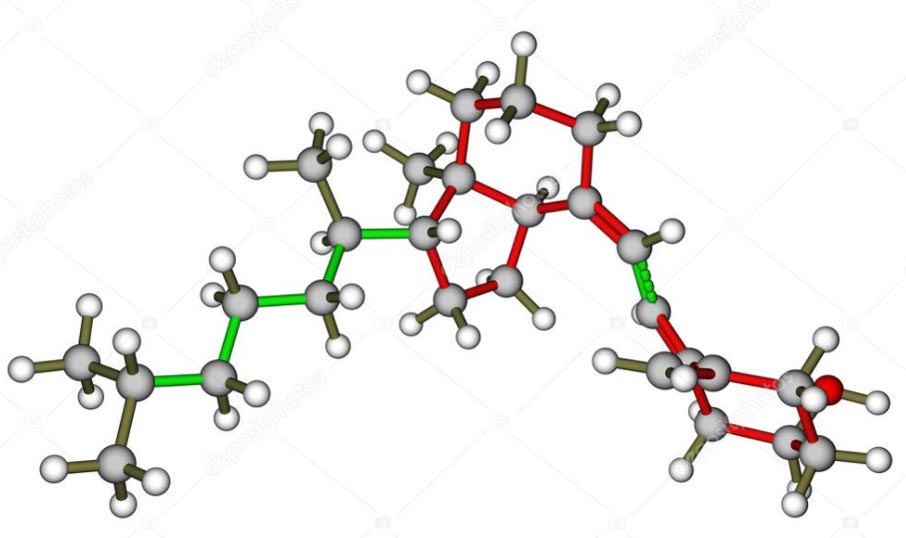
The volunteers were randomly divided into two groups, one of which was given vitamin D3 in a single dose of 200,000 units (IU) dissolved in a peanut oil solution. The other group was given only the peanut oil solution. All participants were treated according to the standard protocol for hospital treatment of the disease, which includes the administration of antibiotics and anti-inflammatory drugs.
The main purpose was to see if acute supplementation would affect the length of hospital stay for these patients, but the researchers also wanted to find out whether it would mitigate the risks of admission to the intensive care unit (ICU), intubation and death.
No significant difference between the groups was observed for any of these clinical outcomes. According to Pereira, the study was designed above all to assess the impact on hospital stay and a larger number of volunteers would be needed to achieve a scientifically acceptable estimate of the effect on mortality.
“So far we can say there’s no indication to administer vitamin D to patients who come to the hospital with severe COVID-19,” she said.
For Bruno Gualano, a researcher at FM-USP and penultimate author of the article, the findings show that at least for now there is no “silver bullet” for the treatment of COVID-19. “But that doesn’t mean continuous use of vitamin D can’t have beneficial effects of some kind,” he said.
Ideal Dose
Pereira is currently leading a study at FM-USP to find out whether subjects with sufficient circulating levels of vitamin D combat infection by SARS-CoV-2 better than those with insufficient levels of the nutrient.
The ideal level of vitamin D in the blood and the daily supplementation dose varies according to age and overall health, she explained. Older people and patients with chronic diseases including osteoporosis should have more than 30 nanograms per milliliter of blood (ng/mL). For healthy adults, 20 ng/mL is an acceptable threshold.
“The ideal approach is case-by-case analysis, if necessary dosing the substance periodically by means of blood work, with supplementation if a deficiency is detected,” Pereira said.
Reference: “Effect of a Single High Dose of Vitamin D3 on Hospital Length of Stay in Patients With Moderate to Severe COVID-19A Randomized Clinical Trial” by Igor H. Murai, PhD; Alan L. Fernandes, PhD; Lucas P. Sales, MSc; Ana J. Pinto, BSc; Karla F. Goessler, PhD; Camila S. C. Duran, MD; Carla B. R. Silva, MD; André S. Franco, MD; Marina B. Macedo, MD, MSc; Henrique H. H. Dalmolin, MD; Janaina Baggio, MD; Guilherme G. M. Balbi, MD; Bruna Z. Reis, PhD; Leila Antonangelo, MD, PhD; Valeria F. Caparbo, PhD; Bruno Gualano, PhD and Rosa M. R. Pereira, MD, PhD, 17 February 2021, JAMA.
DOI:
Never miss a breakthrough: Join the SciTechDaily newsletter.
Follow us on Google and Google News.
5 Comments
The article fails to mention that this is just not high dose of vit.D but it’s a Single High Dose.
This was an expected result. Lets just not fall into generalizations, what we can only conclude is that
A Single High Dose of Vitamin D (“But that doesn’t mean continuous use of vitamin D can’t have beneficial effects of some kind,” he said)
Fails to Improve Condition of
Moderate to Severe COVID-19 Patients
Note: No significant difference – The supplementation did not reduce length of stay or affect the proportion requiring intensive care; effect on mortality.
“The ideal approach is case-by-case analysis, if necessary dosing the substance periodically by means of blood work, with supplementation if a deficiency is detected,” Pereira said.
“Pereira is currently leading a study at FM-USP to find out whether subjects with sufficient circulating levels of vitamin D combat infection by SARS-CoV-2 better than those with insufficient levels of the nutrient.”
I don’t even think the body can take that much vitamin D so this idea of a single dose is pointless, did they even measure the change in the blood levels? This should have been the point…
The objective of this study was probably the least probable to give positive outcomes given what is known about vit D and it’s effects on human physiology…
SET FOR FAILURE
Also sheds no light on VitD as prophylactic rather than as a treatment for severe cases.
You cant fortify your walls after the enemy is already past your walls of defense and is wrecking your city. – This is an analogy of this study.
It is funny how the same old Sao Paulo study is cited again and again.
The key message is: in a TROPICAL city there is no effect seen with a poor Vitamin D protocol.
The Vitamin D needs 2 additional OH groups from metabolism in liver and kidneys. Than it is a transcription factor which also needs time for the target proteins to be synthesized.
The mean time in the hospital was 7 days, in 7 days the 200000 IU Vitamin D was not even fully converted to the active form.
With a little knowledge of the physiology of Vitamin D it is fully understandable that this study showed no effect.
This study was obviously designed to fail. That is the most disturbing conclusion I can make… I will even call this a deliberate act to misinform the public about the real benefits of profylactic use of vitamin D3 against viral deseases like COVID19.
Before even treating with a huge bolus dose of inactive vitamin D3, they should have determined the current serumlevel of 25(OH)D in COVID19 patients. And if deficient they should be treated with calcifediol which is converted in just a few hours to the active 1,25(OH)D metabolite instead of administering the inactive vitamin D3 which takes at least 3-4 weeks to be fully converted tot the active metabolite. Knowing that severe illness of COVID19 can occur within 1-2 weeks after hospitalization it is easy to understand the treatment with vitamin D3 would fail anyway.