

A large international study suggests today’s hip replacements may last much longer than previously thought.
Hip replacement surgery has become so successful that more people are receiving new hips at younger ages than ever before. That success has also raised an important question: can today’s artificial joints keep pace with decades of active living?
A major new study published in The Lancet offers encouraging news. An analysis of nearly 1.9 million hip replacements from national joint registries, combined with clinical studies involving more than 5,000 patients, suggests that modern hip implants are lasting far longer than earlier generations. The researchers estimate that about 93% remain functional after at least 20 years, with roughly 92% still working after 25 years and about 91% after 30 years.
The findings mark a substantial improvement over previous estimates. A 2019 Lancet study found that only about 58% of hip replacements lasted 25 years, but that analysis included older implant materials that are no longer widely used. Advances in modern bearing surfaces have greatly reduced wear, allowing many of today’s implants to remain functional for decades.
Why Today’s Implants Last Longer
The improvement appears to be tied largely to better bearing surfaces, the parts of the artificial joint that move against each other every time a person walks, climbs stairs, or gets out of a chair. Newer materials, including highly cross-linked polyethylene and advanced ceramics, are designed to produce less friction and shed fewer wear particles.
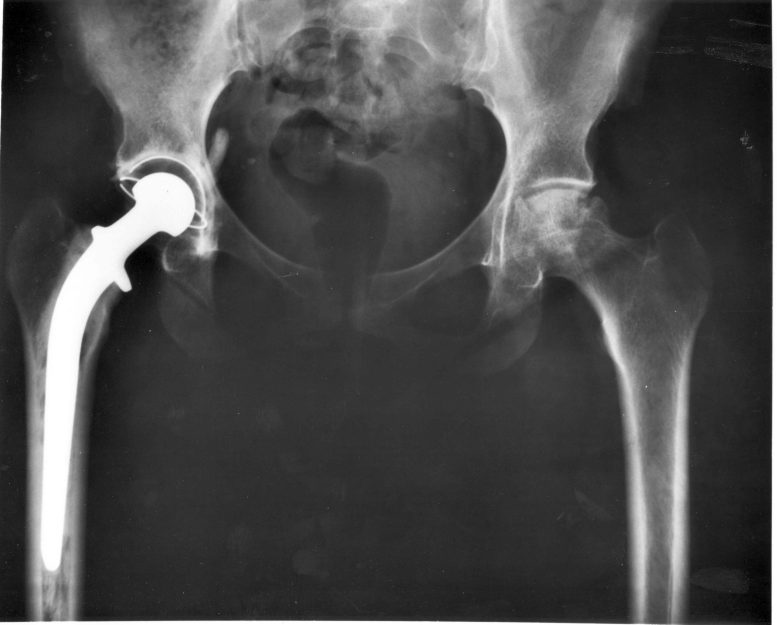
As older implants wore down, they could release tiny particles that triggered inflammation in the surrounding tissue, raising the likelihood that the implant would gradually loosen.
What the Findings Mean for Patients
The findings could change how patients think about surgery. In the past, younger adults were often warned that getting a hip replacement too early might mean needing another operation later.
Revision surgery is usually more complex than the first procedure. It can involve bone loss, scar tissue, and fewer implant options. Longer-lasting implants may reduce that concern, although they do not remove it entirely.
The researchers caution that these numbers describe large groups, not individual guarantees. A hip replacement’s lifespan can still depend on age, activity level, bone quality, weight, overall health, implant type, and surgical technique.
Even so, the study offers a reassuring message: for many patients, a modern hip replacement is no longer just a temporary fix. It may be a decades-long repair that helps people move with less pain for much of the rest of their lives.
Reference: “Survivorship of modern total hip replacement to 30 years: systematic review, meta-analysis, and extrapolation of global joint registry data” by Veronica Pentland, Zoe Thompson, Alimu Dayimu, Nikos Demiris, Eric Bohm, David Campbell, Erik Lenguerrand, Anne Marie Fenstad, Ove Nord Furnes, Nils Hailer, Gaeme Hoit, Johan Kärrholm, Torbjørn Berge Kristensen, Keijo Mäkelä, Søren Overgaard, Elizabeth Paxton, Heather Prentice, Bheeshma Ravi, Mike Reed, Ola Rolfson, Claus Varnum, Tommi Viitanen, James P Waddell, Michael Whitehouse, Amir Khoshbin and Amit Atrey, 28 February 2028, The Lancet.
DOI: 10.1016/S0140-6736(25)02305-0
Never miss a breakthrough: Join the SciTechDaily newsletter.
Follow us on Google and Google News.