
Close Menu
    Facebook X (Twitter) Instagram
    SciTechDaily
    • Biology
    • Chemistry
    • Earth
    • Health
    • Physics
    • Science
    • Space
    • Technology
    Facebook X (Twitter) Pinterest YouTube RSS
    SciTechDaily
    Home»Health»How COVID-19 Can Impact the Heart: Inflammation, Oxidative Stress and Calcium Changes
    Health

    How COVID-19 Can Impact the Heart: Inflammation, Oxidative Stress and Calcium Changes

    By Biophysical SocietyFebruary 20, 20232 Comments3 Mins Read
    Facebook Twitter Pinterest Telegram LinkedIn WhatsApp Email Reddit
    Share
    Facebook Twitter LinkedIn Pinterest Telegram Email Reddit
    How COVID-19 Can Impact Heart
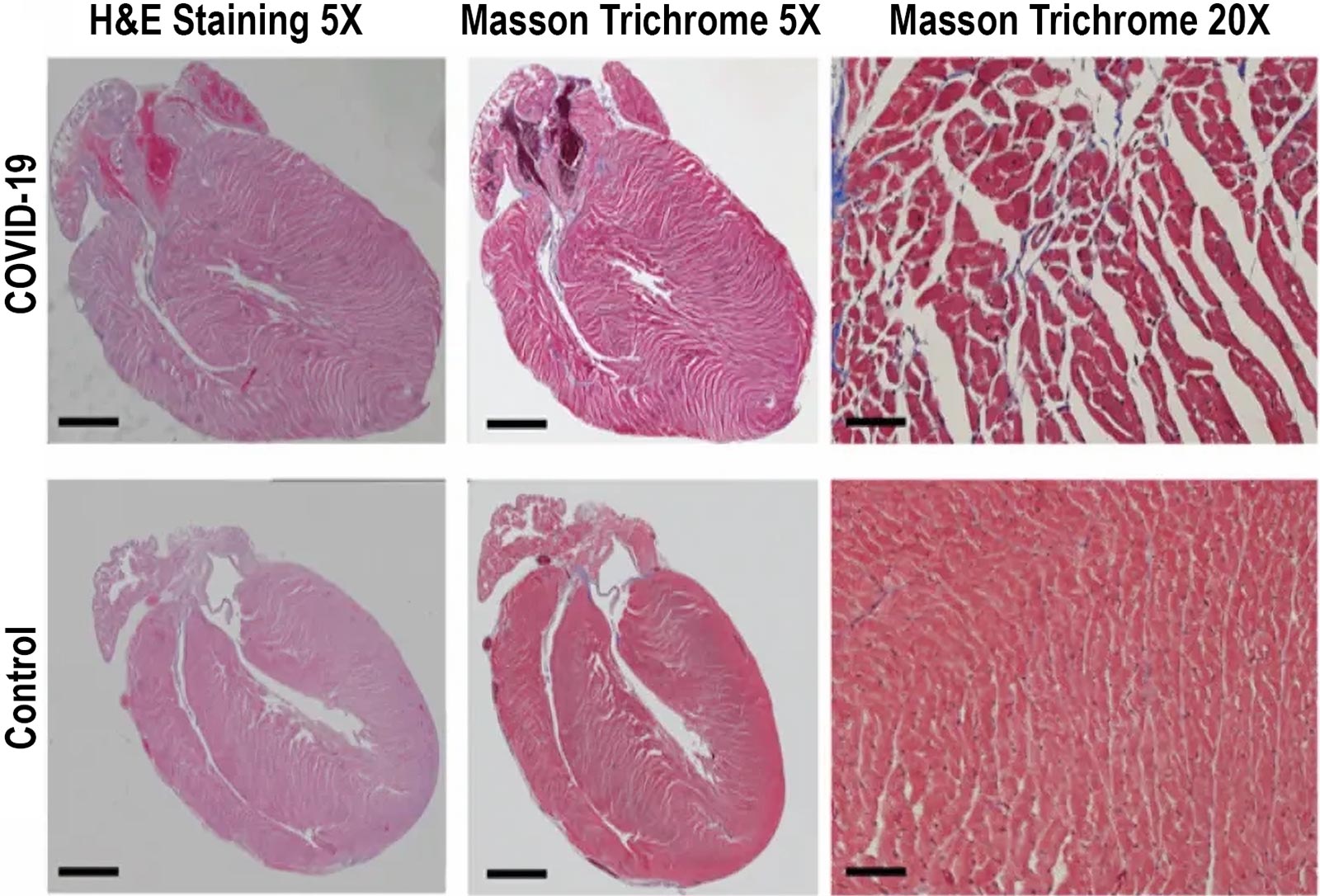
    Hearts from mice infected with COVID-19 have an increased percentage of fibrosis and dilation of the fibers—a common indicator of early cardiomyopathy in mice. Credit: Image courtesy of Andrew Marks

    COVID-19 infection can cause changes in calcium channels that can affect how the heart beats, it can also trigger inflammation and oxidative stress in the heart.

    Potentially life-threatening heart issues can be caused by COVID-19 infections. Scientific studies suggest that people with COVID-19 are 55% more likely to suffer a major adverse cardiovascular event, including heart attack, stroke, and death, than those without COVID-19. They’re also more likely to have other heart issues, like arrhythmias (abnormal heart rhythms) and myocarditis (inflammation of the heart muscle).

    Andrew Marks, a cardiologist and biophysics professor at Columbia University, Steven Reiken, a research scientist in Marks’ lab, and colleagues, have studied some of the changes that occur in the heart that could lead to these problems. Reiken will present their work on Monday, February 20 at the 67th Annual Biophysical Society Meeting in San Diego, California.

    Molecular Changes in Hearts

    In heart tissue from patients who had COVID-19, the team observed increases in oxidative stress (harmful production of unstable molecules) and signals of inflammation, as well as changes in calcium. They also detected adverse changes to a protein called RyR2, which is responsible for regulating the heart’s calcium ion levels. The heart muscle, like all muscle cells, needs calcium ions to contract. The heart’s system for managing calcium ions is essential for the coordinated contractions of the atria and ventricles that pump blood throughout the body. When calcium in the heart becomes dysregulated, it can cause arrhythmias or heart failure.

    To study changes to the heart further, they used a mouse model infected with COVID-19. They observed changes to the heart tissue including immune cell infiltration, collagen deposition (indicative of injury), death of heart cells, and blood clots. They also measured changes to the heart proteome—the proteins that are expressed by the heart cells—and found patterns consistent with changes observed to human hearts that were infected with COVID-19, as well as markers of cardiomyopathy, which can make it harder for the heart to pump blood to the body and can lead to heart failure.

    “The more awareness you build around particular aspects of a disease, the more likely you are to improve the care of patients. And doctors should be aware of heart changes related to COVID-19 infections and should be looking for them,” Marks said.

    Ultimately, “we want to really figure out what’s causing the heart disease and how to fix it,” Marks said. Understanding changes at the molecular level may reveal drug targets that could improve cardiac symptoms related to COVID-19 and help healthcare professionals diagnose and treat these issues more effectively. Additionally, understanding the cardiac complications of COVID-19 can also help public health officials make more informed decisions about how to respond to the COVID-19 pandemic, especially in advising those at higher risk for heart problems.

    Never miss a breakthrough: Join the SciTechDaily newsletter.
    Follow us on Google and Google News.

    Biophysical Society Cardiology COVID-19 Heart Popular
    Share. Facebook Twitter Pinterest LinkedIn Email Reddit

    Related Articles

    COVID Toll: Big Jump in Cardiovascular-Related Deaths Reported by American Heart Association

    New Research Links COVID-19 Infection – and Vaccination – to a Debilitating Heart Condition

    COVID Spike Protein Binds to Heart’s Vascular Cells – May Contribute to Severe Microvascular Damage

    COVID-19 Infections Increase Risk of Serious Heart Conditions Up to a Year Later

    Pfizer COVID-19 Vaccine Associated With Increased Risk of Carditis (Heart Inflammation)

    Most Young People Recover Quickly From Myocarditis Side Effect of COVID-19 Vaccine

    American Heart Association: COVID-19 Vaccine Benefits Still Outweigh Risks

    Heart Damage Found in More Than Half of COVID-19 Patients Discharged From Hospital

    Cardiac Ultrasounds Show Damaging Impact of COVID-19 on the Heart

    2 Comments

    1. John Barr on February 20, 2023 12:35 pm

      Oddly, I developed cardiac arrhythmias after the pfizer covid vaccine along with tinnitus, neuropathy and muscle fasciculations. Is anyone looking into this?

      Reply
      • Besta Luk on February 20, 2023 12:44 pm

        No. It’s probably due to climate change.

        Search youtube for Dr. John Campbell and one of his COVID-19 videos. He’s had similar problems, and explains in a balanced scientific way.

        Reply
    Leave A Reply Cancel Reply

    • Facebook
    • Twitter
    • Pinterest
    • YouTube

    Don't Miss a Discovery

    Subscribe for the Latest in Science & Tech!

    Trending News

    Bone-Strengthening Discovery Could Reverse Osteoporosis

    Scientists Uncover Hidden Trigger Behind Stem Cell Aging

    Scientists Find Way to Reverse Fatty Liver Disease Without Changing Diet

    Could Humans Regrow Limbs? New Study Reveals Promising Genetic Pathway

    Scientists Reveal Eating Fruits and Vegetables May Increase Your Risk of Lung Cancer

    Scientists Reverse Brain Aging With Simple Nasal Spray

    Scientists Uncover Potential Brain Risks of Popular Fish Oil Supplements

    Scientists Discover a Surprising Way To Make Bread Healthier and More Nutritious

    Follow SciTechDaily
    • Facebook
    • Twitter
    • YouTube
    • Pinterest
    • Newsletter
    • RSS
    SciTech News
    • Biology News
    • Chemistry News
    • Earth News
    • Health News
    • Physics News
    • Science News
    • Space News
    • Technology News
    Recent Posts
    • Europe’s Most Active Volcano Just Got Stranger – Here’s Why Scientists Are Rethinking It
    • Why Are Giant Ants Letting Tiny Ants Crawl All Over Them?
    • Revolutionary Technique Sends Healthy Mitochondria Exactly Where They’re Needed
    • This Student Recreated the Universe in a Bottle. What She Discovered Could Help Reveal How Life Started on Earth
    • Alzheimer’s Symptoms May Start Outside the Brain, Study Finds
    Copyright © 1998 - 2026 SciTechDaily. All Rights Reserved.
    • Science News
    • About
    • Contact
    • Editorial Board
    • Privacy Policy
    • Terms of Use

    Type above and press Enter to search. Press Esc to cancel.