
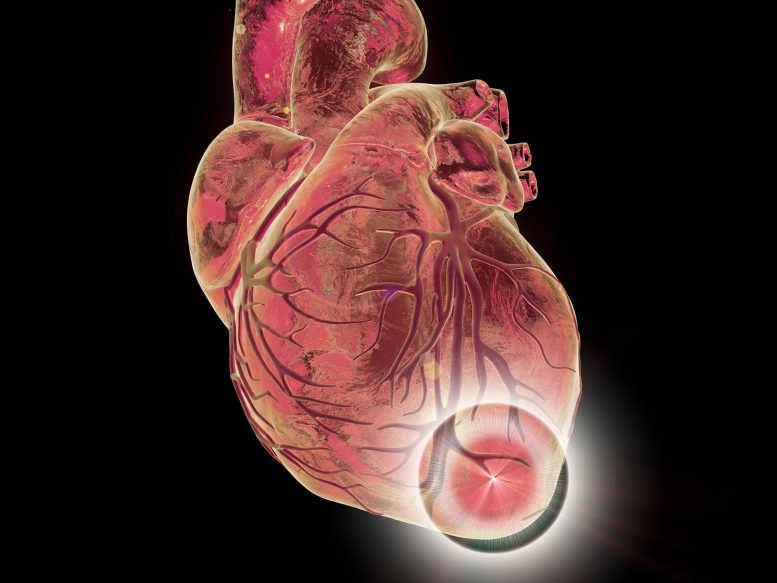
Cardiovascular care essential part of post-infection care.
An in-depth analysis of federal health data indicates that people who have had COVID-19 are at increased risk of developing cardiovascular complications within the first month to a year after infection. Such complications include disruptive heart rhythms, inflammation of the heart, blood clots, stroke, coronary artery disease, heart attack, heart failure, or even death.
Such problems occur even among previously healthy individuals and those who have had mild COVID-19 infections, according to the study, from researchers at Washington University School of Medicine in St. Louis and the Veterans Affairs St. Louis Health Care System.
The research was published on February 7, 2022, in Nature Medicine.
“We wanted to build upon our past research on COVID’s long-term effects by taking a closer look at what’s happening in people’s hearts,” said senior author Ziyad Al-Aly, MD, an assistant professor of medicine at Washington University. “What we’re seeing isn’t good. COVID-19 can lead to serious cardiovascular complications and death. The heart does not regenerate or easily mend after heart damage. These are diseases that will affect people for a lifetime.”
The Global Impact of COVID-19 on Heart Disease
More than 380 million people globally have been infected with the virus since the pandemic started.
“Consequently, COVID-19 infections have, thus far, contributed to 15 million new cases of heart disease worldwide,” said Al-Aly, who treats patients within the VA St. Louis Health Care System. “This is quite significant. For anyone who has had an infection, it is essential that heart health be an integral part of post-acute COVID care.”
Cardiovascular disease — an umbrella term that refers to various heart conditions, thrombosis, and stroke — is the leading cause of death in the United States and the world. The Centers for Disease Control and Prevention (CDC) estimates that one out of every four Americans dies of heart disease each year.
Additionally, heart disease comes with a hefty price tag, according to the CDC, costing the U.S. about $363 billion each year in healthcare services, medications and productivity lost to death.
“For people who were clearly at risk for a heart condition before becoming infected with SARS-CoV-2, the findings suggest that COVID-19 may amplify the risk,” said Al-Aly, who is also director of the Clinical Epidemiology Center and chief of the Research and Education Service at the Veterans Affairs St. Louis Health Care System.
“But most remarkably, people who have never had any heart problems and were considered low risk are also developing heart problems after COVID-19,” he added. “Our data showed an increased risk of heart damage for young people and old people; males and females; Blacks, whites and all races; people with obesity and people without; people with diabetes and those without; people with prior heart disease and no prior heart disease; people with mild COVID infections and those with more severe COVID who needed to be hospitalized for it.”
The researchers analyzed de-identified medical records in a database maintained by the U.S. Department of Veterans Affairs, the nation’s largest integrated healthcare delivery system. The researchers created a controlled dataset that included health information of 153,760 people who had tested positive for COVID-19 sometime from March 1, 2020, through January 15, 2021, and who had survived the first 30 days of the disease. Very few of the people in the study were vaccinated prior to developing COVID-19, as vaccines were not yet widely available at the time of enrollment.
Statistical modeling was used to compare cardiovascular outcomes in the COVID-19 dataset with two other groups of people not infected with the virus: a control group of more than 5.6 million patients who did not have COVID-19 during the same time frame; and a control group of more than 5.8 million people who were patients from March 2018 through January 2019, well before the virus spread and the pandemic settled in.
The study does not include data involving the virus’s delta and omicron variants, which began spreading rapidly in the latter half of 2021.
The COVID-19 patients in the study were mostly older, white men; however, the researchers also analyzed data that included women and adults of all ages and races.
Cardiovascular Health in COVID-19 Patients Over Time
The researchers analyzed heart health over a year-long period. Heart disease, including heart failure and death, occurred in 4% more people than those who had not been infected with COVID-19.
“Some people may think 4% is a small number, but it’s not, given the magnitude of the pandemic,” Al-Aly said. “That translates to roughly 3 million people in the U.S. who have suffered cardiovascular complications due to COVID-19.”
Compared with those in the control groups without any infections, people who contracted COVID-19 were 72% more likely to suffer from coronary artery disease, 63% more likely to have a heart attack, and 52% more likely to experience a stroke.
Overall, those infected with the virus were 55% more likely than those without COVID-19 to suffer a major adverse cardiovascular event, which includes heart attack, stroke, and death.
“Our findings highlight the serious long-term cardiovascular consequences of having a COVID-19 infection and emphasize the importance of getting vaccinated against COVID-19 as a way to prevent heart damage; this also underscores the importance of increasing accessibility to the vaccines in countries with limited resources,” Al-Aly said.
“Governments and health systems around the world should be prepared to deal with the likely significant contribution of the COVID-19 pandemic to a rise in the burden of cardiovascular diseases,” he said. “Because of the chronic nature of these conditions, they will likely have long-lasting consequences for patients and health systems, and also have broad implications on economic productivity and life expectancy. Addressing the challenges posed by long-COVID will require a much needed, but so far lacking, urgent and coordinated long-term global response strategy.”
Reference: “Long-term cardiovascular outcomes of COVID-19” by Yan Xie, Evan Xu, Benjamin Bowe and Ziyad Al-Aly, 7 February 2022, Nature Medicine.
DOI: 10.1038/s41591-022-01689-3
Never miss a breakthrough: Join the SciTechDaily newsletter.
Follow us on Google and Google News.
3 Comments
Worldometer shows 415,246,488 cases worldwide, with 5,849,986 deaths due to COVID-19. There have also been a plethora of cases involving heart issues, among vaccinated young men and women. Our inability to stop the scourge of this virus is going to weigh heavily on the future of many, and I wonder if previous covid-19 sufferers are going to pass disease on to the next generation?
Agree 💯
The massive increase in plaque in young people’s most likely do to covid infection which was designed specifically to kill. This still has been a gigantic cover up and maybe when tramp is thrown out we will get to the bottom of this.
Covid also causes blood clots and many other systemic problems.