
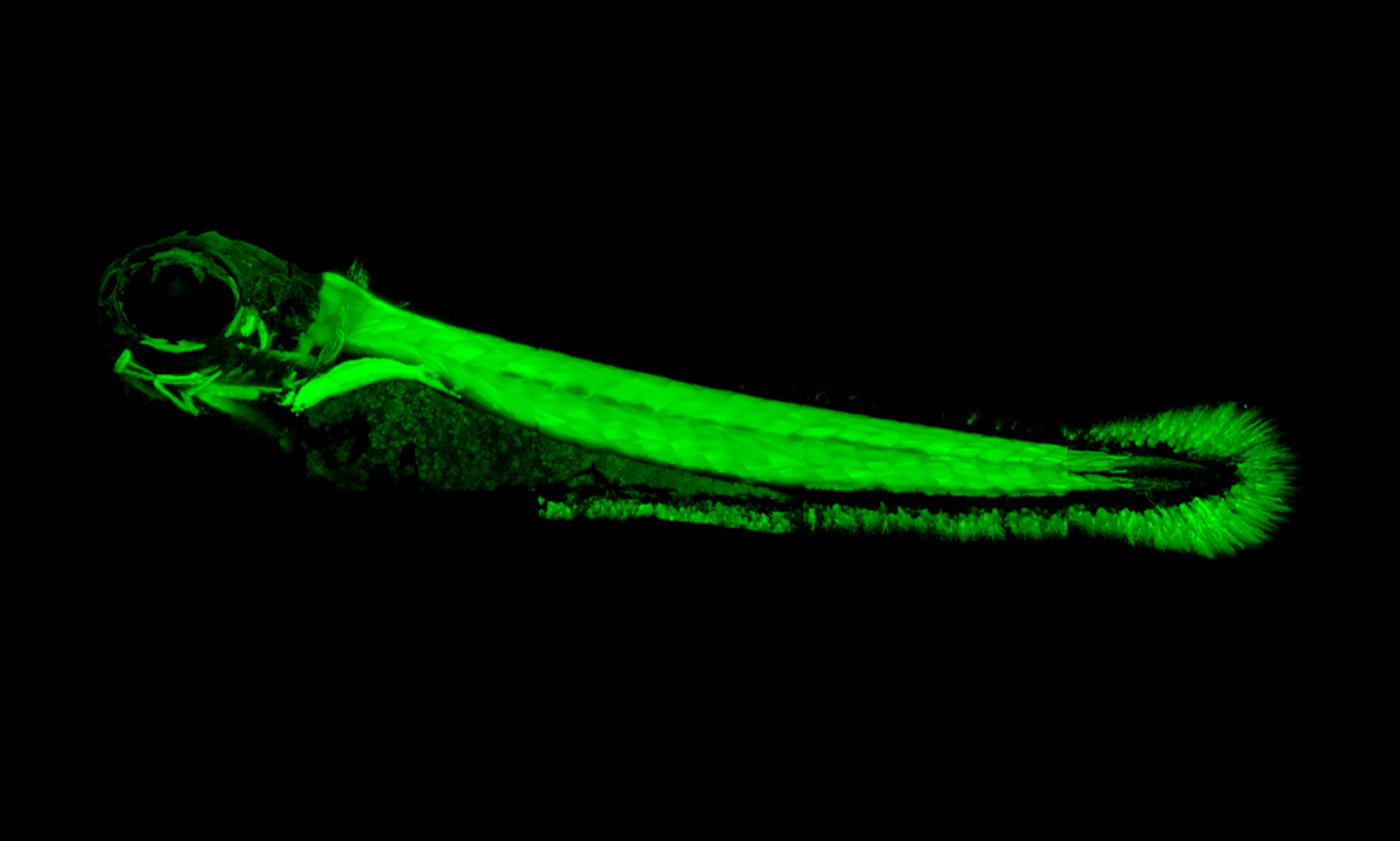
Researchers Have Discovered How Electric Fish Acquired Electric Organs
Electric fish, like the electric eel, can distinguish other electric fish by species, sex, and even by an individual thanks to their electric organs, which also allow them to transmit and receive messages analogous to bird songs. Recent research published in Science Advances describes how minor genetic alterations allowed electric fish to develop electric organs. The discovery could also aid researchers in identifying the genetic mutations responsible for various human diseases.
In order for fish to acquire electric organs, evolution had to take advantage of a genetic anomaly. Every fish has two copies of the same gene, which creates sodium channels, which function as microscopic muscle motors. Electric fish shut off one copy of the sodium channel gene in muscles and turned it on in other cells to evolve electric organs. The small motors that normally cause muscles to contract were transformed into electric signal generators, and voila! A brand-new organ was created, one with amazing powers.
Genetic Mutation Behind Electric Organ Development
“This is exciting because we can see how a small change in the gene can completely change where it’s expressed,” said Harold Zakon, professor of neuroscience and integrative biology at The University of Texas at Austin and corresponding author of the study.
An approximately 20-letter-long short section of this sodium channel gene that regulates the gene’s expression in a particular cell has been found, according to researchers from Michigan State University and UT Austin, who report their findings in the new paper. They verified that this control region is either changed or completely absent in electric fish. Because of this, one of the two sodium channel genes is disabled in the muscles of electric fish. However, the implications go far beyond than the development of electric fish.
“This control region is in most vertebrates, including humans,” Zakon said. “So, the next step in terms of human health would be to examine this region in databases of human genes to see how much variation there is in normal people and whether some deletions or mutations in this region could lead to a lowered expression of sodium channels, which might result in disease.”
The study’s first author is Sarah LaPotin, a research technician in Zakon’s lab at the time of the research and currently a doctoral candidate at the University of Utah. In addition to Zakon, the study’s other senior authors are Johann Eberhart, a professor of molecular biosciences at UT Austin, and Jason Gallant, associate professor of integrative biology at Michigan State University.
Sodium Channels in Electric Fish Evolution
Zakon said the sodium channel gene had to be turned off in muscle before an electric organ could evolve.
“If they turned on the gene in both muscle and the electric organ, then all the new stuff that was happening to the sodium channels in the electric organ would also be occurring in the muscle,” Zakon said. “So, it was important to isolate the expression of the gene to the electric organ, where it could evolve without harming muscle.”
There are two groups of electric fish in the world—one in Africa and the other in South America. The researchers discovered that the electric fish in Africa had mutations in the control region, while electric fish in South America lost it entirely. Both groups arrived at the same solution for developing an electric organ—losing expression of a sodium channel gene in muscle—though from two different paths.
“If you rewound the tape of life and hit play, would it play back the same way or would it find new ways forward? Would evolution work the same way over and over again?” said Gallant, who breeds the electric fish from South America that were used in part of the study. “Electric fish let us try to answer that question because they have repeatedly evolved these incredible traits. We swung for the fences in this paper, trying to understand how these sodium channel genes have been repeatedly lost in electric fish. It really was a collaborative effort.”
One of the next questions the researchers hope to answer is how the control region evolved to turn on sodium channels in the electric organ.
Reference: “Divergent cis-regulatory evolution underlies the convergent loss of sodium channel expression in electric fish” by Sarah LaPotin, Mary E. Swartz, David M. Luecke, Savvas J. Constantinou, Jason R. Gallant, Johann K. Eberhart and Harold H. Zakon, 1 June 2022, Science Advances.
DOI: 10.1126/sciadv.abm2970
The research was funded by the National Science Foundation and the National Institutes of Health.
Never miss a breakthrough: Join the SciTechDaily newsletter.
Follow us on Google and Google News.