
Close Menu
    Facebook X (Twitter) Instagram
    SciTechDaily
    • Biology
    • Chemistry
    • Earth
    • Health
    • Physics
    • Science
    • Space
    • Technology
    Facebook X (Twitter) Pinterest YouTube RSS
    SciTechDaily
    Home»Biology»How Hydra – A Group of Small Aquatic Animals – Regenerate Their Own Heads
    Biology

    How Hydra – A Group of Small Aquatic Animals – Regenerate Their Own Heads

    By Oxford University Press USADecember 7, 2021No Comments3 Mins Read
    Facebook Twitter Pinterest Telegram LinkedIn WhatsApp Email Reddit
    Share
    Facebook Twitter LinkedIn Pinterest Telegram Email Reddit
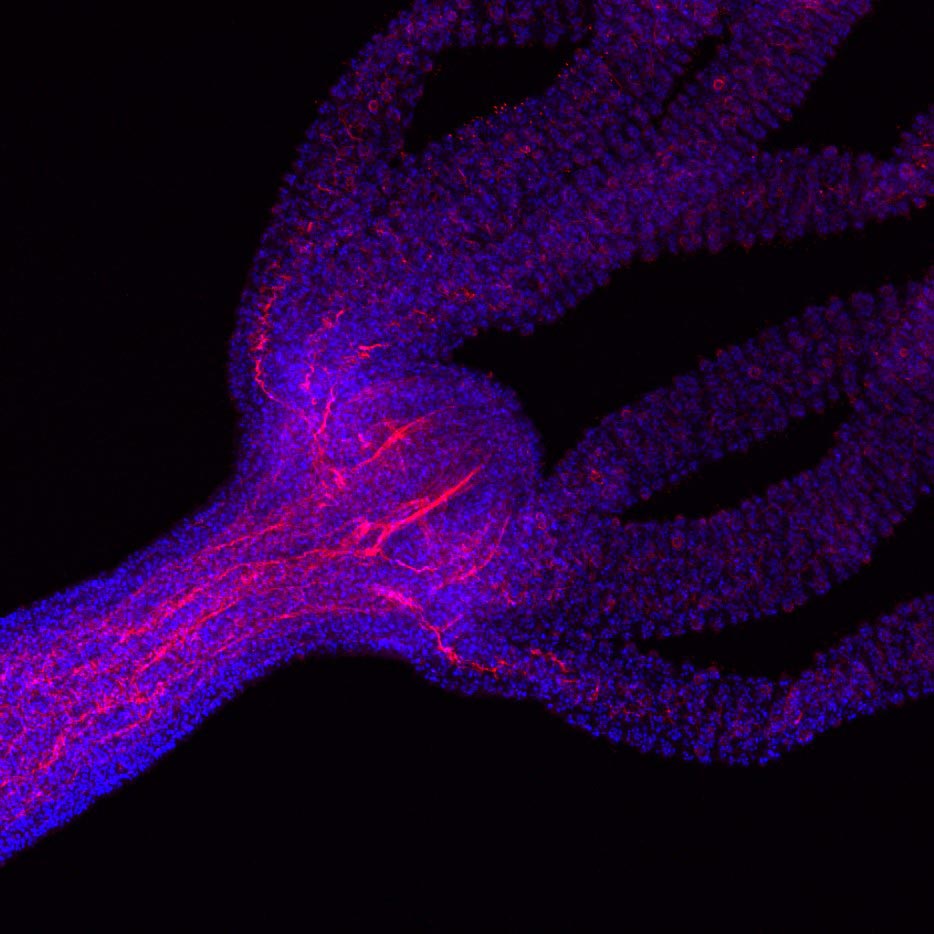
    Hydra
    Hydra, a group of small aquatic animals, can regenerate their own heads by altering the regulation of their genes. Credit: David Plachetzki

    Hydra can regrow their heads through epigenetic remodeling of gene regulation.

    A new paper in Genome Biology and Evolution, published by Oxford University Press, maps out for the first time how Hydra, which are a group of small aquatic animals, can regenerate their own heads by changing the way that their genes are regulated, known as epigenetics.

    Hydra belong to the group of animals that consists of about 10,000 species divided into two major groups: Anthozoa (comprising of sea anemones, corals, and sea pens) and Medusozoa (sea wasps, jellyfish, and hydra). Hydra, which live in temperate and tropical regions, are commonly believed to be biologically immortal; Hydra stem cells have a capacity for unlimited self-renewal. 

    Whole-body regeneration occurs in a few animal species. The extent to which the genes and gene regulatory networks driving regeneration vary across species remains largely unexplored. Scientists still don’t understand the mechanism driving Hydra head regeneration. Previous studies have found evidence of regulation by multiple developmental pathways. Researchers have found several genes associated with head regeneration.

    Epigenetic Shifts Revealed by Cutting-Edge Tools

    To understand the rudiments controlling Hydra head regeneration, researchers first identified 27,137 elements that are active in one or more sections of the organism body or regenerating tissue. Researchers used histone modification ChIP-seq, a method used to analyze how proteins interact with DNA, to identify 9998 candidate proximal promoter and 3018 candidate enhancer-like regions respectively. Their research shows that a subset of these regulatory elements is remodeled during head regeneration and identifies a set of transcription factor motifs that are enriched in the regions activated during head regeneration. These enriched motifs included developmental transcription factors.

    This work identifies for the first time the specific candidate regulatory elements of the genome that change during Hydra head regeneration, which determine how organisms develop by turning on or off genes depending on need. “One exciting finding of this work is that the head regeneration and budding programs in Hydra are quite different, said the paper’s lead author, Aide Macias-Muñoz. “Even though the result is the same (a Hydra head), gene expression is much more variable during regeneration. Accompanying dynamic gene expression is dynamic chromatin remodeling at sites where developmental transcription factors bind. These findings suggest that complex developmental enhancers were present before the Cnidaria and Bilateria split.”

    Reference: “Coordinated gene expression and chromatin regulation during Hydra head regeneration” by Rabi Murad, Aide Macias-Muñoz, Ashley Wong, Xinyi Ma and Ali Mortazavi, 8 December 2021, Genome Biology and Evolution.
    DOI: 10.1093/gbe/evab221

    Never miss a breakthrough: Join the SciTechDaily newsletter.
    Follow us on Google and Google News.

    Evolution Evolutionary Biology Regenerative Biology
    Share. Facebook Twitter Pinterest LinkedIn Email Reddit

    Related Articles

    Genome Study Links Paternal Age to Conditions Such As Autism

    Insects Help Scientists Understand the Predictability of Evolution

    Female Butterflies Prefer Flashier Mates

    Horizontal Gene Transfer Between Plants is More Widespread than Previously Thought

    Evolution Shapes Ecology of Dammed Connecticut Lakes

    Evolutionary Changes Surrounding the NOS1 Gene

    Human Evolution Still Tied to Darwinian Selection

    Human Y-Chromosome Has Enough Genes to Stay for Millions of Years

    Study Measures Mammalian Growth, Taking 24 Million Years to Go from Mouse to Elephant

    Leave A Reply Cancel Reply

    • Facebook
    • Twitter
    • Pinterest
    • YouTube

    Don't Miss a Discovery

    Subscribe for the Latest in Science & Tech!

    Trending News

    New Study Reveals Why Ozempic Works Better for Some People Than Others

    Climate Change Is Altering a Key Greenhouse Gas in a Way Scientists Didn’t Expect

    New Study Suggests Gravitational Waves May Have Created Dark Matter

    Scientists Discover Why the Brain Gets Stuck in Schizophrenia

    Scientists Engineer “Tumor-Eating” Bacteria That Devour Cancer From Within

    Even “Failed” Diets May Deliver Long-Term Health Gains, Study Finds

    NIH Scientists Discover Powerful New Opioid That Relieves Pain Without Dangerous Side Effects

    Collapsing Plasma May Hold the Key to Cosmic Magnetism

    Follow SciTechDaily
    • Facebook
    • Twitter
    • YouTube
    • Pinterest
    • Newsletter
    • RSS
    SciTech News
    • Biology News
    • Chemistry News
    • Earth News
    • Health News
    • Physics News
    • Science News
    • Space News
    • Technology News
    Recent Posts
    • This 15,000-Year-Old Discovery Changes What We Know About Early Human Creativity
    • 35-Million-Year-Old Mystery: Strange Arachnid Discovered Preserved in Amber
    • Revolutionary Gas Turbine Generates Power Without Air Compression
    • Is AI Really Just a Tool? It Could Be Altering How You See Reality
    • JWST Reveals a “Forbidden” Planet With a Baffling Composition
    Copyright © 1998 - 2026 SciTechDaily. All Rights Reserved.
    • Science News
    • About
    • Contact
    • Editorial Board
    • Privacy Policy
    • Terms of Use

    Type above and press Enter to search. Press Esc to cancel.